
Canna Campbell knows how to build a budget. But knowing what to do with your money doesn’t make you immune to the pressure of rising living costs.
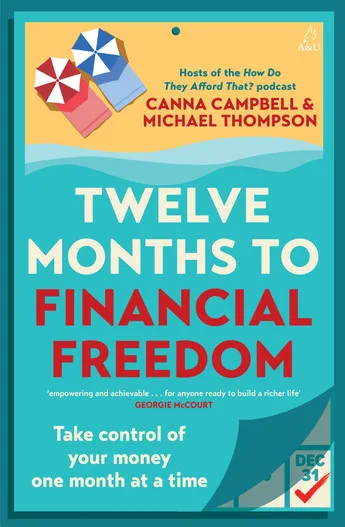
The financial planner has just published Twelve Months to Financial Freedom: Take Control of Your Money One Month at a Time, co-written with journalist Michael Thompson, which breaks down managing your finances into achievable monthly steps.
Speaking on marie claire’s podcast, You’re Gonna Want To Hear This, Campbell reveals that she and her partner, Tom, have temporarily cut their individual spending allowances to keep their family finances on track.
“Because of the rising cost of living, we’ve both actually completely cut our individual spending money,” Campbell tells host and marie claire editor Georgie McCourt. “Things were becoming too, too expensive. So we actually temporarily stopped that.”
It is a candid admission from someone whose work centres on helping others build financial independence. And it comes with a message for anyone embarrassed about having to rethink what they can afford: Campbell is making those decisions, too.
“With the rising cost of living, there are a lot of things I’ve had to really cut back on and cut out, and I’m not ashamed to admit that,” she says. “We’re all in this together.”
In a conversation spanning money shame, relationships and emotional spending, Campbell makes the case for a more honest relationship with money. That includes being willing to change a budget when the numbers stop working.
“Nothing’s set in stone,” she says. “It needs to be fluid.”
The Holiday Photo Doesn’t Show The Savings Plan
That honesty is particularly useful when a scroll through Instagram can leave you wondering how everyone else seems to be affording overseas holidays, restaurant dinners and new clothes.
McCourt raises Campbell’s own family trip to Fiji, which she discussed on social media alongside an explanation of the saving that made it possible. The photographs showed the holiday; her accompanying post acknowledged the planning behind it.
Campbell says the distinction matters. An image of someone enjoying themselves tells you very little about their financial position.
“What goes on behind closed doors is very, very different,” she says. “There are a lot of people living it up, but they’re actually drowning in credit card debt.”
Others may have received financial help or inherited money. Some may be living payday to payday to maintain appearances. Equally, Campbell points out, someone might have spent years saving and making sacrifices for the experience you’re seeing.
“You don’t know what sacrifices have gone in, how much hard work, the risks that they’ve had to take to perhaps get to where they are,” she says.
“You are looking at something that is surface level. It doesn’t actually show the true story behind the image.”
Her response is to return the focus to your own priorities. What do you want? How long are you willing to save for it? What would you be comfortable giving up along the way?
And, perhaps most revealingly: “Are you sure that’s exactly what you actually want?”
What Their Family Budget Looks Like Now
For Campbell and Tom, managing money together means sharing information as well as expenses.
Their income goes into a family account, which covers costs including mortgage repayments, groceries and babysitting. Both have access to the account and can see where the money is going.
Babysitting is another expense they have reduced. When they go out, they might take the children along; otherwise, Campbell says, she enjoys being at home and having people over.
“I love a frugal night in,” she says. “It’s good for the soul.”
Their financial conversations happen wherever they can find a quiet moment: on the phone, or in bed with their budget and internet banking open. The point is to keep talking, rather than leave one person to carry all the decisions.
Campbell says an arrangement where one partner manages everything can create problems on both sides.
“Not only is someone being left in the dark, but also then that other person is wearing all the responsibility,” she says. “That’s not fair on that person either.”
Sharing family goals does not mean abandoning her own financial independence. Campbell also maintains investments and superannuation separate from Tom’s.
“I want to be able to always stand on my own two feet and be proud of what I’ve built,” she says, “and also be a great role model to my children.”
A Budget Has To Work Beyond The Page
Campbell’s approach to budgeting begins with a practical distinction: writing down what you intend to spend is only part of the job.
“A budget is just a piece of paper with an intention,” she says.
The system behind it is what helps that intention hold up when bills arrive. Her approach uses two main accounts: an everyday account for regular expenses, and a “financial float” account for costs that arrive quarterly, twice a year or annually.
That second account is where money builds up for predictable but less frequent expenses, such as car registration, insurance and Christmas presents. Instead of treating each bill as a surprise, the household puts money aside ahead of time.
Genuinely unexpected expenses are a different matter. Campbell recounts an incident in which her daughter threw a glass of water onto her phone, leaving her with a $1100 repair bill and concerns about losing family photographs.
The payment came from her emergency savings.
“Did I enjoy it? No. Did I like seeing my balance drop? No,” she says. But having the money available meant she did not have to rely on a credit card.
Her account of the incident captures something that can be missing from polished financial success stories: being prepared does not make an expensive setback feel good. It simply gives you more options when it happens.
Why She Started Asking What Shopping Was Giving Her
Campbell also speaks openly about a period of spending that had little to do with needing new clothes.
After the birth of her son, Rocco, she experienced postnatal depression and found herself repeatedly shopping at Scanlan Theodore. Eventually, she began questioning why she was returning.
“I was spending, and I just got into this … which was so unlike me,” she says.
What she recognised was the appeal of the experience inside the store: a break from the demands of caring for a baby, a conversation with another adult and the feeling of being treated with care.
“I was spoken to really nicely by another adult, and I felt loved and cared and nurtured and respected,” she says. “That was why I was returning back to the store.”
Understanding what she was seeking helped her pull back. She still owns and wears pieces from that period, but the lesson was about recognising the need behind the purchase.
It is a question she also encourages people to ask when decluttering: what made you buy something, and what can you learn from the things you barely used?
“What am I learning from this?” she asks. “How do I not do this again and waste money like this again?”
Being “Bad With Money” Isn’t A Permanent Identity
Throughout the conversation, Campbell returns to the shame people can carry around their finances — particularly if they grew up hearing that they were irresponsible or incapable.
“Perhaps you would spend a lot of money because no one ever taught you how to save money or how to do a budget,” she says.
“The thing is, being good with money is actually a sense of self-love and self-care.”
Her book takes a month-by-month approach because trying to resolve every financial issue at once can become overwhelming. Credit card debt, superannuation, insurance, investing: faced with the entire list, it can feel easier to do nothing.
Campbell wants people to recognise smaller signs of progress, too. Checking a superannuation balance, saving $1000 or asking a question about insurance all count.
“We don’t give ourselves enough credit,” she says.
Asked what one action an overwhelmed listener could take this week, her answer is straightforward: tackle the task you have been avoiding.
“Do something that they’ve been putting off the most,” she says. “Face it and just do it and tick it off, and then check in with yourself.”
Even Campbell has an outstanding task on her own list: updating her will.
“Nobody’s perfect with money, certainly not me,” she says. “I buy things as well, and occasionally I make silly mistakes, but I don’t beat myself up. I go, ‘Well, what can I learn from this so I don’t make the same mistake again?’”
Listen to Canna Campbell’s full conversation with Georgie McCourt on marie claire’s podcast, You’re Gonna Want To Hear This.
Purchase Twelve Months to Financial Freedom: Take Control of Your Money One Month at a Time here

Related stories
Native ad body.

Native ad body.




Native ad body.