

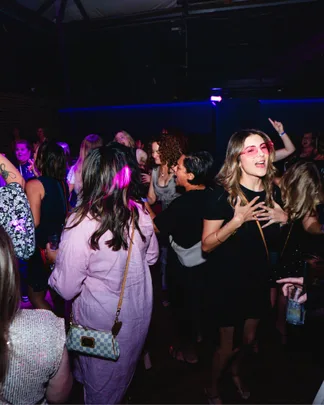
Costumed bodies weave through stringent security points, presenting their bags for inspection and their wrists for stamping. Sequins and glitter and angel wings and neon latex blend together as the hordes make their way past the food trucks, the merch stands and a second line of security, before stepping into the club itself.
Music is blaring and, at first glance, it doesn’t look any different to any other nightclub or dance party (costumed bodies aside). Until you realise the place is filled with women.
As in, only women. Right down to the security team and the bar staff. For the uninitiated, this is Disco Club, the creation of Lise Carlaw and Sarah Wills. The two best friends from Brisbane didn’t want to give up partying with their friends at night as they got older and the responsibility pile got higher, and they assumed other women would feel the same. The pair held their first event in 2022.
“It was at a bowls club in Brisbane,” Wills recalls. “There was nothing glamorous about hiring a function room in a carpeted bowls club, with Lise and I going to the outer suburbs to hire a discount bluetooth speaker and creating a Spotify playlist.” Eighty women turned up to that first event, but for Carlaw and Wills, it sparked something.
“There was nothing spectacular about that first Disco Club, other than the feeling in the room,” Carlaw says.
That feeling was what spurred the duo into taking Disco Club on the road, first to Sydney and then to Melbourne, where the events have gone gangbusters.
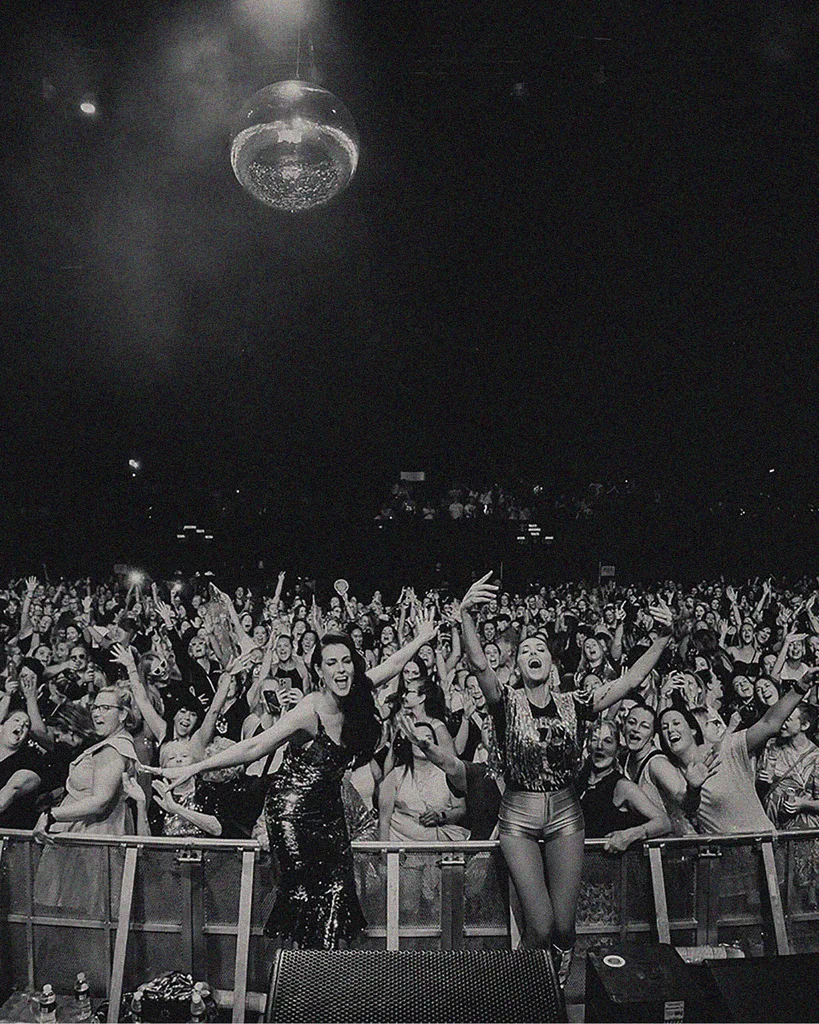
In four years, the pair have gone from blasting homemade playlists at the local bowls club to hiring top-shelf female DJs and selling out the likes of Sydney’s Hordern Pavilion. To put that into perspective, Disco Club sold the same number of tickets to their Sydney show as the Goo Goo Dolls and Camila Cabello did at the same venue.
“But the feeling has stayed,” Wills says, “from the first one with just 80 people to the ones in Sydney where there have been 5000 people.”
It goes further than wanting to shirk adult life for one night. A study from Monash University revealed that 60 per cent of women feel unsafe in music venues, with fears of sexual harassment and assault being the main cause.
Of the women who had experienced sexual harassment and violence in nightclub settings, up to 80 per cent didn’t report it. Meanwhile, a Deakin University study focused on nightlife venues in Geelong, Victoria, found 56.6 per cent of women had been subjected to some form of sexual harm, from being sexually propositioned to being groped.
“Many of the young women we spoke to felt this kind of behaviour was just normal and something they had to accept if they wanted to go out,” researcher Kira Button noted. Additionally, a survey by Transport for NSW revealed that 90 per cent of women don’t feel safe in Sydney at night.
Given the fear and anxiety a majority of Australian women feel about socialising at night, it shouldn’t be a surprise that women-only spaces like Disco Club have skyrocketed in popularity. Where there is demand, basic economics dictates that supply tends to follow.
“I think women can truly exhale when the male gaze isn’t there,” Wills says. “We’d spent decades making subconscious calculations every time we went out, like how to dress, how to get home, who we’d be around, whether we’d need to keep an eye on our drink or stick together at the end of the night. If women feel like they can’t go out at night because they don’t feel safe, then we all lose something, don’t we?” Adelle Cousins agrees.
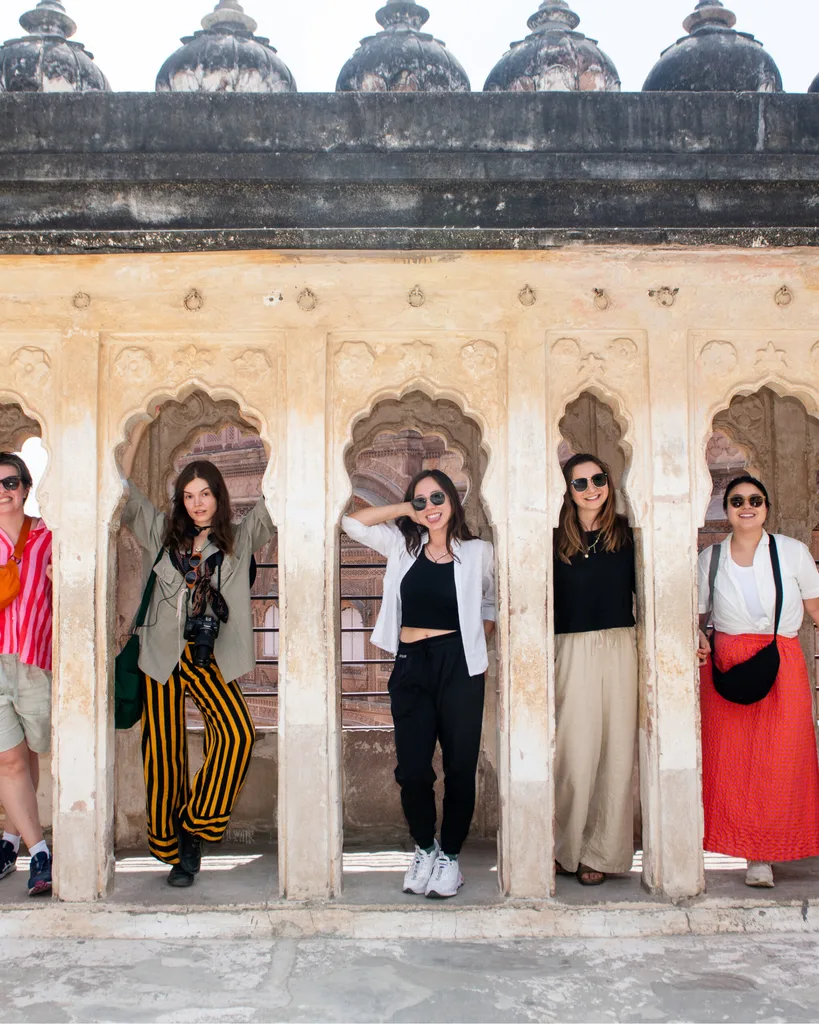
She and her bestie Shereice Söderberg created the Blackout Room in Perth’s Aberdeen Hotel two years ago, also with the aim of giving women a safe space to enjoy themselves. “For a lot of women, traditional nightclubs can come with the need for a level of awareness, or feeling like you need to stay alert,” she says. “What we’ve seen at the Blackout Room is that without that layer of pressure, women relax much faster.”
It’s something Dr Hannah Tonkin, the NSW women’s safety commissioner, has spent a lot of time reflecting on. “Women should not have to limit their activities, carefully plan their travel routes and constantly manage their fear just because of the behaviour of a minority of men,” she tells marie claire. “The onus should be on men to change their behaviour rather than women having to go out of their way to avoid it. But the reality is that we’re a long way from that ideal.”
Unsurprisingly, the women-only movement hasn’t only found its place in nightclubs, with the number of female-focused travel companies also increasing.
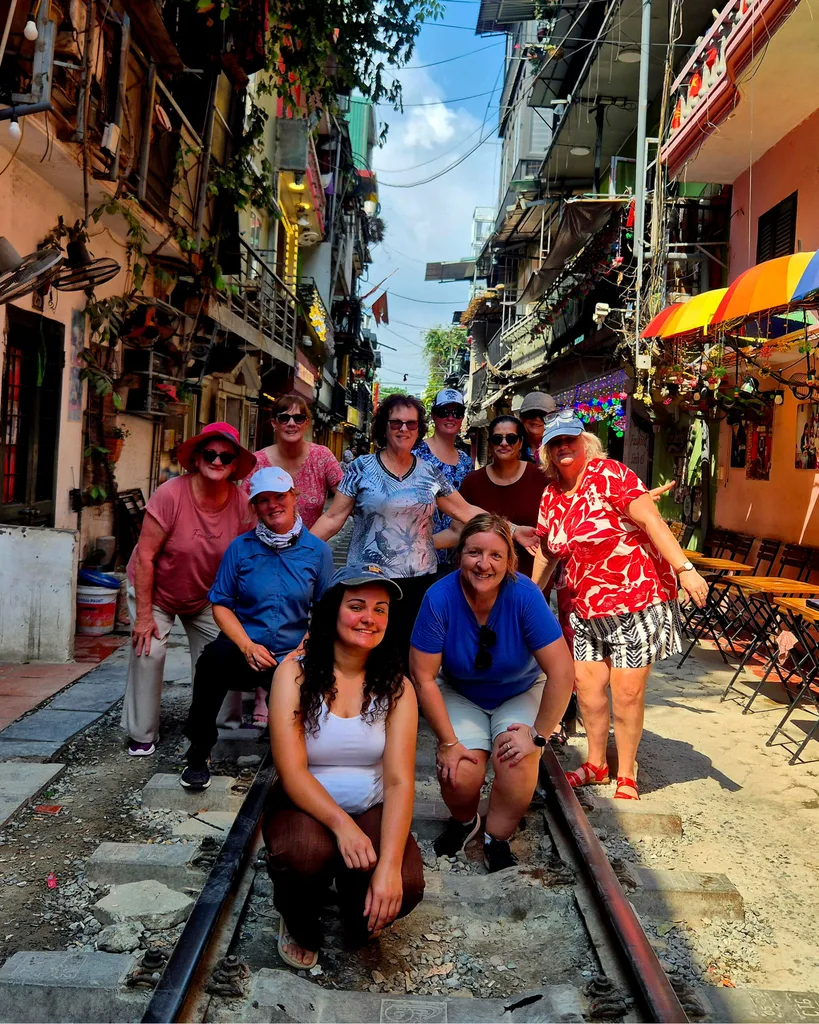
Sinead Phillips is the founder of SheVentures, a travel company with the sole aim of providing women a safe opportunity to travel. “I saw a gap where there were women who wanted to travel, but not alone, and not with men,” she says.
“I created SheVentures because I think women can have their guard up when there are unfamiliar men around.” With tours to the likes of Vietnam, Sri Lanka and Africa, Phillips ensures the safety of the women from the moment they arrive at the airport. “It’s the little things, like I make sure I’m the last person to go through immigration and security, so the women in the group know they’re not being left behind.”
Itineraries are based on places Phillips has personally visited and vetted, ensuring safety and security. But she’s continuing to learn what helps women feel most at ease when they’re somewhere unfamiliar. “One of the biggest things ladies have brought up is that they have a fear of eating alone and that was really frightening to them,” she says.
“So now on every trip, where there happens to be a free night, I make it clear that there is always a standing reservation to come and eat with me. I just say, ‘I’ve made a booking, you’ve got company for dinner if you want it.’”
And nine times out of 10, Phillips says she’s been taken up on the offer. Having also opened her tours to school-leavers who are keen to avoid the alcohol-fuelled antics of a traditional Gold Coast schoolies experience, Phillips says it’s becoming an increasingly popular choice. “For groups of newly graduated friends, it’s also a chance to celebrate a milestone together in a meaningful way. They come home with stories, shared experiences, new perspectives and stronger connections to each other.”
For Erica Kritikides, Intrepid Travel’s general manager of global experiences, creating the Women’s Expeditions arm of the Melbourne-based company was a no- brainer. “There can be a lot of fear around travel, and our Women’s Expeditions really speak to the theme of not being held back, not being afraid.”
The result, though, was two-fold. Not only is the company empowering women to travel, but the knock-on effect has seen it contribute to the success of female entrepreneurs abroad. “In some countries, there are certain spaces that female tourists can enter, but not men,” explains Kritikides.
“On one of our tours through Iran, the women were really curious about the women-only spaces, like beauty salons and spas, which are very big in that culture, but the men in the group couldn’t go in because it’s not culturally acceptable. So with the Women’s Expeditions, we have access to these women-only spaces and this creates impact for these female-run businesses. Every time we create a new itinerary, we are uncovering new female tourism entrepreneurs.”
The rise of women-only spaces isn’t necessarily a rejection of men. Rather, it’s an indication of how many women still navigate the world with a level of caution that men rarely need to consider.
Whether it’s on a dance floor, on a group tour through Vietnam or at a dinner table in a foreign city, these spaces offer something many women find increasingly rare: the chance to relax. In 2026, that remains a powerful selling point. And judging by the waitlists, sold-out tours and packed dance floors, it’s one that’s only growing stronger.

Related stories
Native ad body.

Native ad body.

Native ad body.


Share this post