

Last December, Melissa Carlton was dreading Christmas. It would be the second without her daughter Abi, who had died suddenly just 20 months earlier, at nine years old. Melissa, her husband Tom, Abi’s sisters Lily and Molly, who were 11 and three, and six-year-old brother Harry had struggled through a period of painful firsts, and it seemed like both no time at all and forever had passed by the time the second Christmas appeared on the horizon. They did what they could to evoke some holiday magic in their Vancouver home, hanging stockings over the fireplace and decorating the tree with handmade ornaments that reminded them of Abi.
On Christmas Eve, Molly came to her parents with a stomach ache, and a tiny alarm began to sound in the back of Melissa’s mind. Abi had also come into their room with a stomach ache. She had been sick, and Melissa and Tom had tucked her in with them. But at some point in the night, Abi died silently in her sleep. Paramedics came, but it was too late. At the hospital, doctors weren’t able to determine what happened. Abi’s death was passed over to the coroner, who determined it was sepsis despite Abi not showing any of the usual symptoms (fever, an infection site, pain) before her death. That diagnosis had never sat right with the family.
And now Molly was crying. And then she collapsed. As other families were waking up on Christmas morning to open presents, paramedics were performing CPR on Melissa’s sassy, big-eyed, brown-haired little girl, who was now in cardiac arrest.
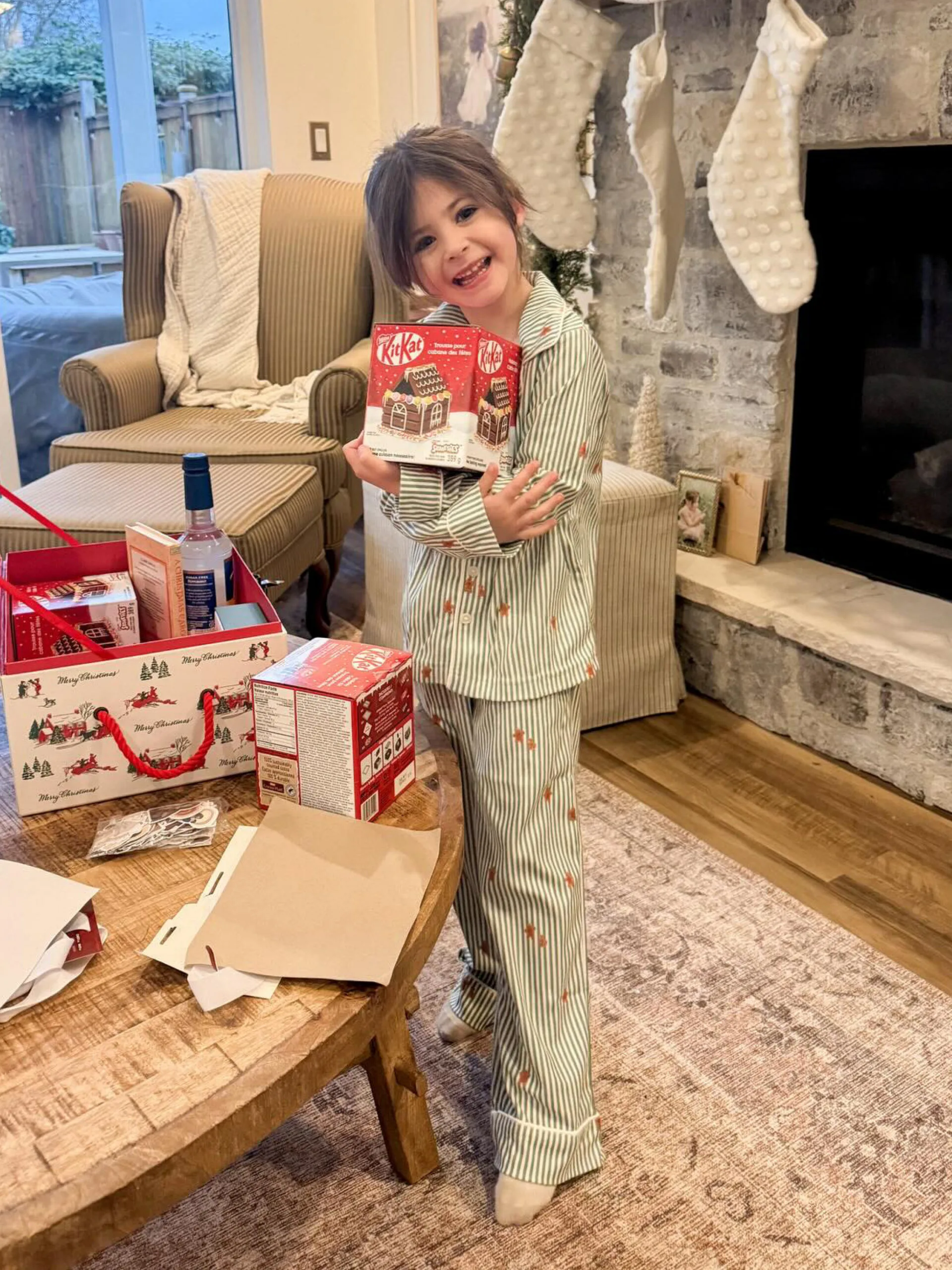
“We were at the trauma centre all day, and it was back and forth: she’d be stabilised and then she’d go into cardiac arrest [again],” Melissa says. “At one point, they were talking about recovery, and then everything just cascaded. My thoughts were just, ‘I can’t believe this is happening. This can’t be happening again.’”
Molly went into a third and final cardiac arrest, and they weren’t able to revive her. Like with Abi, the doctors didn’t know what had happened to Molly. Also like Abi, Molly hadn’t shown any signs that anything was wrong in the lead-up to her death. How could these two girls, so young, vibrant and full of life just moments before their deaths, be gone?
“After Molly, we knew it had to be something genetic; it was not a coincidence,” Melissa says. “It was the exact same symptoms, the exact same timeframe, and both out of nowhere. It’s terrifying living in the fear that it will happen to another child.”
Contrary to popular assumption, genetic testing doesn’t always take place during an autopsy. If it had, the Carltons would have found out that Abi had PPA2 deficiency, a rare and life-threatening genetic condition in which physical stress, such as a viral illness, can cause heart failure. The family would have been tested, and Melissa and Tom would have found out that they are carriers, and that while Lily and Harry didn’t inherit the gene mutation, Molly did.
My thoughts were just, ‘I can’t believe this is happening. This can’t be happening again’
Melissa Carlton
But they got their answers way too late. And it was a hard-fought battle because so little is known about SUDC (sudden unexplained death in childhood) – like SIDS, but for children aged one to 18 – even in the medical community. Melissa connected with the American SUDC Foundation, which educates coroners and encourages them to store samples from children whose deaths have been ruled as unascertained. That this was not a mandatory process was baffling to Melissa. Fortunately, there were three samples for Molly. Even still, it wasn’t easy to get a diagnosis. “There was quite a delay because the first two samples were not usable,” Melissa says. “It was just devastating.” She thought they would never get the answers they so desperately needed. “Then we got a call in April that the final sample had worked, and we had a diagnosis of PPA2. I just felt this burst of energy and rage. The technology is there for us to have known. This should not have happened. The system failed us.”
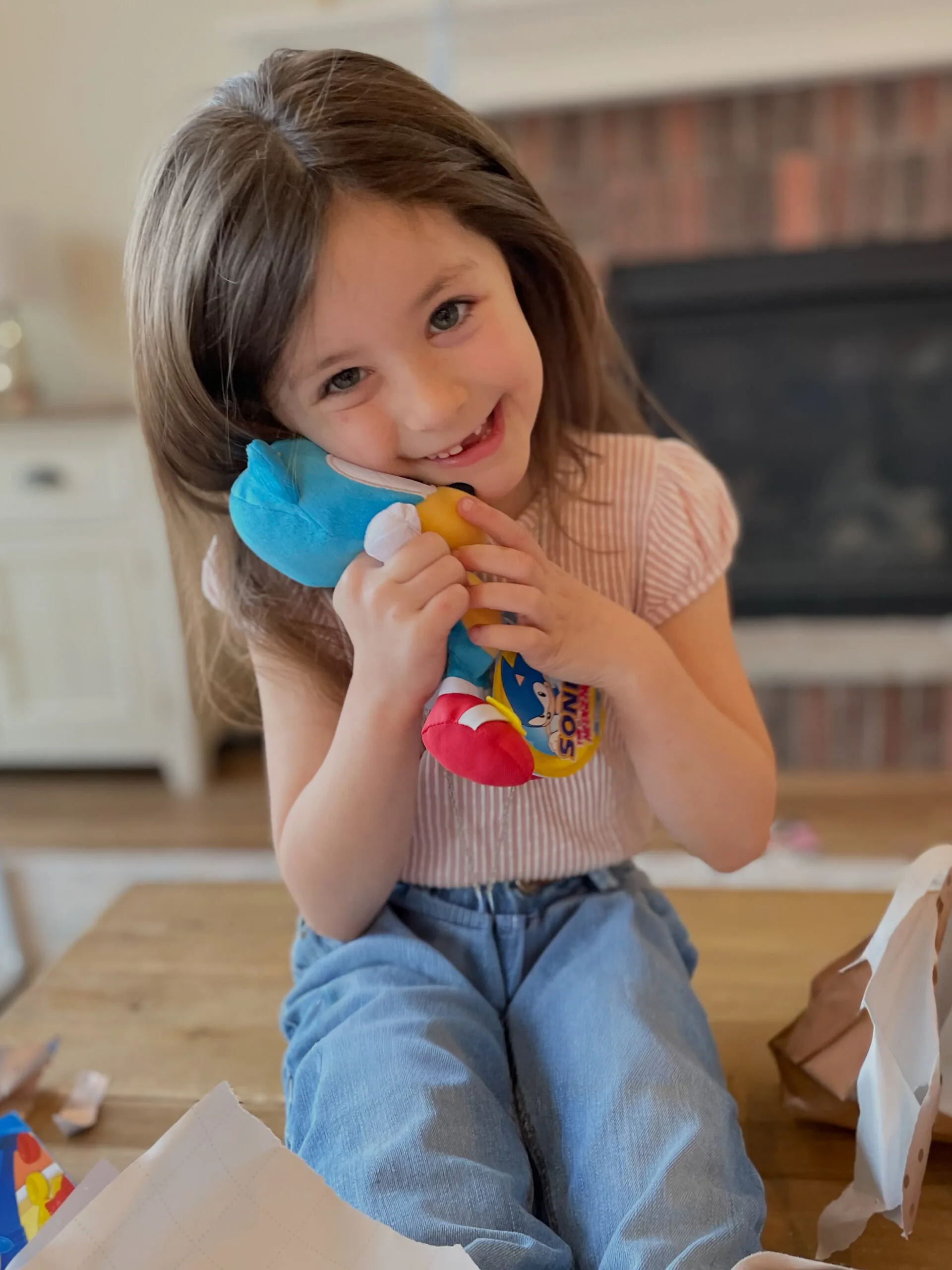
Melissa says she “blasted” her MP and health minister with emails. “I told them our story and said I wanted to talk about legislation that requires the categorisation of an unexplained death, and also introduce postmortem genetic testing.” After that, she went online.
As a photographer, Melissa had a respectable social media presence, and after Abi died, she began sharing her family’s story as a way to help her understand her grief and to connect with others. In the days after Christmas, she also posted about losing Molly. Her follower count grew into the tens of thousands.
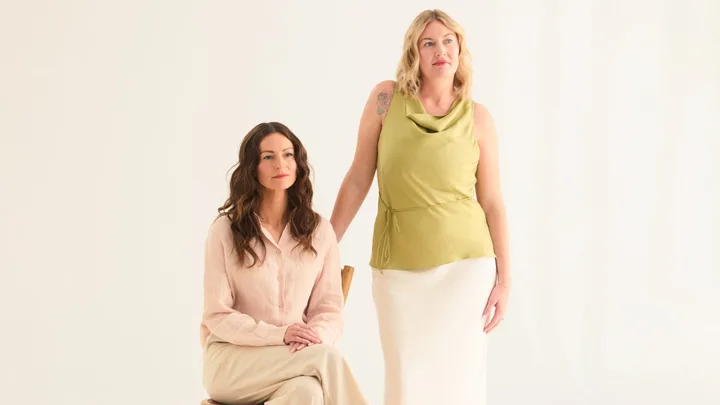
Melissa noticed one Instagram account being tagged in her comments section over and over again: @our_rarelife. Its owners, Danielle and Leon Green, were parents in Western Australia who had also lost two children, suddenly and without explanation, and were sharing their story online to raise awareness of SUDC, PPA2 deficiency, and to advocate for mandatory genetic testing during autopsies.
Danielle and Leon’s first child, a baby boy named Sonny, was born in March 2021, when WA was still deep in lockdown. “He was such a lovely baby, so smiley, very easy,” Danielle says. “I call him my sunshine boy.”
In December that year, when Sonny was nine months old, he showed mild gastro symptoms – nothing unusual for a baby, but he “looked a bit flat”, says Danielle, so they took him to emergency. Within 40 minutes, Sonny went into cardiac arrest. After another 40 minutes of CPR, Sonny’s heartbeat returned and he was breathing on his own. The decision was made to transfer him to the children’s ICU at another hospital, but on the way, he went into cardiac arrest again. “I remember the doctors warning me, ‘We have to stop CPR, it’s too far gone and he’s no longer himself,’” Danielle says. “I was pleading with them, ‘No, show me what to do and I’ll do it.’ The doctor grabbed my wrist and had tears in his eyes and said, ‘He’s not your little boy anymore.’”
She and Leon went home empty-handed, save for an outdated Red Nose flyer about SIDS. They were not connected with any counsellors or social workers, there was no referral to a psychologist, no liaison with the coroner who was investigating Sonny’s death. “I had to call them myself for updates,” Danielle says. “The only contact we had was a police investigator, who was very kind, but we would only get a quick check-in.”

Two months later, Danielle found out she was pregnant. Without knowing what happened to Sonny, the thought of having another baby was terrifying. They asked for help. “We advised the coroner and the police that we were expecting another child, and we spoke to our GP, and we were asking everyone about genetic testing,” she says. “Sonny had only been gone for three months at this stage, and people were saying, ‘Oh, you don’t need genetic testing, there was nothing wrong with Sonny, there’s no family history, testing is expensive.’ Everywhere we asked, the door was kind of closed in front of us.”
The doctor grabbed my wrist and had tears in his eyes and said, ‘He’s not your little boy anymore.’
Danielle Green
Their daughter, Airlie, was born in November 2022. “We called her our heart healer,” Danielle says. “She was so sassy, so funny; she brought us so much joy.” When she was five months old, Airlie started showing gastro symptoms. Danielle and Leon panicked. They took her to hospital where she was monitored until she started to perk up. She was discharged, but at home, she went downhill, fast. “We went back to the ED, and within about an hour, she went into cardiac arrest, too,” Danielle says. The same team that worked on Sonny were there for Airlie. They revived her within a minute, and she was transferred to the children’s ICU.
Because Sonny’s case with the coroner was unresolved, the doctors had nothing to use in diagnosing Airlie. “They told us it had to be something genetic, because it was the same [situation],” Danielle says. Doctors fast-tracked genetic testing for Airlie and that’s when they discovered a PPA2 deficiency. That knowledge bought them another year with Airlie – they had a medical plan for whenever she got sick: she would be admitted to hospital and overseen by a specialist team. But when she was 18 months old, Airlie went into cardiac arrest. After 40 minutes of CPR, Danielle and Leon had to make the call no parent should ever have to: stopping resuscitation. “You never think it’s going to happen. It was like my nightmare just unfolded again,” she says.
Like Melissa, Danielle was fuelled by rage. “I went into this angry advocate mode: how did we slip through so many cracks? Why didn’t the coroner genetically test Sonny?” She wrote letters to her MP, to the coroner, “to anyone, just asking these questions”.

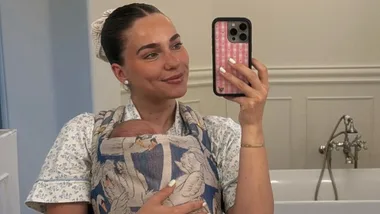
“Children don’t just die,” Danielle says. “Maybe in the 1900s, when they didn’t have certain medical knowledge, but not in this day and age.”
Despite living on opposite sides of the world, Melissa and Danielle realised they’d been advocating for the same things: more accessible genetic screening for couples pre-conception, an expanded newborn bloodspot test and routine genetic testing during autopsies after SUDC or SIDS. And when approached for this marie claire story, they met in person for the first time in Sydney.
In 2025, Danielle joined forces with Rachael Casella, who founded Mackenzie’s Mission after losing her daughter at seven months old. Rachael had campaigned to make reproductive genetic carrier testing free in Australia, and as a result, Medicare now subsidises the three-gene carrier screen for cystic fibrosis, spinal muscular atrophy and fragile X syndrome. (Additional genes can be tested via a number of labs at a patient’s expense; Rachael is an ambassador for Lumi Health.)
Together, Danielle and Rachael founded The Coroners Project to lobby for national routine genetic testing for all autopsies involving people aged 20 or under when the cause of death is unclear. “Our focus is that we need a national approach and consistency, as some states don’t have any process in place,” Danielle explains. Currently, each state and territory has its own coronial process and protocol, and genetic testing is up to the discretion of the forensic pathologist.
If there’s an indication that a genetic condition might have caused a death, the family will often be recommended to pursue genetic testing on their own. Not only can that be an insurmountable task for grieving families to navigate, but once the onus is put on individuals to seek their own tests, it creates health disparity. Also, operating on a case-by-case basis means there are no standard guidelines for death categorisation, and without that, it’s impossible to understand the scale of SIDS and SUDC.
This year is seeing a groundswell of support for research and legislative changes relating to SUDC. Danielle says that both the WA and Queensland Coroners Courts will review their respective Coroners Acts. Since its inception in May last year, The Coroners Project has gained support from organisations such as Murdoch Children’s Research Institute, Australian Genomics, the Mito Foundation and Red Nose Australia, which is funding a study that aims to develop early screening tools to identify risks of SIDS and SUDC. It’s being run by Melanie Andrew-Manning, a biomedical researcher at the University of Western Australia whose daughter, Mylee, passed away in her sleep at 15-and-a-half months old in 2012. Her death was ruled SUDC until Melanie pressed for immunology testing and found that Mylee had an unknown inherited condition that proved fatal.
Melanie describes the underlying causes of SUDC like a pie: a portion would be genetic, a portion would be immunology-related and a portion would be cardiac. In 2024, researchers in New York looked at more than 300 cases of SUDC and found that febrile seizures could also be behind some of the deaths.
Meanwhile in Canada, Melissa launched the Early Answers Foundation. “It’s not just about PPA2,” she says. “It’s about all these answers that we could get for everybody before it’s too late. The science is there and we’re not using it. Our vision is policy change, education and pushing for testing and early answers.”
By the time you’re reading this, Melissa and her MLA (member of Legislative Assembly) will have presented a bill to parliament in Canada requiring genetic testing for all SUDC cases. The chief coroner in her province has expressed his full support for the bill, and is working on allocating funding for genetic testing.
There is no force more powerful than a bereaved parent. Despite that doctor telling her that Sonny was “not her little boy anymore”, Danielle knows that’s not true. “They’re not here physically, but I’m Sonny and Airlie’s mum,” she says. “Their lives mattered; their diagnosis mattered so we can better support families facing the same rare conditions, trying to get the research to the point where it will start to help children, and create greater awareness about preconception genetic testing.”
“Some people are like, ‘Wow, how are you doing this?’ but I think this is just part of it,” Melissa adds. “This is how I’m turning [my pain] into purpose and doing something that should have already been in place.” She pauses. “I don’t know what else I would be doing.”
If you have experienced loss from SUDC, you can have your say in changing the coronial process with Melanie Andrew-Manning’s survey here.

