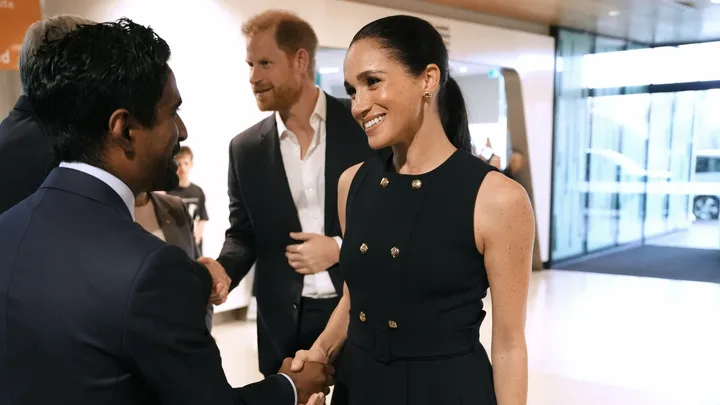
Prince Harry and Meghan Markle have touched down in Australia for their latest tour. Not a royal tour, but rather a business and philanthropic visit.
While this trip may echo the optics of their 2018 arrival, their first overseas tour as a married couple, the context could not be more different. Then, they were senior working royals undertaking an official visit, complete with public walkabouts, diplomatic duties, and full state support.
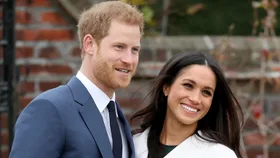

That nine-day tour reportedly cost Australian taxpayers more than $400,000, a figure largely accepted as part of the machinery of monarchy. The excitement, at the time, was palpable. Crowds gathered, adoration swelled, and midway through the 16-day visit came the announcement that the Duke and Duchess of Sussex were expecting their first child. It was, in many ways, the peak of their royal fairytale.
Since their 2020 departure from the royal family, which was reductively dubbed ‘Megxit’, Prince Harry and Meghan have been explicit in their intention to build financial independence. They left the UK for Montecito, cultivated a network of high-profile connections, and racked up an impressive portfolio of media and commercial ventures, from high-profile interviews to multimillion-dollar streaming deals.
The move was framed as both necessary and self-determined. Meghan, in particular, became a lightning rod for a uniquely toxic convergence of tabloid scrutiny, institutional rigidity, and racism. Their exit from royal life was not merely strategic, but deeply personal.
Two things can be true at once: their decision to leave was justified, and their reinvention as self-sustaining public figures has proved undeniably lucrative.
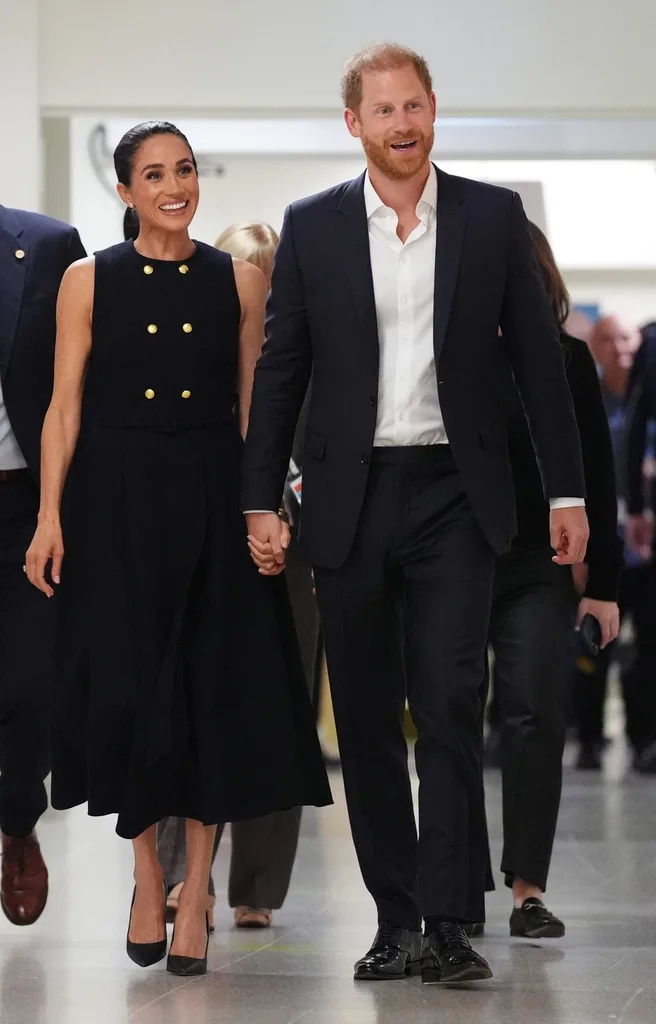
Which is what renders this current visit more complex. If the trip is private, and increasingly commercial in nature, on what basis does any part of it fall to the public to fund?
Because while the Sussexes’ team maintains the trip is self-funded, policing is another matter. A spokesperson for the New South Wales Police Force has confirmed that an operation will be in place to ensure public safety during their stay, with any additional measures absorbed into standard policing resources.
Private events requiring police presence typically operate on a user-pays model. This visit, however, occupies a grey area: the couple’s profile necessitates security, yet the nature of the trip does not meet the threshold of official duty. The result is a blurred line between private enterprise and public responsibility.
Discourse around the prospect of taxpayers helping to foot the bill has, perhaps unsurprisingly, skewed negative.
That their visit is, in part, commercial only makes the reliance on public resources more contentious. Prince Harry is due to deliver a keynote address at a summit, with tickets reportedly priced up to $2,400, while Meghan will appear at a women-only “girls’ weekend” in Sydney, where packages exceed $3,000 per person.
The itinerary does include charitable engagements, from children’s hospitals to meetings with veterans and survivors of family violence. But these sit alongside, rather than supplant, the trip’s revenue-generating elements.
Even die-hard royalists, my mother included, who have defended Harry and Meghan from pillar to post through years of scrutiny, appear divided on this point. If the visit operates, even in part, as a commercial venture, it is reasonable to question why its associated costs, particularly security, should be borne by the public.
To position a trip as private, profit-adjacent, and independent of the institution, while continuing to rely on the infrastructure of the state, is a difficult balance to sustain. Perhaps, at some point, financial independence has to mean exactly that.