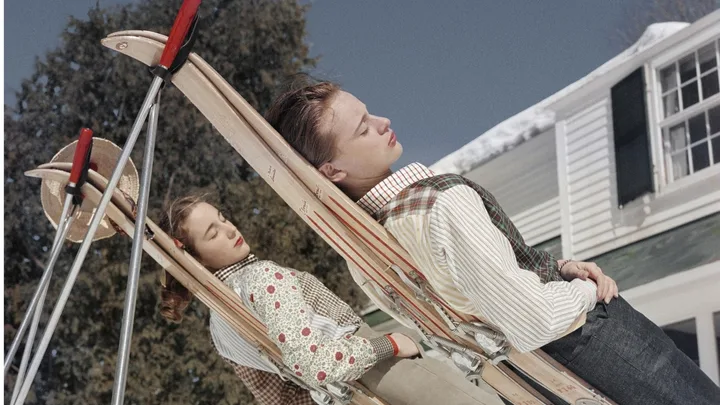
Cortina d’Ampezzo, the alpine town that served as the backdrop for this year’s Winter Olympics, has long traded in a particular kind of winter glamour.
This season, it also became the stage for a defining moment in Australian sport. Australia closed the Games with six medals, including three gold, two silver and one bronze, marking the nation’s most successful Winter Olympics to date.

As the Games unfolded in flashes of triumph and controversy, Cortina d’Ampezzo offered a quieter counterpoint. The storied resort hosted many of the 16 Olympic disciplines this year including alpine and cross-country skiing, curling and luge, its mountain air thick with spectacle, scrutiny and nostalgia.
Located roughly 250 miles northeast of Milan, near the Austrian border, Cortina is well versed in life under international gaze. The town last hosted the Winter Olympics in 1956 and was originally slated to stage the 1944 Games before their cancellation during World War II, a history that has left it quietly fluent in grandeur and return.
According to Bob Ahern, Director of Archive Photography at Getty Images, Cortina’s reputation as the aesthetic north star of winter sports glamour was forged in that postwar moment.
The 1956 Games were not only the first Winter Olympics to be televised to a global audience, but the earliest glimmer of what Ahern calls “a now fully fledged ecosystem of fashion, sport and media crossover.”
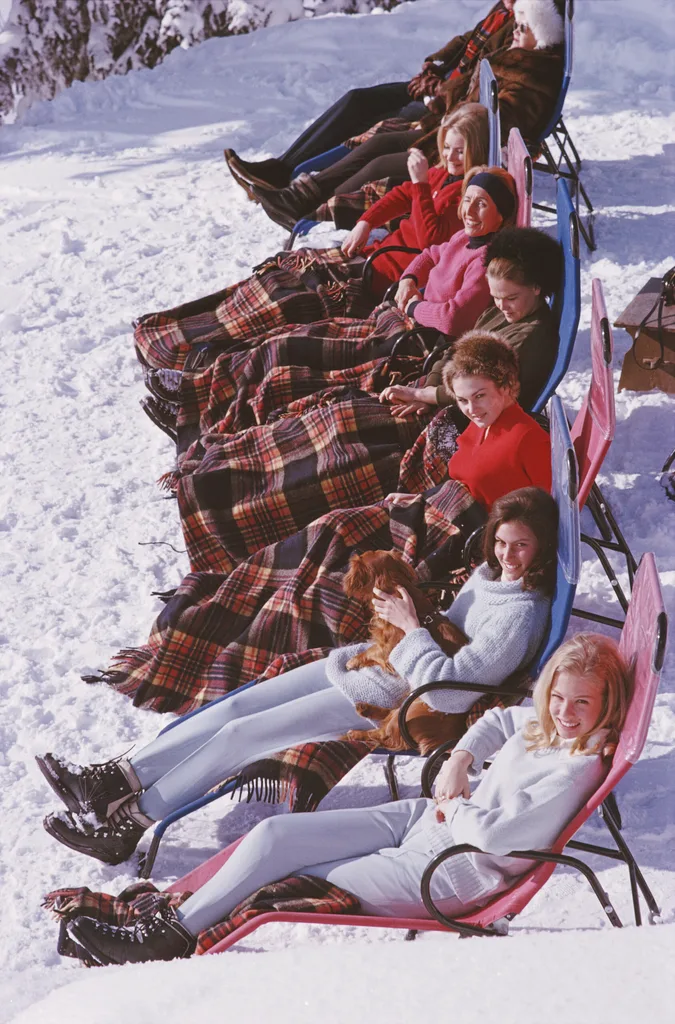
It was also the first time designers visibly entered the Olympic arena, with Team USA women dressed by Bonnie Cashin and the men outfitted by Pendleton Woolen Mills, signalling the moment performance and style first learned to speak the same language.
As Milan rose into its modern identity as a fashion capital, Cortina followed in its slipstream, evolving into what Ahern describes as an extended winter runway to the city.
By the 1980s, Corso Italia’s boutique lined promenades rivalled the slopes themselves for allure. “Cortina’s legacy may have been spotlighted by sport,” Ahern reflects, “but fashion’s influence is arguably why we keep coming back.”
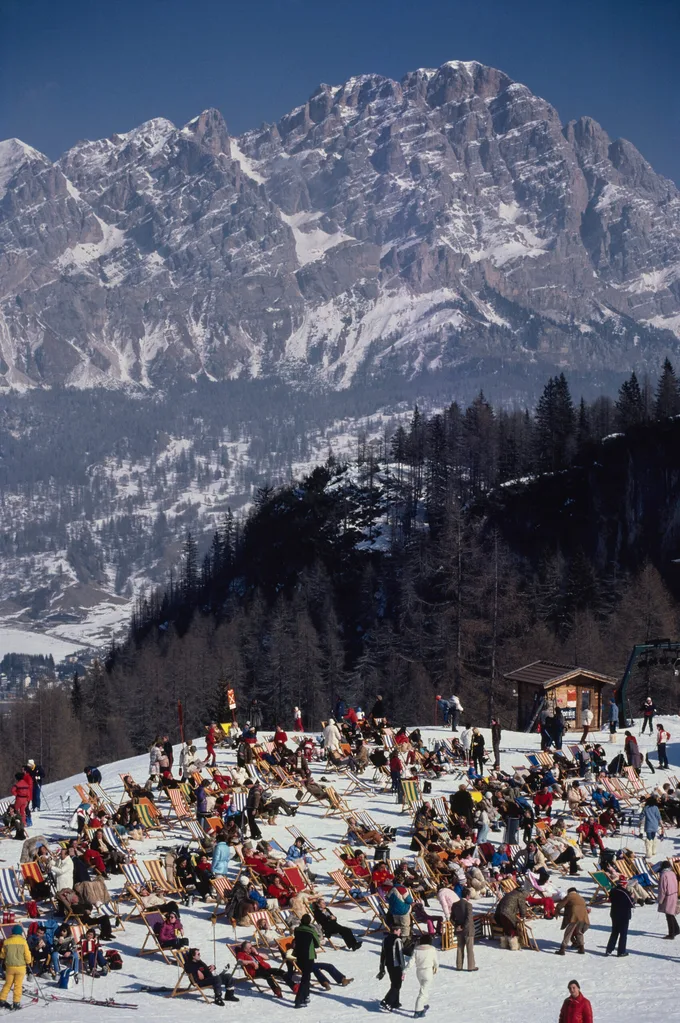
That mythology of alpine glamour predates even the Olympic spotlight. Perched nearly 4,000 feet above sea level in the heart of the Dolomites, a UNESCO World Heritage site since 2009, Cortina has long drawn artists, aristocrats and itinerant tastemakers seeking altitude as both refuge and theatre.
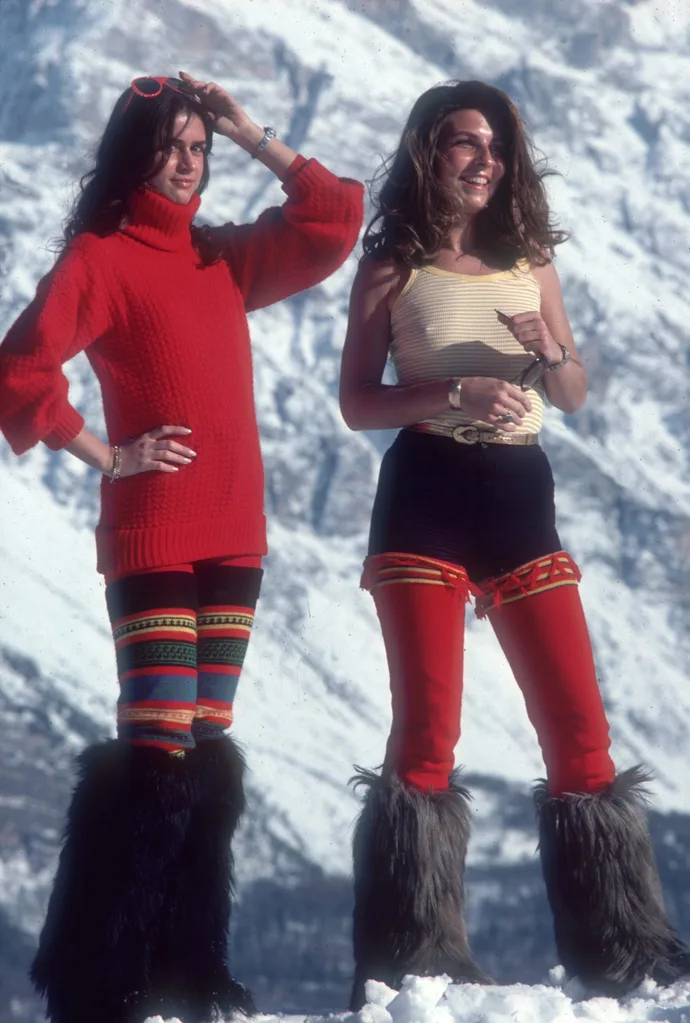
Slim Aarons helped crystallise that image in the mid 20th century, returning again and again to photograph chalet lined slopes and après ski rituals for Holiday magazine.
Though Aarons’ lens favoured lifestyle over fashion, Cortina became the place where the two learned to entwine, from boots cinched into stirrups on the mountain to fur lined coats warming the night below.
Tracing the archive further back reveals how winter sport style evolved alongside fashion itself. In the late 19th century, women crossed glaciers in long skirts and bustles, dressed for society rather than terrain.
By the early 20th century, wool and fleece signalled function over fantasy. Then came tailoring, technical fabrics and eventually the Moon Boots and fur trimmed silhouettes of the 70s and 80s, when, as Ahern notes, there was “as much activity in the boutiques of Cortina as there was on the slopes.”
Today, the Games unfold within a vastly accelerated visual economy. Getty Images has deployed more than 120 staff across Italy, using robotic cameras and thermal imaging to render the extremes athletes endure in moments of breathless clarity.
Yet for all the technological evolution, Ahern insists the essence of Olympic image making remains unchanged. “What has remained constant is the skill and expertise of the photographer,” he says.
“The drive to distil the beauty and drama of sport into a fraction of a second, and to preserve the moment for generations to come.”
In a world increasingly crowded with synthetic imagery and instant spectacle, Cortina’s analogue glamour feels newly magnetic. The slopes remain a stage, but it is the interplay of sport, fashion and memory that keeps the town lodged so firmly in the cultural imagination.