

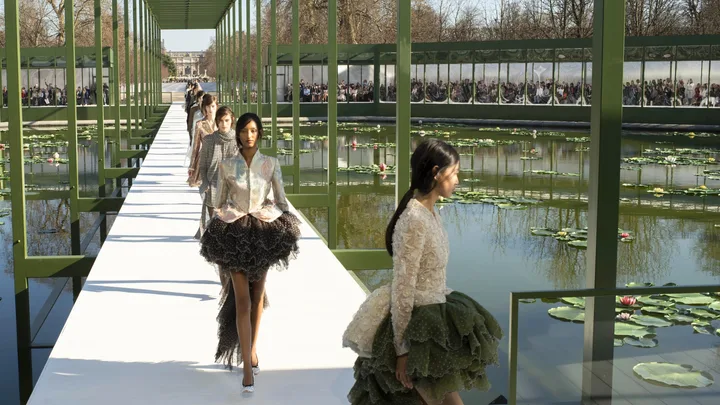
For Autumn Winter 2026, Jonathan Anderson transformed the Jardin des Tuileries into something closer to a proposition than a runway.
A vast glass pavilion encased the fountains, the runway stretching across floating lily pads as guests gathered beside a dappled basin, moments from the Musée de l’Orangerie, where Claude Monet’s Water Lilies remain in suspended bloom.
Backstage, Anderson was notably composed. “The pressure last year was intense,” he admitted. “Now I feel calmer, more relaxed.” Less than a year into the role, and the first creative director since Christian Dior to oversee both men’s and womenswear, he appears to be shifting from reaction to resolution.
Among the park’s green chairs, Anderson spoke of water lilies and their ability to disturb the surfaces they inhabit, and of the promenade as ritualised display. Like Monet’s canvases, which mirror the sky while obscuring depth, dress becomes an exercise in reflection and refraction.
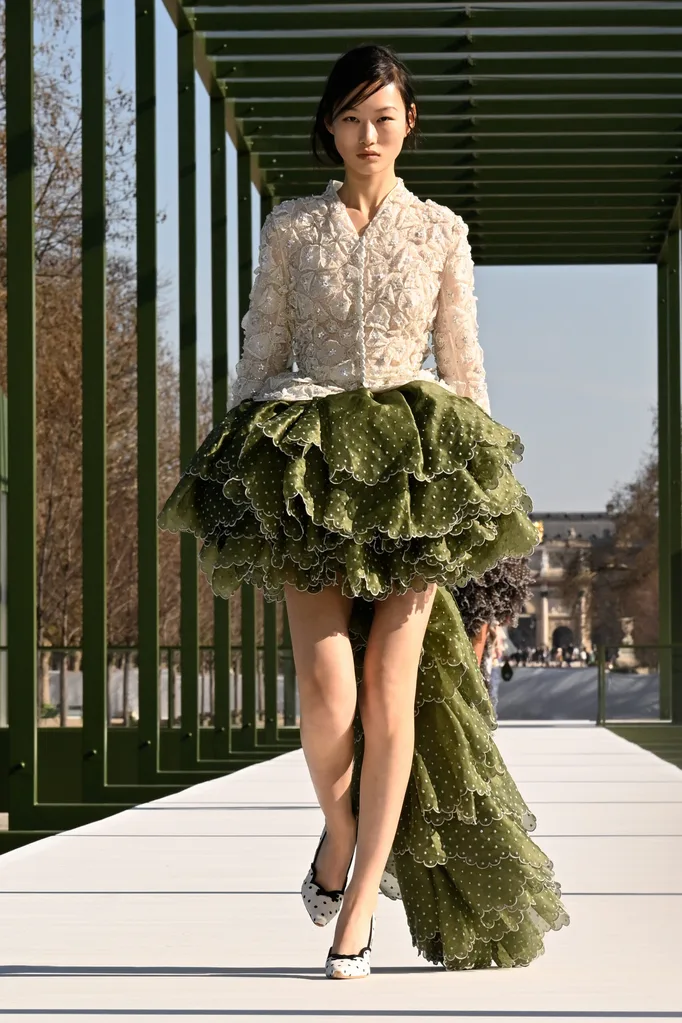
That tension between surface and depth structured the clothes. Above the waist, discipline prevailed. Cropped Bar jackets, austere cardigans and buttoned silhouettes reaffirmed Dior’s codes. The Bar itself was inflated, truncated or rearticulated as a collarless knit, its fluted hem spilling over tiered tulle.
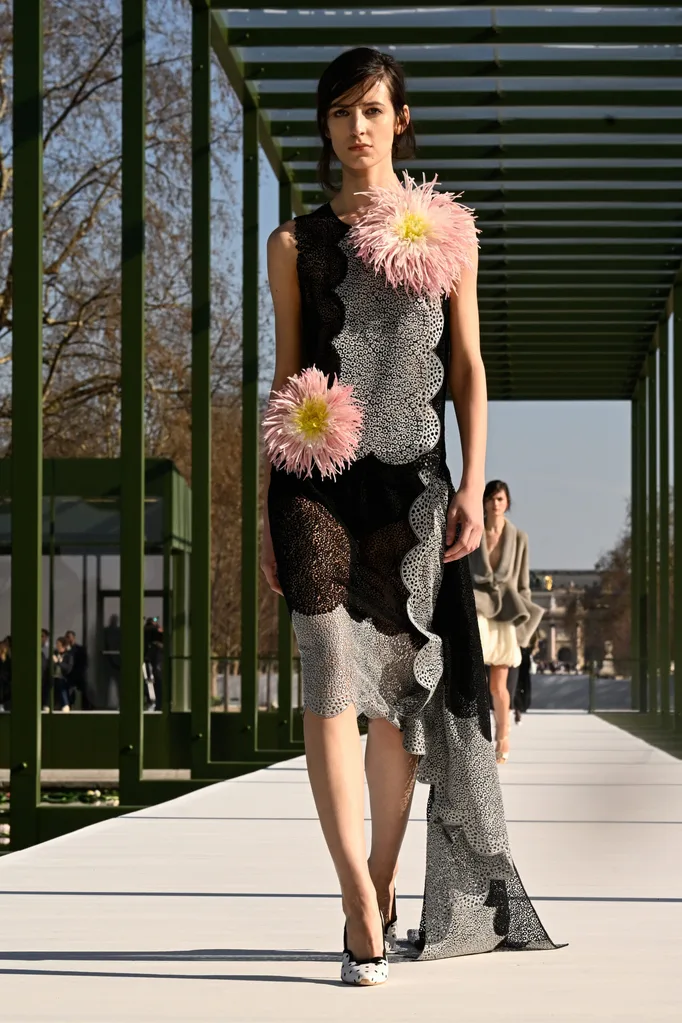
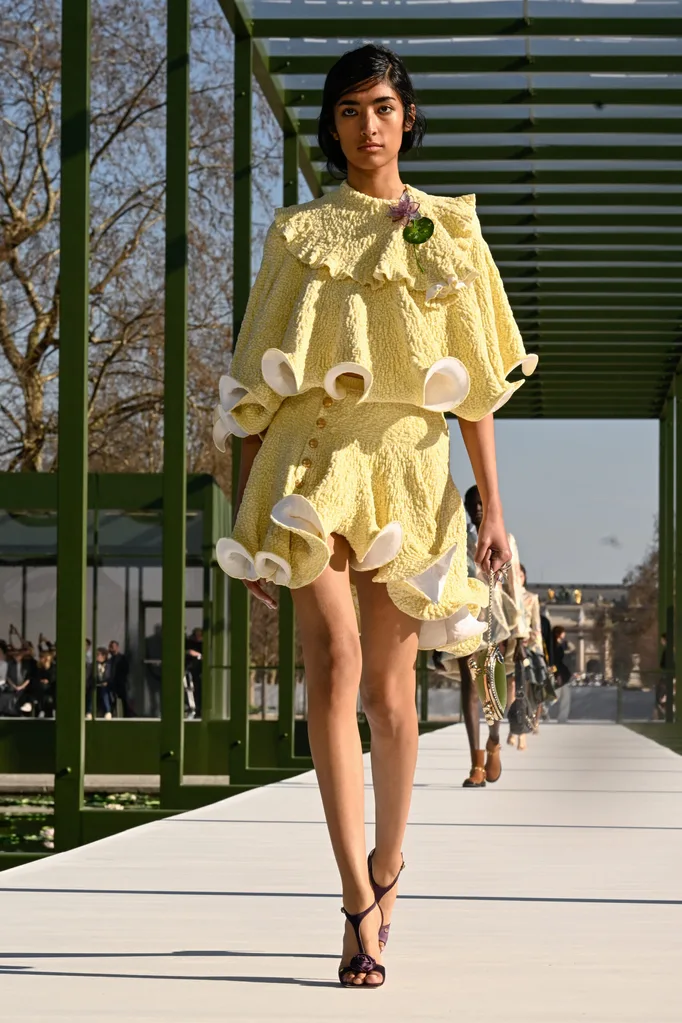
Beneath that composure, volume unfurled. Skirts billowed in silk and gauze, buoyant and tidal, their movement contrasting the rigour above. The water lily again: serene at a glance, kinetic underneath.
Fabrication carried particular weight. Garment-washed skirts opened like petals. Tailoring was subtly destabilised with track-pant buttons at the hem, a small but pointed interruption of orthodoxy.
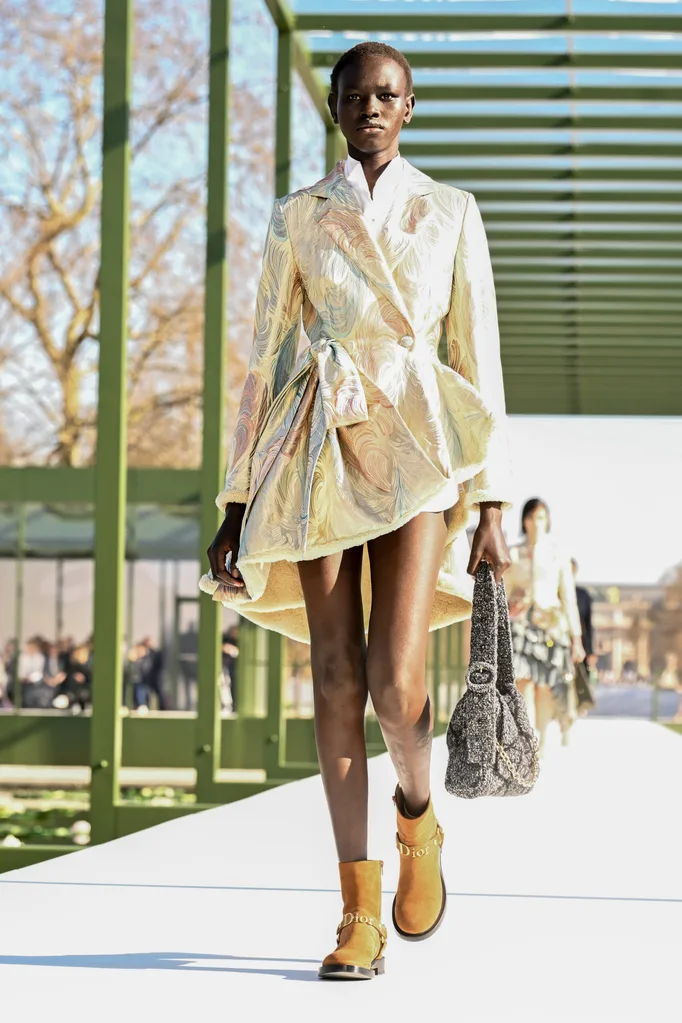
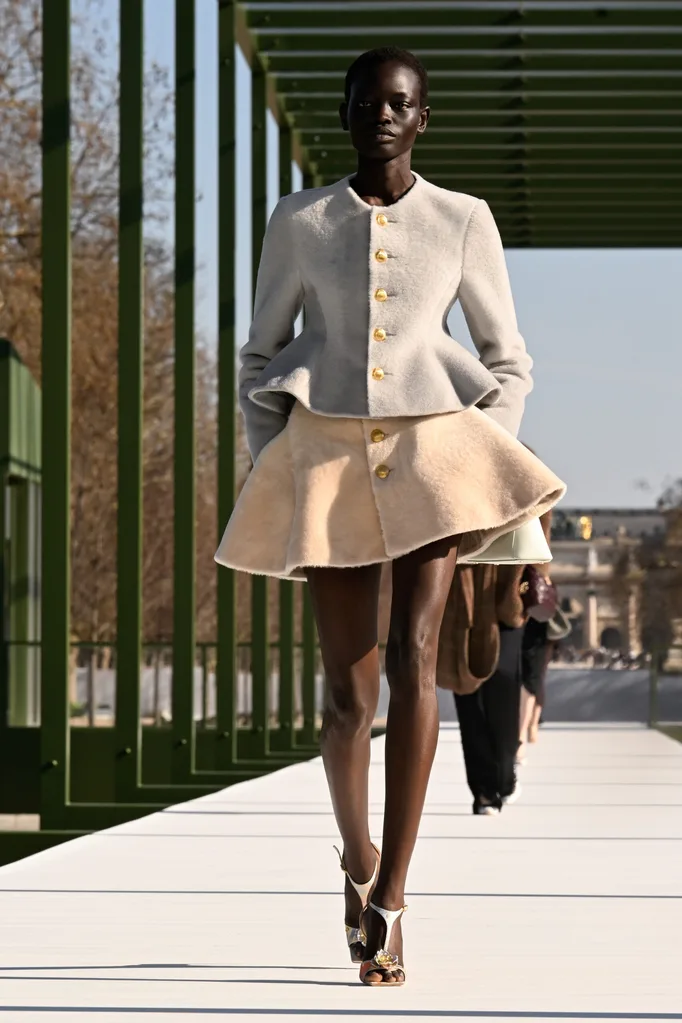
The ‘New Look’ appeared compressed into a cropped skirt suit rendered in what appeared to be shearling, a deliberate rescaling of a canonical silhouette. Yet for every disruption, there was restraint: a razor-cut black suit, a tuxedo-collared coat of exacting clarity. “It’s more wardrobe than I would usually do,” Anderson noted. “This is the Dior wardrobe.”
Anderson returned to a line by Radclyffe Hall describing rainbows suspended in a fountain’s mist, a quiet preface to a collection attuned to refraction, distortion and the tender instability of light.
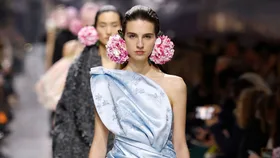
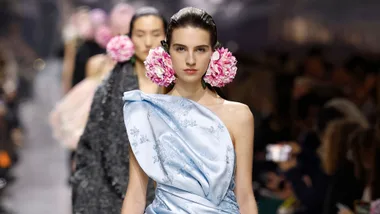
That Impressionist impulse seeped into the textiles. Iridescent pastels drifted across silk and gauze as if dissolved in water. The palette remained resolutely aqueous: moss, pearl, silvery grey and washed lilac.
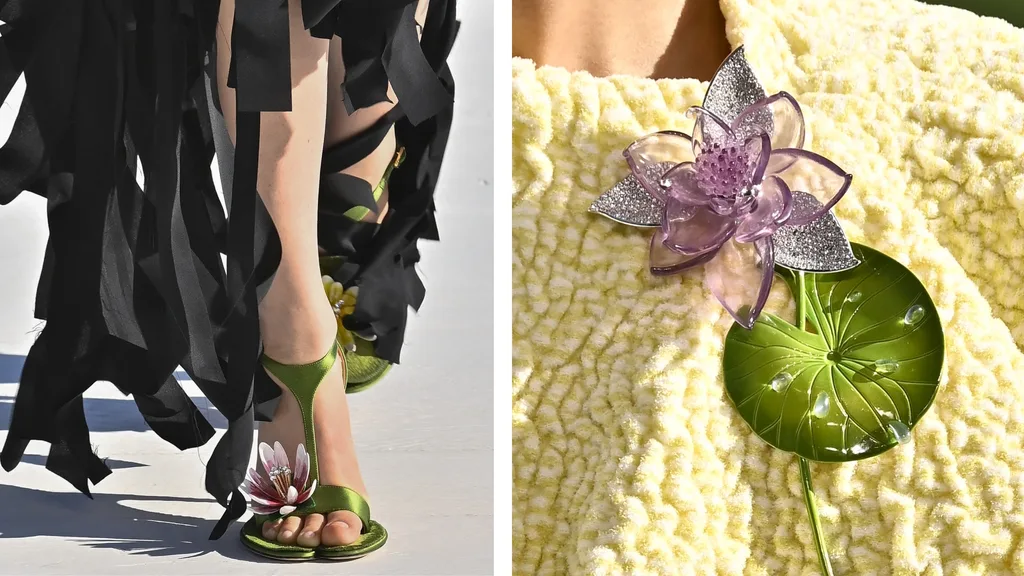
Accessories extended the aquatic logic with an almost studied wit. Floral-adorned heels and lily pad brooches pricked with dew-like crystals suggested a kind of cultivated fantasy, less fairytale than finely wrought illusion.
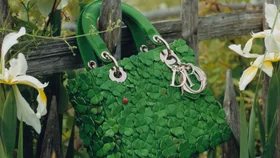
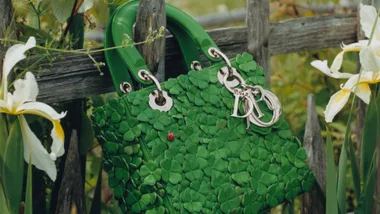
The Lady Dior was recalibrated in proportion, its architecture gently unsettled, while new sculptural bags emerged punctuated with bows and covered in polka dots, emblems of craft that felt quietly subversive.
Impressively, the collection was conceived and realised in under a month. Yet it did not feel hurried; rather, it felt like the work of a designer no longer reacting to the weight of Dior’s inheritance, but daring to enter and negotiate its terms.
“Dior has this giant past, and I had to start there,” he said. “Now I feel free to release it from that.”


Share this post