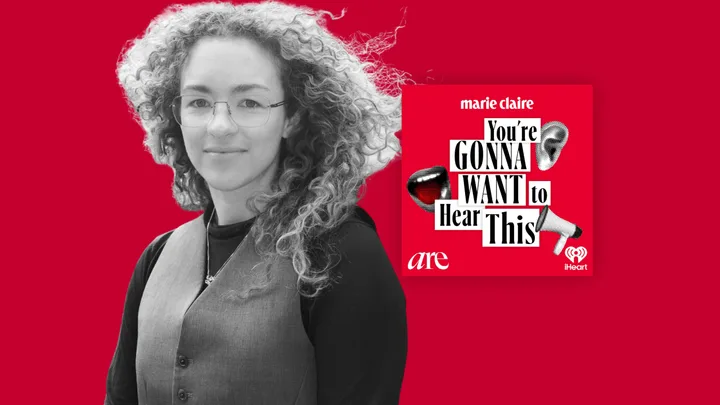
Author Hannah McElhinney has described the events behind her book Wormhole as a devastating collision of chronic illness, medical uncertainty, and online wellness culture, in a wide-ranging podcast interview with marie claire’s You’re Gonna Want To Hear This that sheds further light on her cousin Lauren’s death following alternative medical treatment in Malaysia.
Speaking with marie claire editor Georgie McCourt, McElhinney revisited the story at the centre of her book: her cousin Lauren, a 37-year-old Australian woman who had spent years searching for answers to debilitating and often shifting health symptoms before travelling overseas for experimental treatment. McElhinney said Lauren’s experience reflected a “fine line” between genuine medical uncertainty and escalating desperation after repeated encounters with a fragmented healthcare system.
“In the early days, it was definitely an issue with a healthcare system that splinters into specialisations,” she says. “But once it becomes difficult to find answers… that’s when desperation starts to set in.”
Listen To You’re Gonna Want To Hear This
From Chronic Illness To Alternative Treatments
Lauren’s health journey began in her teenage years with a diagnosis of chronic fatigue syndrome, later followed by fibromyalgia and other contested or difficult-to-treat conditions. McElhinney said that while some of these diagnoses were medically recognised, the lack of clear treatment pathways left Lauren feeling increasingly without options. “She received a diagnosis… but the treatment plan was: there’s no cure,” McElhinney said. “You have this for life.”
Over time, Lauren began exploring alternative diagnoses, including Lyme disease, a condition caused by tick-borne bacteria. McElhinney noted that while Lyme disease is recognised in many parts of the world, its diagnosis and interpretation can be more complex and controversial in Australia, particularly in cases labelled “chronic Lyme disease.” She said Lauren was ultimately drawn into online communities and alternative treatment networks that promoted unproven therapies and reinforced distrust in mainstream medicine.
Online Communities And Escalating Beliefs
McElhinney described discovering her cousin’s activity in private Facebook groups after her death, saying the online spaces revealed a “microcosm of the internet” where medical distrust was reinforced and extreme treatments were normalised. She said members of these groups, while often genuinely suffering, frequently recommended unsafe or unproven interventions.
“People who had very advanced brain cancer… trying to treat it with ivermectin or horse paste,” she said, adding that some also promoted the use of bleach-based products in ways that mirrored broader misinformation trends. McElhinney linked this escalation to a broader cultural moment during the COVID-19 pandemic, when conspiracy theories and distrust in institutions became more widespread.
Treatment In Malaysia And A Fatal Outcome
A key focus of the episode was Lauren’s decision to travel to Malaysia for a procedure known as hyperthermia treatment, in which the body is heated to extreme temperatures as part of an alternative cancer and chronic illness protocol. McElhinney said Lauren’s family only became aware she had travelled after she was already in hospital, when a message was sent via social media from an unfamiliar account alerting them to her condition. “She was in Malaysia… and they can’t bring her out of the anesthetic,” McElhinney recalled. Lauren died following complications during treatment.
Questions Around Medical Responsibility
McElhinney also discussed the doctor who performed the procedure, describing him as a qualified oncologist who had worked in mainstream medical settings but also adopted controversial alternative therapies after exposure in Europe. She said the doctor later met with Lauren’s family and did not acknowledge wrongdoing. “He really just thinks that this was a terrible side effect and he has no idea how it happened,” she said.
Personal Reflection And Health Anxiety
McElhinney also reflected on her own experiences with chronic illness, including IBS and OCD, and how her personal health journey informed her understanding of Lauren’s path. She described periods of anxiety-driven health behaviours and restrictive diets, as well as eventually finding a more balanced approach that combined conventional medication with selective use of alternative therapies such as acupuncture. “I take SSRI medication… at the same time I find tarot reading more helpful than therapy,” she said, describing a “toolkit” approach to wellbeing.
A Cautionary Account Of “Wellness Culture”
Across the interview, McElhinney returned to a central theme of Wormhole: how wellness culture, when combined with medical uncertainty and online community reinforcement, can lead to escalating and dangerous decision-making. She said Lauren’s life became increasingly constrained by strict wellness routines, extreme dietary restrictions, and intensive treatment schedules. “She couldn’t go out and see her friends… she couldn’t do what life is about,” McElhinney said. For McElhinney, the lesson is not a rejection of all alternative medicine, but a warning about the point at which hope, misinformation, and desperation converge. “It’s still far more helpful for me to trust,” she said of her own approach to healthcare, “and then focus on living.”

Related stories
Native ad body.
Native ad body.
Native ad body.