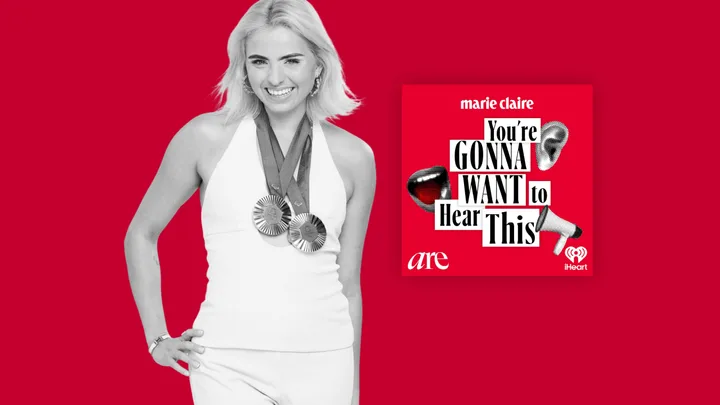
Paralympic gold medallist Alexa Leary is used to winning. But nothing about her latest chapter – the release of her new book Sink or Swim – is about medals. Instead, it’s about survival. Because at just 19, Leary didn’t just suffer a catastrophic cycling accident – she says she “died”. “I don’t remember anything about the accident,” she tells marie claire editor Georgie McCourt on this week’s episode of You’re Gonna Want To Hear This. “I really destroyed my brain… I’m living a second life.”
Listen To You’re Gonna Want To Hear This
“They told my parents I wouldn’t make the flight”
The crash, which happened during a high-speed ride, was as violent as it was random. “I was going down a hill going 70 km an hour… I clipped the wheel in front of me and boom,” Leary says. “I smashed my head… my helmet fell off.” What followed feels almost unbelievable – a chain of coincidences that saved her life.
“There was no reception out there… but a car came past, and a doctor was riding up the hill,” she explains. “He put me in a breathing position… or I’d die.” Even then, survival wasn’t guaranteed. “They said I’d never make the flight,” she says of the emergency helicopter transfer. “They told my family, ‘She’s not going to make it.’” Her parents were asked to say goodbye – eight times.
“My brain went out of my skull”
Leary’s injuries were devastating: a severe traumatic brain injury, collapsed lungs, blood clots – and a brain so swollen it forced surgeons to remove part of her skull. “My brain blew like crazy… it went out of my skull,” she says. “They had to take my skull out and put it in the freezer.” For months, she lived without part of her skull, wearing a protective helmet.
“You could see my brain… the outline of it,” she says. She couldn’t walk. She couldn’t talk. And eventually, she realised something even more confronting: “I could never tell you I had an accident,” she says. “That’s a weird thing about my brain.”
“I’m living a second life”
Leary doesn’t remember who she was before. “I look at photos and I’m like, ‘Whoa, that happened?’” she says. “I don’t remember the old person I was.” Instead, she’s had to rebuild – from learning to walk and speak again, to relearning how to regulate emotions. “I get really angered… I’d punch a hole in the wall,” she admits. “My emotions go insane.” At one point, her impulse control was so severely affected she would act in ways she couldn’t explain (such as touching random people’s breasts).
“That’s just my brain damage,” she says. “People need to understand that.” Now, with the help of a behaviour coach and ongoing therapy, she says she’s improving: “I’m only getting better… 100% better than I was a year ago.”
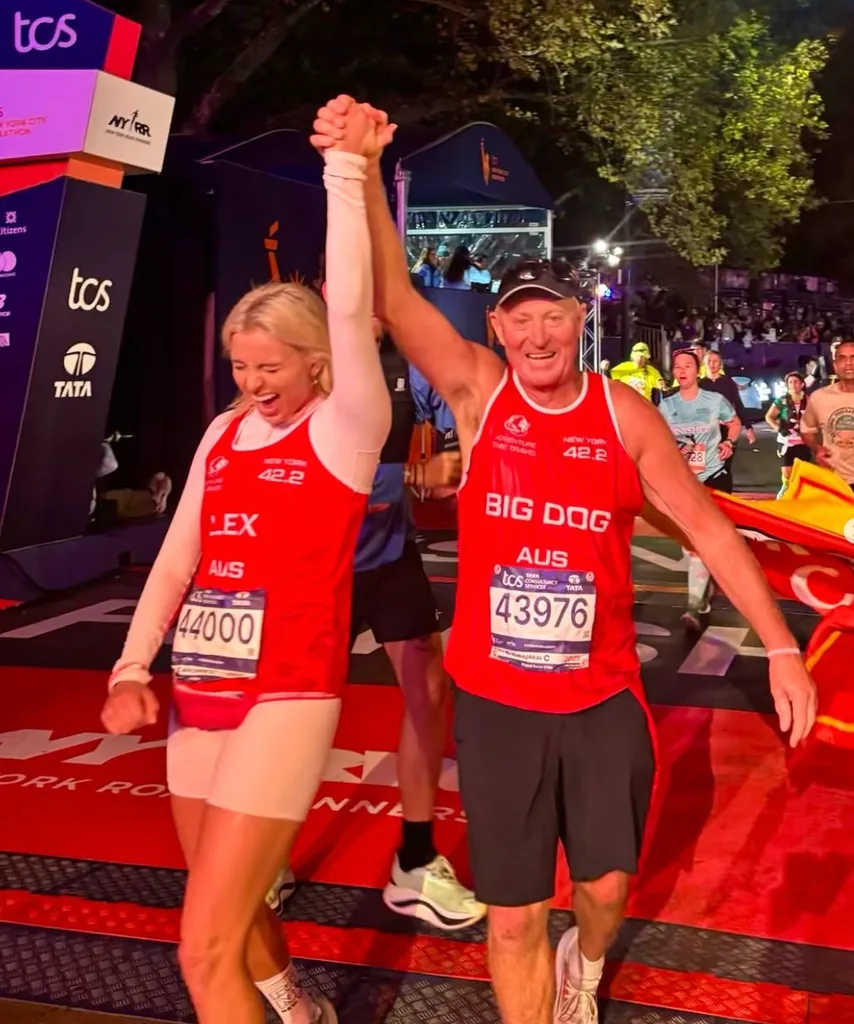
“I lost friends – they couldn’t understand my brain”
The emotional toll hasn’t just been internal. Leary says her injury dramatically changed her relationships. “I lost a lot of friends,” she says. “They didn’t want to accept or understand my brain damage… the person I am now.” But in their place, she’s found new connections. “The friends I have now… they want to understand my brain more,” she says.
From ICU to Paralympic gold
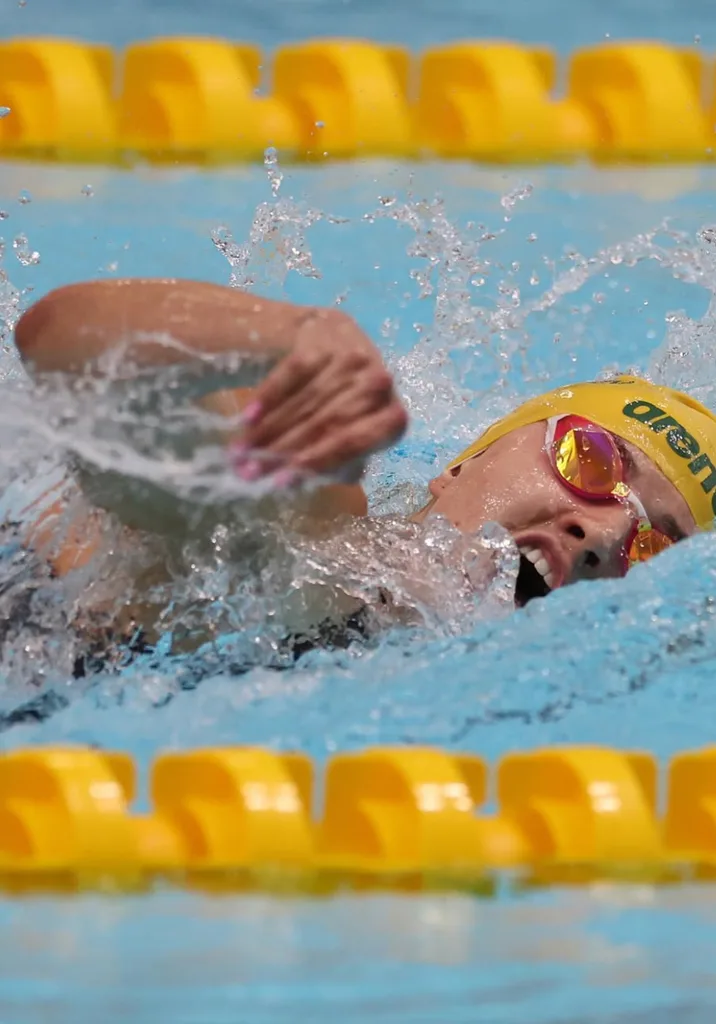
Perhaps the most extraordinary twist in Leary’s story is what came next. Swimming – something she hadn’t seriously pursued before – became her path back. “I needed a goal,” she says. “I wanted the Paralympics… I wanted to win it.”
And she did. In 2024, Alexa qualified for the Paris Paralympics, breaking the 100m freestyle S9 world record. She didn’t stop there – in Paris, she broke her own record twice, winning two gold and one silver medal.
Standing on the podium, she says the moment wasn’t about the medal – but the journey. “I didn’t care about the medal,” she says. “I cared that I was there… how far I’ve come.” Her mindset? Relentless. “I’m out there to win the day,” she says. “Every day.”
The hidden reality of brain injury
Through Sink or Swim, Leary is determined to challenge misconceptions about traumatic brain injury. “I’m not just a girl who fell off a bike,” she says. “There’s a whole lot more than that.”
She describes daily challenges many people never see – memory loss, emotional volatility, chronic pain and a constant need for support. “My brain is so delicate,” she says. “If someone hit my head… I could have a seizure or I would die.” She’s now campaigning for greater awareness, even calling for a dedicated Traumatic Brain Injury Awareness Day in Australia.
“I have to learn to love myself”
Beyond the physical recovery, Leary says the hardest battle has been internal. “I look in the mirror and I get ill,” she admits. “I’m just mean to myself.” But she’s working on it – daily. “The biggest thing… is to love yourself,” she says. “Look in the mirror and love who you are.”
“I’m a fighter”
Five years on, Leary’s life looks nothing like it once did – but in many ways, her defining trait remains unchanged. “If you could describe yourself today?” she’s asked.
Her answer is immediate: “Determined. A fighter. I just don’t stop.” And with Sink or Swim now out in the world, she’s turning her most painful chapter into something powerful — not just for herself, but for anyone learning to rebuild. “I want people to understand,” she says. “This is a second life.”

Related stories
Native ad body.

Native ad body.



Native ad body.