Some stories stop you in your tracks – not because they’re shocking, but because they fundamentally reshape how you understand survival.
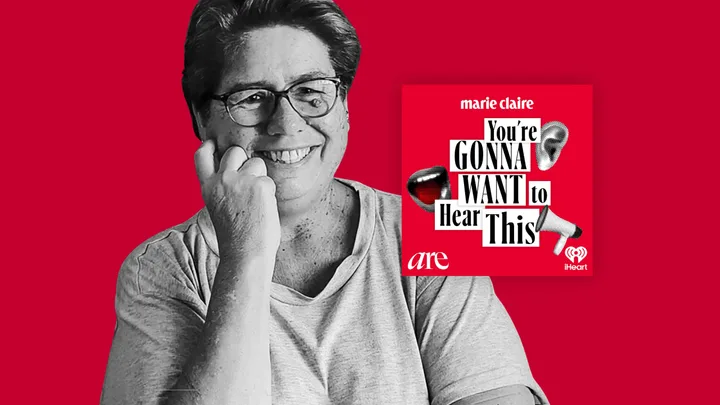
On this week’s episode of You’re Gonna Want To Hear This, Georgie McCourt sits down with author Maggie Walters, whose life story is as confronting as it is quietly extraordinary.
Diagnosed in her twenties with Dissociative Identity Disorder (DID), Walters speaks candidly about what it means to live with what she calls “the girls” – the alternate identities that formed in response to severe childhood abuse. Rather than framing DID as something to fear, Walters reframes it as a deeply human, creative act of survival.
“It’s not psychosis,” she explains in the episode. “It’s a child’s mind going, ‘I have to survive this somehow.’”
Her first memoir, Split, introduced readers to that reality. But it’s her latest book, Fractured Motherhood, that brings the conversation into even more complex territory: what it means to become a parent when your own childhood was defined by trauma.
Listen To You’re Gonna Want To Hear This
Breaking The Cycle
For Walters, motherhood was never a given. After discovering she likely couldn’t have biological children due to the physical toll of her abuse, she and her husband chose to adopt three children from the Philippines.
What followed was not just a journey into parenthood, but a conscious, daily decision to break cycles that often feel impossible to escape.
“I was terrified I’d repeat what happened to me,” she says.
That fear – of passing on intergenerational trauma – is something many parents carry in quieter ways. But Walters articulates it with striking clarity. Her approach wasn’t about perfection, but intention: choosing, again and again, to respond differently.
And over time, that choice reshaped her life.
Living With “The Girls”
One of the most powerful parts of the conversation is Walters’ description of how her mind works. She compares it to living with a “dysfunctional family” you can never leave – each identity holding different memories, emotions, and roles.
For years, Walters hid this reality from her children. But ahead of the release of Split, she made the decision to tell them the truth.
Their response? Simple, and deeply moving.
“That makes sense of a lot of things,” her sons told her.
It was, she says, a moment of release – of no longer having to live in hiding.
Motherhood As Healing
If Fractured Motherhood asks one central question, it’s this: can you parent differently from how you were raised?
Walters’ answer is yes – but not without complexity.
From seemingly small moments – like brushing her daughter’s hair – to larger emotional challenges, parenting often brought her face-to-face with memories she didn’t fully own, but still felt.
Instead of retreating, she chose to reframe those moments as opportunities for connection.
“I wanted to make it a bonding experience,” she says.
That shift – from survival to intention – becomes the emotional core of her story.
A Message Of Hope – Without Clichés
Despite everything she has lived through, Walters resists easy narratives of resilience. There are no neat endings here, no suggestion that trauma simply disappears.
What she offers instead is something more grounded: the idea that change is possible.
“You can change things,” she says. “Even if you’ve got trauma in your history, don’t give up.”
It’s a message that lands not as a platitude, but as lived experience.
Because if there’s one thing this conversation makes clear, it’s that healing doesn’t come from erasing the past – but from choosing, every day, what you do with it.
Purchase Fractured Motherhood here maggie-walters.com

Related stories
Native ad body.
Native ad body.
Native ad body.