

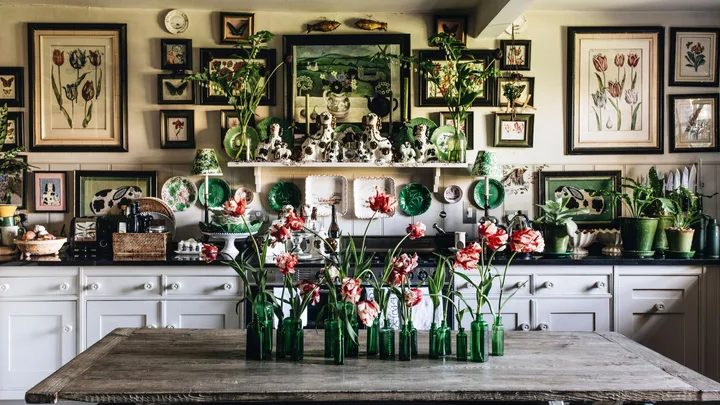
Step through Butter Wakefield’s front door in Shepherd’s Bush in London and the busy sights and sounds of an electric city immediately soften around the edges. The traffic fades, the light shifts, and suddenly you’re somewhere between townhouse and wild meadow. It’s not staged. It’s not curated within an inch of its life. It’s just … alive.
Nature doesn’t politely knock in Butter’s world, it moves in and almost takes over. On one hand this isn’t surprising, as Butter is known throughout the UK for her award-winning garden design business. But what makes her home so magnetic is the feeling it evokes, without being sentimental. Indoors and outdoors blur in the best possible way, while bold colours and prints create a mood of irreverence. It is collected but not contrived. The richly layered interiors are due to her affinity for slow decorating blended with a designer’s enthusiasm for constant reinvention. Her Victorian-era home has held her and her family for more than three decades.
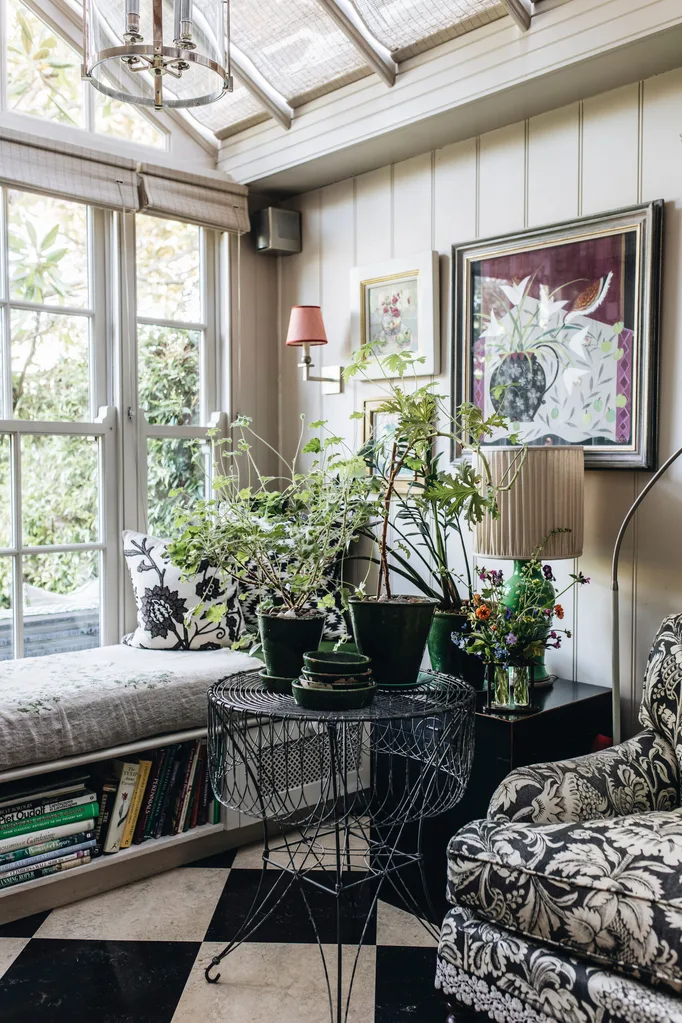
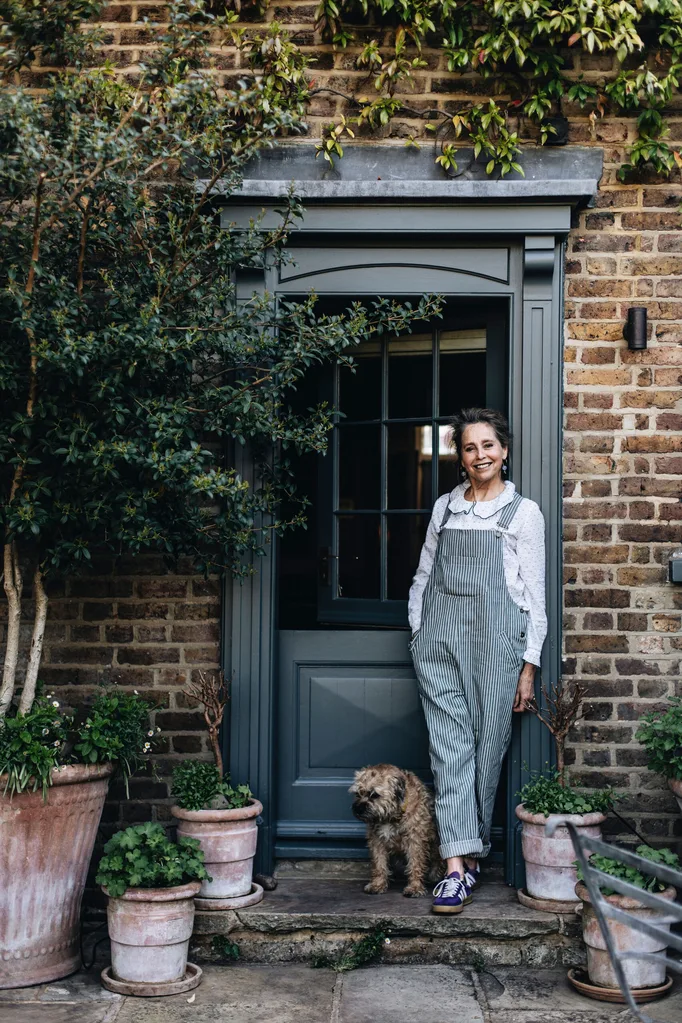
While her four grown children have moved on now – many with families of their own – Butter resides here with her border terrier, Wafer (who she admits, she’d be lost without), and a passion for transformation. “I think there is still so much to do, and so many areas that still need more work,” she says. “I have grand ideas and plans.” The artwork displayed on gallery walls is being constantly updated and pictures are regularly rearranged, while the addition of new prints through cushions and reupholstered furnishings also help to revamp rooms.
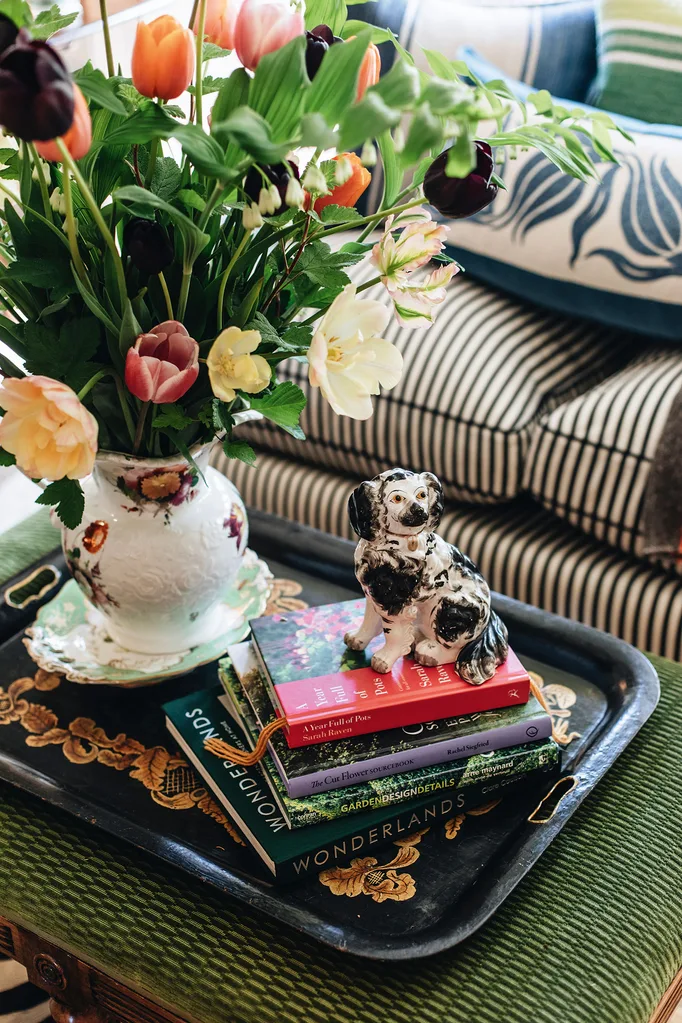
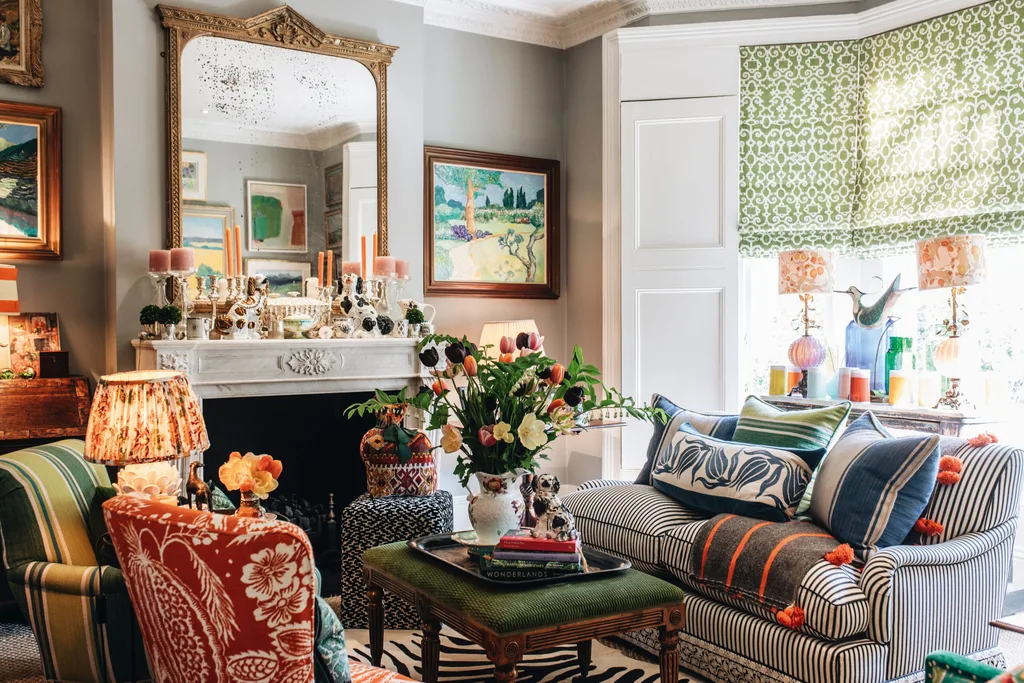
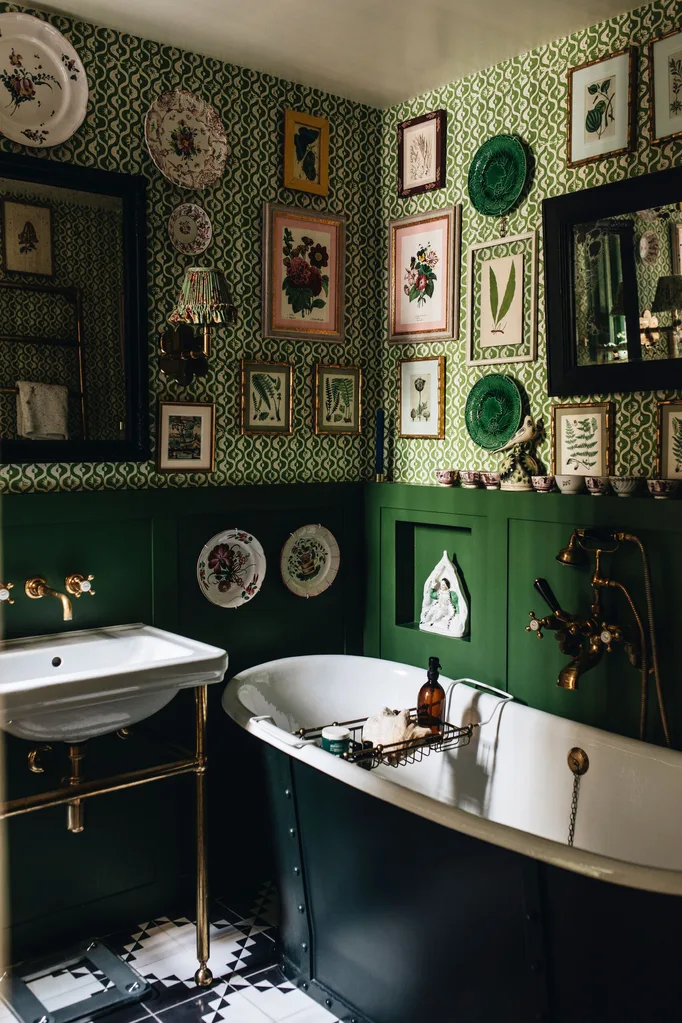
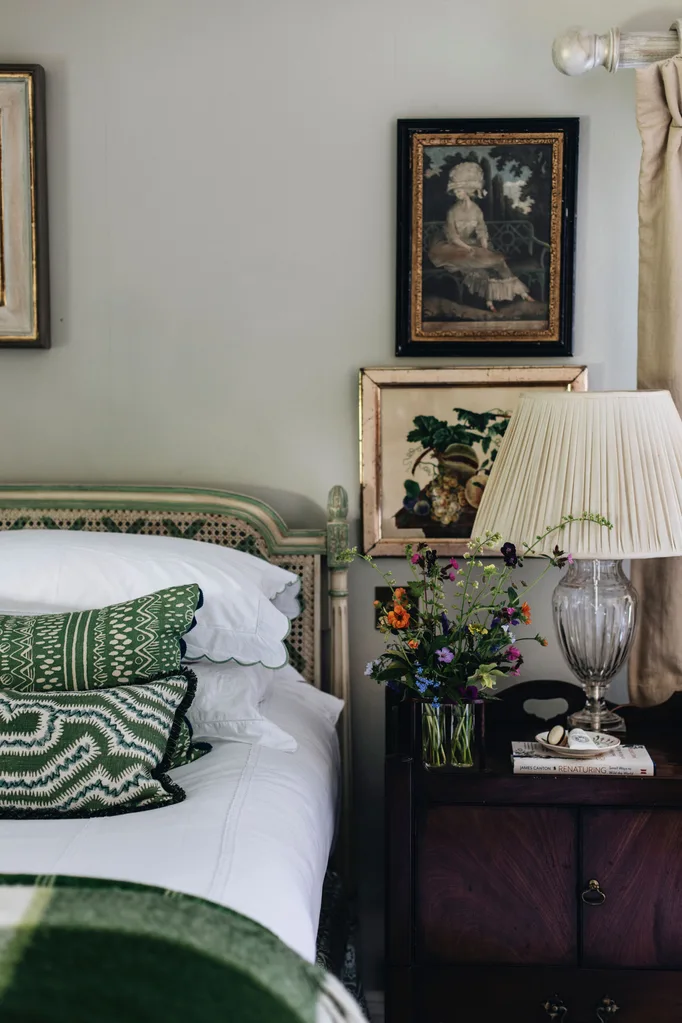
Inside, the maximalism is intentional. Can you have too much nature in a home? “Not if you’re a maximalist like I am,” she says instantly. “I don’t think I have ever once thought to myself, ‘Oh, now that is just a bit too much, too many flowers or too many pots of bulbs’; never once, ever. More is more, and more nature on the inside of the house only helps make it a lovelier place to be when you can’t be outside.” Butter’s colour palette is pure confidence. Green is a nonnegotiable. “Green is my absolute favourite colour of all time.” I have a bright green hall, a green bathroom, a green front door and garden gate,” she says.
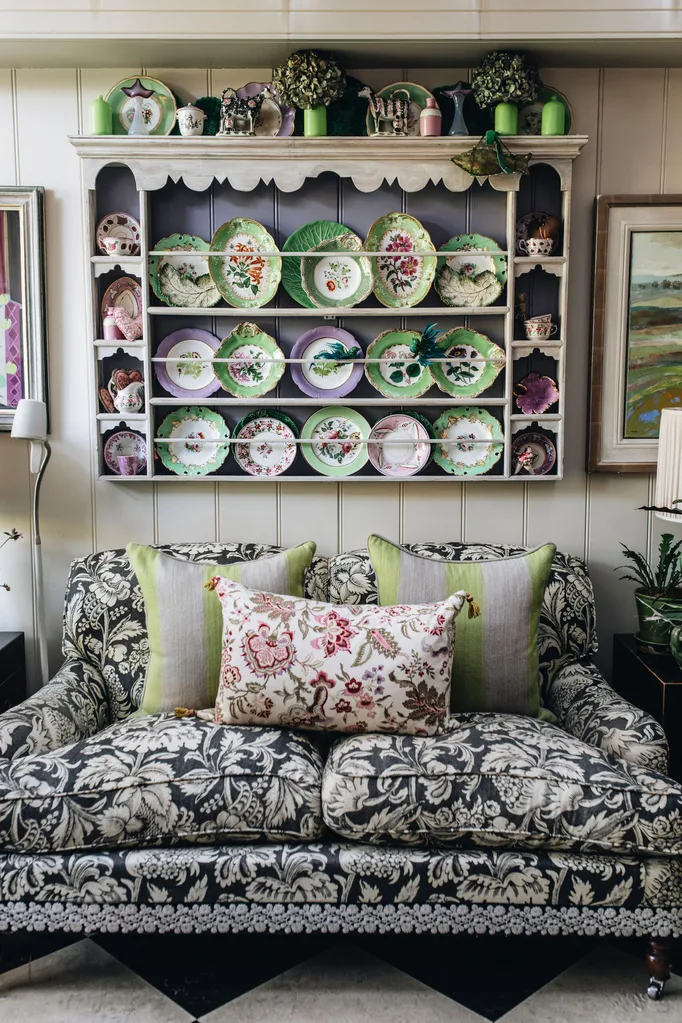
“It’s punchy but never shouty, because green, as any gardener knows, is the ultimate neutral. “The other colour I adore is orange. It can be found in a rather subtle way – well, as subtle as orange can be – around the drawing room. I have it on some cushions, a couple of chairs, some lampshades and it is also painted on the inside of my bookshelves. Orange features through a lot of the artwork I have collected over the years too.
I grow a lot of orange flowers in the gardens … I think the drawing room really sings when I have big jugs of orange and apricot tulips about.” But while you might think her garden has inspired her decorating choices, it’s actually the other way around. “The colours I am drawn to in the garden originated from, and were inspired by, the colours I have running through the house,” she says. “I do like to link the colours on the inside to those on the outside.
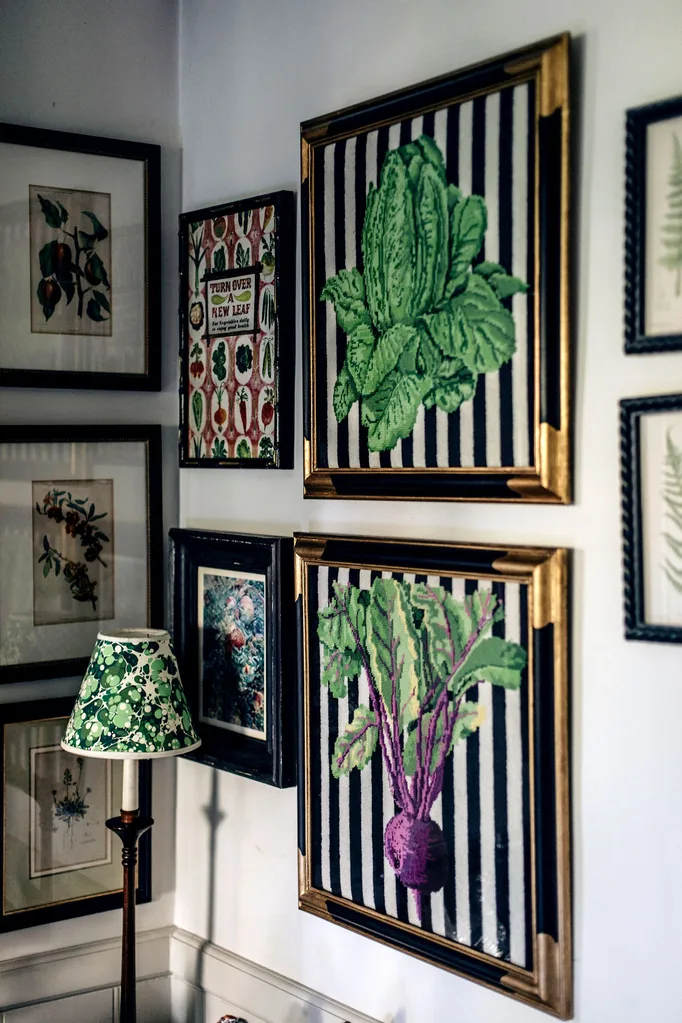
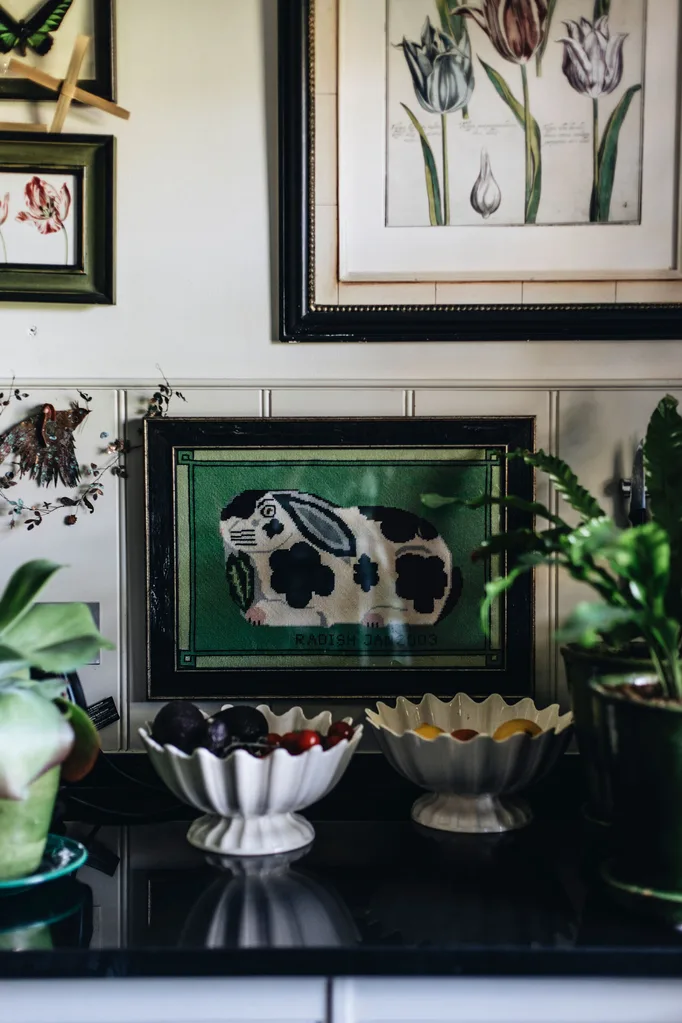
With clients, I always ask for their paint and fabric choices [from their interiors] so when we plan the colours of the garden borders they blend beautifully.” Butter has also developed a taste for monochrome, leaning into the favoured influence through checkerboard flooring in the kitchen and conservatory, zebra and cow prints, decorative striping and black banisters and picture frames. But nature’s pull is foremost: her garden is the first thing she sees from her bedroom window every morning. “It’s the perfect start to the day,” she says. Nature, in her home, is not confined to vases. “Whether it’s freshly cut flowers, pots of seasonal scented bulbs, lovely abandoned nests that I have found and rescued from the ground (I have a dear little collection of them in my downstairs loo) or the odd beautiful lichen-covered twig that I stick somewhere to remind me that the simple things are often the most emotive and inspirational. All of these tiny treasures make me feel grounded and connected to the outdoors and the natural world.”
Before founding her garden design studio in 1992, Butter honed her aesthetic in rarefied creative circles, first at Christie’s in New York, and later at the revered British decorating house Colefax and Fowler. There, she learnt the grammar of scale, texture, colour and pattern – principles she still applies, albeit with soil under her nails. Formal training at The English Gardening School and the London College of Garden Design followed, but it’s clear that her grounded sensibility was shaped long before any diploma. Butter’s story begins far from West London, on a small farm outside Baltimore, Maryland on the US east coast.
“We were always outside,” she recalls. “My love for dogs, ponies and all things outdoors taught me at an early age the responsibility and hard work that accompanies these pleasures.” Childhood wasn’t aesthetic, it was active. Filling bird feeders. Picking up sticks. Doing chores. Learning to identify trees in winter when there were no leaves to cheat with. “We generally never got it right!” she laughs.
Her father, described as “a great man of the land”, was ahead of his time, turning his small arable farm into a wildlife habitat long before the topic of biodiversity became dinner-party conversation. He loved birds, watched them from the kitchen table, insisted his children understand the landscape around them. “He has inspired me hugely,” Butter says. “Although he is long gone, I run my little life with him always firmly at the front of my mind.” His influence lives on in her name.
Her mother, aunt and grandfather were also all devoted gardeners. As a child, she wandered their plots, absorbing a sense of beauty that felt both instinctive and inherited. That early fluency in the language of the outdoors would later braid seamlessly with a cultivated eye for interiors. Her approach to colour outdoors is surprisingly relaxed. “Nature is far more forgiving,” she says. “Generally, I think this is because there is so much green in the garden that somehow tempers all the other bold splashes of colour. Having said that, I do think if there are too many opposing colours in the garden it can feel unsettling and jarring, so I suppose there are a few golden rules we stick to.
“For instance, I don’t often put red and yellow together. I love yellow but find red (unless it’s a red full of wonderful, rich blue hues) a more difficult colour to manage in the garden. Like interiors, plenty of the same colour in different flower forms always works wonderfully well, so if in doubt, add more of the same colour and flower.” It works in borders. It works in rooms. It works in wardrobes, frankly.
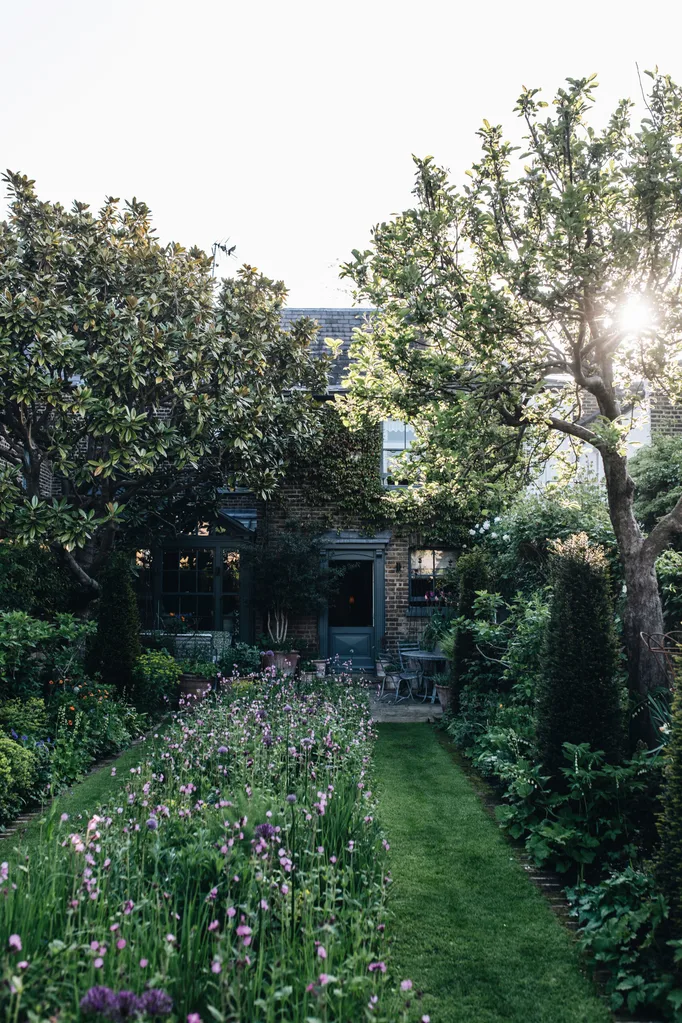
And then there’s the wildflower meadow. Yes, a meadow. It runs down the centre of her small garden like a rebellious streak. It’s actually her second attempt (the first made border maintenance impossible!), but this version works. Meadow turf was rolled out like lawn and took almost immediately. “It has brought countless joy and changes every year,” Butter says. Some seasons red campion dominates. Other years ox-eye daisies muscle in.
“What I really love about it is that I can’t really control it,” she adds, smiling. “As I have a pretty healthy dose of OCD, it helps to remind me that there are a few things I simply cannot manage to any significant level. It amuses me, as it definitely has the upper hand.” Her optimistic response to nature’s whim points to the bigger therapeutic role her garden plays outside of its decorative allure. Butter unreservedly believes in its restorative powers. “After a long, busy week, I wake up on Saturday and often feel a bit blue,” she says. “I know it is just the adrenaline of the work week wearing off, but over the years, I have come to understand this. The cure-all to what ails me the most is a spin around the garden first thing in the morning while I am still in my dressing gown, brandishing a beautifully strong cup of coffee. It doesn’t take long before I am planning what flowers to pick for the house, or what jobs need to be tackled most urgently.” The evolution of Butter’s picture-perfect city garden has taken place over decades and with so many memories embedded in the walls of her home, it’s no wonder the house feels less like property and more like kin. “Oddly my house really feels like the family member who hasn’t gone,” she says.
“It is often the provider of much solace and big, warm virtual hugs when I seem to need them the most.” She speaks of the place not as a finished project but as a continuing conversation. “I wonder if I will ever feel it’s completely ‘done’? I certainly hope not. I hope to remain here until the bitter end.”
That energy, the refusal to be static is what keeps the place feeling vibrant rather than preserved. In a city that never really switches off, Butter’s everchanging home is proof that you don’t need acres to feel grounded. Sometimes all it takes is a bold front door, a handful of tulips, a slightly unruly meadow and the confidence to let nature lead.
This is an edited extract from The Nature of Decorating by Jenny Rose-Innes (Quadrille, $70).

