

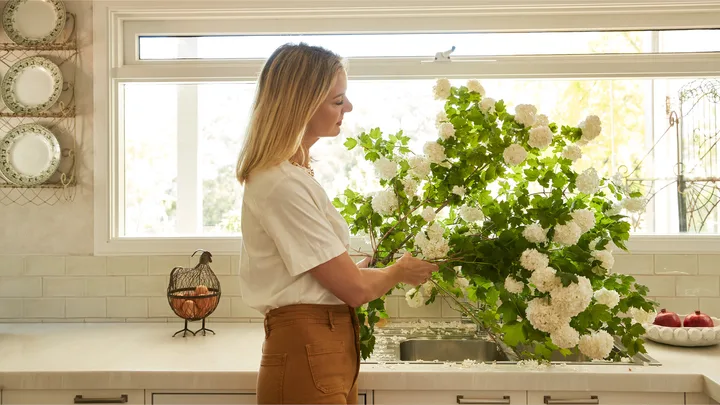
From embracing minimalism to mastering effortless entertaining, five women share the rituals and philosophies that shape the way they live. Whether it’s decluttering with purpose, collecting antiques, finding joy in everyday cooking or creating a family home that welcomes chaos, their stories prove that a beautiful life is less about perfection than intention.
Skip ahead to:
Inga Campbell: Letting Go Of Stuff
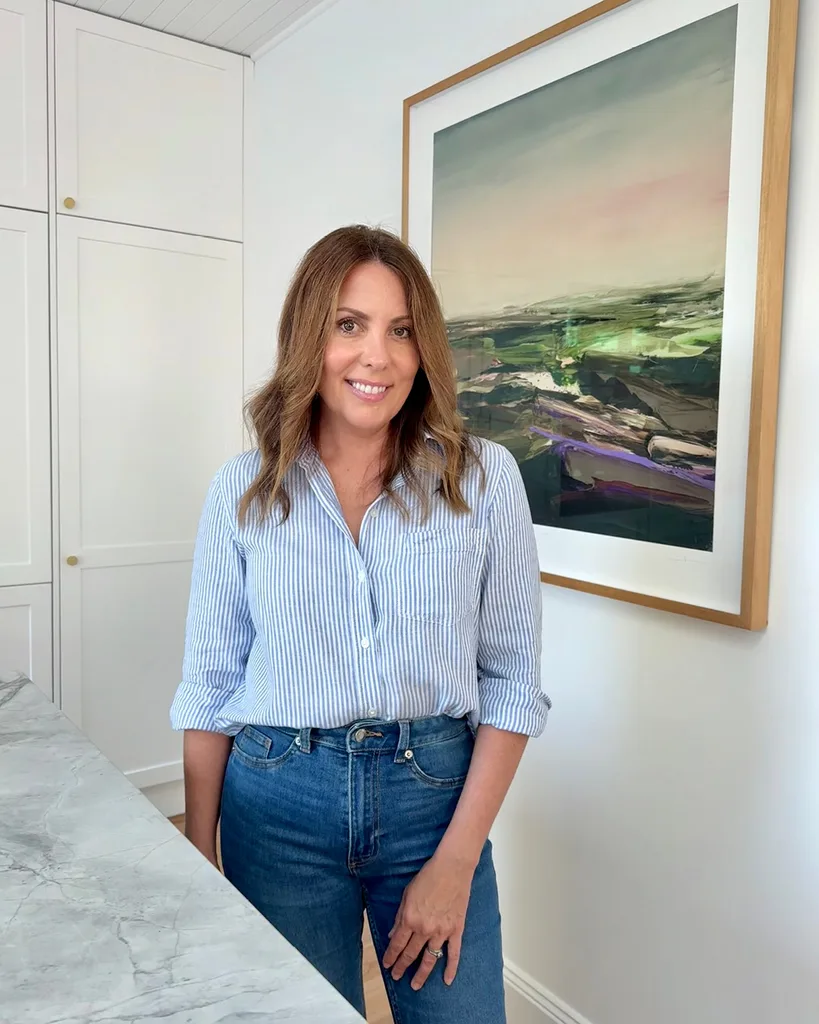
My journey to minimalism began 10 years ago. I was running my business (I still do), and juggling a small toddler and a big workload. But I wasn’t doing it all, and I definitely wasn’t doing it well. Around that time I was seeing a psychologist for anxiety. And then my husband raised the idea of minimalism.
To be honest, I really didn’t like the idea. But he’d discovered a game in The Minimalists Podcast, and I thought it might be fun; the house probably needed a bit of a tidy-up anyway. As we started, something happened: my anxiety began to ease. It felt like there was a direct correlation between the clutter in my home and the clutter in my head. That realisation was huge for me, and I started applying the same thinking to other areas of my life.
I unsubscribed from emails, simplified my schedule and decluttered not just physically but mentally as well. The combination of therapy and the process of minimalism was incredibly powerful and changed things for me. It also prompted a shift in our values. We realised that what we valued wasn’t stuff, but experiences, travel and time with friends. Human connection became more important than what we owned.
Because we were no longer tied down by possessions, we were able to make big decisions. We spent a year travelling in America with our four-year-old daughter while I kept working, which would have felt impossible before. Minimalism has been life-changing for our family. We don’t do it perfectly, and we’re not extremists, but I would still call myself a minimalist today. I love how it feels and I can’t imagine not living this way moving forward.
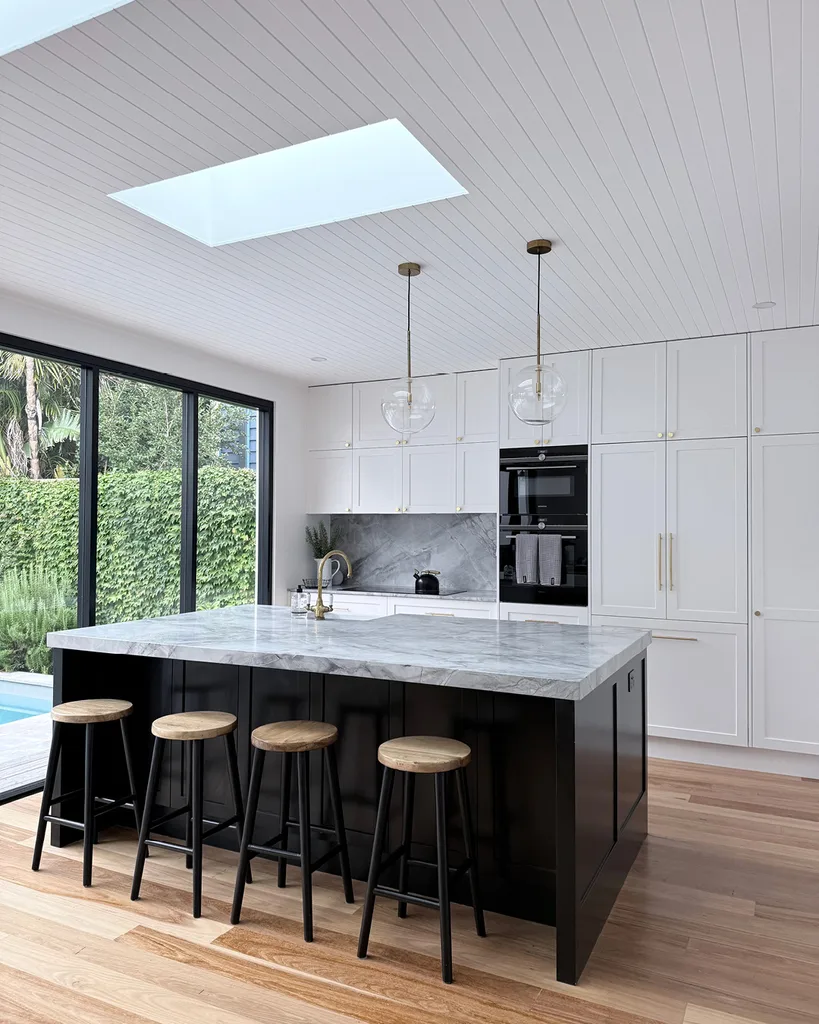
Before I began letting go, my belongings represented identity: past careers, past versions of myself, and who I wanted people to think I was. That’s not to say I don’t attach meaning to anything anymore, but now I can appreciate beautiful things without needing to bring them into my home. I still have lovely things and a clear aesthetic, I just don’t need to own a lot of stuff for that to be true. In the Minimalism Game, over a month you remove one item on day one, two on day two, and so on.
By the end of the month, you’re letting go of 30 things in a day. It wasn’t overwhelming; we’d sort things to donate or sell, but we also had rules – it had to leave the house within the week. By the end, we had let go of thousands of items, and as we reduced we felt lighter; it wasn’t about not loving our things, it was about not being anchored by them. We began with the easy areas – the junk drawer, kitchen utensils.
TIP | In the Minimalism Game, over a month you remove one item on day one, two on day two, and so on. By the end of the month, you’re letting go of 30 things in a day
And when you realise that nothing bad happens when things leave your home, it’s easier to keep going. That said, sentimental items are hard (my wardrobe!), and one of the biggest for us was our vinyl records. My husband worked in music, so we had a huge collection. But our record player had been broken for years, so we were just storing them. Letting them go didn’t mean music stopped being important, it just meant others could enjoy them.
Absolutely, we had disagreements. He had some old guitars he loved, I had a collection of artwork from my teens. There really is no “perfect” way to do minimalism, it’s about what works for your family. I still struggle with emotional attachment, and I think most people do. Minimalism asks you to balance memory, emotion and wellbeing. It has to be a choice, not an imposed rule. Our teenage daughter’s cupboards are definitely fuller than I would choose, but that’s my preference, not hers.
At this point, minimalism sits quietly in the background as a set of intrinsic values, part of how I make decisions. From time to time I slip back into having too many things, so I’ll do a gentle reset by moving things on. For me, minimalism is less about rules and more about understanding what helps me feel calm and grounded.
One of the biggest misconceptions about minimalism is that it means living in a bare house, owning no decorative items, wearing the same clothes, or not liking fashion at all. My home isn’t empty or stripped of personality. It’s simply considered. I value artworks, I love having flowers and beautiful soft furnishings. I just don’t feel the need to constantly change or add to them.
Georgie McCourt: Shopping For Antiques
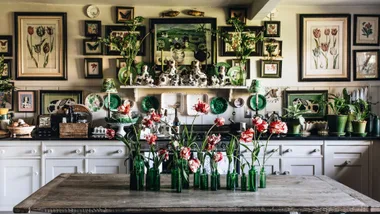
For Georgie McCourt, antiques remain relevant when a house is furnished with pieces from different eras and different lives.
When I was a child, my mother would take me to auction houses all over Sydney. We’d roam around warehouses where the air smelt of dust and furniture polish. Nothing was online then; you had to show up in person, catalogue in hand, prepared to inspect every leg and hinge. It was the least exciting activity in the world for a kid. She would move through rows of sideboards and armoires, checking joints and peering into drawers.
To me, everything smelt old, looked old, and – most offensively – was brown. I was a child of peak Ikea, obsessed by flat-pack Swedish minimalism, but our home was filled with antiques: Georgian chests, ornate mirrors, a mahogany table that had several lives before us.
My brother’s Ikea bed was the anomaly – and the source of a small scar on my face from a fight that saw me fly into a corner of it (don’t think badly of him; I returned the favour and we’re both scarred, literally). Mum’s closest friend, whose daughter was my own best friend, also loved antiques. Their house had the same scent and palette: polished timber, faded velvet, rooms full of antiques.
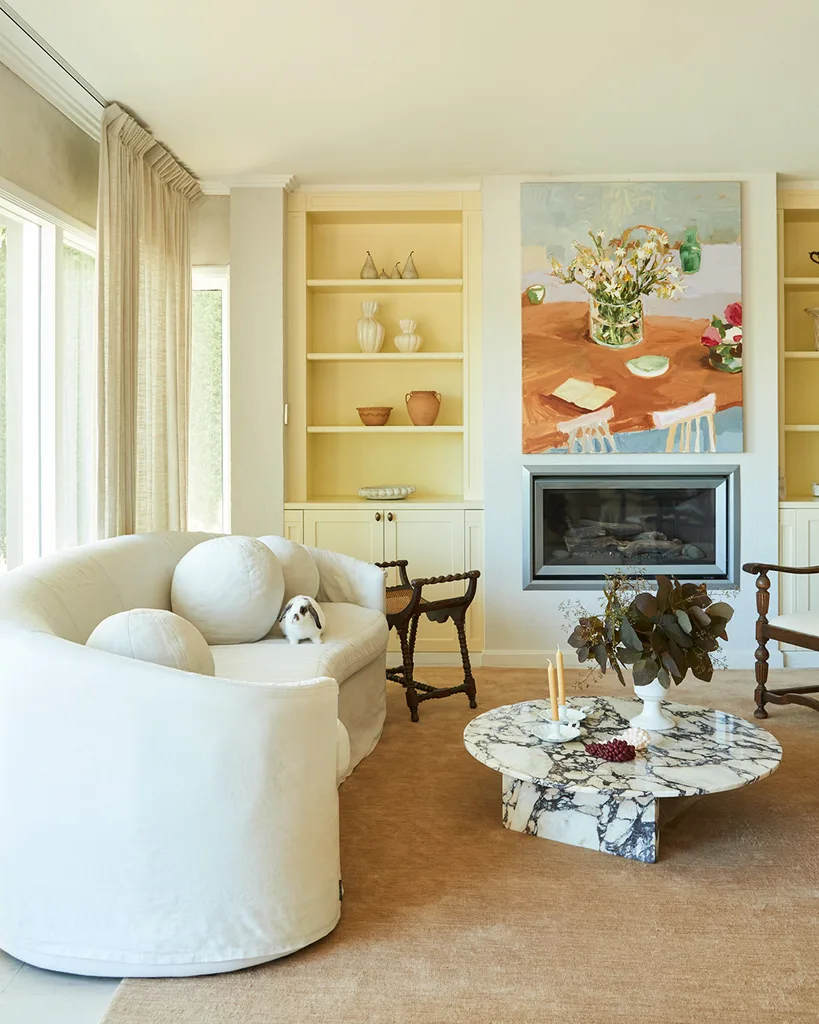
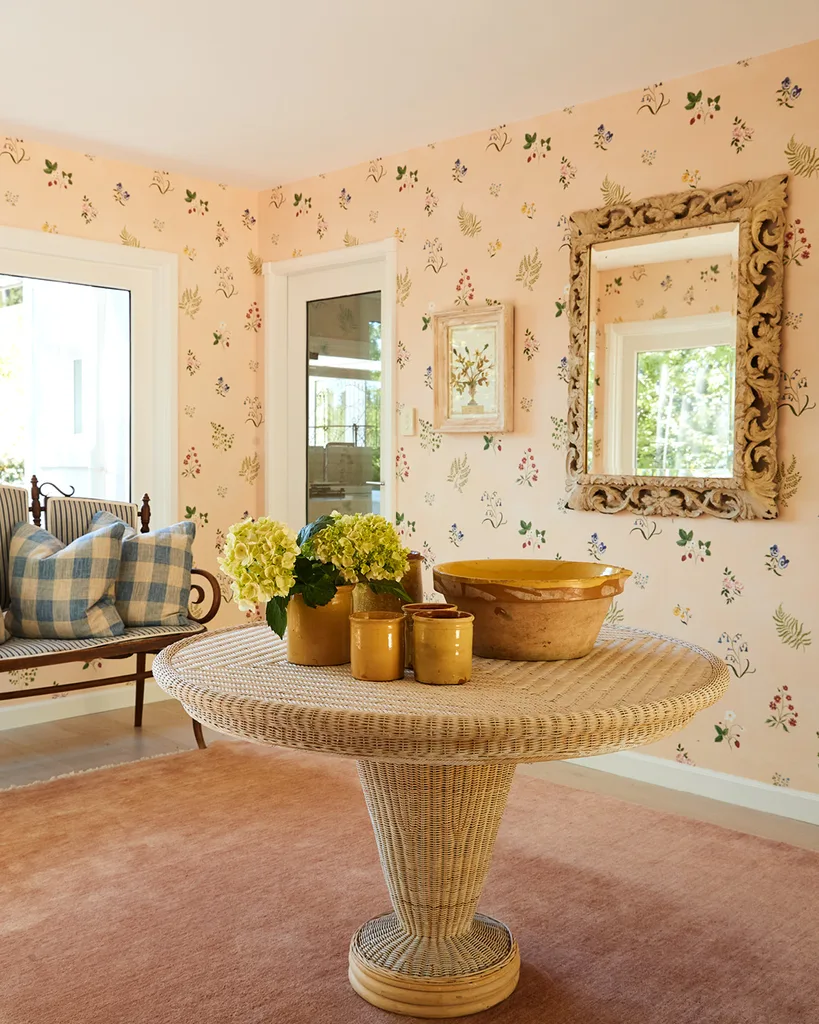
So if I wasn’t at my house I was at hers, which meant I was followed everywhere by the musty smell of antiques. In my twenties, I fell hard for vintage fashion. Living in London, I spent weekends on Portobello Road, rifling through racks of vintage clothes. I wandered the King’s Road in Chelsea, in and out of the same stores Kate Moss was said to frequent, collecting eccentric jackets and beautifully worn leather bags. And still, antique furniture was not for me.
When I bought my first home, I wanted everything new (the cheap flat pack kind of new, not the fancy Coco Republic kind). But in my early thirties, something changed, and suddenly I understood the charm of antiques. Now I source antiques everywhere. Lawson’s is my regular haunt in Sydney; Leonard Joel would be my equivalent in Melbourne. I live in the Southern Highlands of NSW, home to lots of antique stores such as Dirty Janes.
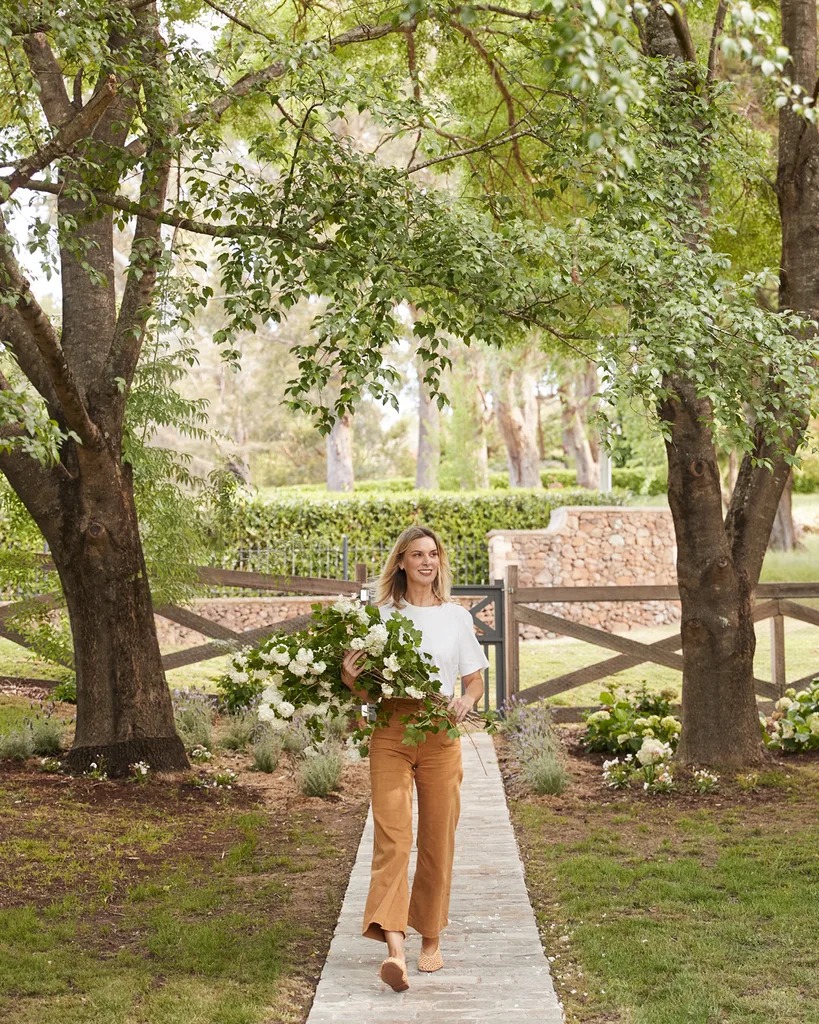
I’m always coming home with something new (or rather, old). I scan Facebook Marketplace with the focus of someone trading stocks, and once found a Clo Studios sofa at a bargain price – a forever piece from a brand that no longer exists. I love East Wing Studio and Cleo Collects, and if I ever win the lottery I will make my way to Tamsin Johnson’s store and buy all her French antiques.
TIP | Use a tape measure: nothing kills the excitement of bringing home a new piece and finding it won’t fit through the door
Failing that, I like the fantasy of getting on a plane and scouring the Parisian markets, filling a few shipping containers and sending them home. My daughters, meanwhile, respond to antiques exactly as I once did. When 11-year-old Lottie asked for a dressing table to display her beauty products, I suggested a charming Art Deco antique. She recoiled. “Mum, I don’t want an old one.” Instead, she chose a flat-pack version with adjustable LED lighting, which is apparently more her “aesthetic” (a word she uses all the time to describe her likes and dislikes).
I do have rules. I won’t buy preloved rugs – I have germ anxiety – and a second-hand mattress is out of the question. But wherever possible, I choose character and charm. I love layering a home with pieces from different eras and lives. Also, it’s something my mum and I have in common, and we’re often checking that we’re not both bidding on the same thing at auction. Read on for my tips and tricks.
Elizabeth Hewson: Making Cooking Easy
At a time when I found myself overwhelmed, I realised I needed to scale down what my cooking should be – less pressure, more ease. Despite the trending, attention-grabbing recipes filling our feeds these days, I’m willing to bet the food you eat – and crave – most often is a far cry from these picture-perfect recipes.
The beauty of home cooking is that it leaves room for a bit of mess, a bit of improvisation, and the kind of flavour that only comes when you’re not trying so hard to get it … perfect. A few years ago, I started making pasta every Saturday night. It was as much therapy as it was dinner, an ongoing project of self-care fuelled by pasta, Louis Armstrong and showering of parmigiano reggiano – food for the soul as well as the stomach.
Leaning into this ritual made me realise that my self-care stretched further than eggs and water, and into how I cook, and eat, every day. Cooking, and the preparation around it, plays a big role in how I check in with myself. It gives me the time to focus and be present, fuels my imagination, communicates how I feel, and allows me to take time out from the mental clutter of the everyday. Yet on other days, cooking is just about getting everybody fed.
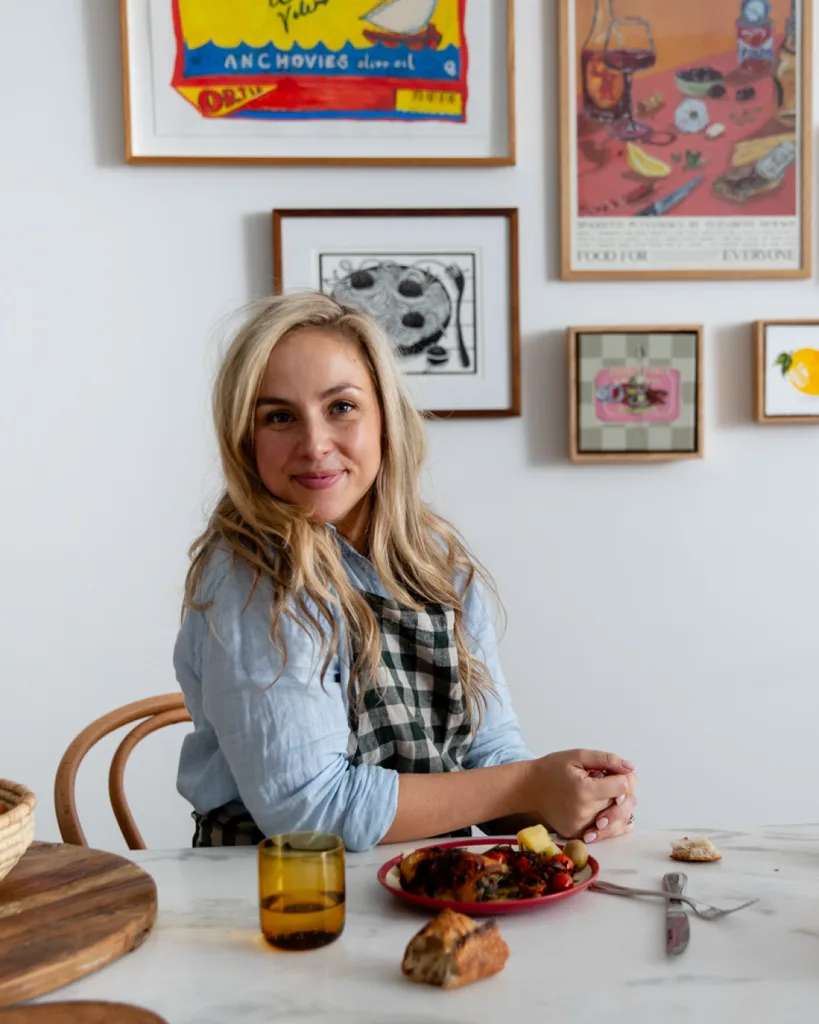
Life doesn’t make things easy. With work, children, relationships, cooking three meals a day can feel like a neverending marathon, even for those of us who find joy in cooking. Then there is the idea of perfection. I have always chased it, believing it to be something to strive for. But as I’ve grown older, wiser, and less concerned with proving anything, I’ve come to see it for what it truly is: the very thing that’s held me back.
And it was in the kitchen, cooking for my family, that this epiphany hit me. The reality is that there is no such thing as a perfect person, a perfect life, a perfect way of doing something. We are all imperfect, and striving for perfection is a pressure that does more harm than good. Imperfections are what make things exciting; they’re what make life interesting. I’ve found the only way to hold on to the joy of cooking in real life is to let go of the pursuit of perfection, and the pressure for it to be anything more than what it is: home food.
If there’s ever a moment that drives this point home, it’s cooking in the thick of real life. After a long day, things get chaotic. Steps are skipped, instructions aren’t followed, ingredients go missing, things get burnt, timing’s off – and yet, somehow, dinner still makes it to the table. I’ve found the only way to hold on to the joy of cooking in real life is to let go of the pursuit of perfection, and the pressure for it to be anything more than what it is: home food. To embrace these imperfections.
An edited extract from Home Food: The Perfect Cookbook for Imperfect Cooks by Elizabeth Hewson (Murdoch Books, $45).
Elise Pioch Balzac: Making Entertaining Look Effortless
To me, “entertaining well” means making sure my guests feel welcome and loved the whole time. I especially enjoy preparing the living room, the table and the bathroom – every touch point is thought through to give a warm and joyful impression as they walk in. It’s never just about the food, but how guests feel when they leave.
First, I think about the guest list, then the menu, then the tableware. I actually test drive new Maison Balzac glassware or dinnerware prototypes on my guests. If they love it, it can go into our future collections.
I love both planning and improvising. I can plan a dinner party around beef bourguignon two months in advance, but I equally love a last-minute invitation – if we catch a beautiful bonito, for example. There is something delicious about both anticipation and spontaneity. Music is essential. I usually choose a chilled, elegant song then ask Spotify to make an entire collection based on that song. Right now I am obsessed with “songs like lujon”. Try it! Lighting is the one detail guests always notice, even if they can’t quite articulate it.
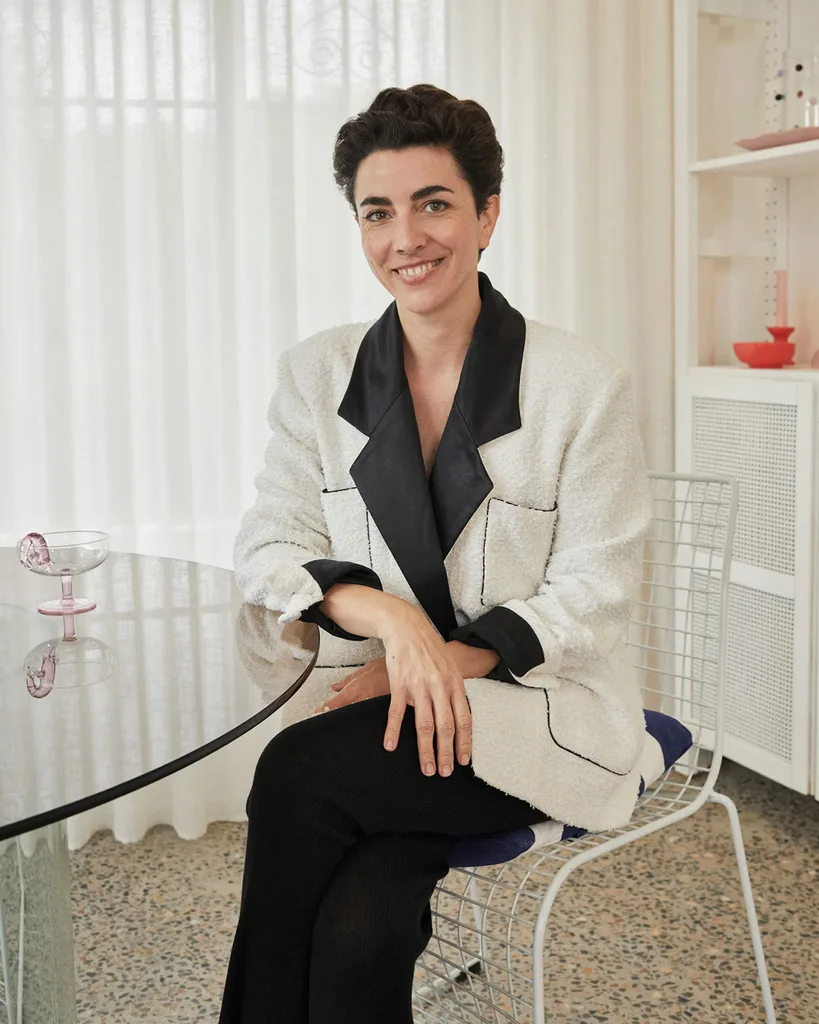
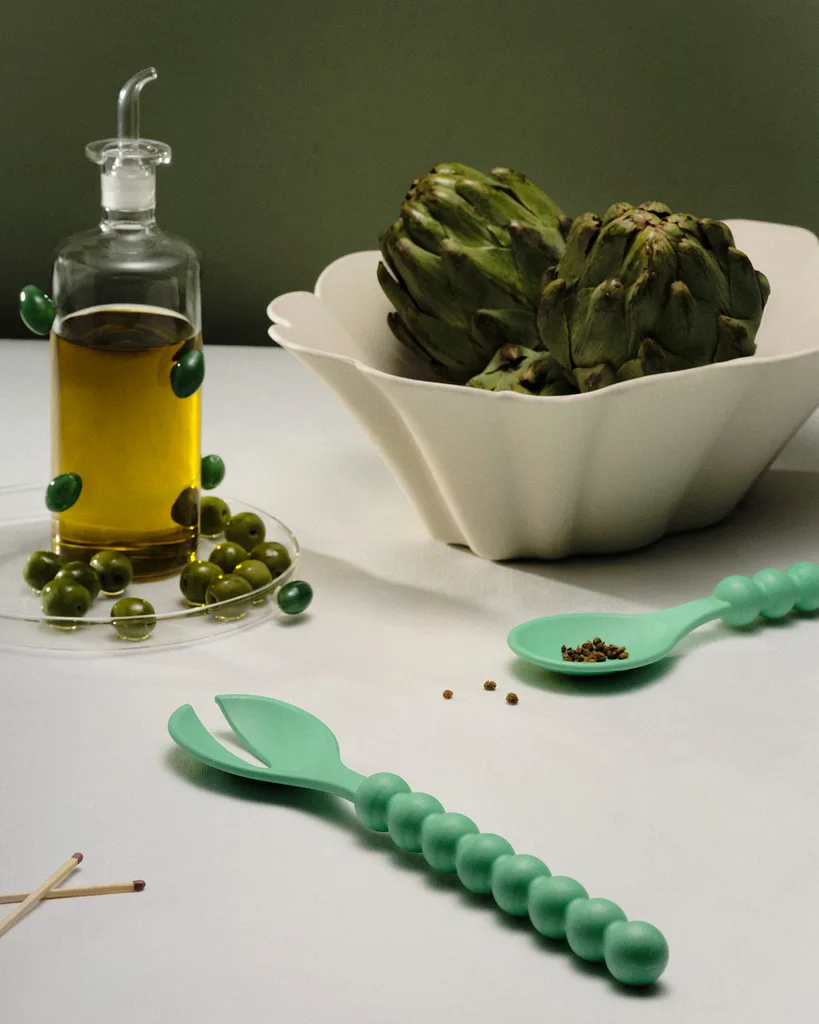
I will fight all my life against aggressive ceiling lights and will always favour table lamps or indirect lighting. Many warm table lamps around the house will give an impression of warmth and elegance. As for the menu, it is sacrilege to have cheese before a meal or after dessert! The correct (or shall I say French!) order is entree, main, cheese and dessert. And my wine? Bottomless champagne! Ideally Roederer or Ruinart in our Pomponette flutes. When the energy dips, I simply open another bottle – the sound of the cork is a dinner party’s best friend.
There are dishes I return to again and again. Beef bourguignon and gratin dauphinoise – 100 per cent success. My grandmother told me never cook a recipe for the first time for guests; I confirm it is not a good idea.
Otherwise it doesn’t matter if the dinner burns or the cake falls on the floor. What matters is to be together and laugh about it. I think the balance between polished and relaxed comes from the host: it is best to have a relaxed approach to entertaining and not put too much pressure on the event, while the home itself can be polished – but not to the extreme! And I space my gatherings out a lot.
That is how I keep it joyful rather than exhausting. When a night has gone perfectly, I can feel the energy left in my house. The minute guests leave, I know if they enjoyed the dinner party or not so much. I love bathing in their positive emotions, then I start to snuff out the candles and gather the dishes. These moments with friends or family fill me with so much joy.
Justine Cullen: Living Beautifully With Kids
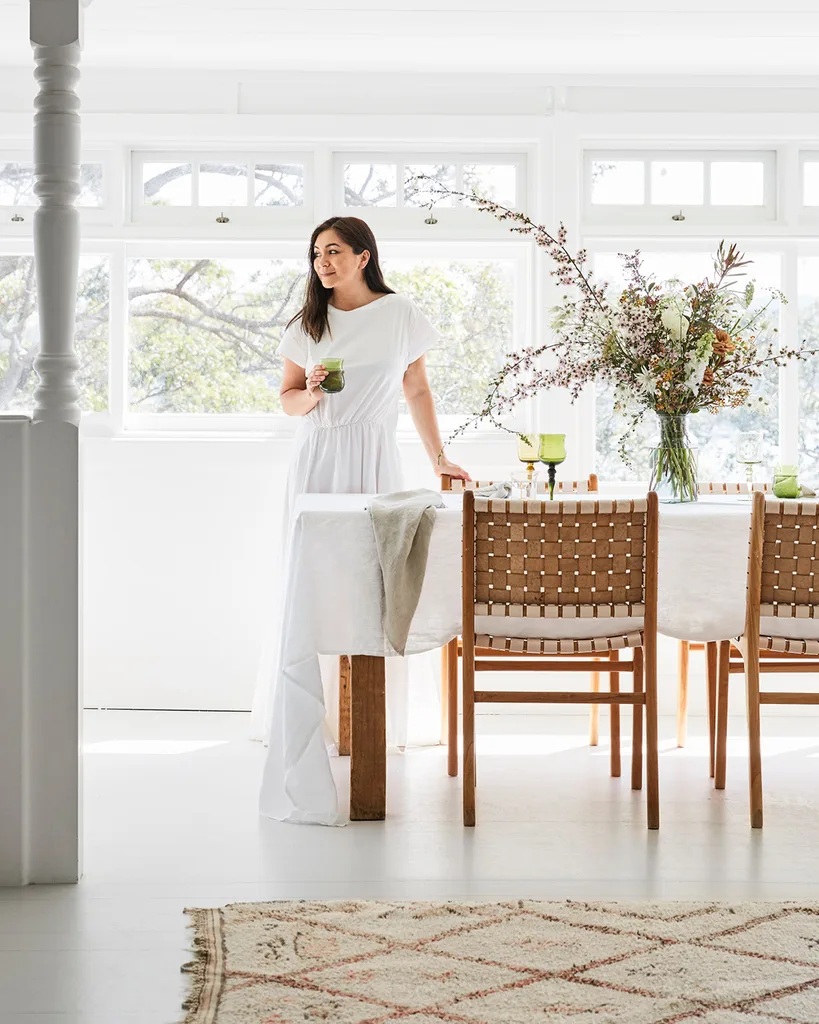
Whenever I posted pictures of my previous home online, the comments were the same. “How do you have so much white with so many kids?” “OMG, a white sofa with four boys?” Or my personal favourite fallacy: “You must spend your whole life cleaning.” (Ha!) The house we lived in was a big, airy – and, yes, very white – 1950s beach house.
If I had to psychoanalyse its styling, I’d say the lack of colour was an attempt at control. We have four children, all boys, and we moved into that house with a new baby just before the pandemic. I’m an introvert, and my family – who I love dearly – are a exercise in overstimulation. What I needed then was a blank, calming canvas to offset the madness. I needed to know that when I finally found the time to clear the mess, the room wouldn’t just look tidy, it would look as close as I could ever get to silent.
Before children, the little rental apartments I lived in were aggressively feminine: pastel embroidered Tocca bedlinen, vintage chandeliers, and candles everywhere. I’m not a serial killer; this was the ’90s when Shabby Chic was it. But in hindsight I wonder if my design choices were not just an attempt to create a soothing sanctuary amid chaos, but also a subconscious reach for that version of myself, the version who always had her own space and didn’t do eight loads of laundry on a Saturday, who never had to learn to automatically wipe the loo seat in her own home before she sat on it.
TIP | We lived a rough-and-tumble life, though this was not a rough-and-tumble house. But painted wood floors and washable sofa covers go a long way
The version who maybe thought she’d have a daughter one day. Blush pink leather dining chairs, an antique Moroccan rug, delicate glassware … I held on to things even when they made no sense. A little style defiance in the face of a sticky reality. We lived a rough-and-tumble life, but this was not a rough-and-tumble house. While we were snakes and snails and puppy dogs’ tails, the house was sugar and spice and all things nice.
The very things that made it so charming made life tricky – every character-filled surface seemed to have an additional ridge for grime to collect under, every original detail seemed perched on the edge of imminent ruin.
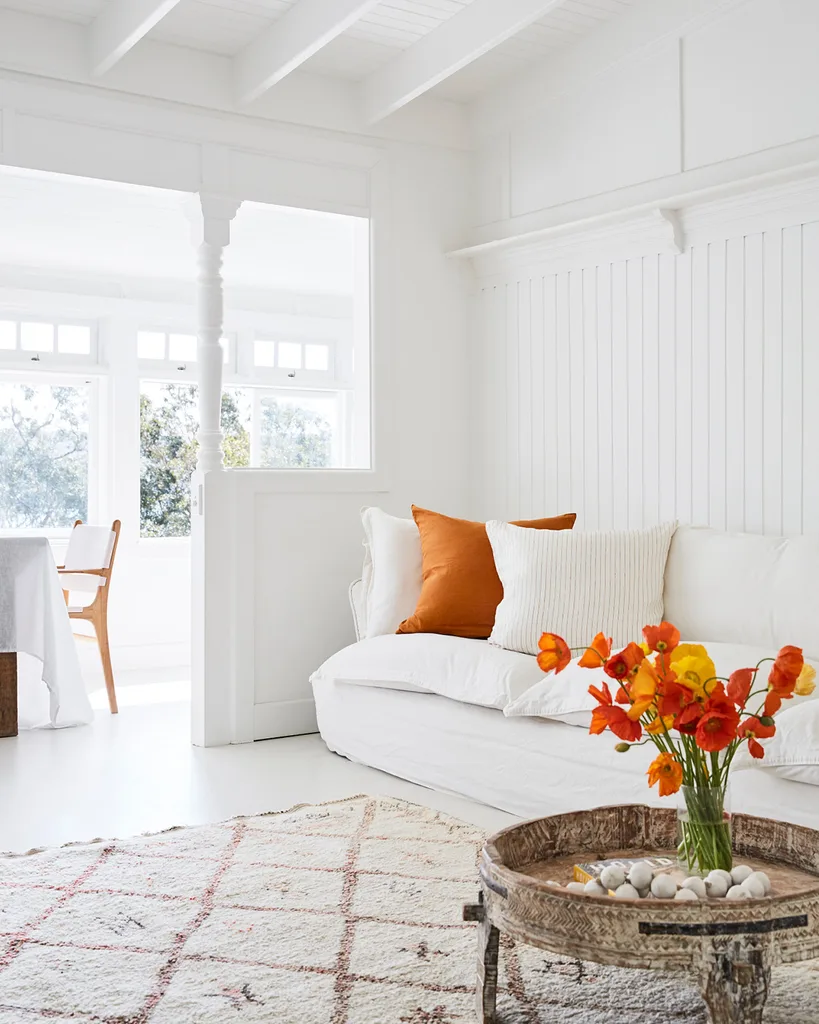
To the commentators on social media, I’d usually answer their questions about all the white with a single word: bleach. Painted wood floors and washable sofa covers go a long way. And besides, they were children, not animals. You know. Mostly. And then we got an actual animal. Not just any animal, but a Bernese mountain dog. A giant, black-haired, goofy creature who cannot imagine why she wouldn’t be able to sit next to us on the sofa or lie in our beds. Her ginormous wagging tail is a weapon of mass destruction, taking out anything in its path –vase, laptop, human.
Bits of her fur were everywhere: in corners, somehow on the curtains, occasionally in our drinking glasses. But Holiday and her magically adhesive coat weren’t the only reasons we eventually moved. Slowly, this life of ours was starting to eat away at the house and at the version of me I was trying to hold onto. A football went through a stained-glass panel on a hidden side window. It would have cost a small fortune to replace, so we didn’t, but I knew the dodgy panel was there and it kept me up at night.
The puppy took a liking to wood and chewed chunks out of the original decking, although that mattered less after a teenage firepit situation got a little out of control and a blackened crater appeared in the middle. There was an original sconce in one of my sons’ bedrooms that I discovered hid a small collection of hardened boogers that I had to chip away at with a knife, taking some gorgeous wallpaper off with them.
The dog blustered into a built-in cabinet and the last of my grandmother’s vintage champagne coupes smashed on the floor. Finally, someone slid down the staircase wall outside into a vintage post light. After that, no electrician could stop the constant flickering, which I chose to take as a sign that maybe our time there was up. Our new house is lovely, but almost embarrassingly easy: it’s not white; it’s freshly renovated, with fewer crevices and no ridges. I don’t stress about tracked-in sand or peanut butter toast landing face-down.
The new sofa is mustard velvet; whatever the dog brings in on her paws brushes right off. It is a house that can cope with the dangerous business of family life. Children grow up, and our dogs are with us for a devastatingly short time. There’ll come a day, I know, when I’ll have more serenity and silence and the pretty, delicate things will make a return.
I’ll look around at my breakable furniture and precariously perched vases and long for another grubby thumbprint, or just one more single black hair in my wine glass. Because I know that right now, in the middle of this sweet, loud, sticky chaos, there can be no more beautiful way to live.

