Millions of Australians will receive a pay rise from July 1 after the Fair Work Commission (FWC) handed down its annual wage review.
The national minimum wage will increase by 5.97 per cent, lifting it from $24.95 to $26.44 per hour, while workers on minimum award rates will receive a 4.75 per cent boost.


The decision will affect almost three million workers across the country. Beneath the headline figures, however, lies a familiar pattern: the workers most likely to benefit are women employed in some of Australia’s most essential yet historically underpaid industries.
Who Benefits Most From The Wage Increase?
According to the Fair Work Commission, around 21 per cent of Australian employees are paid at a minimum award rate, amounting to almost 2.8 million workers. Those workers are disproportionately female, with more than two-thirds working part-time, more than half employed casually and more than a third considered low-paid.
The industries most reliant on award wages paint a familiar picture. Think retail workers, childcare educators, disability support workers, pharmacy assistants, hospitality staff and healthcare employees. These are the sectors that keep daily life running, and they are also sectors where women make up a significant proportion of the workforce.
In practical terms, the increase means a full-time worker on the national minimum wage will earn $1,004.90 per week, up from $948. While an extra $56.90 a week might not sound life-changing on paper, it can make a meaningful difference when you’re juggling rising rents, grocery bills and utility costs.
The timing is significant. Many low-paid Australians are still feeling the effects of the post-pandemic cost-of-living crisis, and the Fair Work Commission noted that award-reliant workers remain worse off in real terms than they were before inflation surged in 2022 and 2023.
The Commission described this year’s review as “particularly challenging” amid ongoing global uncertainty and inflationary pressures. While it stopped short of fully restoring workers’ lost purchasing power, it said the increase was designed to ensure award-reliant employees did not continue falling behind.
Closing The Gap On Historically Underpaid Work
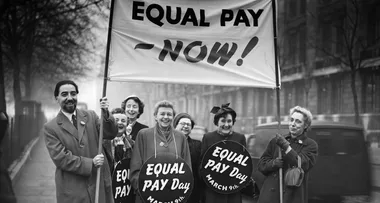
Importantly, the wage rise is just one part of a broader shift. The Fair Work Commission is also reviewing modern awards to address what it describes as the gender-based undervaluation of work, particularly in female-dominated professions that have historically been underpaid despite their social and economic importance.
As part of that process, wage increases are already being phased in for workers across childcare, disability support, pathology, pharmacy, dental assisting and other healthcare professions. The Commission has explicitly linked these reforms to efforts to narrow Australia’s gender pay gap.
“[This] will result in the phasing in of wage increases to children’s services employees, dental assistants, pathologists, disability home care workers, pharmacists and a range of other health professionals over the next few years,” the Commission said.
“These are all female-dominated occupations, and we expect this to result in a further narrowing of the gender pay gap.”
The decision also includes the gradual removal of the lowest ongoing classification in the award system, known as C13, replacing it with the higher C12 classification as the minimum rate for ongoing employment. While technical, the change will provide an additional boost for some of Australia’s lowest-paid workers.
The increase won’t close Australia’s gender pay gap overnight, nor will it solve the broader challenges facing low-paid workers. But at a time when the cost of living continues to dominate household budgets, it represents a meaningful step forward.
For many women working in the sectors that keep the country running, it’s a sign that some of Australia’s most essential work is finally beginning to be valued accordingly.