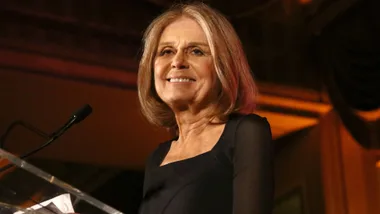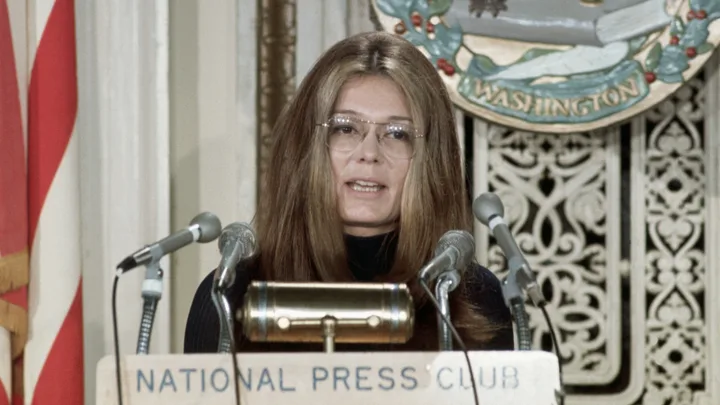
For more than half a century, Gloria Steinem was one of the most recognisable voices in the fight for women’s equality. With her signature aviator glasses, centre-parted hair and gift for turning complex political ideas into compelling arguments, the journalist and activist helped propel feminism from the movement’s meeting rooms into mainstream culture.
But Steinem’s influence cannot be reduced to a collection of famous quotes or photographs. She was an organiser, editor, coalition-builder and communicator who recognised the power of visibility.
She knew that women’s private experiences – of work, motherhood, sex, money, violence, discrimination and reproductive healthcare – were shaped by public policy and systems of power.
Steinem, who died peacefully at home on September 2 at the age of 92, did not build the feminist movement alone. Her work was profoundly influenced by the women around her, particularly Black activists including Flo Kennedy, Dorothy Pitman Hughes, Fannie Lou Hamer and Shirley Chisholm.
She also faced criticism and controversy throughout her life. Yet her ability to bring feminist ideas to a mass audience changed politics, publishing and popular culture.
Here are 10 moments that helped make Gloria Steinem an icon.
1. Her Time In India Shaped The Way She Thought About Activism
Long before she became one of America’s most prominent feminists, Steinem spent two formative years travelling through India.
Arriving in 1957, aged 22, she travelled inexpensively, spent time in villages and became involved with the Gandhian Bhoodan movement, which encouraged wealthy landowners to give land to people experiencing poverty.
The experience introduced her to grassroots organising based on listening rather than hierarchy. Small groups gathered to share their experiences without waiting for a designated authority figure to lead them – an approach Steinem would later recognise in the consciousness-raising circles of the women’s movement.
It gave her an early understanding of something that would underpin much of her work: personal stories could reveal collective injustice.
2. Her Connection To A CIA-Backed Organisation Became An Enduring Controversy
Between 1959 and 1962, Steinem led the Independent Research Service, which helped American students attend international youth festivals where they could challenge communist propaganda during the Cold War.
Years later, it emerged that the organisation had received funding from the CIA. Rather than distancing herself from the revelation, Steinem defended the project and her involvement in it.
The episode remains one of the most disputed chapters of her life. It also complicates the polished image that would later surround her, revealing a young political operator already willing to work within powerful institutions to influence public debate.
3. She Exposed The Reality Behind The Playboy Bunny Fantasy
In 1963, Steinem went undercover as a Playboy Bunny at New York’s Playboy Club for a two-part magazine investigation.
Her resulting story, “A Bunny’s Tale”, stripped away the glamour surrounding the job. Steinem documented the exhausting working conditions, invasive medical examinations, low pay, sexual harassment and rigid appearance standards imposed on the women employed there.
The investigation became one of her most famous pieces of journalism. It demonstrated how supposedly glamorous workplaces could profit from women’s bodies while denying them dignity and power.
The assignment brought Steinem national attention, although she later said it made it harder for her to be taken seriously as a writer. Editors continued to associate her with the Bunny costume long after the story had been published – an irony that only reinforced her argument about how women were judged.
4. An Abortion Speak-Out Transformed Her Relationship With Feminism
In 1969, Steinem attended a public meeting about abortion held in a Greenwich Village church basement. She arrived as a reporter, but what she heard changed the direction of her life.
Women spoke openly about obtaining illegal abortions and the fear, danger and shame that surrounded them. Listening to their testimony prompted Steinem to reconsider her own abortion, which she had undergone at 22.
Until then, she had treated it as an intensely private experience. The meeting helped her understand that the circumstances surrounding abortion – who could access one, who was punished and who was forced to remain silent – were fundamentally political.
Steinem later identified that evening as the moment she became an active feminist.
5. She Argued That Sexism And Racism Could Not Be Separated
Later that year, Steinem published the essay “After Black Power, Women’s Liberation”, examining the connections between racial and gender inequality.
The piece brought her to national prominence, but it also raised difficult questions about race, representation and which women were being heard within the feminist movement. Steinem’s political thinking had been shaped by Black women activists, particularly lawyer and organiser Flo Kennedy, whose influence she openly acknowledged.
At a time when mainstream feminism was frequently criticised for centring white, middle-class women, Steinem increasingly argued that gender equality could not be pursued in isolation from racism, poverty and other forms of discrimination.
It was an imperfect and evolving position – and one that would remain central to both her work and the debates surrounding it.
6. She Took The Case For Equality To The US Senate
In 1970, Steinem appeared before the US Senate to advocate for the Equal Rights Amendment, the proposed constitutional change intended to guarantee equal legal rights regardless of sex.
Her testimony challenged the idea that women and men naturally belonged in different social roles. She connected legal inequality to the realities of women’s lives: lower pay, limited educational opportunities, unequal parenting expectations and exclusion from political power.
It was Steinem at her most effective. She took the language of the women’s movement and translated it into a direct case for institutional reform, forcing lawmakers to confront discrimination not as a series of isolated complaints but as a systemic problem.
7. Her Partnership With Dorothy Pitman Hughes Produced An Image For The Ages
In the early 1970s, Steinem travelled across the United States with Black feminist and community organiser Dorothy Pitman Hughes.
Together, they addressed audiences on subjects including childcare, housing, racism and women’s economic independence. Hughes, an experienced speaker, helped Steinem develop the confidence to address increasingly large crowds.
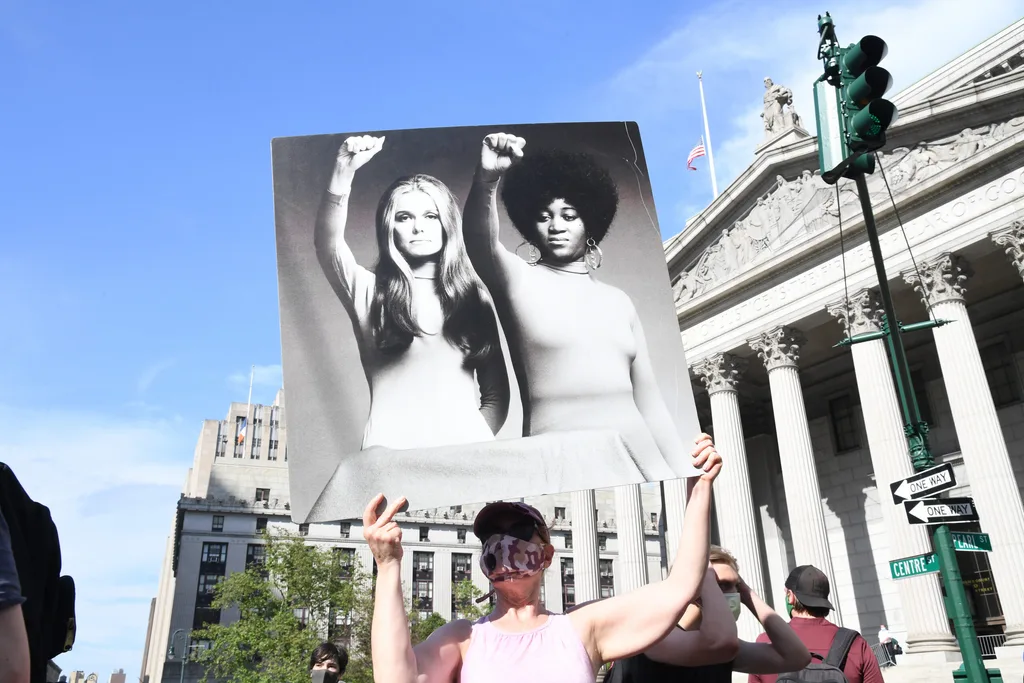
Their partnership produced one of the defining photographs of second-wave feminism: the two women standing side by side, each raising a clenched fist.
The photograph became famous, but their work together carried the deeper significance. At its best, their alliance represented a vision of feminism that understood women’s liberation as inseparable from racial and economic justice.
8. She Helped Create A Pathway For Women Into Political Power
In 1971, Steinem joined Bella Abzug, Shirley Chisholm, Fannie Lou Hamer and other leaders in founding the National Women’s Political Caucus.
Its objective was practical as well as symbolic: to recruit, train and support women seeking election or appointment to public office. At the time, just 13 women were serving in the US Congress.
The caucus represented an important shift in strategy. Protest and public debate remained essential, but meaningful equality would also require women to occupy the institutions where laws, budgets and national priorities were decided.
Steinem understood that representation was not simply about seeing women in positions of influence. It was about giving women the power to shape the decisions that governed their lives.
9. She Backed Shirley Chisholm’s Historic Presidential Campaign
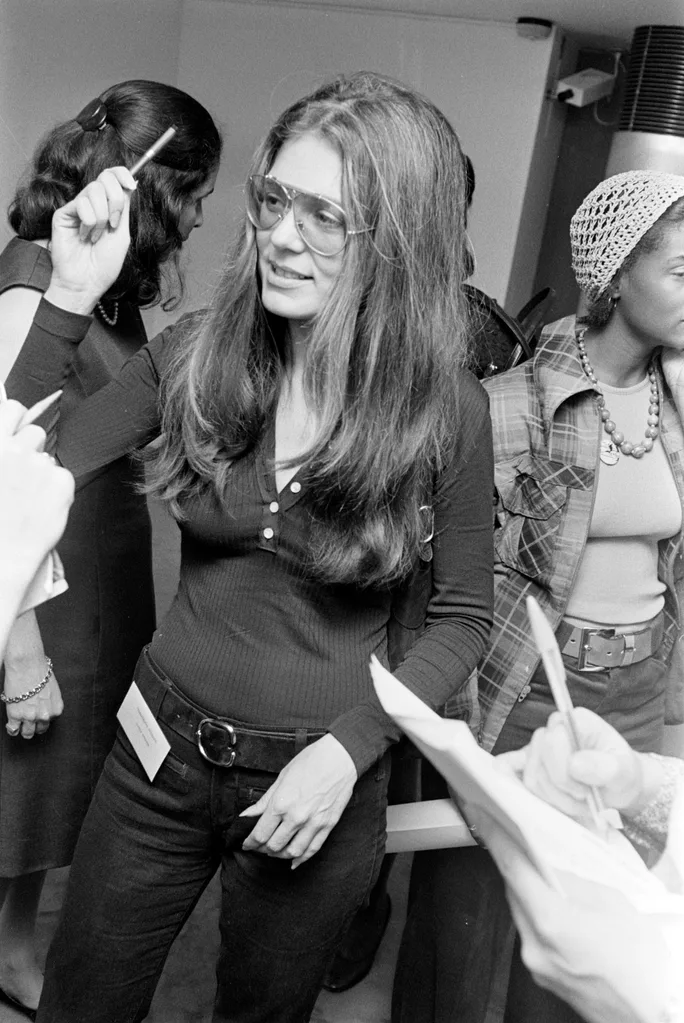
In 1972, Shirley Chisholm became the first Black woman to seek the presidential nomination of a major American political party.
Her campaign exposed fault lines across progressive politics. Chisholm did not receive the unified support of either the liberal establishment or the women’s movement, despite the historic significance of her candidacy.
Steinem supported Chisholm and stood as a Chisholm delegate in New York. Although she was unsuccessful, the decision illustrated her belief that feminist politics had to extend beyond rhetoric. If women wanted a share of political power, they had to support women who were prepared to pursue it – particularly those confronting both racism and sexism.
10. She Helped Prove That Feminist Publishing Could Command A Mass Audience
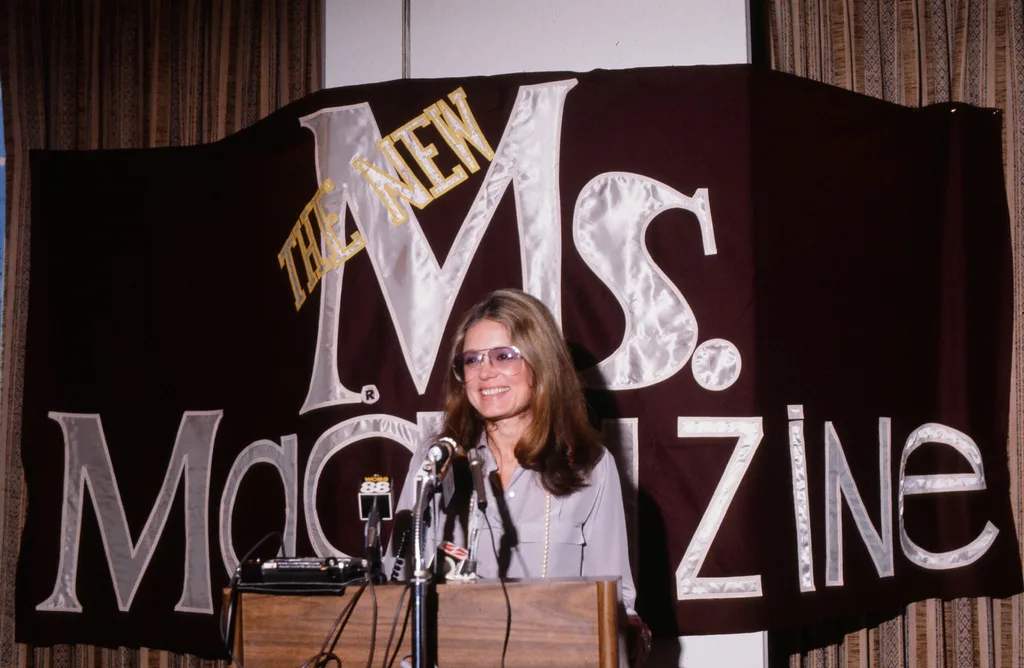
Few achievements are more closely associated with Steinem than the launch of Ms. magazine.
First appearing as a preview within New York magazine in 1971 before becoming a standalone publication in 1972, Ms. created a space for subjects routinely dismissed or ignored by mainstream women’s media. Instead of instructing women on how to become more attractive, agreeable or domestically accomplished, it examined work, politics, reproductive freedom, relationships, violence and power.
The preview edition sold out its initial run of 300,000 copies in just eight days.
Its debut also included “We Have Had Abortions”, a declaration signed by 53 prominent women at a time when abortion remained illegal in much of the United States. Steinem joined figures including Billie Jean King, Susan Sontag, Anaïs Nin and Nora Ephron in publicly acknowledging they had terminated pregnancies.
The statement challenged the culture of secrecy surrounding abortion and placed real names behind an issue too often discussed in the abstract.
The Conference That Brought The Movement Together
One final milestone encapsulated Steinem’s greatest strength.
In 1977, more than 20,000 people gathered in Houston for the National Women’s Conference. Delegates debated abortion, racism, lesbian rights, disability, employment, violence and women’s representation in government.
The conference attempted something extraordinarily ambitious: transforming the varied experiences and demands of American women into a shared political platform.
Steinem later described the gathering as one of history’s most significant overlooked events. It showed that her contribution was never simply about being feminism’s most famous face. Her real talent lay in bringing people and causes together – and helping turn their individual stories into collective demands.
Gloria Steinem’s legacy is complicated, as the legacy of any figure who occupies public life for more than 60 years must be. She did not speak for every woman, nor was she responsible for the movement she came to symbolise.
What she did was make women’s experiences impossible to dismiss as trivial or merely personal. She helped give feminism a language, a platform and an audience – then spent the rest of her life insisting that equality was not a radical ambition, but an unfinished democratic promise.