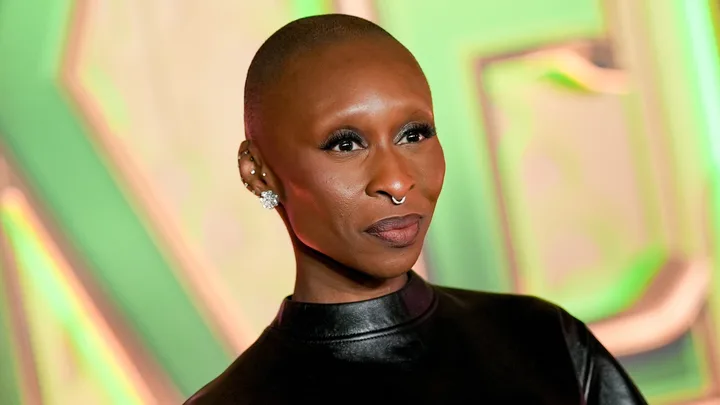
If there is one thing Cynthia Erivo will do, it’s stand her ground.
Across two sprawling Wicked press tours, Erivo and Ariana Grande’s friendship became a source of endless internet fascination, for reasons that ranged from genuinely heartfelt to deeply unserious.
But there’s one viral moment Erivo has since reflected on more critically: the time she was dubbed Grande’s “bodyguard” after stepping in to protect her from an overzealous fan in Singapore. While the jokes may have appeared harmless on the surface, Erivo told Variety she believes the response exposed something far more insidious about the way Black women are perceived.
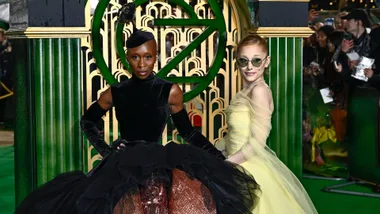
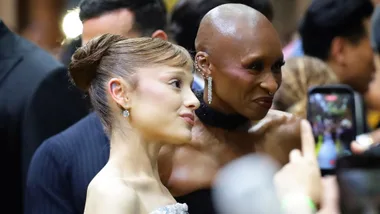
In case you missed it, during the Wicked: For Good premiere in Singapore, a fan leapt over a barricade and grabbed Grande around the shoulders on the red carpet.
Erivo immediately moved between them, appearing to shield Grande with her body. Footage of the incident quickly spread across TikTok, where viewers praised Erivo’s quick reflexes, protectiveness and, inevitably, her biceps. Many also jokingly referred to her as Grande’s “bodyguard.”
Erivo, however, suggested the framing was not entirely innocent, noting it seemed rooted in perceptions of her “physique” and “the fact that I was bald.”
According to Erivo, there was an assumption she was physically larger than Grande and therefore naturally cast into the role of protector or enforcer. “I think that we haven’t really come to terms with the insidious nature of how we view Black women,” she said, adding, “I would hazard a guess that it would not have been the same had it been the other way around.”
She’s not wrong to interrogate it. The masculinisation of Black women is a deeply entrenched racist trope, one that has historically framed Black femininity as inherently more aggressive, physically imposing or less delicate than white femininity.
Erivo admitted the discourse surrounding the moment was so upsetting it briefly put her off campaigning for an Oscar.
“I think maybe in a way it did, actually,” she said. “I just felt like my humanity had been bastardized. I felt like something I did instinctively had been made to be something that it simply was not because of the way people see women who look like me, and because of the assumptions that are made.”
“I just didn’t want to be a part of that, really and truly,” she continued. “I didn’t want to put myself through it. I didn’t feel like I deserved it.”
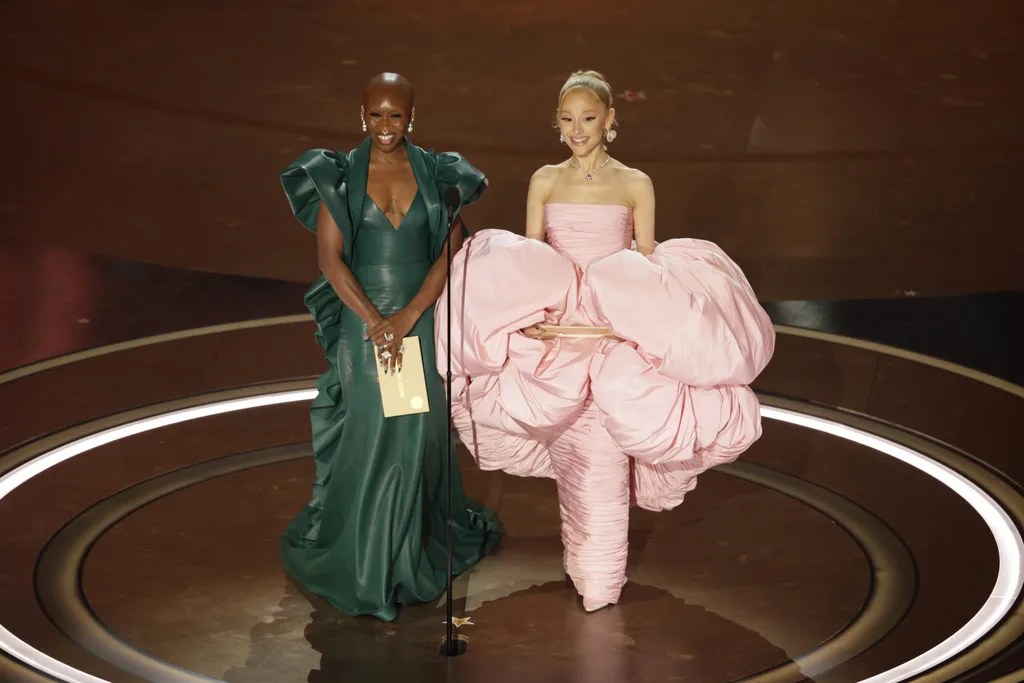
It didn’t help, she added, that “it felt like there was already a sort of upturned nose at the second installment, even though we all knew there was a second film coming and we were just doing our jobs.”
It’s clear the actress has grown weary of being reduced solely to Wicked discourse. In a now widely circulated clip from the same Variety interview, Erivo was asked to revisit the now-famous “Defying Gravity” riff during a career retrospective game.
“No,” she replied with a smile, before later gently asking if they could move on from Wicked altogether.
“Do you mind if we do another question that isn’t about Wicked?” she asked. “Because I feel like I’ve spent the last two years talking about it and I think we have an opportunity to start talking about something else.”
She added: “Because I love Wicked, but I’ve just talked about it… ad nauseam.”
Online, many fans praised Erivo for setting boundaries and resisting the expectation that actors must endlessly perform enthusiasm for the same role long after a press tour has ended.
Others, meanwhile, framed the moment as evidence she was exhausted by the franchise that catapulted her even further into mainstream fame, saying it was “sad” to see something that once sparked joy in her reduced to “bitterness.”
Currently, Erivo is back on stage in Dracula, her one-woman production at London’s Noël Coward Theatre.