

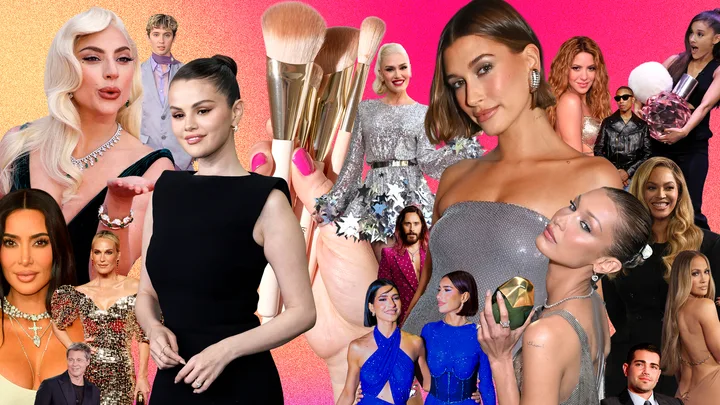
It’s 2025, and you open Instagram to see a familiar headline rise to the top of your feed. A celebrity, it seems, has revealed in an interview that they’re launching their own beauty brand. The story follows a script so well-worn the quotes could be copy-pasted between profiles with barely a tweak.
“I was just so over [insert relatable beauty struggle]. I wanted a [product] that could actually [profit from a growing consumer trend], but nothing out there felt right,” it will read. “I’ve always been obsessed with [conveniently buzzy beauty category], so I figured why not make it myself? Now it’s all I use. It’s definitely the secret to my [cosmetically engineered or genetically endowed attribute].”
The chorus of groans is practically audible in the comments section, where hundreds express pre-emptive fatigue at yet another celebrity-fronted cosmetic endeavour. A recent market report from NIQ revealed that in 2021 alone, nearly 20 celebrity beauty brands entered the market.
Consumers have grown increasingly sceptical, as public figures with little connection to their chosen category are continuously lured in by the lofty profit margins that a beauty line can provide.
This time, the subject of the announcement is Lindsay Lohan. The former Disney darling has re-emerged after an extended hiatus from the spotlight. Now in her late thirties and reprising her role as Anna in the sequel to the noughties girlhood film Freaky Friday, Lohan appears on the June cover of ELLE USA, celebrating her widely welcomed comeback.
There’s been public speculation about her unusually taut visage, but Lohan denies rumours of a facelift, instead crediting the glow-up to lemon juice, pickled beets, and – there it is – her upcoming skincare line.
A generous read of the comments would suggest the audience was unconvinced. Still, Lohan’s line is set to join the crop of celebrity beauty brands that have launched this year, including skincare line Parívie by Paris Hilton, Isima haircare from Shakira, and Brunel bodycare from supermodel Jasmine Tookes.
The Veronicas’ Jess and Lisa Origliasso are launching autoimmune-friendly makeup under Lemons Beauty. Even actor Jesse Metcalfe, of Desperate Housewives fame, has introduced gender-less skincare line Nutrl Skin. It’s a lot. No wonder comment-section scepticism is at an all-time high.
But the numbers present a compelling counter argument. According to NIQ, celebrity beauty brands generated more than $1.5 billion in 2023. And although the rate of new launches has finally slowed – from 19 in 2021 to just six in 2023 – the appetite for celeb-backed beauty hasn’t disappeared, whether the internet wants to admit it or not. At this point, a good product is table-stakes, but if performance and star power are no longer enough to win consumer trust, what separates the celebrity successes from the flops?
Problem solvers
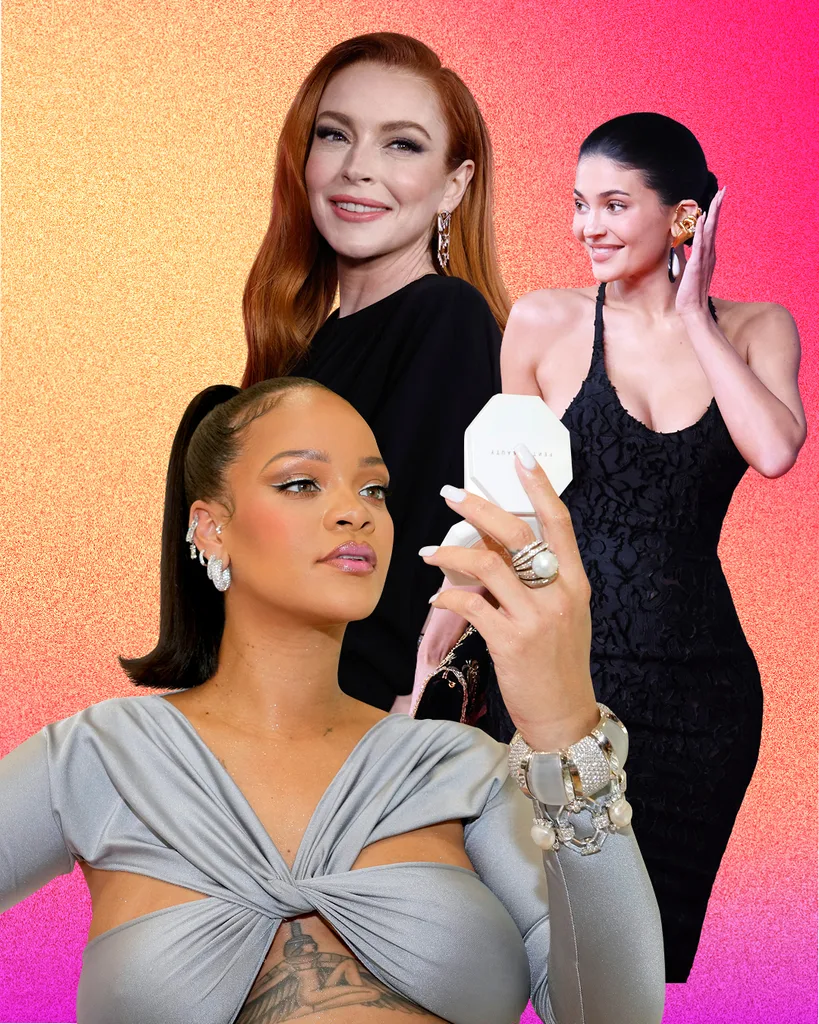
While Hollywood types have been slapping their names on products since the dawn of time, the “celebrity beauty brand” as we now know it is a relatively novel concept. You can thank 2017 for that, as music superstar Rihanna launched Fenty Beauty and simultaneously set a new industry benchmark. The “Work” singer developed the makeup line with a clear message of inclusion: its foundation range offered an unprecedented 40 shades.
“Some [customers] are finding their shade of foundation for the first time, getting emotional at the counter,” Rihanna told Time magazine. “That’s something I will never get over.” In an instant, Fenty Beauty had catered to more consumers than the majority of its competitors, who scrambled to catch up.
The launch became a catalyst for industry-wide change, known as “the Fenty Effect”. Fenty Beauty offered vision and problem-solving expertise, anchored in Rihanna’s own experience as a Black woman, rather than a celebrity promotional vehicle. And that’s since become a key distinction from less successful efforts.
Founder as muse – not just a face
While Fenty Beauty was having the biggest impact on the industry at large, makeup-mogul-in-the-making Kylie Jenner was selling out her Kylie Lip Kits in mere seconds. Jenner launched the $US29 liquid lipstick-and-liner duos in 2015 after her favourite MAC pencil (in Whirl) kept selling out thanks to fans trying to imitate her overlined (and enhanced) pout.
The products felt like an organic business move for the then-18-year-old, whose obsession with makeup was well-documented on Keeping Up With The Kardashians. “It’s the most authentic thing I’ve done in my career,” she said in an interview with the Evening Standard. “I feel like people can tell that I’m super passionate about it.”
The kits’ success wasn’t necessarily tied to the efficacy of the products, it was about access: limited drops that would sell out almost immediately made them a coveted commodity. It was also a chance for the star to profit directly from the beauty trends she was setting.
Jenner parlayed this strategy into a fully fledged makeup line, Kylie Cosmetics, and sold a majority stake to Coty, Inc for a landmark $US600 million in 2019.
As the hyper-glamorous aesthetic began to fade and a more stripped-back beauty ideal became the look du jour, the 2020s saw a new kind of celebrity brand emerge: minimalist, stylish and highly curated. Enter Rhode, the skincare line Hailey Bieber launched in 2022.
Where Kylie Cosmetics leaned on maximalism and mass hype, Rhode was quiet luxury, with soft-focus visuals, dewy finishes and a pared-back product offering. The brand’s use of the viral “glazed doughnut” skin glow and uber-wearable peptide lip treatments had been engineered to echo Bieber’s own routine, offering a glimpse into the glossy, clean-girl aesthetic she had been strategically cultivating via her social media.
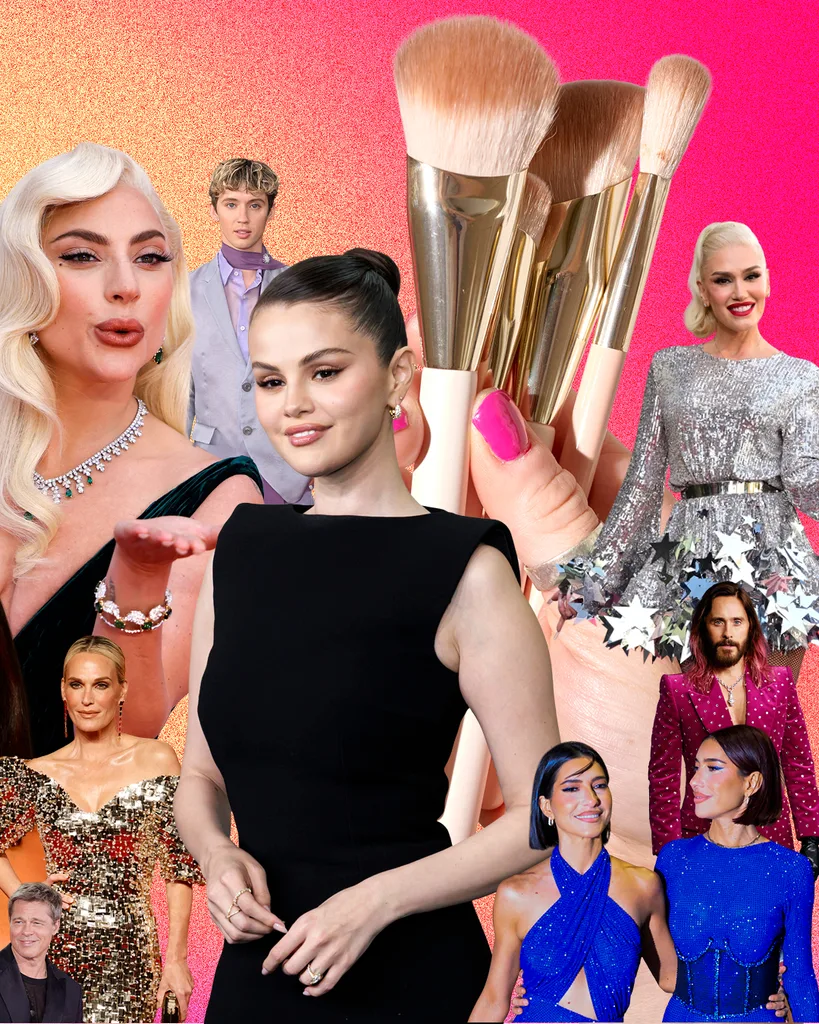
This approach meant that by the time Rhode reached the market, the model had established an online persona that could attest to her interest in skincare, which meant fewer eye-rolls and a larger audience who had been primed to buy products based on Bieber’s endorsement.
“We [went] into it knowing that people are tired of seeing brand after brand after brand from different people and celebrities,” Bieber told Allure. “So I had to … really feel [that Rhode] is going to be something refreshing and different.”
Developed over two years, the line, which consisted of only three skincare products at launch, managed to strike that elusive balance between cultural clout and commercial success. Rhode was relatively affordable, but the limited drops created exclusivity, while the branding felt premium.
Bieber also engaged trusted skincare experts to further cement the integrity. While Rhode was comparatively late to the celebrity beauty space, it avoided the limitations that often befall its contemporaries.
After expanding into makeup and merch (that’d be the viral lip balm phone case), Bieber sold Rhode to e.l.f. Beauty in a deal reportedly worth more than a staggering $1 billion in May – three years after it launched.
Purpose beyond product
Another star-powered brand that’s still going strong is Selena Gomez’s Rare Beauty. While tabloids have enthusiastically compared Rare and Rhode, given Gomez dated Bieber’s husband, Justin, such dated narratives do a disservice to the remarkable brands both have built.
Gomez launched her brand in 2020, with a focus on makeup as a tool for confidence and self-love. As the actor told WWD, “I wanted to create a brand with a greater meaning and a vision to create a welcoming community that could shape positive conversations around self-acceptance and mental health.”
It was a bit of a tricky premise, considering the beauty industry’s complicated relationship with the pressures of femininity, but it appears to have worked. Rare Beauty’s annual revenue was $US350 million in 2023, according to data provider PitchBook, driven largely by the Soft Pinch Liquid Blush, which sold 3.1 million units in 2022.
The company is now said to be worth upwards of $US1.1 billion, and the products are highly regarded as flattering, functional and accessible. Gomez’s own public vulnerability in relation to her mental health appears to have deepened consumer trust in Rare Beauty, which is the sole element that legitimately warrants comparison with Bieber’s Rhode: as founders, the two women don’t just endorse their brands, they embody them.
However for every success, there have been plenty of other celeb-led launches that haven’t been able to find a hook. Gwen Stefani’s GXVE Beauty makeup line is still stocked at Sephora but all reports signal that it’s struggling; Addison Rae’s Item Beauty was also a misfire, while Harry Styles’ Pleasing and Pharrell Williams’ Humanrace have barely registered since their launches a few years back.
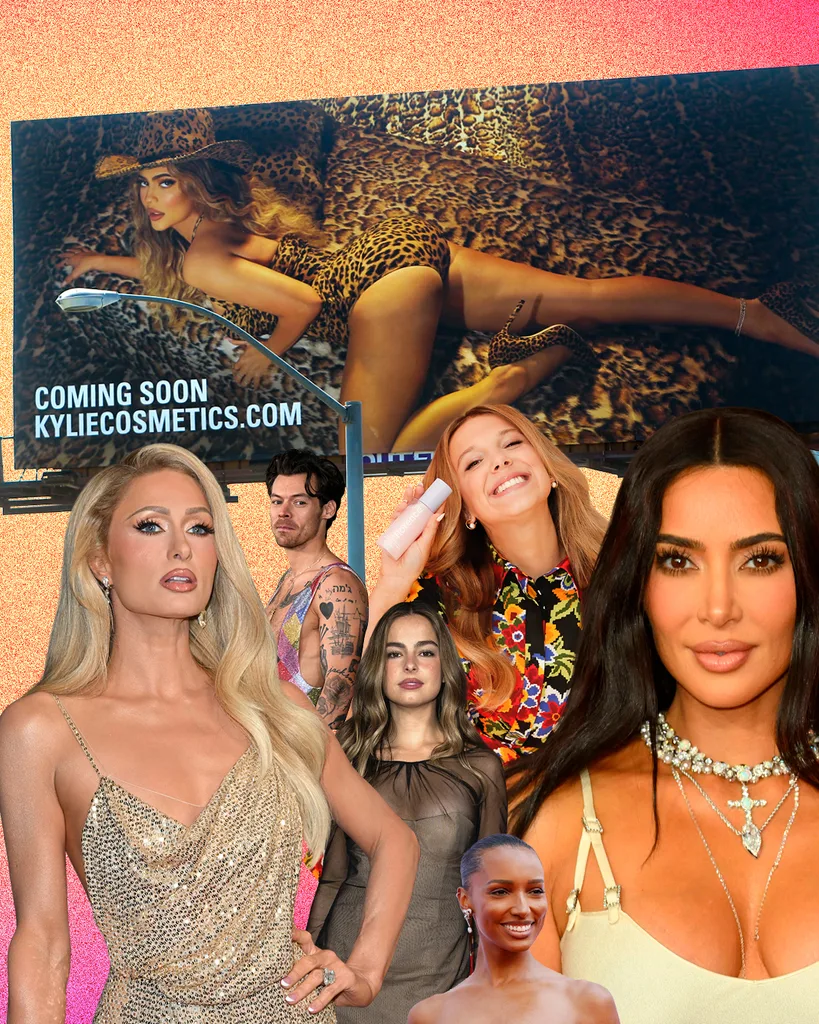
Their failures point to a shared flaw: no matter how famous the face, if the brand lacks a clear reason to exist, it won’t resonate.
Then there are the problematic personalities behind the brands that are impacting sales and reception, like Brad Pitt’s much-maligned Le Domaine or Twentynine Palms by Jared Leto, which lasted less than a year. The brands arrived with no clear problem to solve, nor any conceivable link to their founders’ image or values.
The brand reboot
This begs the question: can a celebrity beauty brand survive a downturn? A deep personal association to her products helped early sales of Kylie Cosmetics soar, but what began as a sensation eventually suffered from overexposure and brand fatigue.
While Kylie Cosmetics is still popular – raking in $US380.4 million in revenue in 2023 – its cultural capital isn’t what it was. A lack of evolution meant the brand’s relevance wavered when beauty trends shifted. Kylie Cosmetics has since pivoted its product range, which has undoubtedly helped to revive interest, with a few recent releases reaching moderate virality.
Jenner’s sister Kim Kardashian has had less luck with her beauty ventures, which are now undergoing a vast rebrand. Despite gaining some initial traction with her KKW Beauty contour kits in 2017 (and selling off a 20 per cent stake to Coty Inc. in 2020 for $US200 million), Kardashian’s line was temporarily shuttered in 2021.
It was replaced the following year with SKKN By Kim, which promised elevated, clinical skincare. Unfortunately, its nine-step routine felt disconnected from the target audience, and Kardashian’s image was also synonymous with makeup rather than skincare.
In March this year, Kardashian bought back the 20 per cent share of the brand from Coty, with the aim to create a new product offering under Skims, her billion-dollar shapewear and clothing brand.
Will it work? If the transformation of Haus Labs by Lady Gaga is any indication, it’s entirely possible. The makeup brand floundered after its 2019 launch, due to vague messaging and a cluttered Amazon rollout, but a 2022 rebrand earned Haus Labs shelf space at Sephora.
The key? The new line focused on high-tech artistry and clearer product positioning, which has won over consumers and critics alike.
The balance of believability
Perhaps the biggest challenge for celebrity beauty brands is convincing consumers that the famous founder really uses the products, particularly given the access they have to the most elite cosmetic interventions.
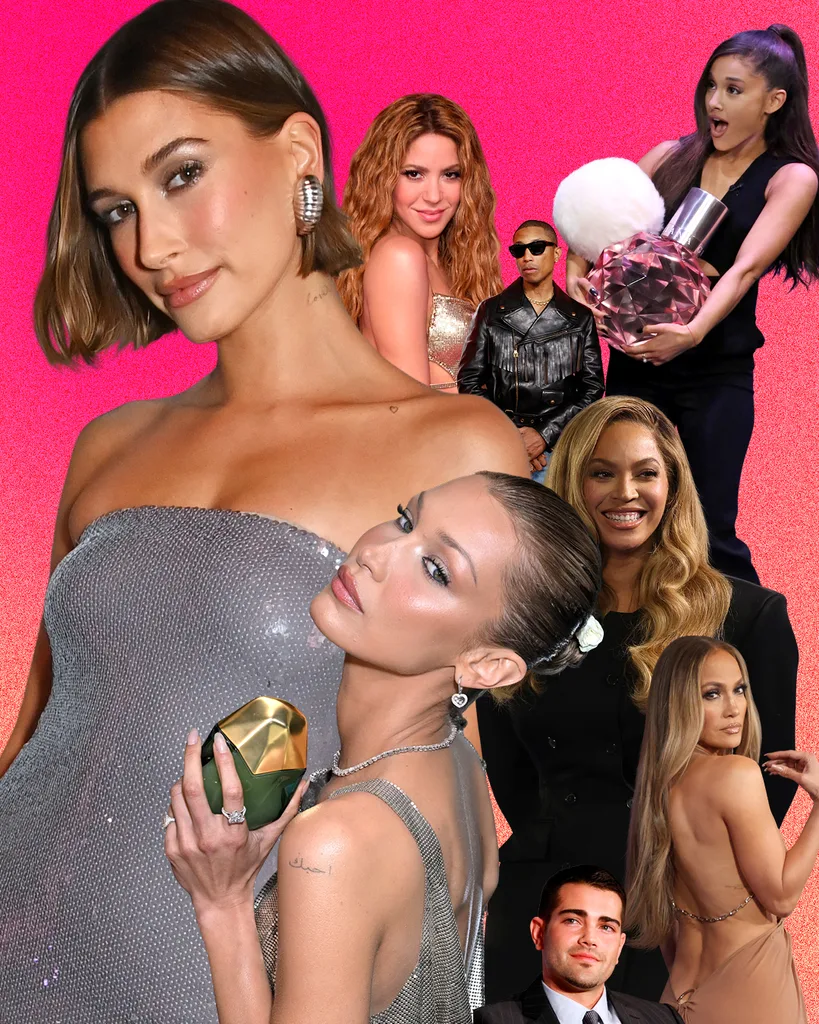
This was one of the most pertinent issues for Kardashian and SKKN By Kim. Jennifer Lopez’s JLo Beauty faced scrutiny almost immediately upon launch in 2021, thanks largely to its core marketing claim that the singer’s ageless skin was maintained by olive oil.
The brand’s signature ingredient, the Olive Complex, was positioned as the key to Lopez’s glow – a claim many consumers found difficult to believe given the prevalence of cosmetic procedure speculation surrounding the star.
In one widely shared comment under a JLo Beauty promo video, a user wrote, “If olive oil gave results like that, my Italian grandma would look 30.”
Lopez publicly denied using Botox or fillers, doubling down on the olive oil narrative, but the mismatch between her appearance and the claim undermined trust.
Despite Lopez’s strong name, the brand has since struggled to maintain buzz, in part because the public simply doesn’t buy the premise (or, it seems, the products).
Well, where to next?
Looking ahead, the most promising celebrity beauty brands won’t necessarily be the loudest, they’ll be rooted in something real. Beyoncé’s Cécred leans into her personal haircare experience, with formulations shaped by cultural heritage and salon experience.
Jennifer Aniston’s LolaVie quietly taps into her long-established association with hair, offering pared- back products that feel timeless. Meanwhile, indie-spirited brands might just be the ones to watch.
Fragrance brands Tsu Lange Yor by Troye Sivan and Orebella from Bella Hadid signal a next-gen approach that’s less reliant on overt celebrity worship, with more emphasis given to lifestyle alignment, creative distinction and niche appeal.
“When I brought up the idea [for Tsu Lange Yor], I was approached by some businesses that basically build it for you and then slap your name on it at the end, and I was like, what is the point?” Sivan told Cosmetics Business. “This is the most personal thing in the world to me.”
With that in mind, the future success of celebrity beauty brands will be dependent on taste, credibility and a willingness to evolve with the culture – not just sell to it. So, who would like to break it to Lindsay Lohan?

