

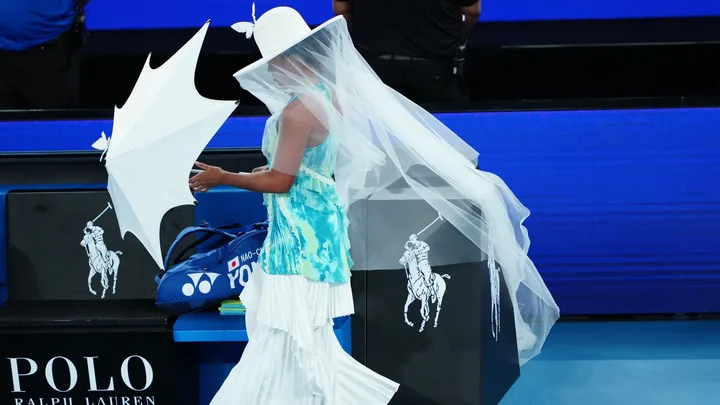
When Naomi Osaka stepped onto centre court at the Australian Open yesterday, tennis briefly relinquished its allegiance to utility.
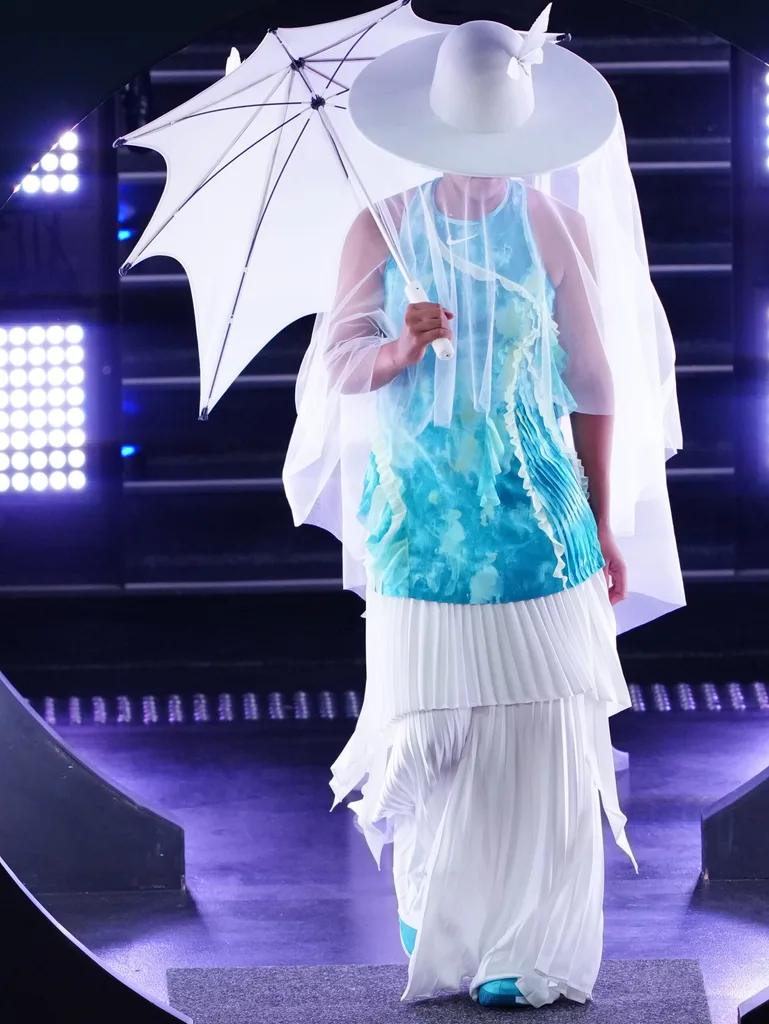
She arrived in custom designs by London couturier Robert Wun and Nike, crowned by a sculptural hat and a diaphanous veil that drifted behind her like a current in motion.

“It feels like armour, and at times fantasy,” Osaka told Vogue ahead of the match, which she went on to win 6–3, 3–6, 6–4. “It reminds me that I’m not just walking out as an athlete, but as a whole person.”
Rendered in marine blues and muted yellows, the ensemble moved with aquatic fluency. Ruffled sleeves echoed soft tendrils, while feathered butterflies perched across her hat and a porcelain parasol she carried during the dramatic entrance.
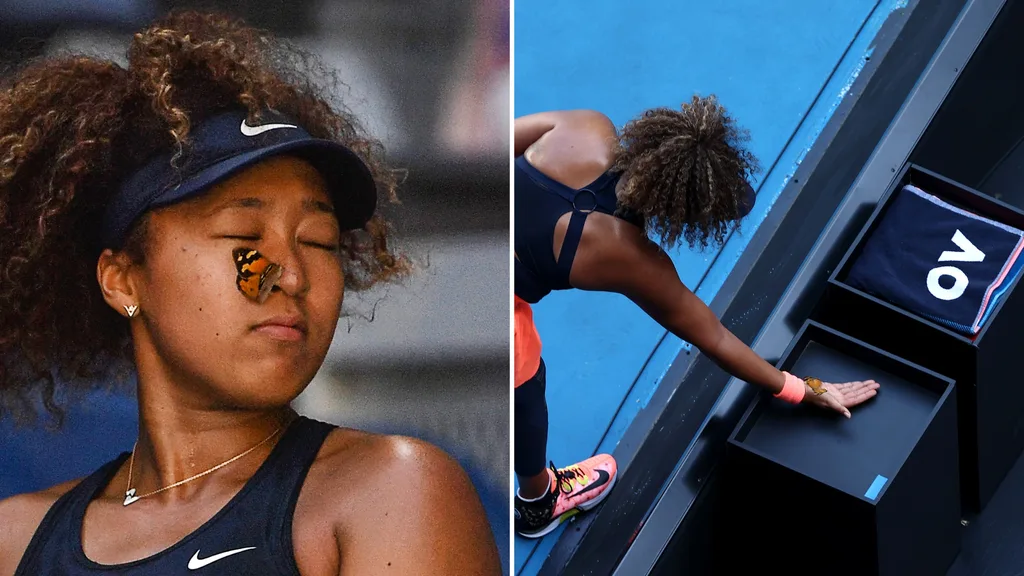
The butterflies nodded to a now-mythic moment from the 2021 Australian Open, when one fluttered onto Osaka’s face mid-match. She gently carried it to the edge of the court before resuming play — and ultimately winning.
The jellyfish motif came from a children’s book she had been reading with her two-year-old daughter, Shai, a symbol she was drawn to for its contradictions: fragile yet resilient, gentle yet powerful.
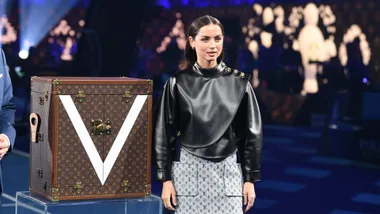
In recent seasons, Osaka has transformed fashion into authorship. Her on-court appearances have evolved from uniform into narrative, from jewel-toned US Open ensembles to collaborations with Louis Vuitton, Nike and Japanese designers that gesture toward lineage and belonging.
“I feel very settled in my style,” she reflects to Vogue. “I’ve settled into being seen.”
That ease has been neither instinctive nor afforded. From her emotionally fraught 2018 US Open victory against Serena Williams to her 2021 withdrawal from Roland-Garros for mental health reasons, Osaka’s career has unfolded beneath relentless visibility. Her quiet disposition was often misinterpreted as fragility, her restraint mistaken for disengagement.
Rather than withdrawing, she gradually reshaped how she communicated, using fashion and self-expression as tools to articulate identity on her own terms.
Her walk-on also reflects a broader shift within Australian sport. Long shaped by a competition-first mindset, events like the Australian Open are beginning to engage with the wider cultural spectacle that has defined American sport for decades.
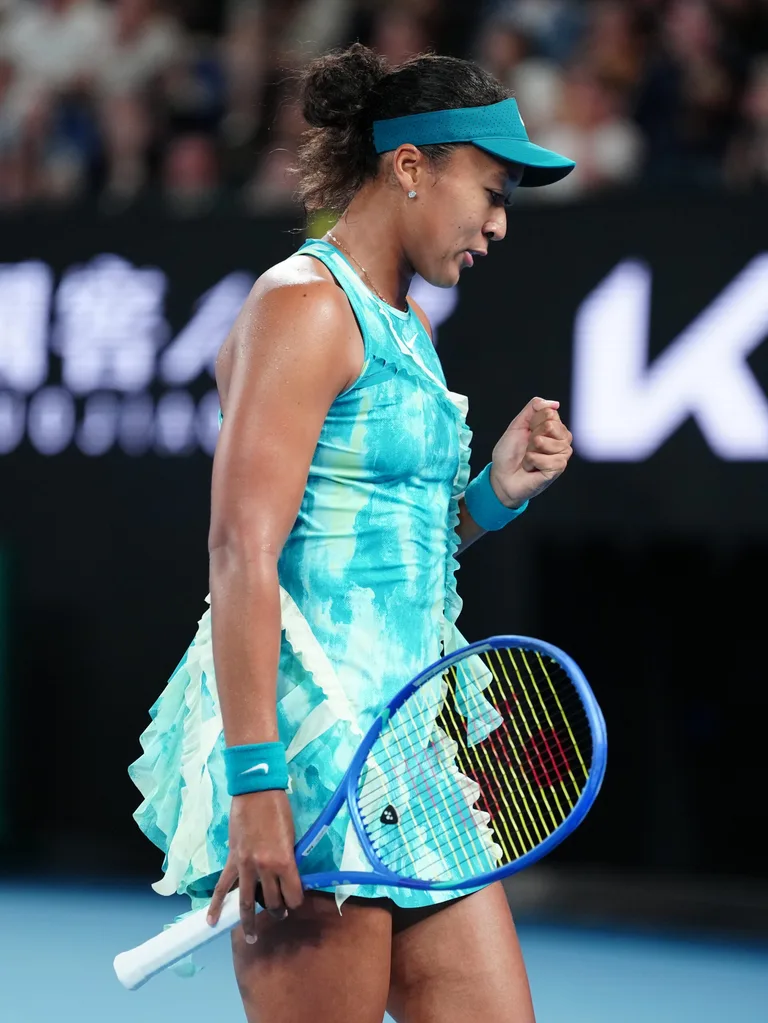
For today’s audiences, fandom extends beyond the result alone. Atmosphere, personality and visual storytelling now play a central role, with fashion, music and identity increasingly embedded within the sporting experience.
Within this context, Osaka’s couture was not indulgence but articulation, a recognition that modern sport now operates as performance as much as contest.
In a discipline historically wary of visual deviation, her collaboration with Robert Wun marks a decisive rupture. Performance and self exist in dialogue rather than opposition. And when athletes are permitted to arrive as complete selves, expressive, intellectual and emotionally legible, sport expands.

It becomes not only more watchable, but more human.

