

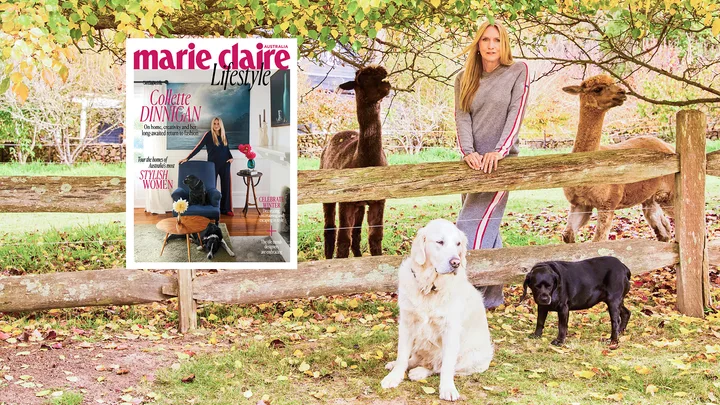
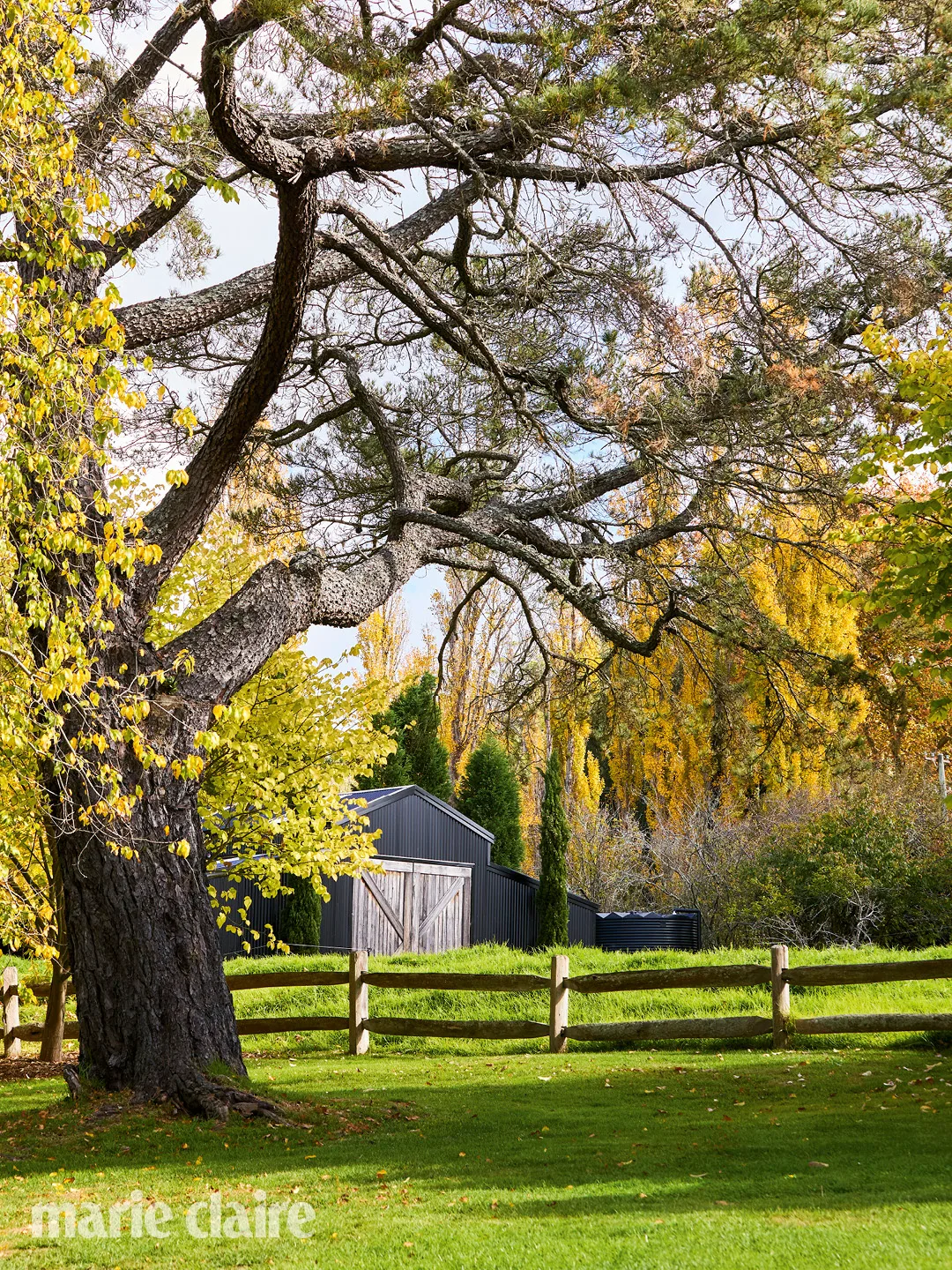
In the NSW Southern Highlands, where frost settles across paddocks in winter and smoke curls from chimneys before dusk, Collette Dinnigan has designed a house that has been layered slowly and instinctively over time.
It is here, among sprawling gardens, that she designed her latest collaboration: a capsule cashmere collection with French heritage label Saint James.

And spending time inside her Bowral home, it becomes impossible to separate the clothes from the world in which they were conceived. “It’s pure cashmere,” Dinnigan says of the collection.
“It’s an ode to those people who like to stay in tracksuits all day, but it’s elevated enough that you could go to the supermarket in it.” That balance – refinement without pretence – has long been her signature.
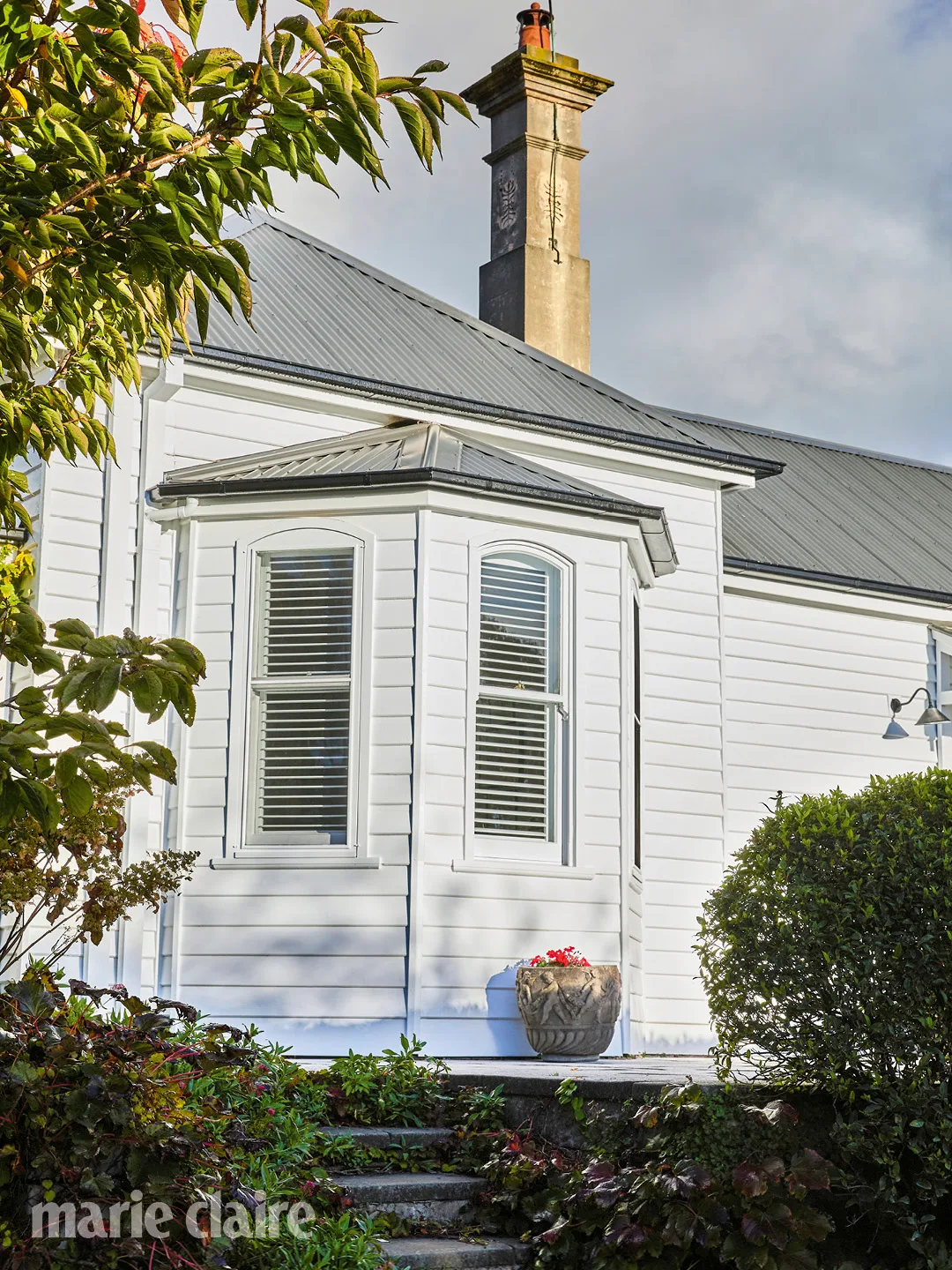
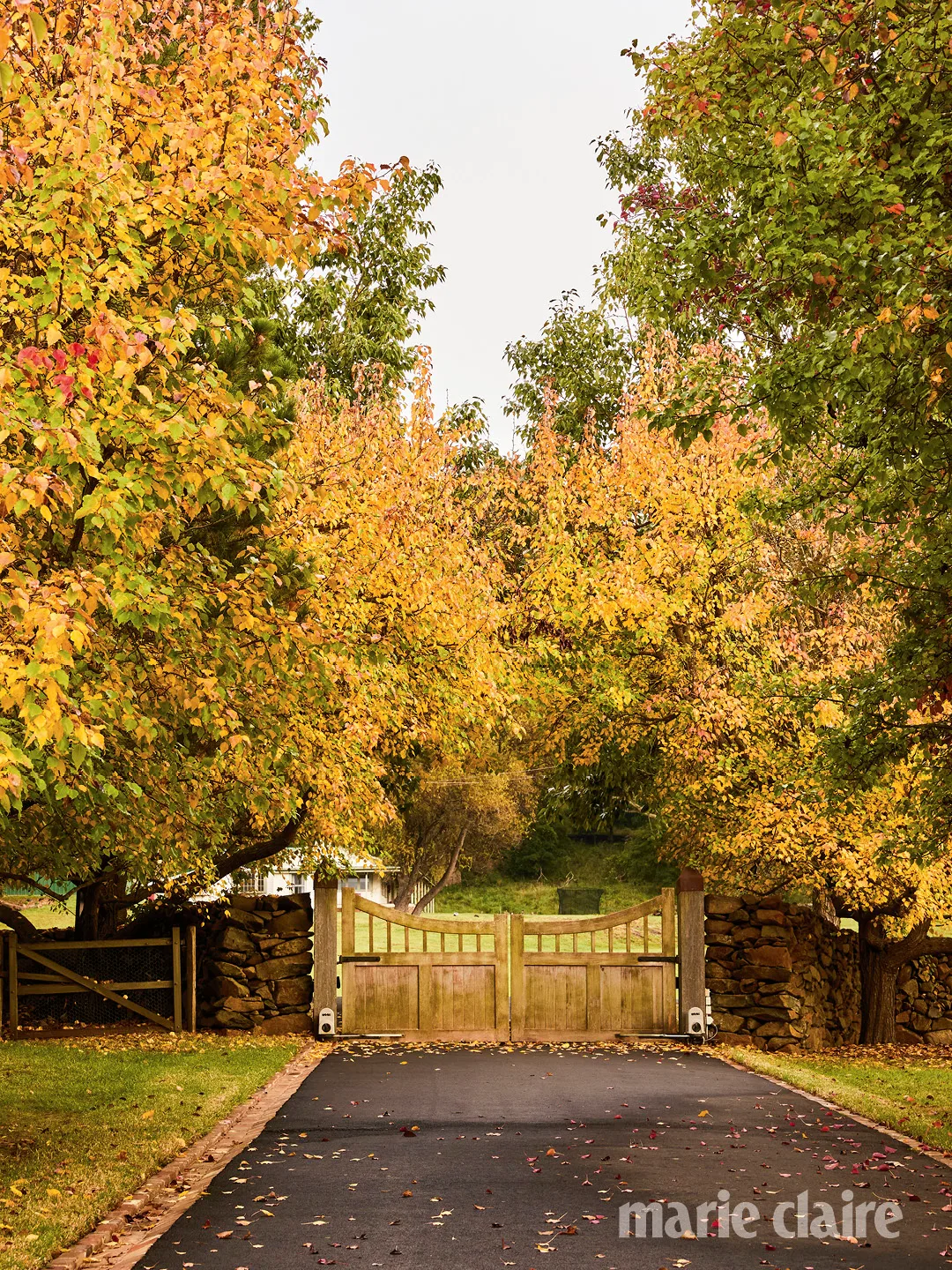
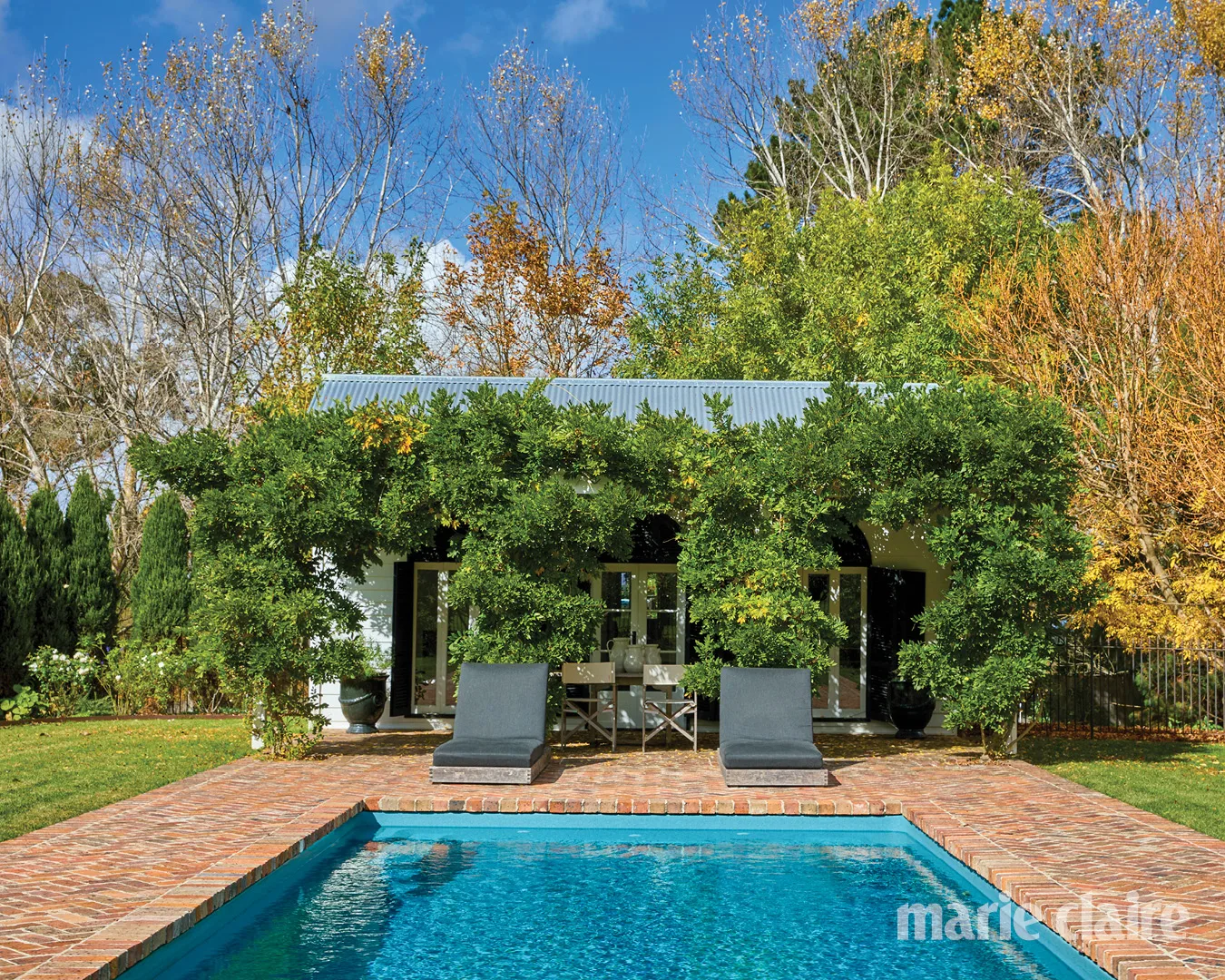
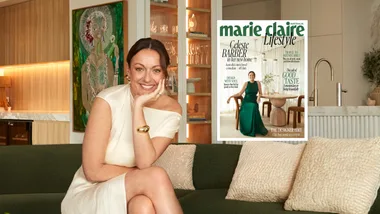
Photographed exclusively for marie claire Lifestyle at her Highlands property, Dinnigan appears entirely at ease in this chapter of life. She moved to the region almost a decade ago with her husband, Bradley Cocks, and son, Hunter, initially to be closer to her daughter’s boarding school. “We love it here,” she says. “It’s very private. It’s a great community. I’ve got my studio and it’s close to Sydney. It ticks a lot of boxes.”
The Highlands have also given her something less tangible: rhythm. “I spend a lot of time in the garden,” she says. “We get all our own vegetables from the garden. We’ve got chickens. We’ve got alpacas. I’m busy every single day.” There is wood to split, fireplaces to light and meals to cook slowly. At night, friends gather around the Aga stove with wine while smoke drifts through the cold air outside. “In the country, everything slows down,” Dinnigan says. “It’s ceremonial. You light the fire, cook a nice meal and actually chew the fat.”
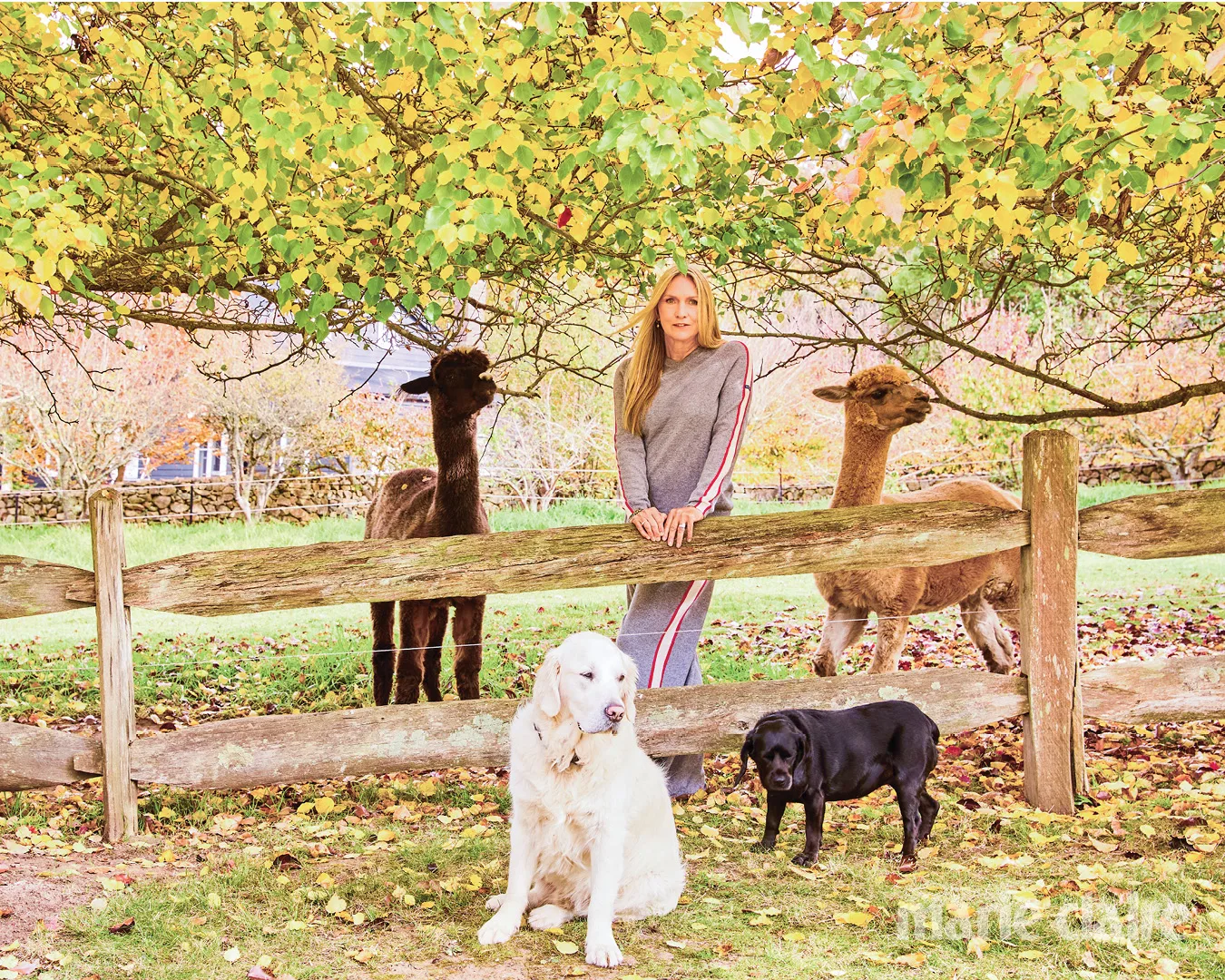
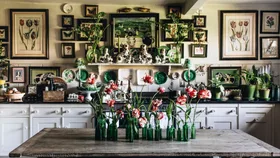
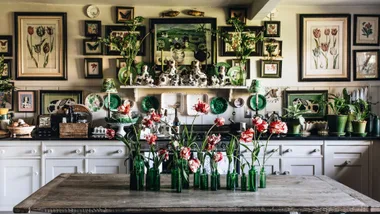
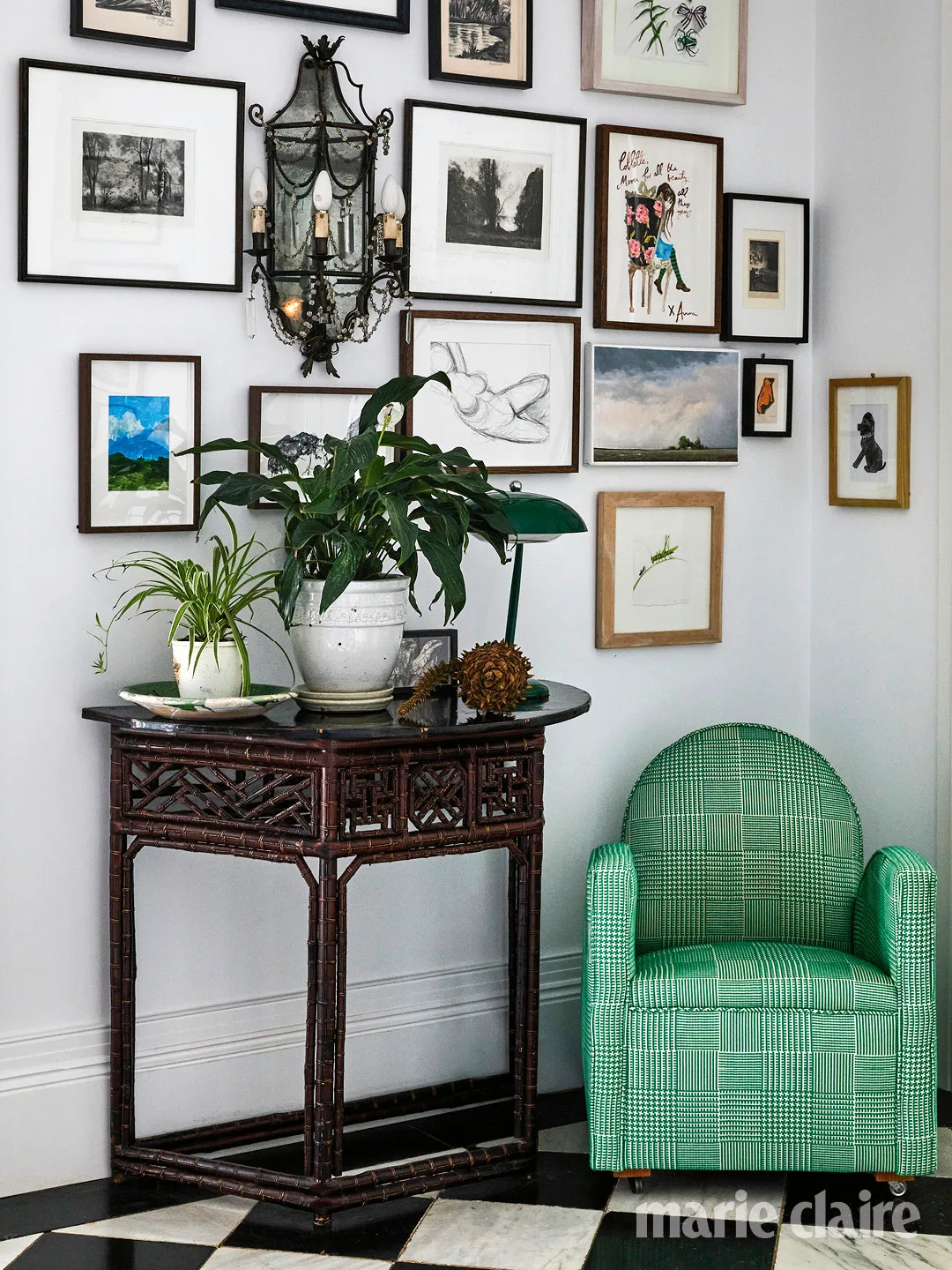
That sense of ritual permeates the interiors. The home is not minimalist, nor is it conventionally polished. Instead, it feels collected – an elegant collision of Italy, France, New Zealand and rural Australia. There are antique marble tiles, ceramics from Puglia, walls lined salon-style with art and oversized branches spilling dramatically from vases. “I think it’s eclectic,” she says. “It feels like a home that’s lived in.”
Dinnigan speaks about interiors the way she once spoke about fashion: through feeling. “For me, a house has to feel calm,” she says. “It has to feel welcoming.”
That calm, she explains, comes not from styling but from the fundamentals: warmth, insulation, light and flow. She is evangelical about underfloor heating and dim lighting. Bedrooms can be dark but living spaces must capture morning light and afternoon sun. Kitchens should never be hidden away. “Everything gravitates around the fireplace and kitchen,” she says.
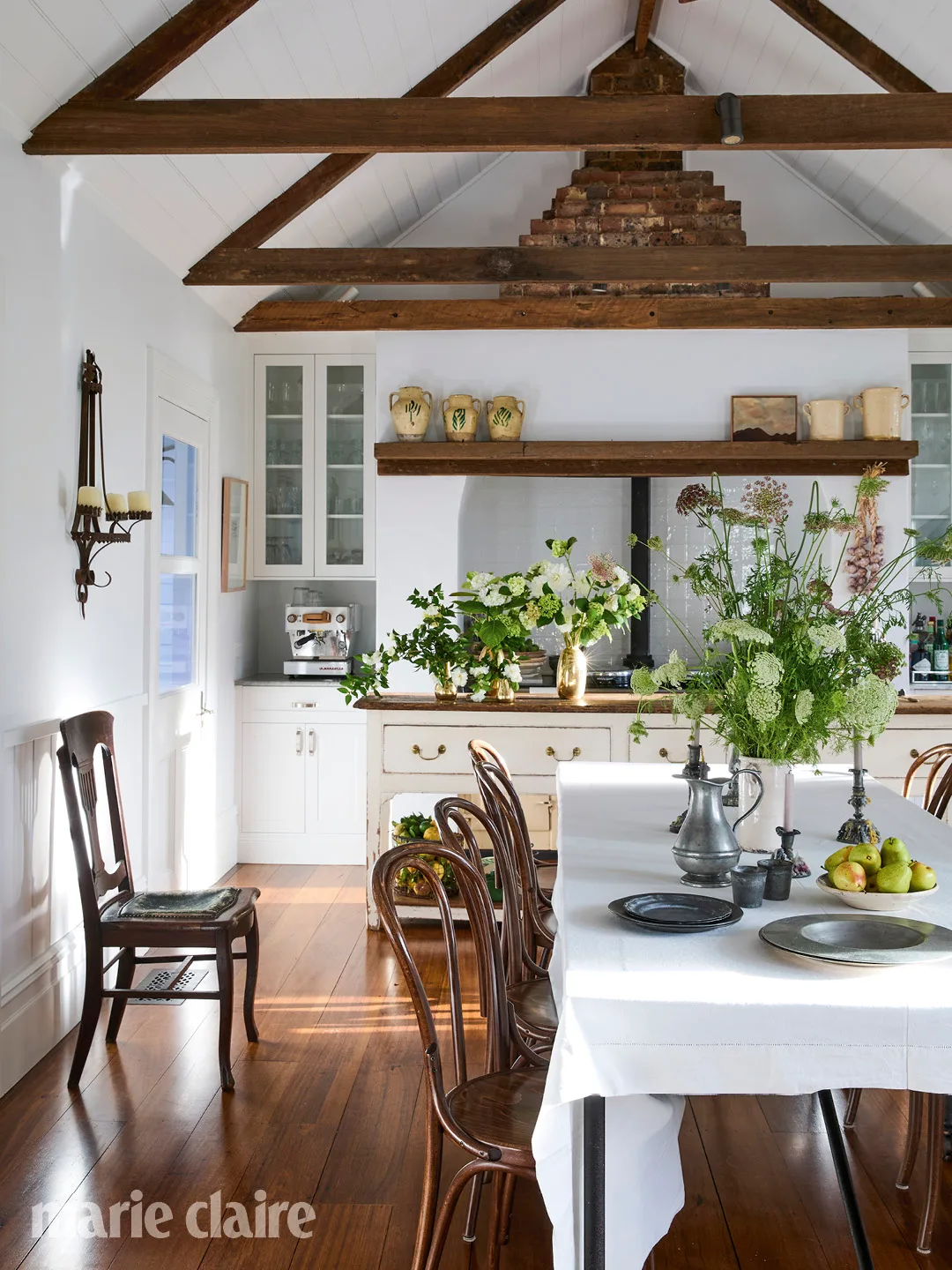
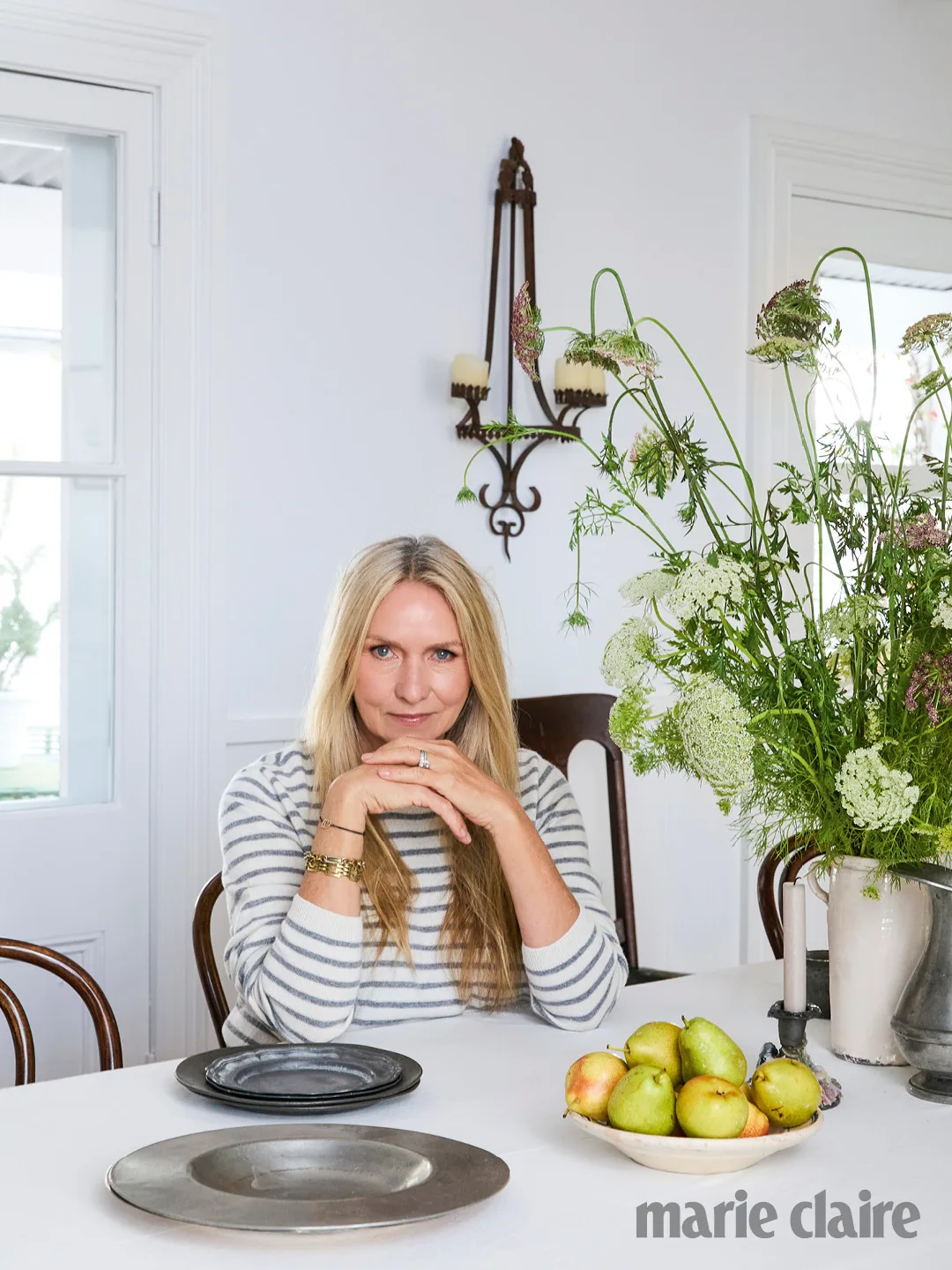
Nature is integrated into the way the family lives. Dinnigan cuts flowers constantly from the garden – hydrangeas, roses, lemon branches and autumn leaves fill rooms with scent and colour. “The house is always filled with flowers from the garden,” she says.
Her collaboration with Saint James feels similarly rooted in authenticity. The label was founded in Normandy in 1889, though its origins stretch back even further, to 1850, when local mayor Léon Legallais established a spinning mill named Moulin du Prieur in the village of Saint-James.
The company’s most iconic creation, the Breton fisherman sweater, emerged in the late 19th century and became an essential uniform for the Terre-Nuevas – French fishermen who spent months navigating the freezing North Atlantic waters. Knitted tightly from dense wool to repel wind and water while allowing freedom of movement aboard boats, the sweaters became synonymous with French maritime life.
Over the following century, the practical knit evolved into a symbol of understated French style, embraced by everyone from sailors to couturiers. It is precisely this blend of utility, craftsmanship and elegance that appealed to Dinnigan.
“I’ve always loved their story,” she says. “It’s authentic.” The collection also reconnects her to decades spent living and working in Europe. The navy palette, in particular, references Italy – specifically memories of Capri and the deep blue uniforms worn by the carabinieri.
“It was my ode to Italy,” she says, “kind of via Australia, back to France.” That layered sensibility – Australian ease filtered through European sophistication – is what has always distinguished Dinnigan’s aesthetic.
Long before “quiet luxury” became an internet obsession, she understood that true elegance is sensory rather than showy. It is cashmere against skin, linen curtains moving in a breeze, a room warmed slowly by firelight.
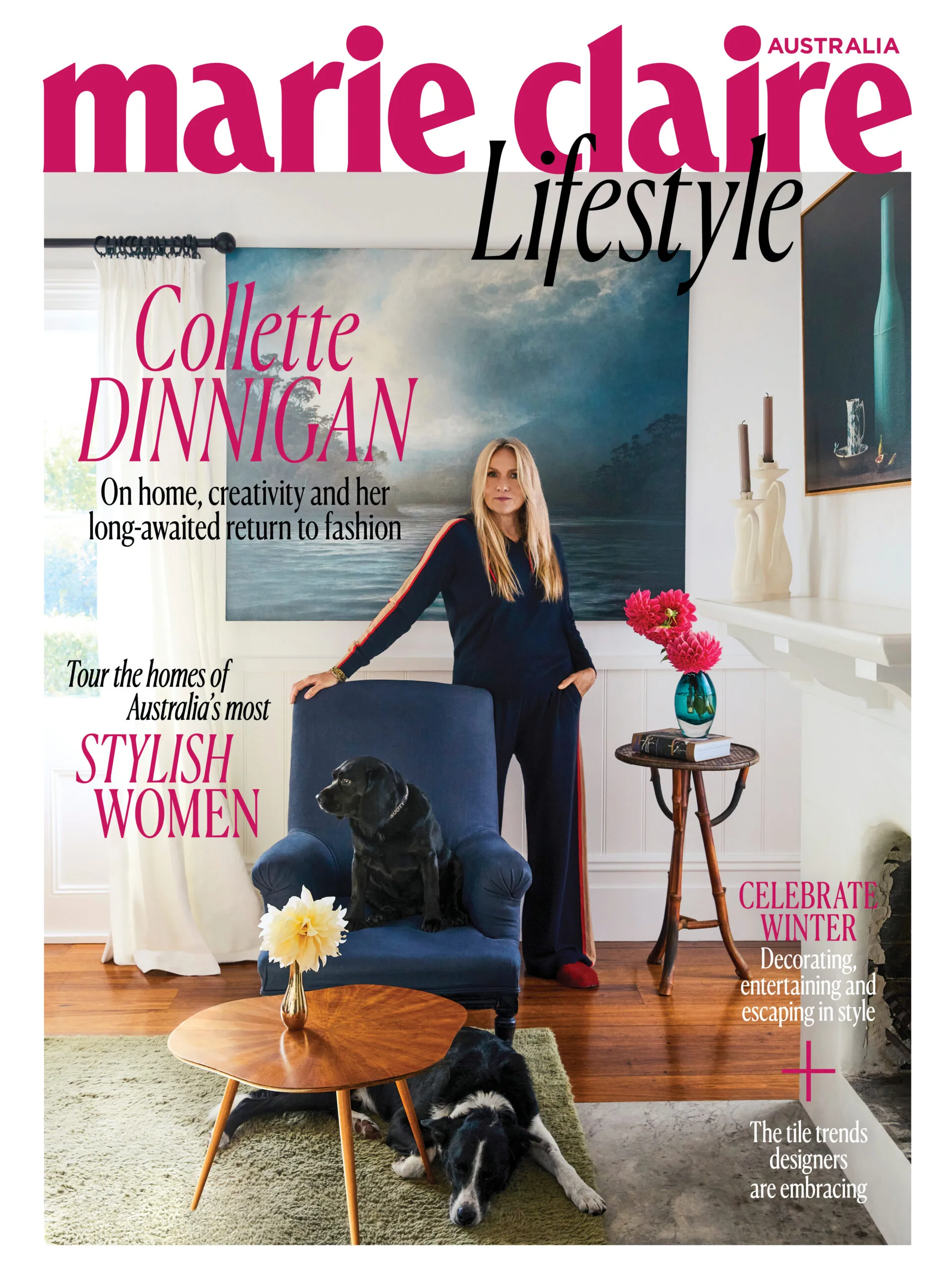
At a time when interiors are increasingly designed for social media, Dinnigan’s house feels refreshingly analogue. Rooms evolve slowly. Artworks are moved around depending on the light.
Furniture is discovered in antiques stores across the Highlands or collected on travels abroad. Nothing appears overly precious. “I think it’s important to constantly move things around,” she says. “It freshens everything.”
Towards the end of our conversation, Dinnigan describes her favourite place in the house. It’s not the formal living room or garden, but the kitchen fireplace at dusk. “When the fire’s on and we’re sitting there having a glass of wine,” she says, “that’s the end of the day.”

