

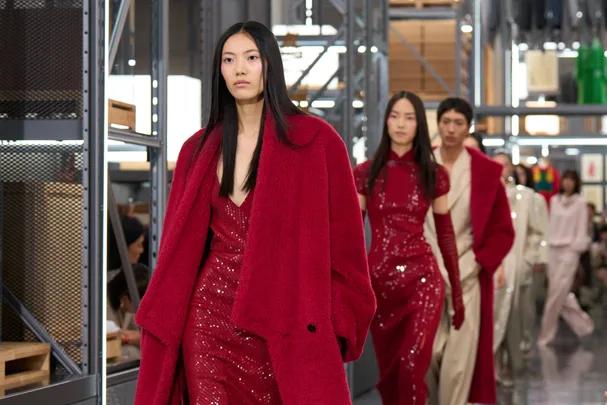
Seventy-five years after Achille Maramotti founded Italian fashion house Max Mara, the brand arrived in Shanghai with a proposition. Staged inside the vast, Brutalist Long Museum – a soaring cathedral of concrete and light overlooking the Huangpu River – Resort 2027 asked a deceptively simple question: What is Max Mara? The answer wasn’t found in a single coat or one defining silhouette. Instead, it unfolded across a collection that felt confident, intellectually rigorous and refreshingly free from the fashion industry’s current obsession with spectacle.
The day before the show, I meet creative director Ian Griffiths, who has spent four decades shaping the visual language of Max Mara. Thoughtful, warm and wonderfully philosophical, he immediately dismisses the notion that fashion should revolve around the designer. “My understanding of the woman we dress is the thing that keeps me motivated,” he tells me. “It’s all about her. Everything we do is for her.” That woman, as Griffiths sees her, has changed dramatically since he joined Max Mara in 1987. “The 1980s were the first generation of power dressing,” he explains. “Women wanted to enter the workplace and Max Mara helped create that uniform. But over time she rose through the ranks. She demanded, quite rightly, the freedom to dress how she wanted. More options. More choice.”
It is a subtle distinction, but an important one. Max Mara has never really been in the business of selling fashion. It has always been in the business of dressing lives. Asked how he would define the house after seventy-five years, Griffiths doesn’t hesitate. “Max Mara is the lingua franca of fashion,” he says. “It’s understood worldwide as a language of cool elegance and chic sophistication. It’s for a woman of any age who identifies with those qualities.”
It is perhaps the most succinct description of the collection that followed. Rather than dedicating Resort 2027 to one historical muse – as previous collections have done – Griffiths imagined every Max Mara woman at once. Marilyn Monroe exists alongside Greta Garbo. Lee Miller shares space with Fran Lebowitz. “They form a composite picture,” he says, “of the definitive Max Mara woman.”
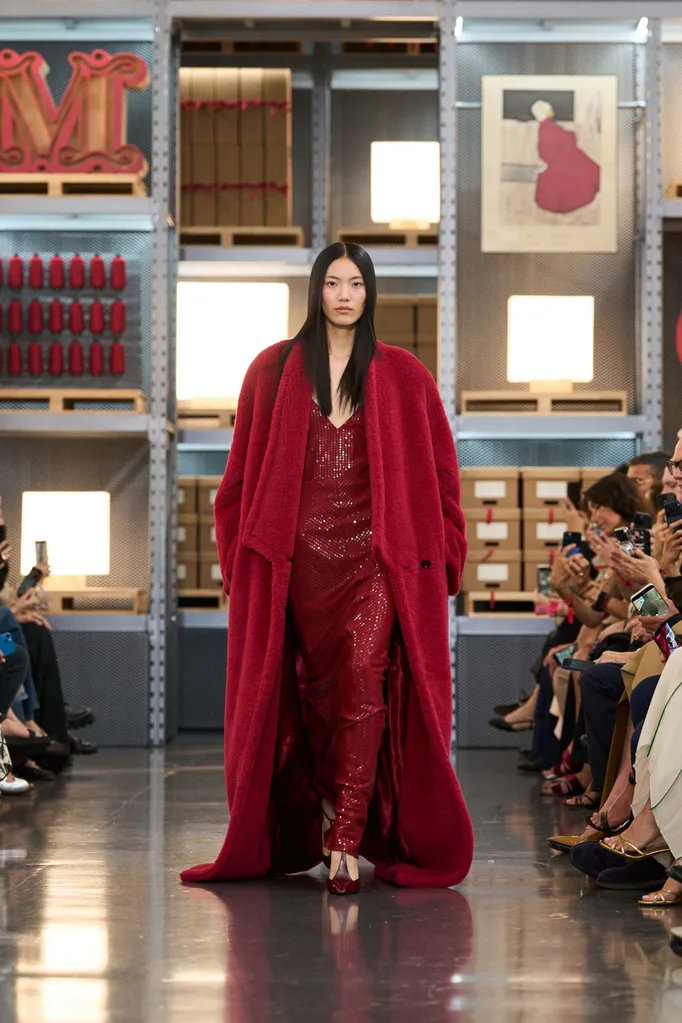
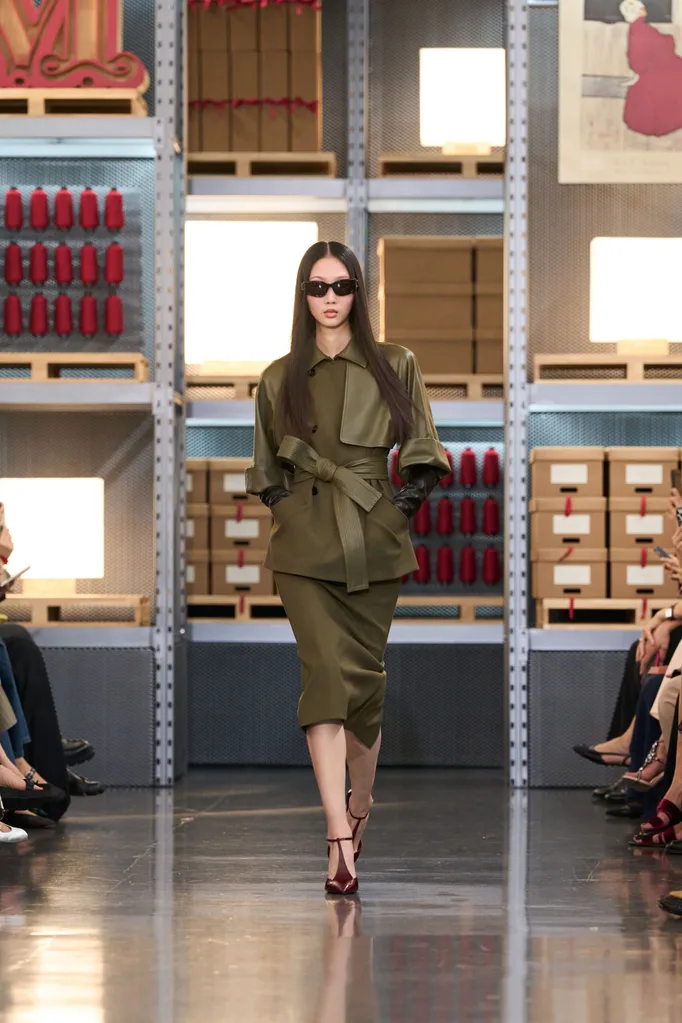
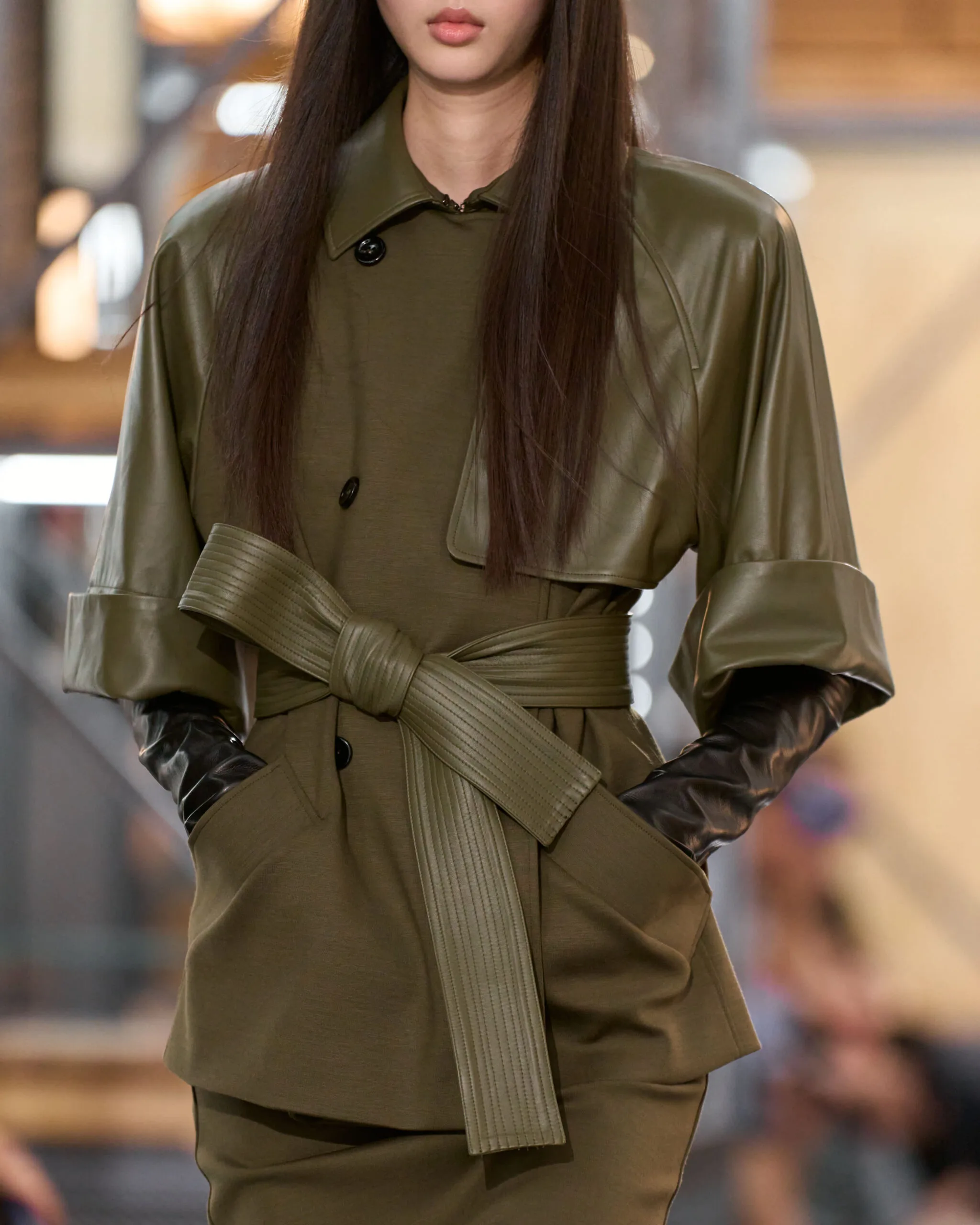
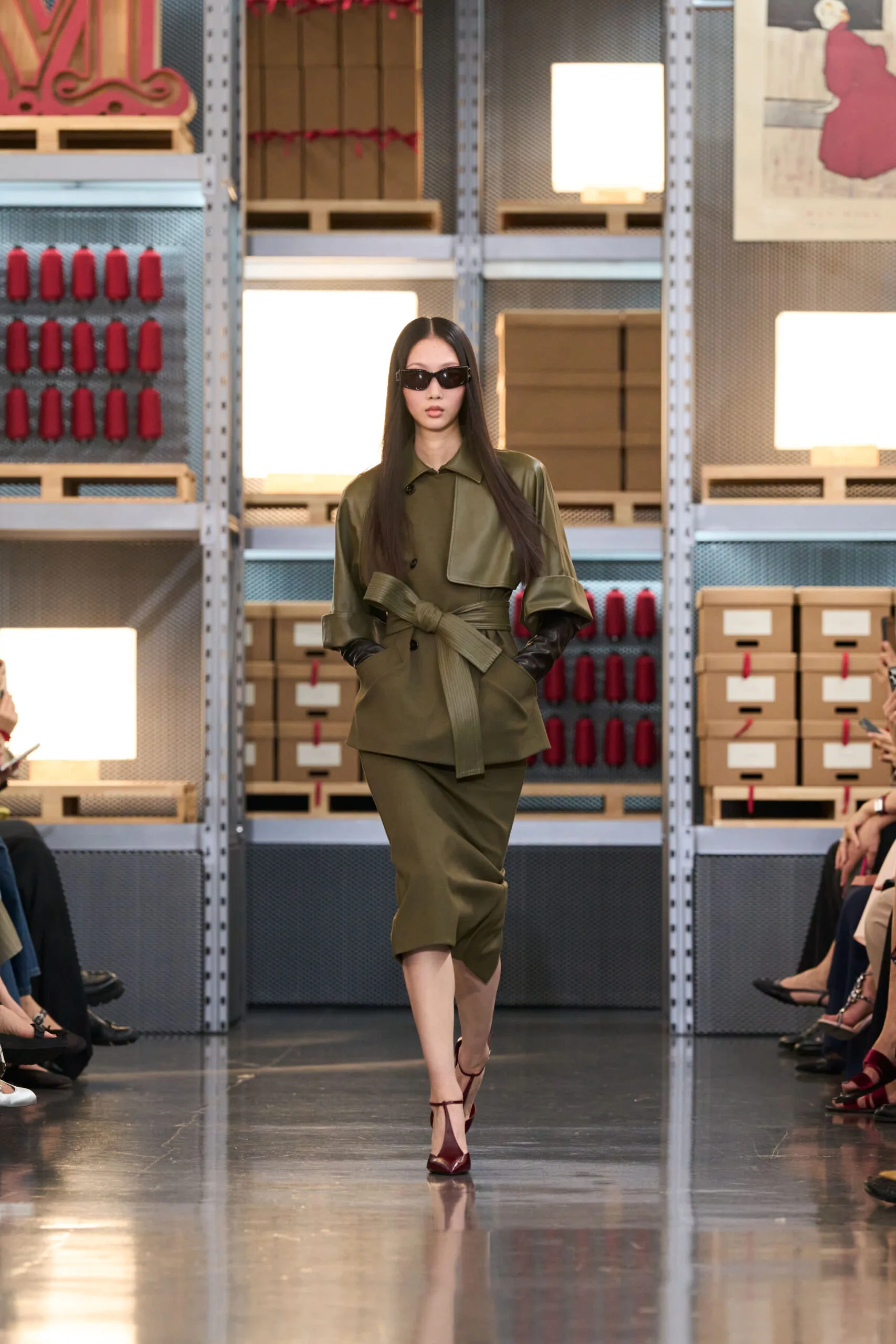
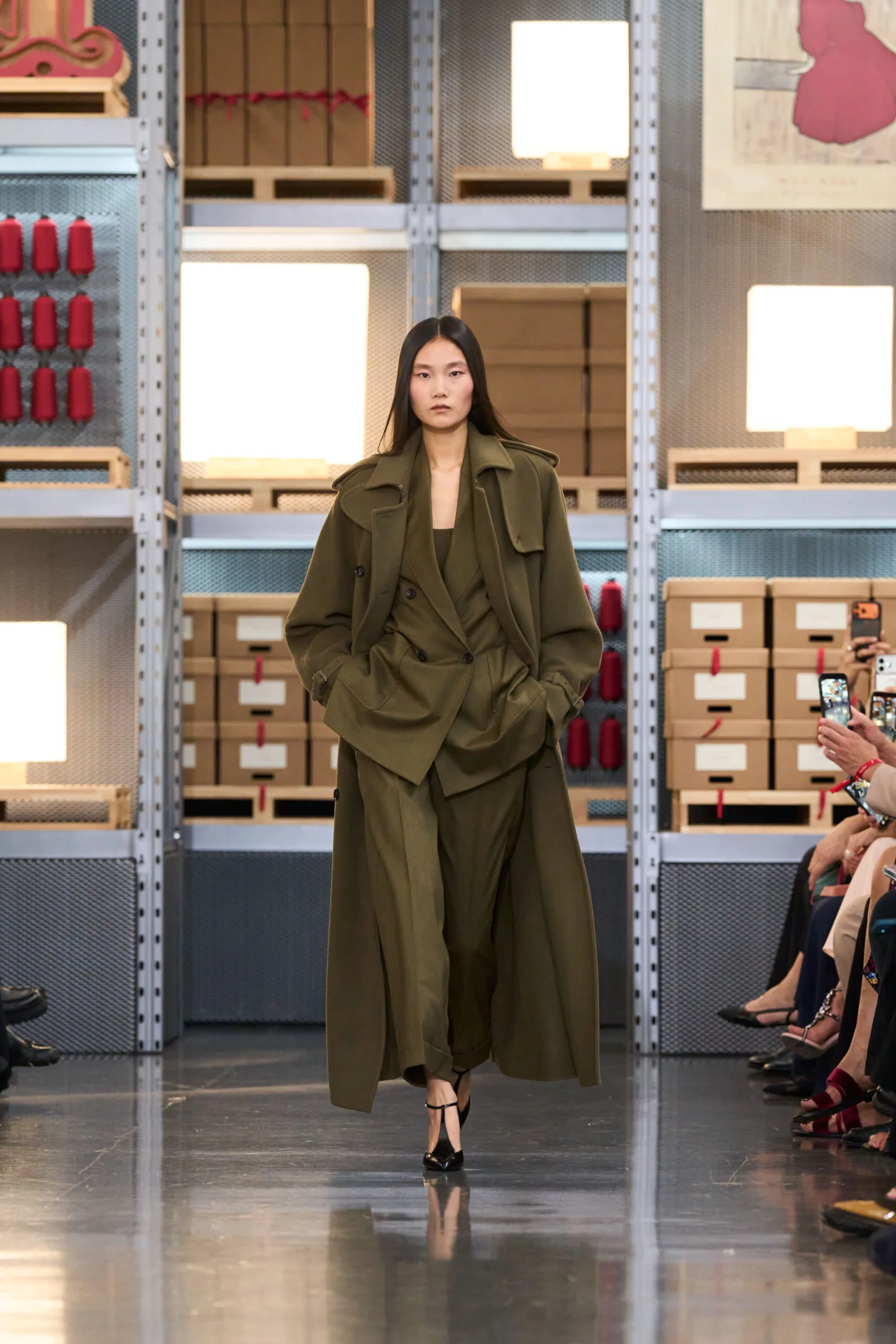
Highlights included a sweeping scarlet teddy coat worn over a liquid sequinned dress in the same saturated red. Elsewhere came oversized cocoon coats in electric cobalt, generous wrap coats in ivory shearling, sharply tailored military-inspired outerwear in olive and impeccably cut double-breasted suiting in rich burgundy.
If Max Mara’s history has been written in coats, this collection added several memorable new chapters. That makes perfect sense when Griffiths explains how he thinks about outerwear. “I trained as an architect,” he says. “A coat is the nearest thing you have to a house. It provides shelter. Warmth. Comfort. Protection. But it’s also a prestige item that communicates something about the person wearing it.”
“People have favourite coats. They don’t usually have favourite skirts.” It’s difficult to argue with him. Max Mara understands that the clothes women remember are rarely the loudest. They are the ones that accompany promotions, marriages, divorces, children, reinventions and decades of ordinary Tuesdays. That philosophy sits at the heart of the anniversary itself.
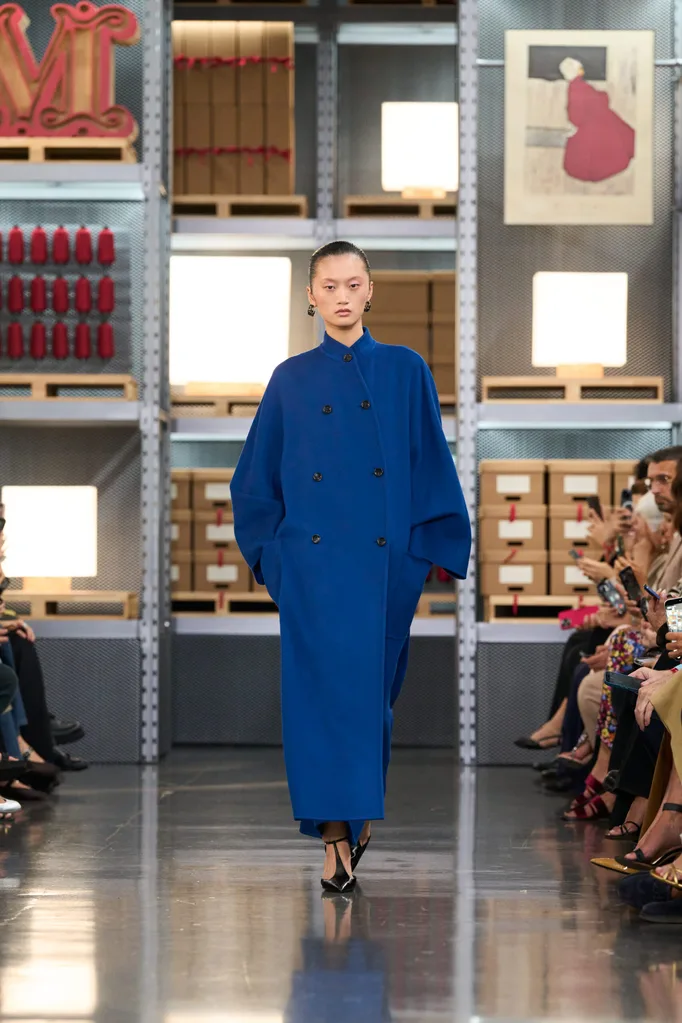
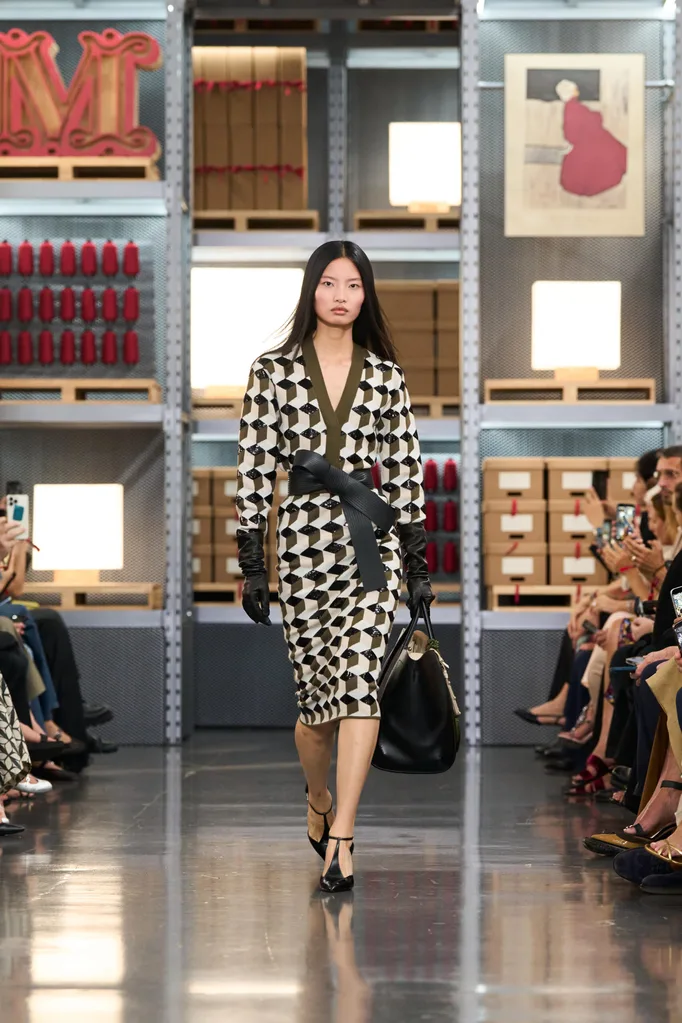
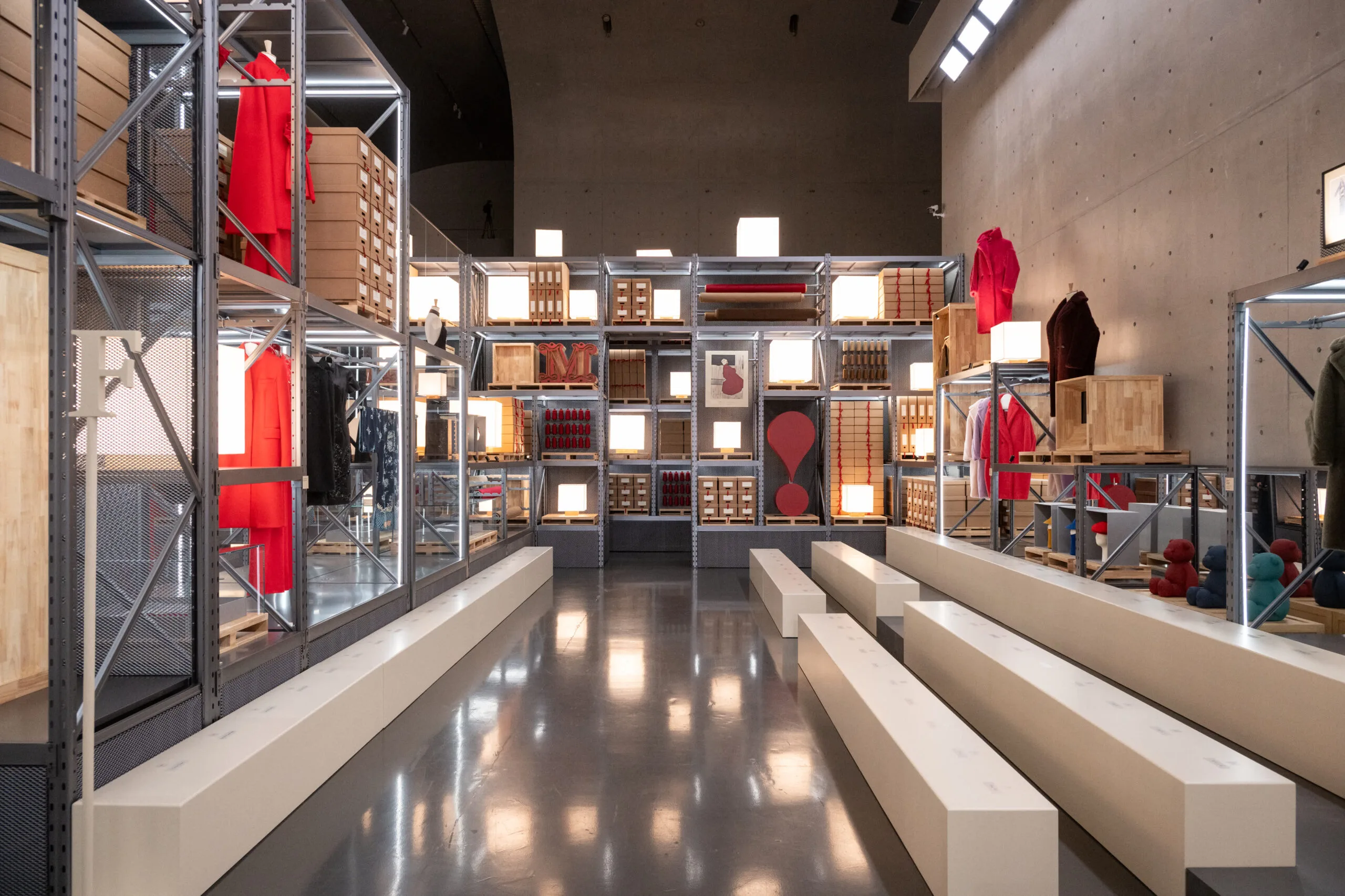
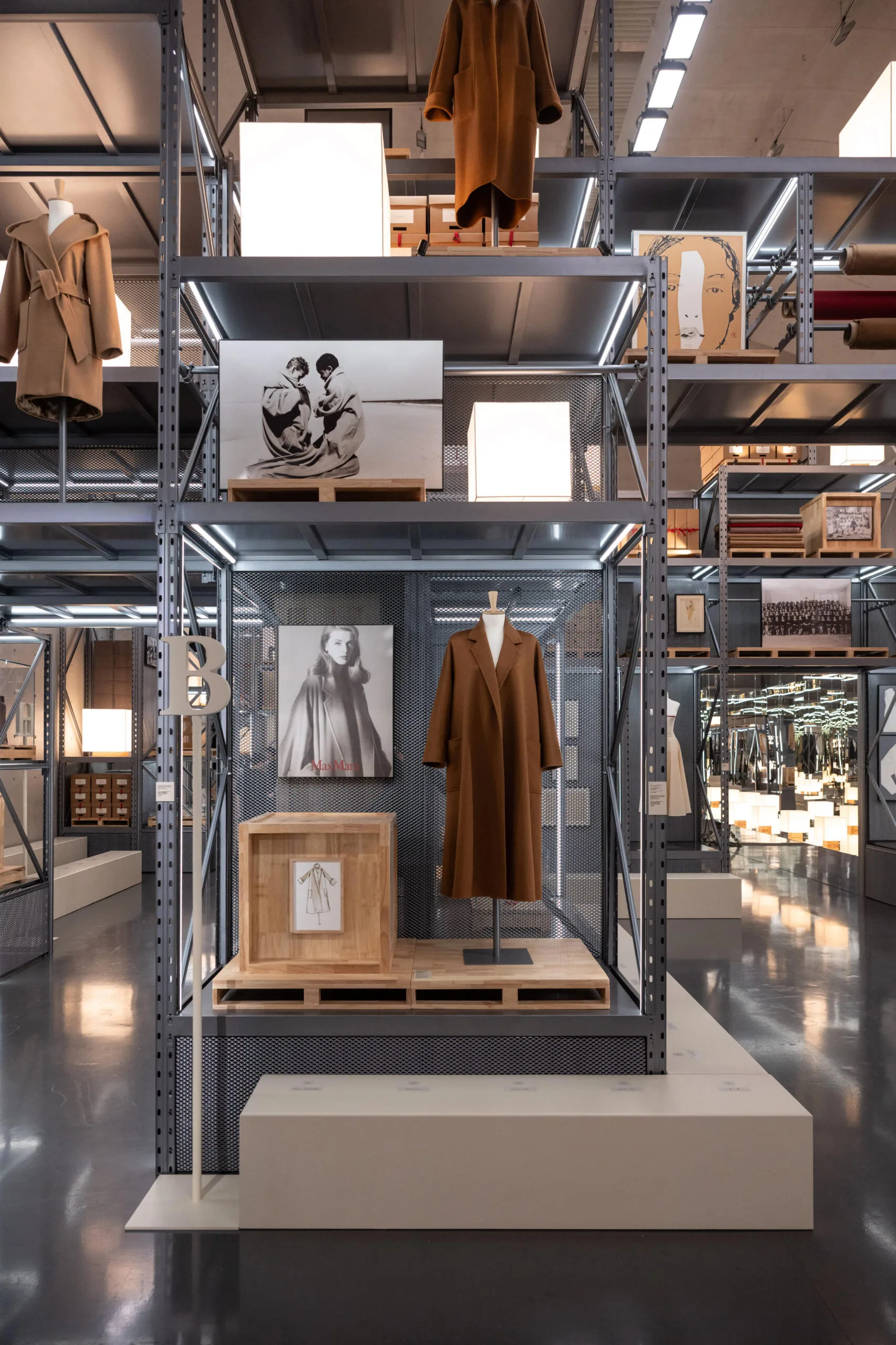
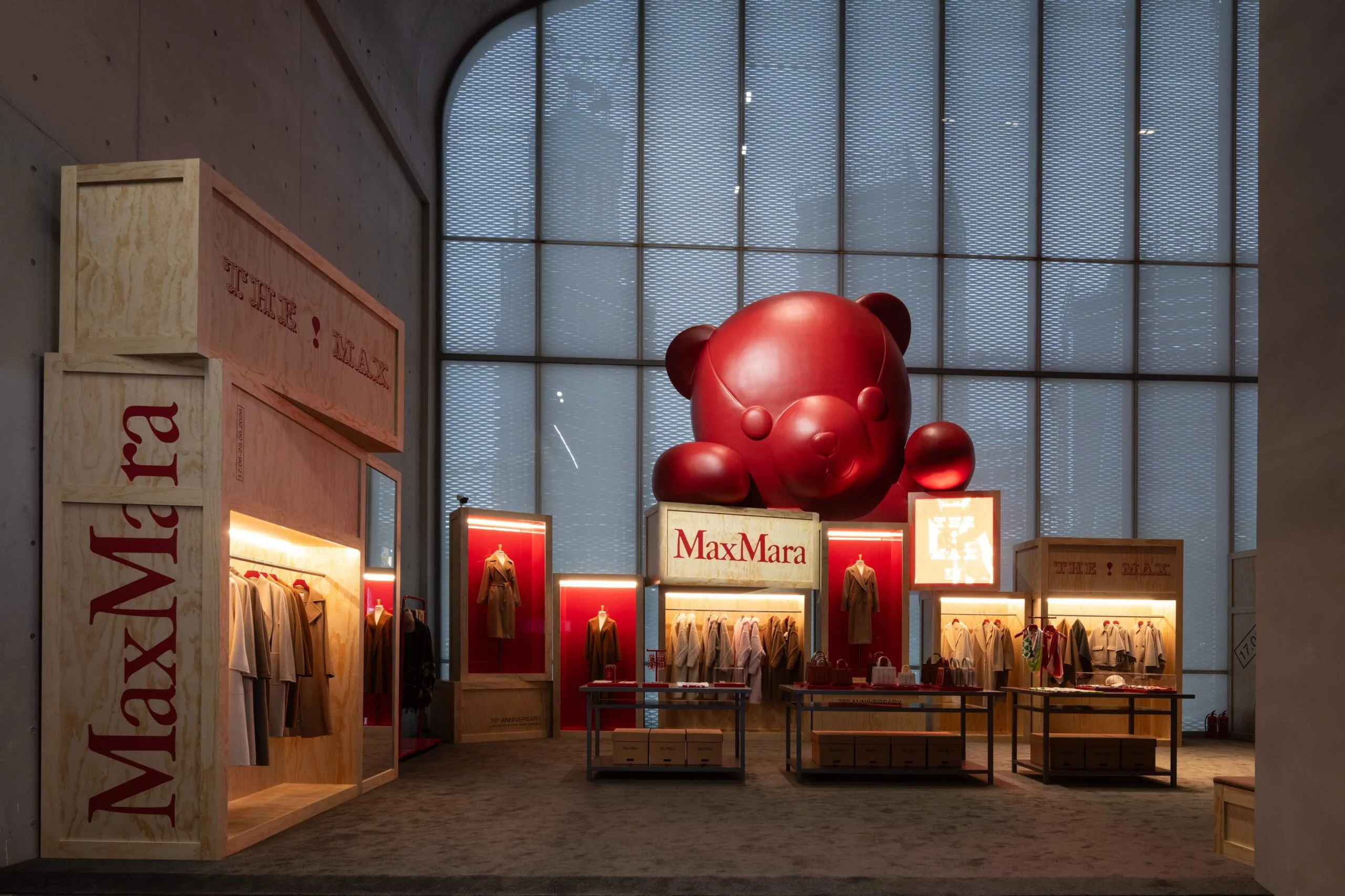
Running alongside the runway was The Max!, an ambitious exhibition curated by Olivier Saillard that transformed the Long Museum into a living version of Max Mara’s archive. Industrial storage crates became display cases. Sketches sat beside finished garments. Rolls of fabric, photographs, advertising campaigns and iconic coats shared equal importance across nine thematic rooms exploring tailoring, colour, craftsmanship and innovation.

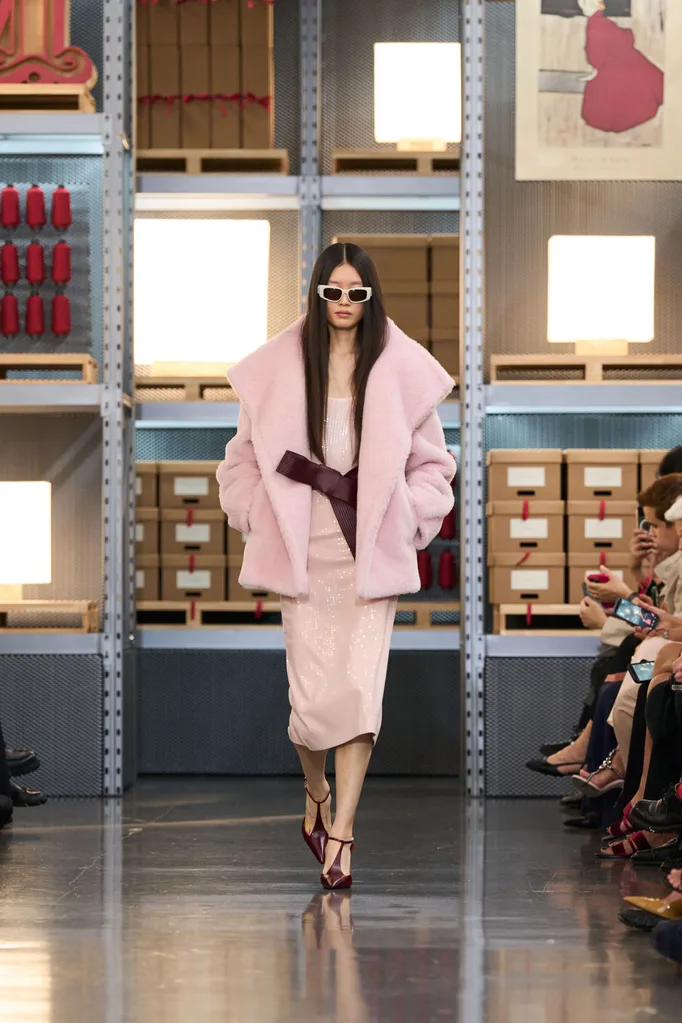
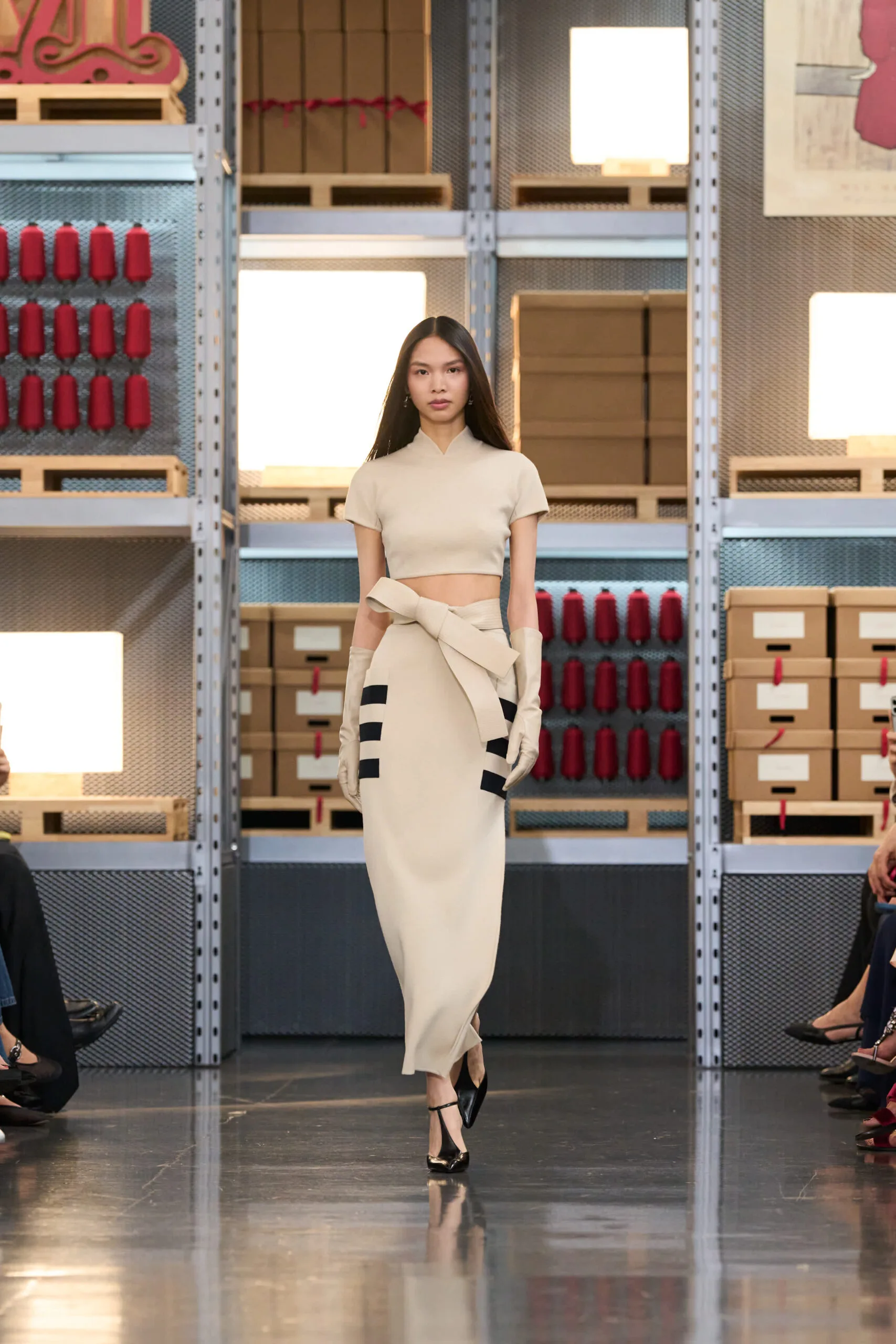
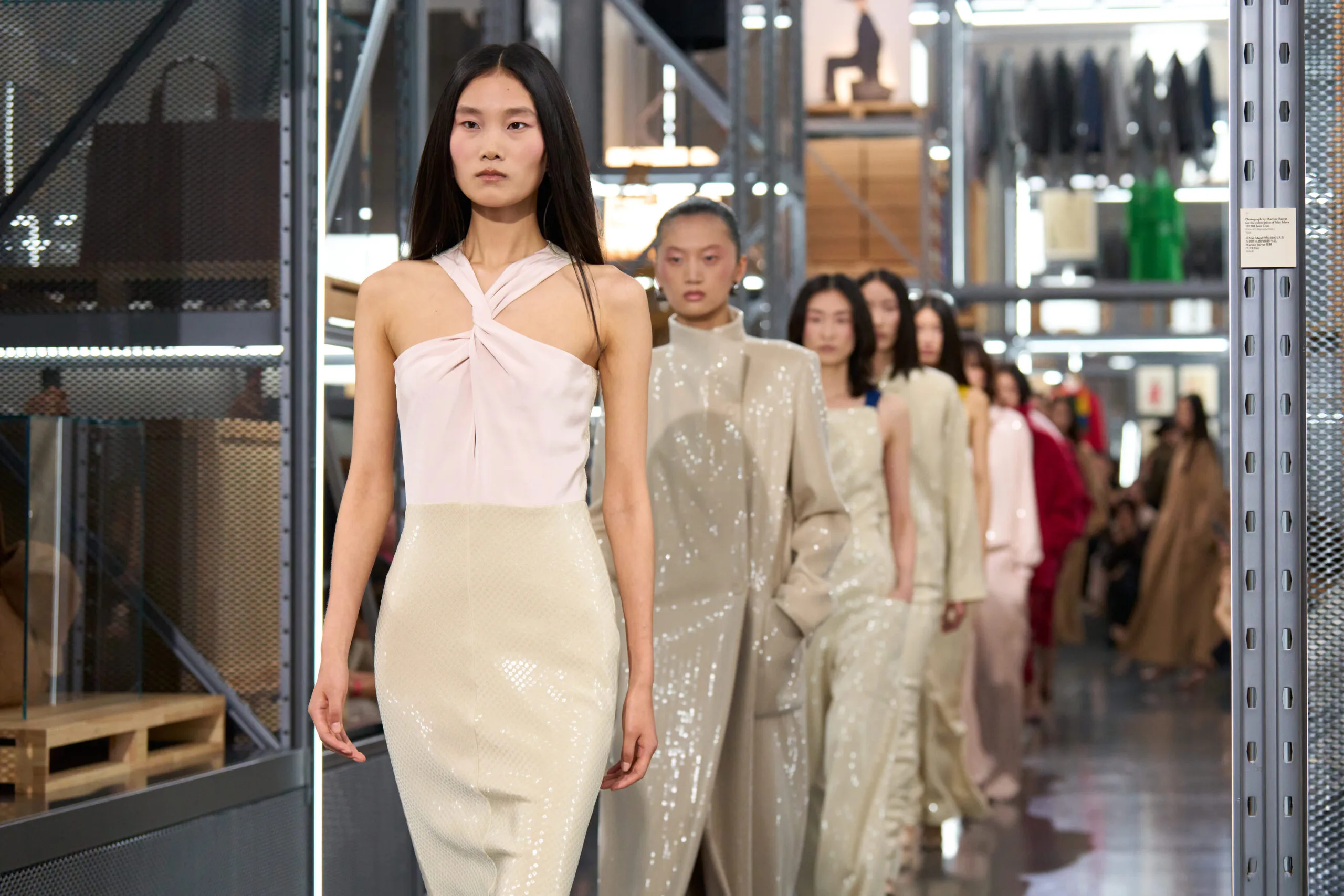
“We’re accustomed to looking back at what we’ve done in order to project forward,” he says. “Every collection is forward-thinking, but particularly this one.” That philosophy could be seen everywhere. Graphic stripes borrowed from the archive reappeared as sequinned knitwear. Geometric cube motifs resurfaced on elegant knitted dresses. Rich cognac leather sat beside camel cashmere and soft champagne tailoring. Oversized ribbed obi belts wrapped around jackets instead of conventional fastenings, while cropped jackets, calf-length pencil skirts, boxy tailoring and impeccably cut flat-front trousers created wardrobes rather than individual outfits.
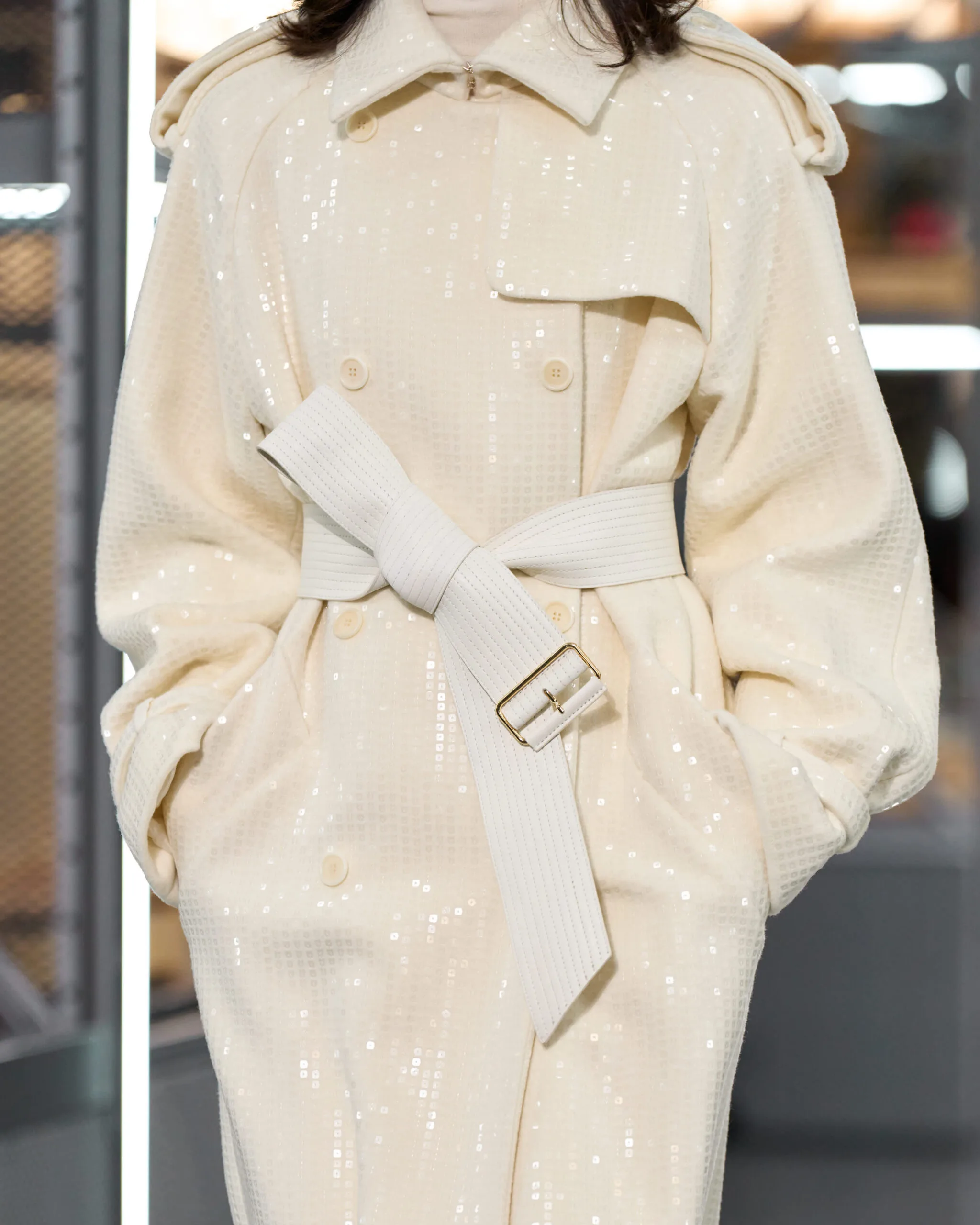
Perhaps the cleverest trick Griffiths pulled was making glamour appear entirely practical. Paillettes appeared not on evening gowns but across sweaters, pencil skirts and daytime separates. Sequins shimmered discreetly beneath oversized coats. Burgundy ankle-strap heels punctuated otherwise restrained looks. Even eveningwear possessed the confidence of women who might leave a gallery opening and head straight into an early breakfast meeting.
There was movement everywhere. “Kinetic Chic” is the collection’s title, and Griffiths is quick to explain its origins. “I wanted to express the energy of the city,” he says. “As Patricia Marx once said: New York may be the city that never sleeps, but Shanghai doesn’t even sit down.”
Shanghai’s extraordinary momentum pulses through the collection – not literally, but emotionally. Everything feels designed for modern women constantly in motion. Griffiths first showed in Shanghai nearly a decade ago, but he sees this return as fundamentally different. “The previous collection was slightly more dystopian,” he reflects. “This one is much more optimistic.”
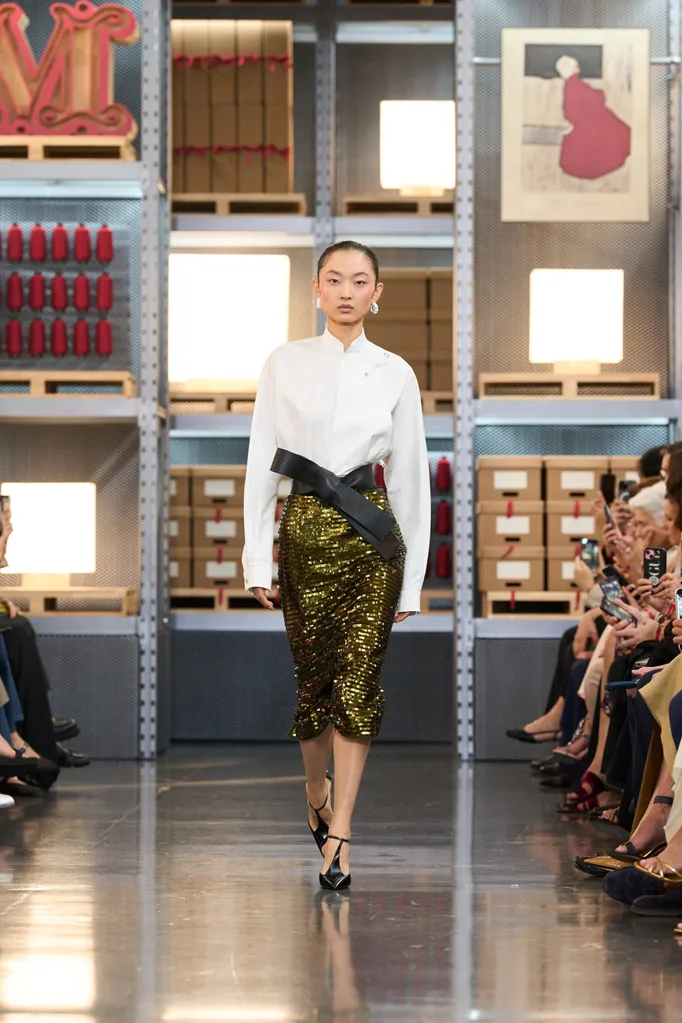
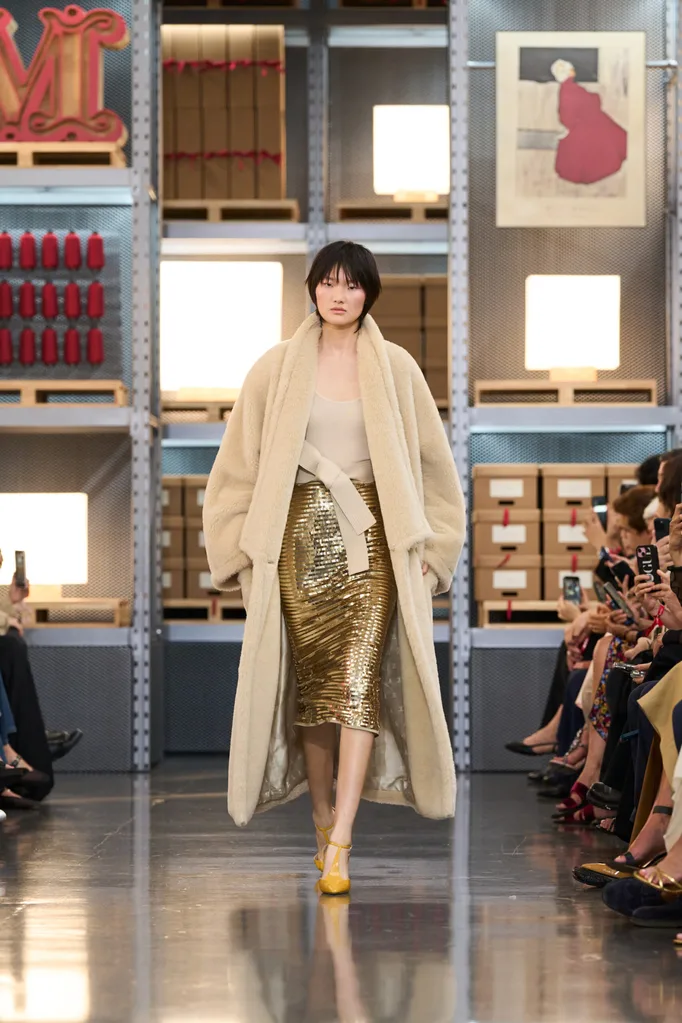
Max Mara has long been associated with Bauhaus principles – functional beauty, democratic design and objects that improve everyday life – and Griffiths embraces that lineage wholeheartedly. “I’ve always thought Achille Maramotti saw Max Mara almost as a Bauhaus fashion house.” The comparison suddenly makes perfect sense. Bauhaus rejected unnecessary decoration in favour of intelligent function. Max Mara has spent seventy-five years doing the same thing with women’s wardrobes.
Griffiths is equally determined that the collection should not impose a purely European perspective on Shanghai. “I wanted something that felt totally international,” he says, “rather than taking a Eurocentric view.”
Instead, East and West converse throughout the collection. Stretch merino cheongsams appear alongside impeccably tailored coats. Crisp white poplin shirts are fastened with traditional pankou closures. Quilted silk jackets subtly reference Chinese dress without slipping into costume. It is cultural dialogue rather than appropriation, integrated so naturally that many references reveal themselves only on closer inspection.
The anniversary also produced three remarkable archival coat reissues. The Meridian, Millenia and Metric coats – first introduced across three decades – have been recreated in featherweight cashmere using contemporary production techniques while preserving their original proportions. Limited to just 200 examples of each style, every coat carries its original sketch and story, a reminder that timelessness is never accidental.
For Griffiths, durability has never been merely about craftsmanship. The first coat he designed for Max Mara now belongs to the third generation of his own family. “My mother wore it. Then my sister. Now my niece.” It is perhaps the perfect illustration of what the brand values most.
Griffiths tells me before we part, “Max Mara respects women.” And you can feel that respect in every coat, every stitch and every carefully considered proportion. After seventy-five years, that remains the house’s greatest luxury – and perhaps its greatest advantage.


Share this post