Following the colourful whirlwind of New York Fashion Week, we have skipped across the pond to London, where the British capital’s own sartorial spectacle is now unfurling.
Last season, London Fashion Week received the royal seal of approval when King Charles descended upon the front row for Tolu Coker’s Fall 2026 presentation. With Meghan Markle having recently returned to the UK, might the Duchess of Sussex take a cue from her father-in-law and take her place among London’s front-row royalty?
The week kicked off at Olympia London, where H&M welcomed an array of familiar faces for a celebration of fashion and celebrity, with Lila Moss, Alex Consani, and Paloma Elsesser all sashaying down the runway.
Other anticipated presentations include industry heavyweights Burberry, Emilia Wickstead and Simone Rocha, alongside the eagerly awaited return of Alexander McQueen.
Elsewhere, Christopher Kane is making his debut at Mulberry, spearheading the heritage house’s womenswear ready-to-wear relaunch. Emerging and independent labels, including Chopova Lowena, Delos and KNWLS, are also set to take to the runway, bringing their distinctive, next-gen vision to the season’s proceedings.
Ahead, we round up our favourite shows from London Fashion Week Spring/Summer 2027.
Simone Rocha
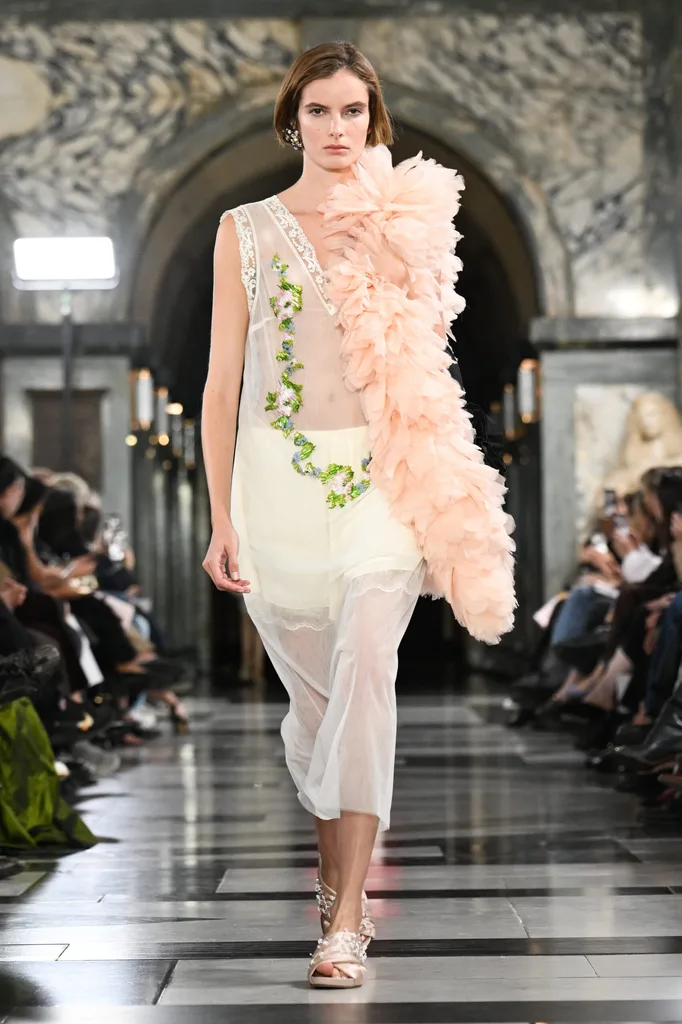
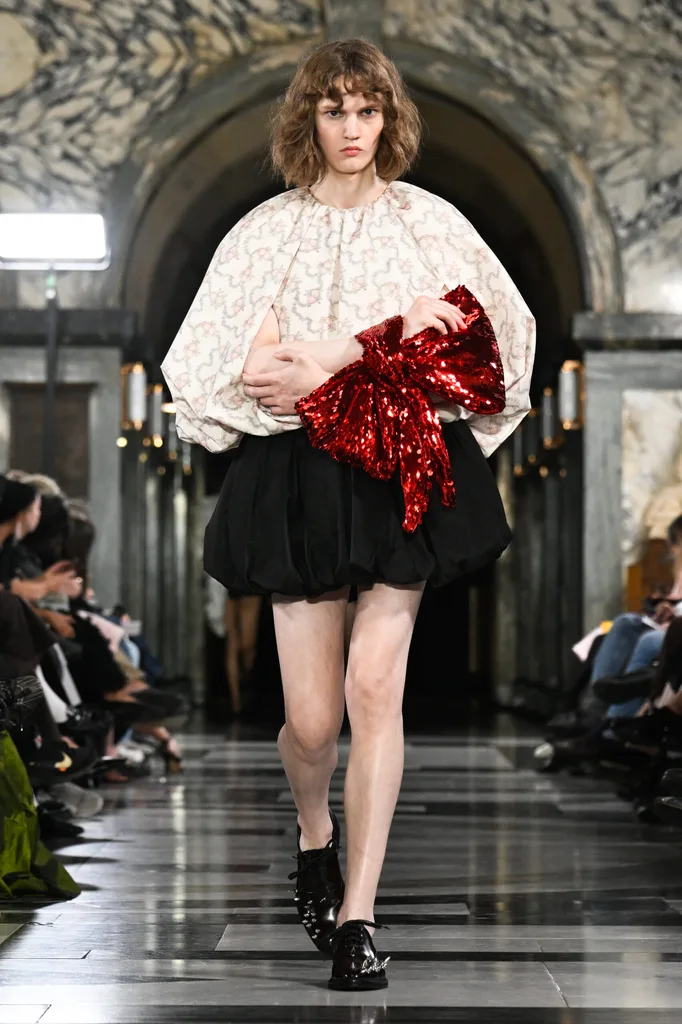
For Spring/Summer 2027, Rocha found unlikely inspiration in Caravaggio’s lost masterpiece The Taking of Christ, famously “found” in 1990 hanging in the dining room of a Jesuit Fathers’ house in Dublin.
This centuries-long mystery contained the crux of contradiction Rocha was exploring: the discovery of beauty in unexpected places, or, as her show notes put it, “humble garments valorised.”
The collection elevated the ordinary through extraordinary treatments, creating clothes that were tactile and beautiful in every sense. Workman’s jackets in cotton gabardine were given operatic volumes, hand-embellished with precious beading and petals, imbuing them with a newfound value.
Necklines were “stuffed” with handmade taffeta roses, while tailored knee-length shorts were softened beneath sumptuous ivory tulle anglaise. Head-enveloping cocoon structures encased the models’ faces in beds of roses, making “portraits of the face”.
Caravaggio’s influence also cropped up in the collection’s colour palette, most notably through two dresses rendered in a rich blue velvet. One silhouette took the form of a midi dress with a plunging neckline wreathed in roses; another, an abbreviated trapeze, was punctuated by wisteria falling from the ears.
Rather than leaning into overt romance, Rocha made intimacy feel physical and encompassing. It seeped through in the way clothes wrap, gather and pressed against the body, “a pure and unapologetic celebration of the beautiful.”
Burberry
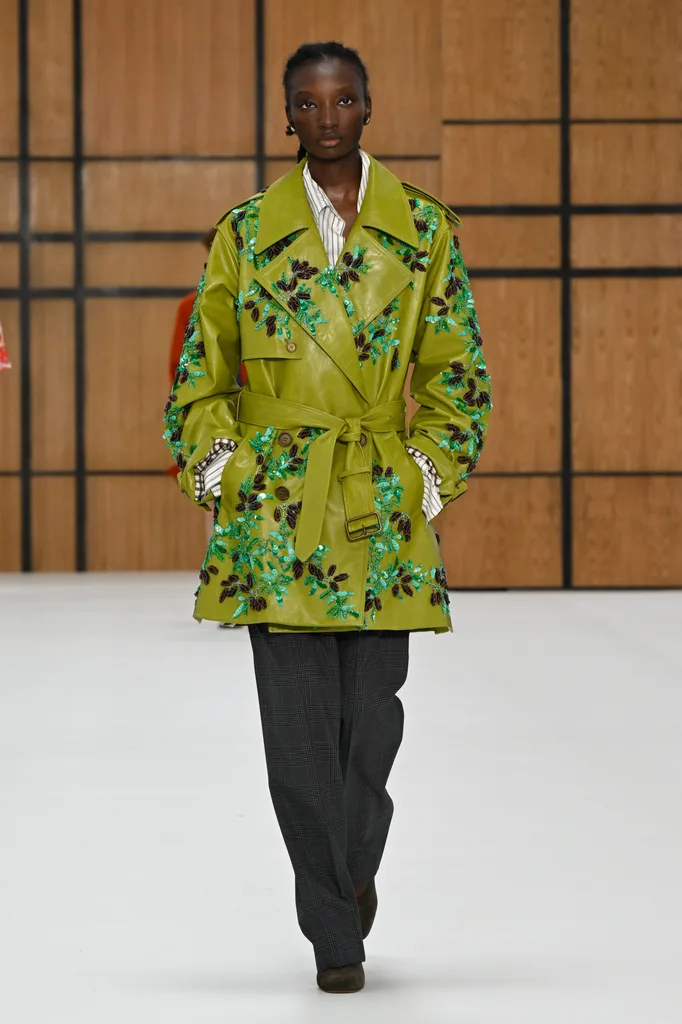
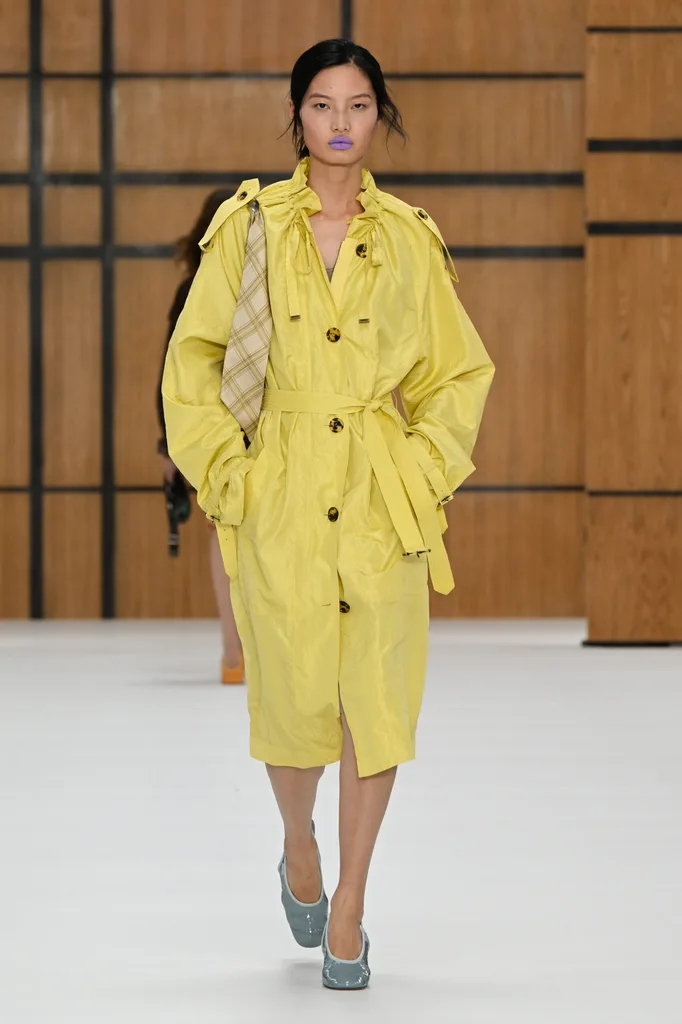
For Summer 2027, Burberry was unshackled from its perfect polish, and instead, revelled in instinct, tactility and feeling. Daniel Lee’s vision sought its soul in the joyful, unmistakably British work of textile artist Celia Birtwell, whose exuberant prints transform the House Check into gingham, stripes, clashing florals and faces.
Washed silk and cotton lend the clothes the intimacy of pieces already loved, while relaxed silhouettes and abbreviated tailoring bring a youthful lightness. “Nothing is overly pressed or pristine,” Lee says. “There’s an intentional imperfection: the idea of owning a piece, living in it.”
Hand-finished florals bloom across the equestrian Derby while woven leather gives the signature Sloane bag an artisanal richness. Against Chelsea College of Arts’ restrained architecture, intricate embroidery, trompe l’œil trench details and airy volumes bloomed through Birtwell’s saturated palette. Set to four decades of David Bowie, Burberry found beauty in the tension between control and spontaneity.
Mulberry
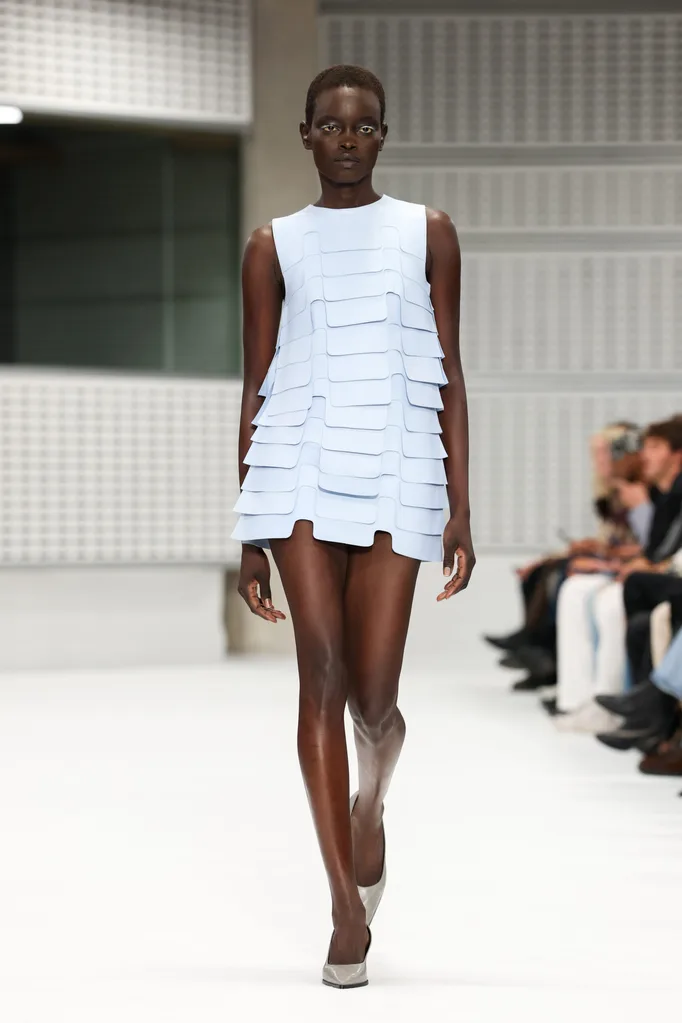
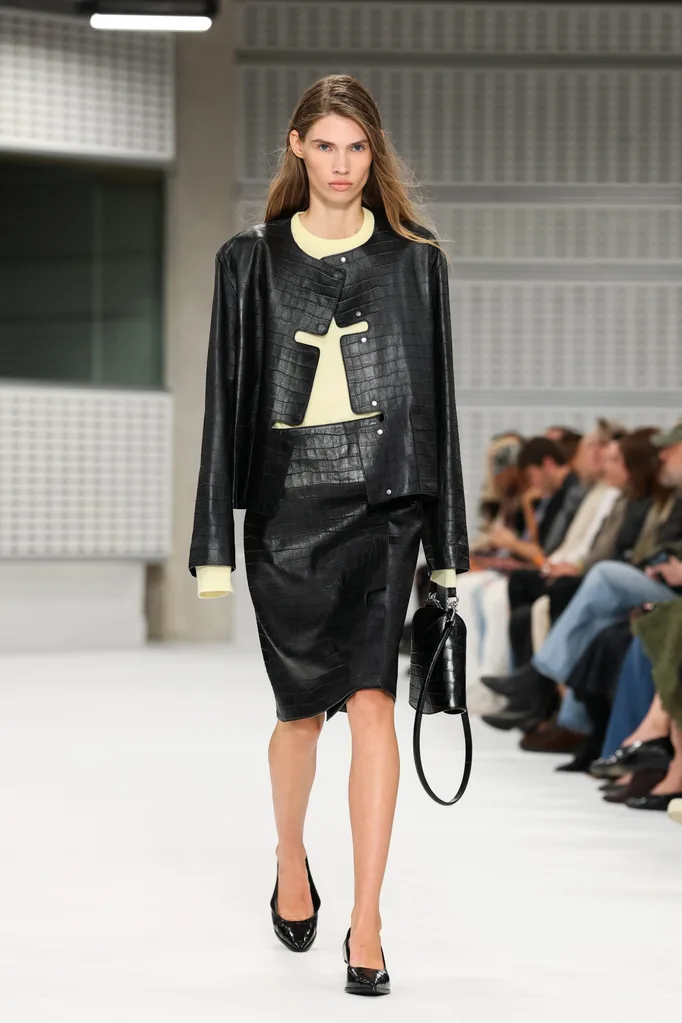
Christopher Kane’s arrival at Mulberry marked one of the most eagerly anticipated moments of London Fashion Week, returning the storied British house to the official schedule after an absence of almost a decade.
It was a homecoming heralded, fittingly, by images of destruction and renewal. In the days preceding the show, Kane offered cryptic clues to his intentions on Instagram: an axe sinking into the bark of a tree; a green seedling sprouting from the earth. After years away from the London Fashion Week calendar, the designer appeared intent on pruning back in order to grow anew.
For his debut collection, Kane looked to the inherent contradictions of British life, placing “establishment and subculture; the precious and the practical; nature and industry; uniformity and individuality” in deliberate conversation. The result was a collection grounded in the house’s heritage, but far from beholden to it. The foundation was, naturally, leather-heavy. The material long synonymous with Mulberry was carefully reimagined, while cut-outs punctuated dresses and jackets, their apertures recalling the distinctive shape of the Bayswater bag.
Kane dipped his toe into evening-wear too through iridescent, layered dresses, while familiar signatures were pulled from the archive and distorted for a new era, with heritage checks and oversized logos reappearing in unexpected forms.
Erdem
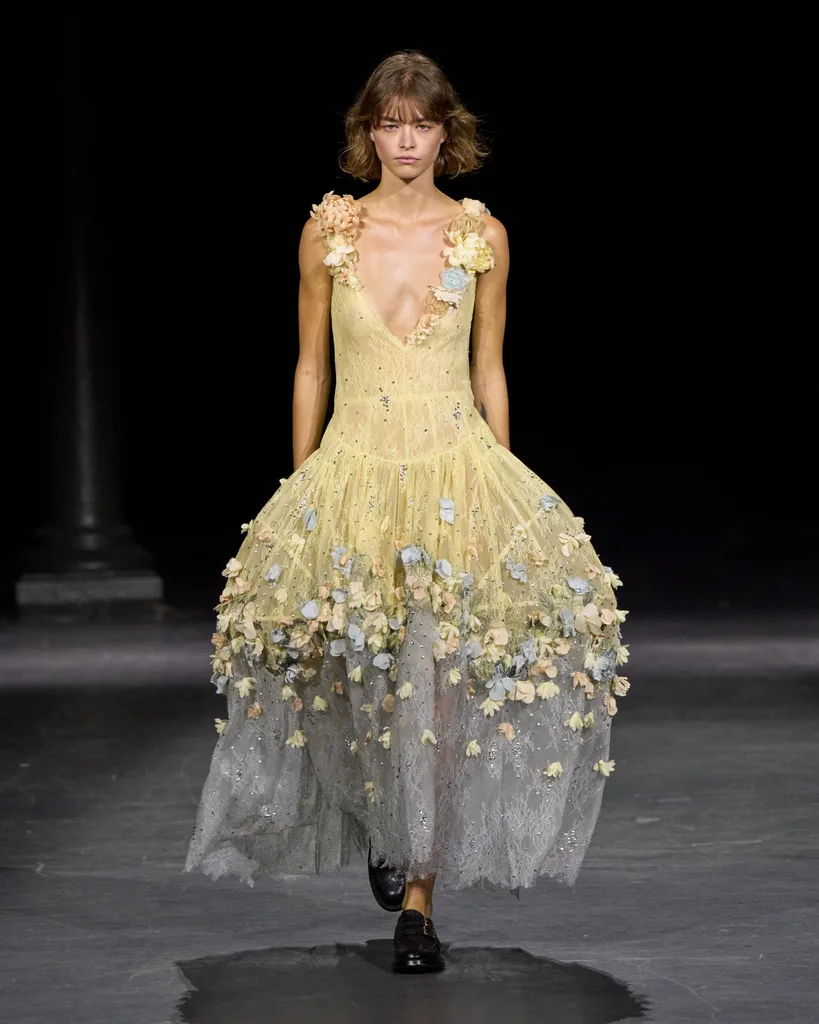
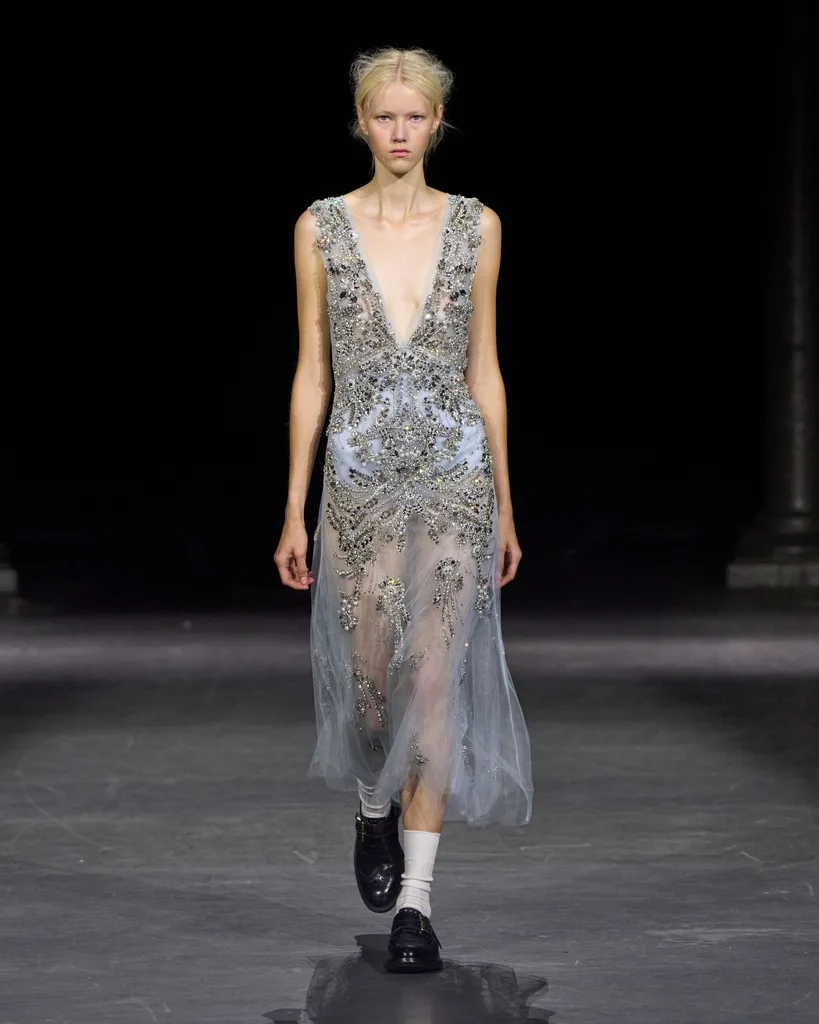
For Spring Summer 2027, Erdem Moralioglu explored the charged space between masculinity and femininity, drawing inspiration from Barbette, the Texan-born aerialist who became a sensation in 1920s Paris.
That tension pulsed through the collection, marrying delicate lingerie, feathered flourishes and sparkling embellishment with sharply tailored coats, tweed and structured menswear. The offering was theatrical yet remarkably assured, balancing the fragility of the performer’s costumes with the physicality of his craft.
Man Ray’s celebrated photographs of Barbette informed the collection’s sense of spectacle, while Erdem’s intricate craftsmanship transformed that history into something distinctly contemporary.