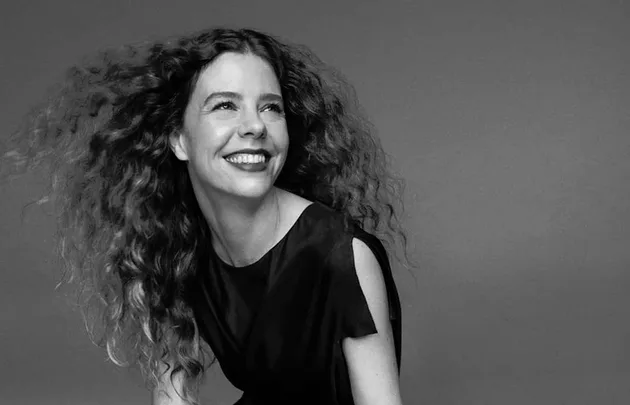
Bianca Spender has opened up about returning to work just six weeks after giving birth, admitting the decision came with sacrifice, guilt and moments she can never recover.
Speaking to marie claire editor Georgie McCourt on You’re Gonna Want to Hear This, the Australian designer said the unforgiving realities of running an independent fashion label left her feeling that stepping away was not an option.
“I can’t say that I went back to work when my kids were six weeks old and that was tough,” Spender said. “There are moments I missed that, if I had stayed home, I wouldn’t have missed. And I can’t ever change that.”
While people warned her she might regret missing parts of her sons’ early lives, Spender said she was also committed to protecting the business she had worked to build. “In fashion, if I didn’t go back, you’re out,” she said. “Particularly when you have your own label, you can’t get out and go back in.”
“It’s hard enough to start a label. It’s hard enough to get it going. But to walk away from it is just – you can’t get back into it and build all those dimensions again.” Ultimately, Spender said she “had to believe” two things could be true at once: that she could pursue an ambitious career and remain a loving, present parent.
“I had to believe I could be a good mum and do what I loved,” she said. “I was teaching them they can do what they love and be a good parent. If they’re a boy, they’re learning that their partner can do that, and if they’re a girl, they’re learning that they can do that. That’s the biggest gift I can give them.”
‘The Mother Guilt Will Always Be There’
Spender does not claim to have conquered mother guilt. Instead, she has learned to manage it by seeking out people who understand the same conflict. “One of the things I had to do to help myself was surround myself with people who were real champions or cheerleaders of you,” she explained.
“When I was feeling really guilty, I would talk to people who were struggling with the same challenges of balancing work and kids.”
Those conversations were not limited to women. “I had some guy friends who were struggling not being there with their kids, and they felt they were missing out,” she said. “Generally, connecting to people who were struggling with the same thing really helped me.”
Spender’s partner became the primary carer, while the couple also relied on friends and family daycare. Watching her sons develop meaningful relationships with other adults helped her reframe what she had previously considered an absence.
“You’re teaching them that they’re comfortable with lots of people, not just you,” she said. “You’re teaching them that they can build these really important bonds, and there are these whole groups of people that care about them deeply.”
For Spender, the answer lay in viewing motherhood not as a series of isolated moments, but as a long-term project. “The mother guilt – and it always will be there – it had to be committed into the long game,” she said. “What do you want them to be as an adult, rather than what experience do you want this one-year-old to have?”
“I can’t make this one-year-old not cry if I go to work and they’ve hit that massive attachment phase. It’s devastating.” In those moments, she focused on the adults she hoped her children would become.
“I’m holding onto the 20-year-old right now, or the 30-year-old that has kids,” she said. “You can feel very loved and not be there all the time.” Still, Spender occasionally seeks reassurance directly from her sons. “I literally ask my poor kids, ‘Do you feel really loved? I just need to know,’” she said. “And they’re like, ‘Yes, Mum, I feel really loved.’” Her youngest son, Florian, even created the family’s now-cherished sign-off: “Love you with all my heart forever and ever.”
Spender also developed a slightly unconventional way of reconciling her work and family lives. “Business was the first child,” she said. “When you have three children, you don’t ever think that they’re loved less just because there are three of them. You just think they’re all loved.”
“I always wanted to have three, and I did end up having three. One just was the fashion business, and the other two are beautiful boys.”
Listen to the full episode here

Related stories

Native ad body.
Native ad body.




Native ad body.