Trigger Warning: This story discusses the sudden deaths of children, child loss and grief. Some details may be distressing to readers. Please take care when reading.
They were four happy, healthy children whose lives ended suddenly, leaving two families devastated and desperate for answers. Now, in an emotional conversation with marie claire, Danielle Lilley and Melissa Carlton reveal how a rare genetic condition claimed the lives of two children in each of their families – and why they’re fighting to ensure other parents don’t face the same unimaginable heartbreak.
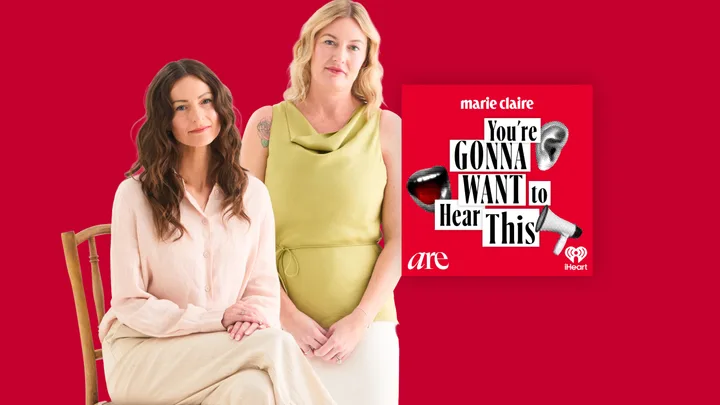
When Danielle Lilley and Melissa Carlton joined me for an episode of marie claire‘s You’re Gonna Want To Hear This podcast, I knew their stories would be heartbreaking. Both women had lost two children to a rare genetic condition they didn’t know existed. What I wasn’t prepared for was the extraordinary strength, anger and determination behind their stories, or how a single genetic test might have changed the course of their families’ lives.
For Melissa, a mother of four from Canada, everything changed in April 2024. Her nine-year-old daughter Abby was a happy, healthy little girl who loved her friends and family. The night before she died, she’d been playing outside with her neighbourhood friends. “I remember I was pulling out of the driveway because I had a meeting to go to, and I looked back and saw her at the front of my house with all of her friends, and she was so happy,” Melissa recalls. “I love that last memory of seeing her in her element with all of her friends.”
Just hours later, Abby woke complaining of a stomach ache and climbed into bed beside her parents. It seemed like an ordinary childhood illness. But sometime that morning, Abby died in her sleep. Paramedics spent approximately two and a half hours trying to revive her. An autopsy later attributed her death to sepsis, although Melissa struggled to understand how her seemingly healthy daughter could have deteriorated so suddenly.
Twenty months later, on Christmas morning, tragedy struck again. The family was visiting relatives in the United States when five-year-old Molly woke with a stomach ache. “We just assumed she was going to get what they had had,” Melissa explains, referring to a gastrointestinal illness circulating among relatives. Molly fell back asleep beside her mother, but when she woke again at approximately 7am, she collapsed and went into cardiac arrest.
Despite being rushed to a specialist hospital, Molly suffered three cardiac arrests and could not be saved. “We had hope that she would come back,” Melissa tells me. “I thought she was going to wake up and tell me she’d seen her sister or something. I was just holding onto this hope that everything was going to be okay. This was not going to happen to us a second time.”
That Christmas Day, Melissa and her husband Tom returned to their two surviving children, Lily and Harry, and had to tell them they’d lost another sister. “We went back home and sat there in shock, and they wanted to open presents, so we let them, and it was just surreal.”
On the other side of the world, Perth mother Danielle Lilley had experienced an almost identical nightmare. In 2021, she welcomed her first child, Sonny, a happy little boy with bright blue eyes and blonde hair who loved swimming lessons and making his mother laugh. At nine months old, he developed mild gastro symptoms. Concerned about dehydration, Danielle took him to hospital. Within minutes, his breathing changed and he went into cardiac arrest. Doctors initially revived him, but he suffered another cardiac arrest during his transfer to a children’s hospital.
“I remember pleading with them, going, ‘No, show me what to do, show me what to do. I’ll do it,'” Danielle recalls of the moment doctors told her they couldn’t save Sonny. “Nine-month-old babies don’t just die, you know? I remember googling and searching and trying to analyse everything. What did I miss? You have that very big mum guilt, because you feel like you’re the mum. You’re there to protect them.”
For years, Danielle had no explanation. She asked about genetic testing but says she was repeatedly reassured that Sonny’s death was simply an incredibly unfortunate event. When she became pregnant again, she was told genetic testing was expensive and unnecessary without a family history.
Her daughter Airlie arrived in November 2022. Danielle called her their “little heart healer”. But at five months old, Airlie developed gastro symptoms and suffered a cardiac arrest. This time, doctors urgently ordered genetic testing. The results revealed a rare inherited condition involving the PPA2 gene. Testing of Sonny’s stored samples subsequently confirmed that he had the same condition.
PPA2-related disease affects the body’s ability to produce energy, particularly in the heart. Illness can place additional demands on the body, potentially triggering a sudden and catastrophic cardiac event. Although the diagnosis finally provided answers, there was no cure.
Airlie survived her first cardiac arrest and lived for another 12 months. Danielle became intensely vigilant, avoiding crowded shops, monitoring potential exposure to illness and working closely with specialists on an emergency care plan. But at 18 months old, Airlie contracted gastro again, deteriorated rapidly and went into cardiac arrest. Despite prolonged resuscitation efforts, she died.
“She was such a vibrant, happy little girl, very social, and you couldn’t control her. She was the boss,” Danielle tells me. “We ultimately just made the decision to stop the CPR and just keep our fond memories of her in that way.”
For both mothers, answers came only after losing their second child. Following Molly’s death, the SUDC Foundation arranged and funded comprehensive genetic testing, which identified PPA2. Stored samples from Abby were then tested, confirming she too had the condition.
What followed was not only devastating grief, but anger.
“The system failed me and my family,” Melissa says. “Just one genetic test is all they would’ve needed when Abby died, and we would’ve caught the disease and tested our whole family, and we would’ve caught it in Molly, and we would’ve had a care plan, and we’d have had a proper shot at being able to care for her and give her the best chance.”
Danielle shares that frustration. “Why weren’t we referred to genetic testing, and why isn’t genetic testing a part of the autopsy process?” she asks. “I think a lot of people assume genetic testing is included, but it isn’t, and it’s up to the discretion of the forensic pathologist and the coroner.”
The women have now joined forces to advocate for earlier genetic screening, better investigation of unexplained childhood deaths and greater support for bereaved families. Through the Early Answers Foundation, they’re calling for improved access to reproductive carrier screening, newborn screening and genetic testing following sudden unexplained deaths.
Their mission extends beyond PPA2. “We have the technology,” Melissa says. “We just don’t use it, and that’s what brought the rage. We could have known this.”
But beyond the science and advocacy is something even more personal: the need to keep their children’s memories alive.
For Melissa, grief sometimes arrives in the most ordinary moments. “Sometimes I’ll find myself looking for Molly, because she was the youngest too. If we’re out and about in a busy place, I’m like, ‘Where is she?’ And then I just have this sinking feeling like she’s not here.”
For Danielle, it’s the absence of the daily rituals of motherhood. “You feel like you’re leaving the house, but you’re forgetting something. Because you’re no longer packing prams, and getting car seats, and strapping kids in, because they’re no longer there. But you’re still like, ‘I should be doing something.'”
Both women want people to know that talking about their children doesn’t make the grief worse. In fact, it’s the opposite. “Our biggest fear is that people will forget them and won’t talk about them,” Melissa explains. “People are worried that they’re going to upset you, but we’re already hurt. We’re already upset. We’re already in pain. But it’s worse when people don’t say something and don’t acknowledge them.”
Danielle remembers Sonny’s enormous smile, his funny squeaking laugh and his obsession with bubbles. Airlie, meanwhile, was cheeky and fiercely independent. “She was my heart healer, she was my little bestie. I think we would’ve been partners in crime, for sure,” she says.
Melissa remembers Abby’s kindness and the way she gave the best hugs. Molly was funny, affectionate and full of attitude. “She was, like, the funniest person I’ve ever known,” she says. “They just left huge holes, just massive holes in our lives, and so we just miss them every single day.”
Danielle is now undergoing IVF with genetic testing of embryos, hoping to have another child. It’s an emotional and uncertain journey, but one she is grateful is possible.
And when I ask what they most want people to take away from their stories, their message is clear. “We want earlier answers and we need everyone’s stories,” Melissa says. “We need everyone to come together. It’s not just about PPA2 and one rare disease. It’s about all of them.”
For Danielle, advocacy has become another way of mothering the two children she lost. “They’re not here physically, but I’m still Sonny and Airlie’s mum. I still wake up every day and I’m a mum even though physically I don’t have them, and I still want to make my children proud.”
It’s a sentiment I haven’t stopped thinking about. These women aren’t simply fighting for answers. They’re fighting for the future of other families, while ensuring the lives of four extraordinary little children are never forgotten.
Listen to Danielle Lilley and Melissa Carlton’s full interview on marie claire’s You’re Gonna Want To Hear This podcast, available on your favourite podcast platform and the marie claire YouTube channel.
This episode discusses child loss and grief. Support is available through Lifeline on 13 11 14 and Beyond Blue on 1300 22 4636.

Related stories

Native ad body.

Native ad body.



Native ad body.