When someone asks, “How are you?”, what’s your default response? Good? Fine? Busy? What about after you’ve survived breast cancer, re-entered the world with your fight seemingly behind you but your life forever changed by what you experienced? That default response is probably a little more nuanced.
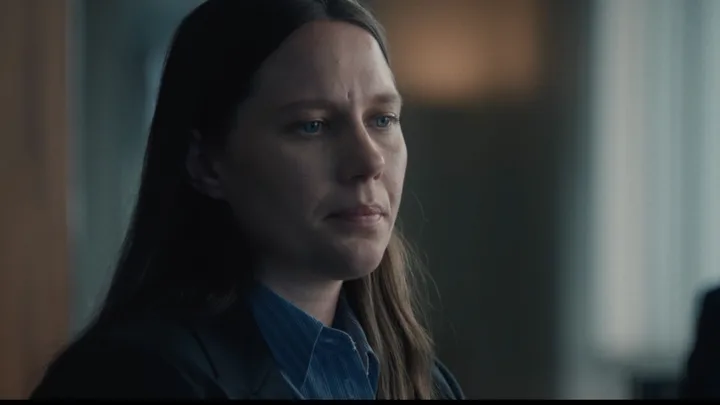
In a new short film from Breast Cancer Network Australia, the notion that the fight ends when treatment finishes is challenged, putting the realities of survival front and centre. Fronted by Logie-winning actress Brenna Harding, The Whole Story is inspired by the real-life experience of breast cancer survivor Bec Chan and centres on a professional woman who has returned to work following breast cancer.
When a colleague asks her how she’s doing, Harding, who plays the short film’s lead, delivers a monologue of confessions detailing the aftermath of her treatment.
RELATED: Seven Women Share Why They Choose To Stay Flat After Having A Mastectomy
“I used to love this job, but now I’m not even sure I can do it anymore,” the woman tells her colleague. “But as you know, I can’t take a break as I’ve run out of leave, my bank account is close to zero and my family is in so much debt because of me.” Those realities are just the tip of the iceberg, but ones shared by countless women who have experienced breast cancer.
Data from the Breast Cancer Network Australia reports that 86 per cent of survivors require financial support or assistance managing high out-of-pocket costs, with 71 per cent needing return-to-work support. Other statistics reveal similar ramifications: 89 per cent report needing fear-of-recurrence support; 70 per cent require support for sexual health and body image; while 80.5 per cent need ongoing mental health support.
In The Whole Story, the male colleague Harding’s character is addressing is bewildered by the litany of impacts her treatment has had on her life — a sentiment survivors often encounter following treatment. “When you ask me how I’m doing, you assume the worst is behind me, so what am I meant to say?” Harding’s character asks. Her point, and the message Breast Cancer Network Australia is sending with the short film, is that fighting cancer doesn’t end once treatment stops.
Breast Cancer Awareness Network is doing important work in this space, supporting survivors with resources and services designed to meet women fighting breast cancer at every stage of their journey.
To find out more or donate, visit bcna.org.au.