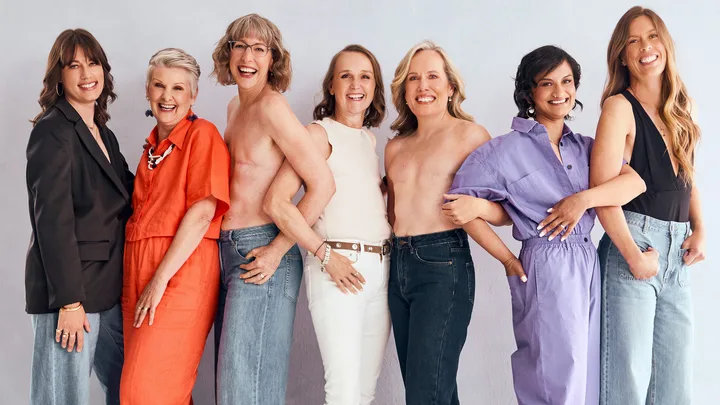
More than 20,000 Australians are diagnosed with breast cancer each year, and 40 per cent of them choose or need the surgical removal of one or both breasts, known as a single or double mastectomy.
This decision is based on several factors, including medical advice, family history of cancer and whether they have inherited a high-risk BRCA gene mutation, which can increase the risk of breast cancer by at least 50 per cent.
Then comes the next hard choice: should you have a breast reconstruction or should you remain flat? As associate professor Caroline Baker, president of Breast Surgeons of Australia & New Zealand, says, there is no wrong choice, as long as you are presented with all the information you need in a non-judgemental way and don’t feel pressured into a quick decision.
“We know that not being offered a reconstruction when you want one, or not feeling that you have the power to make an informed choice, can mean an impact on your longer-term psychological outcome,” she says. “All the conversation should be around what the woman wants.”
Here, seven women explain their choices.
ROBYN SMITH, 46
Three months after her mum died of ovarian cancer, Robyn Smith had a risk-reducing double mastectomy. With a strong family history of cancer and the BRCA2 gene mutation, she “always knew it was something I would do. I didn’t want to live with that risk.”
Robyn, who works at Inherited Cancers Australia, chose to reconstruct her breasts after a surgeon informed her of research that found women have better mental health outcomes if they underwent reconstruction after a mastectomy.
Even so, she doesn’t remember getting a comprehensive rundown of all the complications that could be associated with reconstruction and, soon after, she began experiencing many symptoms of breast- implant illness (BII).
“I was seeing doctors and trying to work out what was going on,” she recalls. “And they’re all like, ‘Oh no, you’re f ine.’ One of the people I saw essentially said, ‘This is in your head.’” As she investigated whether to have an explant, a surgeon told her she would look “aesthetically unpleasing” if she removed her implants.
Disregarding this “advice”, Robyn chose to go flat in 2020, 13 months after her surgery.
Within two weeks, her BII symptoms began to fade. Together with fellow flattie Pascale Garlinge, she set up Flat Life Australia, an online support group for women who choose to live flat. “We wanted other people to know that they’re not alone and that flat is just as valid as reconstructing,” she says.
“As long as you’re making an informed choice with unbiased information, the best choice is the one for you. There are so many societal assumptions and we wanted people to know there are plenty of Australians living flat and happy.”
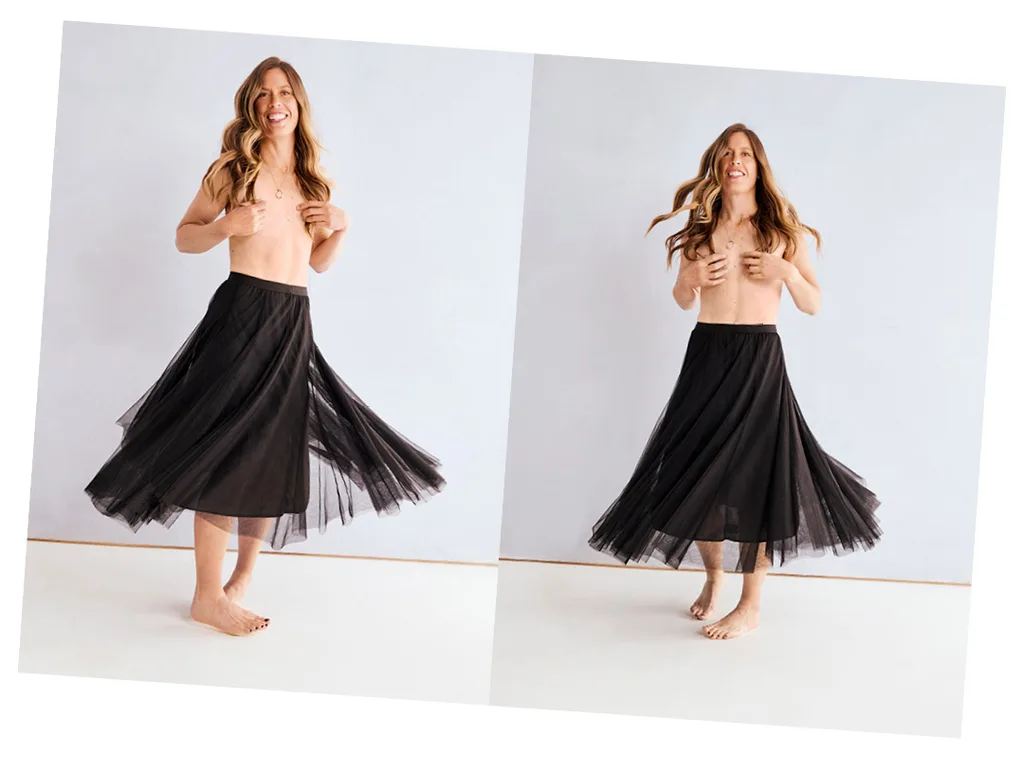
BELINDA KERR, 51
Belinda Kerr knew something was wrong. For several months she’d been having issues breastfeeding her son, and despite several doctors telling her everything was fine, the then-36-year old trusted her own instincts.
After finding a lump in her breast and getting a biopsy, she was told it was either pre-cancerous or cancerous. The news couldn’t have come at a worse time; not only did she have a baby but it was also just days before Christmas and she had a trip planned with her husband and two other children.
Not wanting to wait, Belinda had a single mastectomy in early January and chose to remain flat. As she underwent post-surgery chemo, her brother was diagnosed with stage four melanoma and died 11 weeks later. “It was just a terrible time,” says Belinda, a midwife.
“I pushed to get tested for the BRCA gene but the doctors were very unwilling because there was no history of breast cancer in the family.” She pushed back, and the test found she did in fact have the gene mutation.
A year after her mastectomy, she had her remaining breast and ovaries removed. Again, she chose a flat closure as she didn’t want to be hospitalised and “didn’t care” if she was flat. Despite her husband’s support on this journey, ultimately her marriage ended, and Belinda re-entered the dating scene.
She notes how difficult some conversations were. When she told a date about being flat-chested, “it was complete silence”, she says of the phone call. “And I went, ‘Are you still there?’ And he was like, ‘I can never see you again.’” Belinda doesn’t dwell on the past, and has since remarried, saying, “I’m really, really happy.”
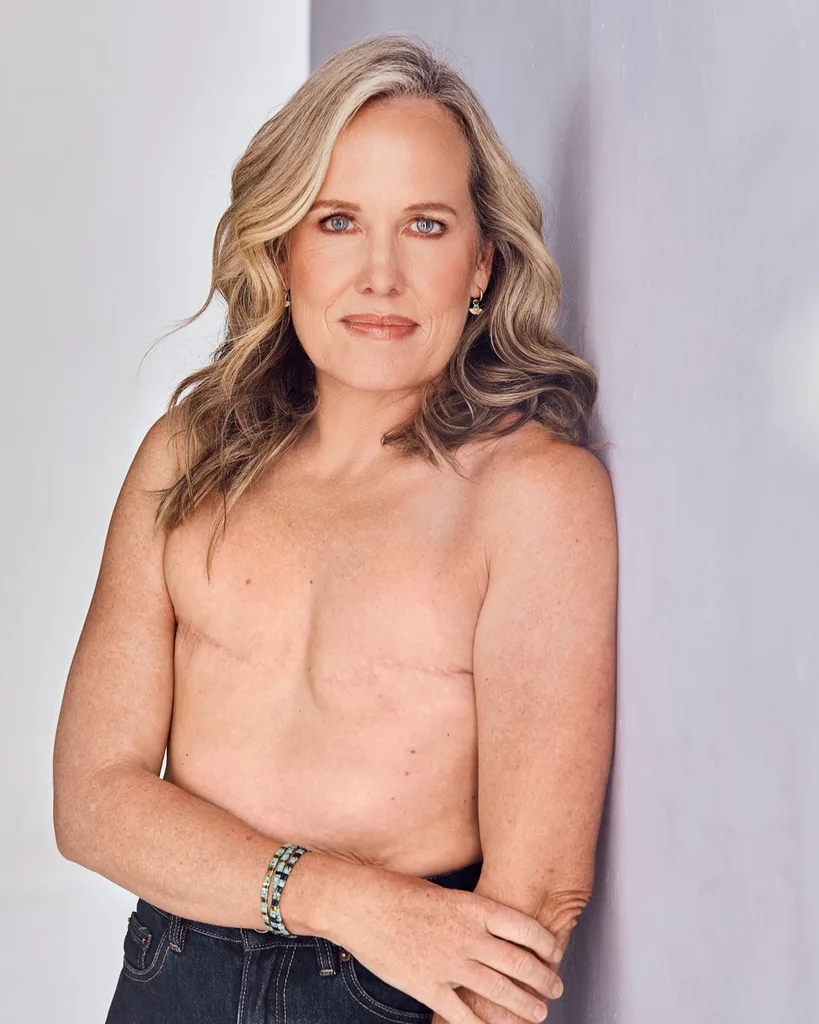
GILLIAN HORTON, 65
Reconstructive surgery might be the norm now, but when Gillian Horton was diagnosed with breast cancer in 2008 and had a single mastectomy, f lat closure was actually par for the course. Four years later, Gillian had her remaining breast removed due to a strong family history of cancer.
Even though her surgeon wasn’t convinced she needed the surgery and made a point of telling her he had removed a “healthy breast”, Gillian knows she made the right choice. “I always maintain it’s a decision we make with information that we have at the time,” she says. “I had had a lot of time to think about it. I’d lost my mum to breast cancer, my sister had just been diagnosed, I’d lost aunties, cousins, et cetera.”
Gillian says it’s important to acknowledge the grief that comes with losing your breast. “You’re not going to look the same again. It’s also the grief of things changing: work changes, relationships change … your ‘normal’ changes. I would walk out of a lingerie store crying as none of the brands had a pocket for my breast form [an artificial breast inserted into bras, also known as a breast prosthesis].”
Now Gillian owns breast form and mastectomy lingerie shops in Canberra and Adelaide and has imported a new, innovative breast form brand into Australia. “Some women don’t even know that a flat closure and breast forms are an option – they just get advised it’s reconstruction. It’s about what we want to wear, breast forms or not, and what we are comfortable with. It all comes back to choice.”
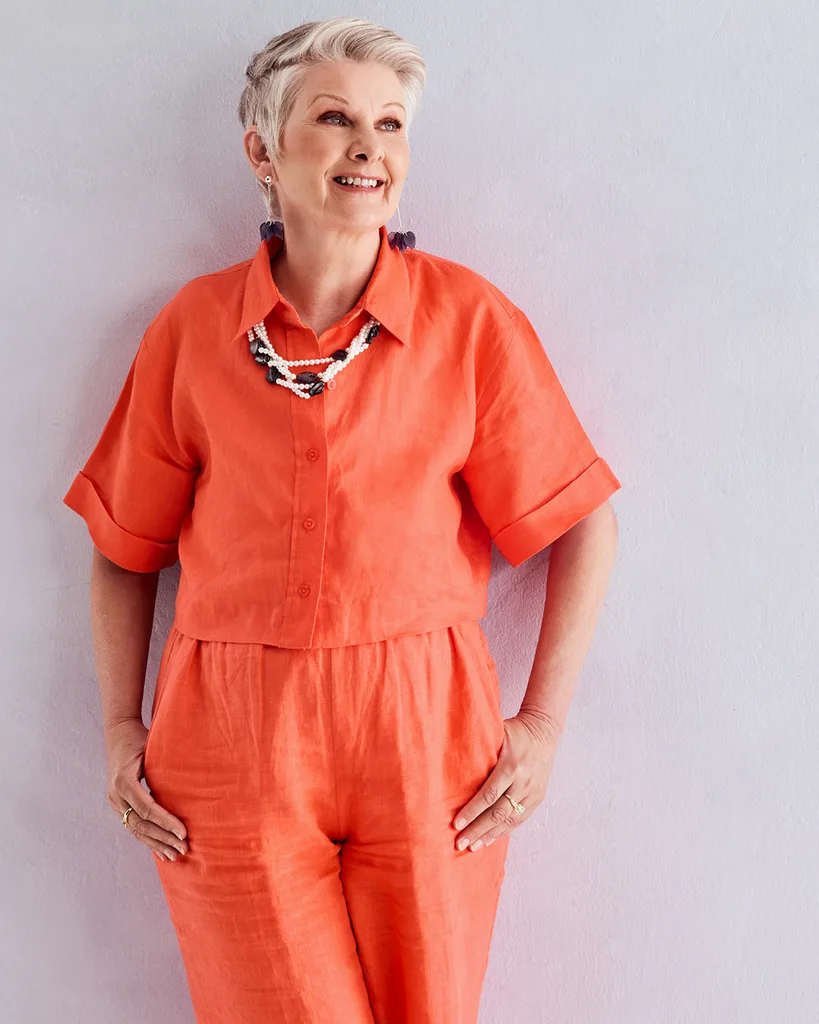
PASCALE GARLINGE, 48
After watching her mother’s suffering and death from aggressive breast cancer at 42, Pascale Garlinge was determined her two daughters would not live that same trauma.
Even though she didn’t have breast cancer, and would later learn she didn’t inherit the BRCA2 gene mutation, many of Pascale’s relatives had died of cancer – including her grandmother at 47 – she decided to have a double mastectomy and implants in 2016.
“It was a bold decision,” she admits. “But I just couldn’t inflict [what I went through with my mum] on my children.
Even now, 30 years on from my mum dying, I still live with the lasting effects of her death.” Two weeks after her implants, the visual artist’s gallbladder painfully burst, and for the next three years she endured depression, chronic fatigue, nail and hair loss and other symptoms of BII. At that time, BII went unmentioned, as did its risks; it’s still not an officially recognised diagnosis.
“It was a very long, lonely, costly time. On the outside I looked great but inside I was breaking up,” Pascale recalls. Surgery to remove her implants made her feel better immediately. “There are some lasting effects, but my physical and mental health have been restored,” she says. “I am so happy being flat. To be honest, sometimes I even forget I don’t have breasts because I feel exactly like myself.”
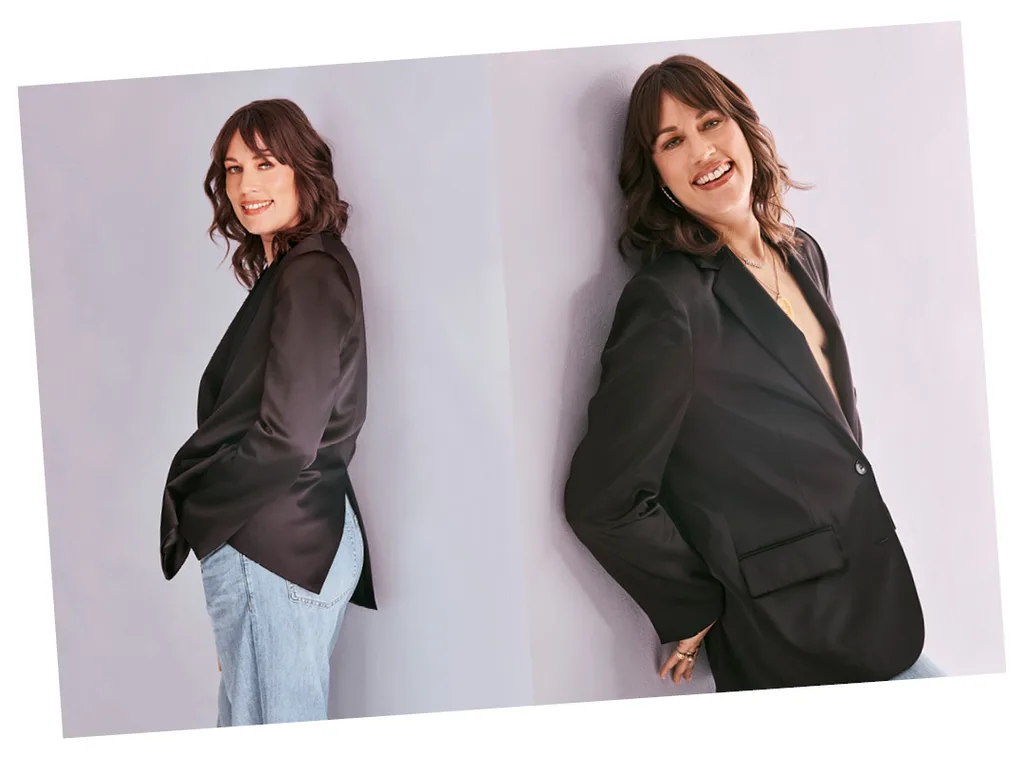
CAROLIEN DIELTJENS, 53
When Carolien Dieltjens was diagnosed in late 2021, her breast surgeon initially told her she would have to undergo a lumpectomy – surgery to remove the cancerous tumour and a small amount of surrounding healthy tissue – plus radiation.
Three weeks and four additional tests later, the plan had drastically changed: Carolien was told she would need a double mastectomy as well as chemotherapy and radiation, and to be put on a clinical trial.
The doctors told her that if she wanted reconstructive surgery, she would need breast implants because she didn’t have enough body fat to create two breasts. The senior manager was overwhelmed.
“It was a really hard time. I was so numb I couldn’t feel anything at all,” she says. “I didn’t want to have implants and I also didn’t want to be flat.” To make the best decision for herself, Carolien spoke with many medical professionals, who assured her implants were safe.
However, she had read of the horrors of BII and was not convinced it was a good option for her. After speaking with a “forthright” Canadian professor, Carolien ultimately decided the risks were too great. “I decided I don’t have to be defined by my breasts. Everyone around me thinks I have a problem because I don’t have breasts anymore, but it’s up to me to decide if I actually have a problem.” Carolien has since embraced life as a flat woman and has never looked back. “I just feel so empowered. You don’t need boobs to be beautiful.”
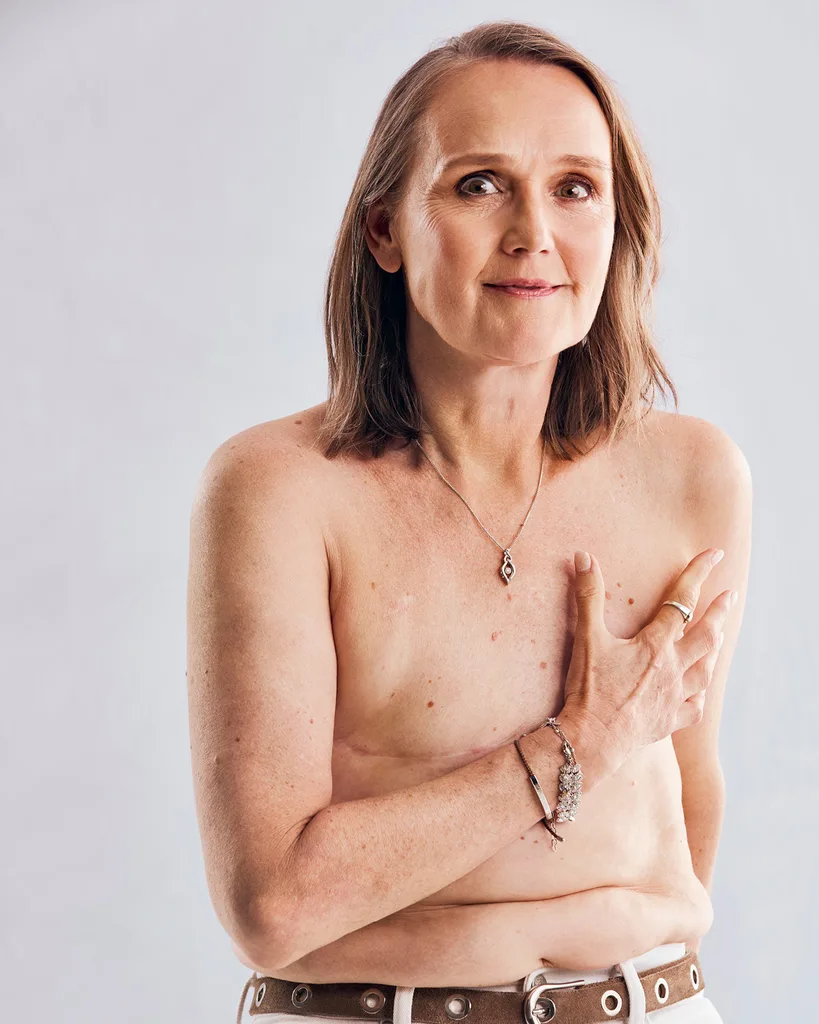
JULIE PRIORA, 54
Mother-of-three Julie Priora feels fantastic. In fact, she feels more comfortable in her body now than when she had breasts. “The only thing I can put it down to is being tiny beforehand. Living flat feels more natural for me than having breasts,” says Julie, a library assistant.
“I hated wearing bras, and when you’re cold people can tell. Now if it’s chilly, no-one knows.” While other women’s journeys with breast cancer are often taxing, Julie says she feels extremely lucky as it was only a “tiny blip” in her life. In 2019, a mammogram revealed cancer in her left breast.
The resulting biopsy removed all the cancer, with the lumpectomy that followed showing clear margins. She decided against undergoing radiation and opted for six-monthly ultrasounds. Three years later, the cancer came back. The surgeon recommended Julie have a single mastectomy.
“If you’re going to take one, take them both,” she told the surgeon. “I don’t want the risk of cancer again in the right breast, and I’d rather be symmetrical.” In 2023, she underwent a double mastectomy and chose to have aesthetic flat closure.
“It was the best choice for me and I healed quickly and easily. After hearing other women’s reconstruction stories, many needing further surgeries, often needing their implants removed anyway, I just think I dodged a lot of bullets,” she says. “I don’t feel self-conscious at all about being flat. I’m still a woman and I’m comfortable in my own skin.”
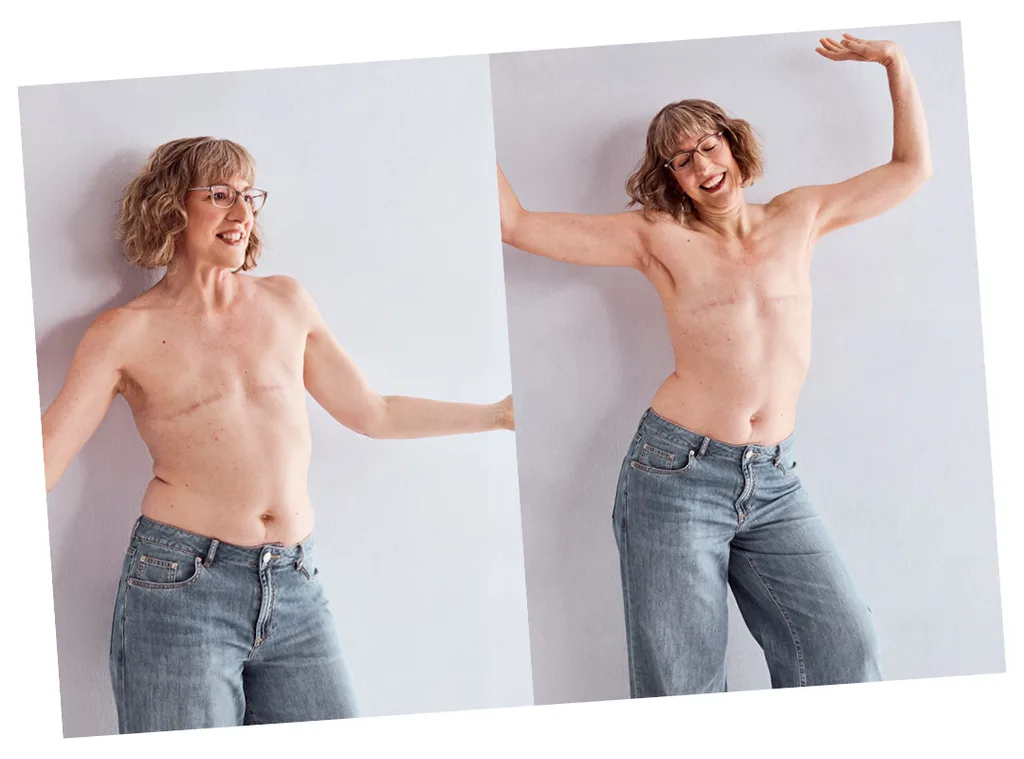
AARTHI AYYAR-BIDDLE, 46
As she was getting dressed for work one day, Aarthi Ayyar-Biddle felt a lump in her breast. Within a week, she was diagnosed with stage 3 invasive ductal carcinoma and underwent chemotherapy for a number of months.
In July 2024, she had a right mastectomy, followed by radiotherapy in September. “There’s no known genetic involvement in my cancer so the treatment team recommended a single mastectomy,” she explains. “So I’m now what they call a uniboober.”
Presented with the choice of remaining flat or having reconstructive surgery with a silicone implant or a flap using tissue from another part of her body, Aarthi’s decision ultimately came down to lifestyle and minimising the need for future surgeries.
“In the end, I just placed a lot more value on being able to do my normal activities like gardening, going to the gym, hanging out with my husband and kids, travelling,” she says. “Those mattered more than what I looked like in the mirror, and my husband wholeheartedly agrees. I’ve come to embrace the asymmetry.”
Coming from an Indian background, the public servant acknowledges that the impact of cancer on aesthetics and body image is often not spoken about openly, but her own experience has been really positive.
“My parents have been supportive of my decisions throughout the whole process. And now that I’m sharing my story and my choice to remain flat more openly, they’ve said how proud they are of me.

Related stories

Native ad body.
Native ad body.
Native ad body.