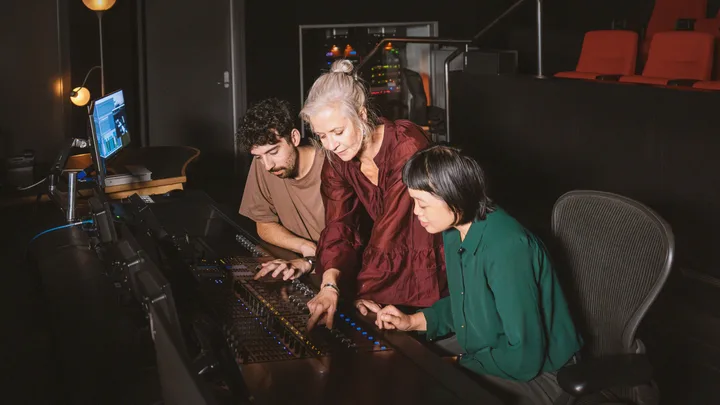
Justine Angus might be in the business of making films, but if she does her job right, you won’t notice her work – you’ll feel it.
As an esteemed sound designer, her role is to weave together the auditory elements of a film or TV series to tell a story. Picture the tension created by a creaking floorboard or the rush of excitement triggered by the first few notes of a triumphant soundtrack. “Sound is a very visceral experience,” she says.
“A good sound engineer has the power to transport an audience into a new world and manipulate them into feeling a certain way.”
Angus’ connection to sound began long before she entered the film industry.
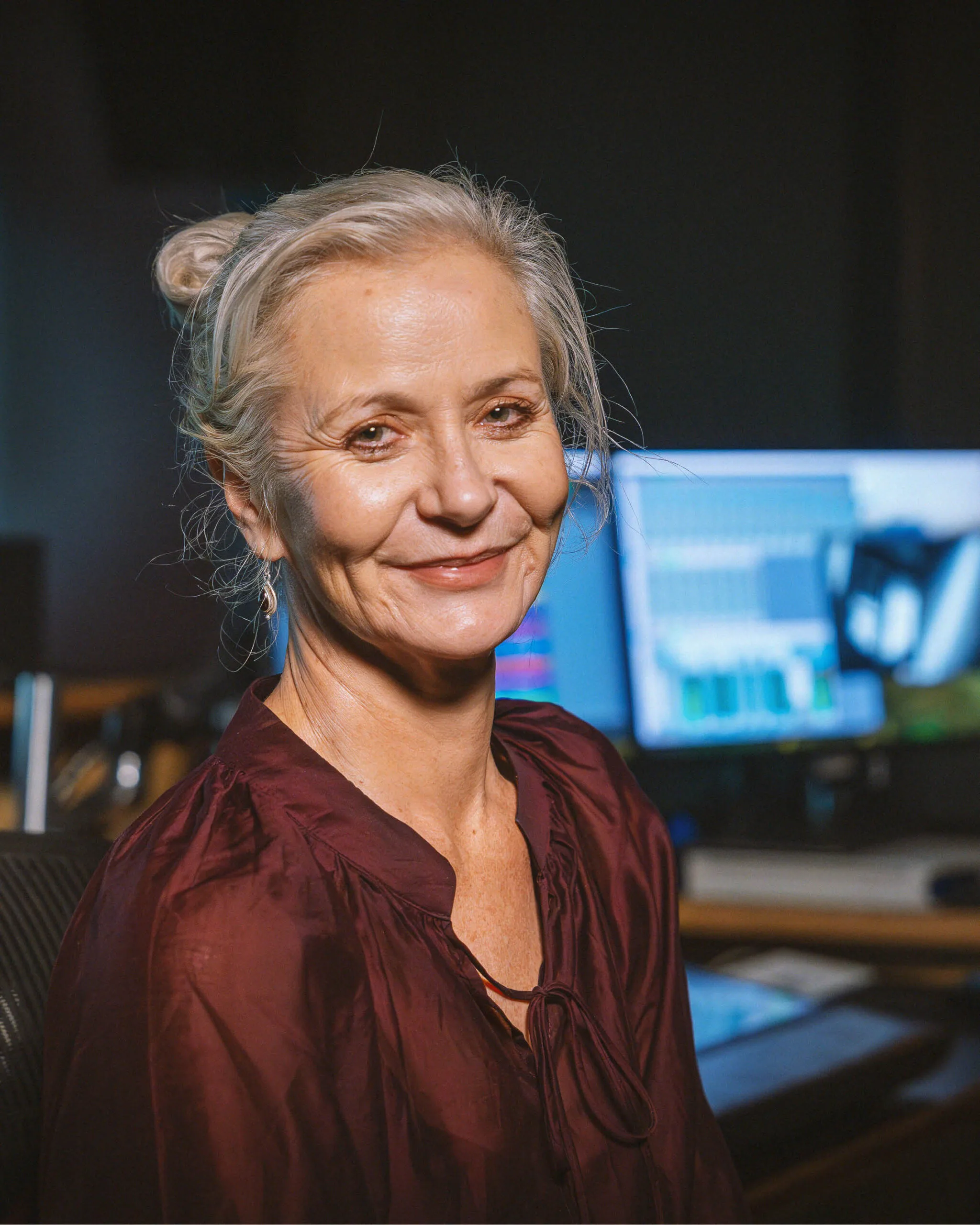
Growing up, she would dismantle her parents’ reel-to-reel tape stereo and spend hours recording music.
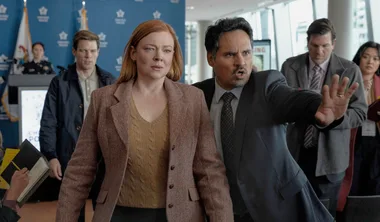
After 10 years as a program maker at the ABC, Angus moved to London and worked on major films, such as 2005’s Batman Begins, starring Christian Bale, and the 2006 animation Happy Feet, featuring Hugh Jackman and Nicole Kidman. It was during this time that Angus also established herself as a music editor, working out of London’s famed Abbey Road Studios and alongside composer Hans Zimmer. In 2016, she returned to Australia and continued to work on a string of hits, including Mel Gibson’s 2016 war film Hacksaw Ridge, starring Andrew Garfield, the 2024 Robbie Williams biopic Better Man, and the 2025 miniseries All Her Fault, with Sarah Snook.
Angus has more than 100 film credits to her name.
Despite working on some of the industry’s biggest productions, Angus often found that sound was dismissed as a technical afterthought rather than a core storytelling driver. “Historically, sound and music aren’t thought about until the end of the production process,” she explains. “It’s an invisible craft, which makes us easy to dismiss and forget the work that goes into it.”
So when she stepped into the role of discipline lead for the Master of Arts Screen: Sound Design course at the Australian Film Television and Radio School (AFTRS) this year, Angus set out to ensure the next generation of sound designers were included in creative conversations from the very beginning.
Part of her vision was to encourage students across every discipline – from directing to production design – to bring sound to the forefront of storytelling.
“It’s important for students to collaborate with other disciplines early, because sound impacts every creative decision made,” she says.
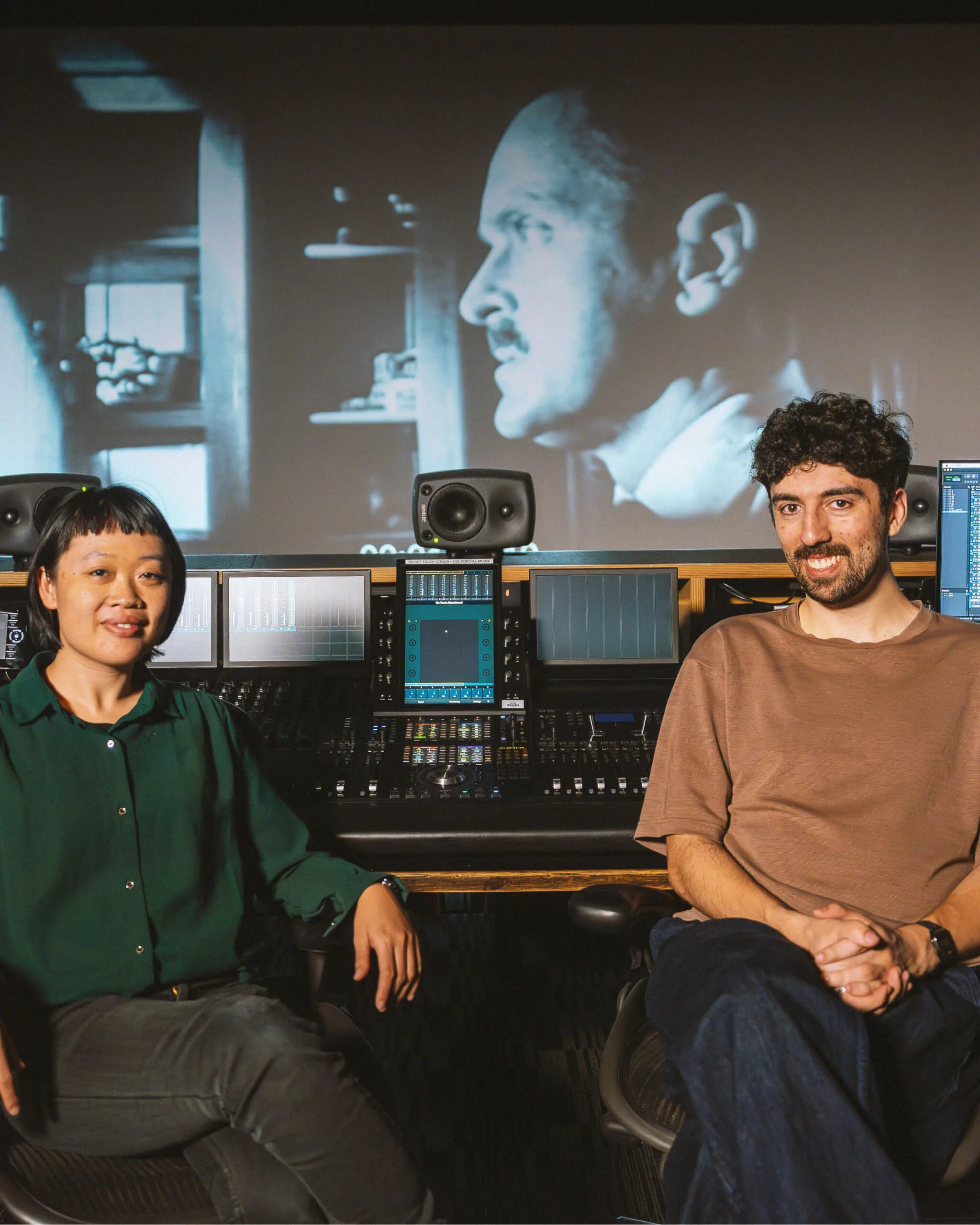
That philosophy is already shaping students such as Addy Fong, who says the course has transformed her understanding of sound’s role in cinema.
“I’ve learnt that sound isn’t just one singular noise; it’s made up of countless tiny layers,” she says. “If I hit a glass jar, for example, you’re not only hearing the impact itself, but the way the sound reverberates through the room, reflects off surfaces and travels back to your ears. It’s very complex. Every micro decision you make with sound might seem small in concept, but they shape so much of our perception of a film in its final stages.”
For fellow student George Kapaklis, the course has revealed the scale of opportunity emerging within sound, with career pathways ranging from dialogue editor and Foley artist to music editor and location sound recordist.
“It’s been so encouraging to see how many opportunities there are in sound within the Australian film industry. It’s a really exciting time,” he says. “The course really equips us to shape how stories are experienced – emotionally, narratively and sensorially – across the full production life cycle.”
If students like Kapaklis and Fong are any indication, the future of sound is in capable hands, with the next wave of professionals finally being heard.
For more information, visit aftrs.edu.au. Join the Australian Film Television and Radio School for its annual access-all-areas Open Day on Saturday 8 August.