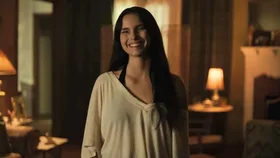
You would be forgiven for not realising that Curry Barker’s debut feature Obsession was made on a shoestring budget.
Few filmmakers emerge from the democratic chaos of YouTube to make a US$500,000 feature, premiere it at the Toronto International Film Festival and ignite a multimillion-dollar bidding war. Within days, Barker had gone from online creator to one of Hollywood’s most exciting new directors.

Stories like Barker’s feel remarkable. But they are becoming increasingly difficult to dismiss as exceptions.
For decades, aspiring filmmakers and screenwriters have been scrambling up the traditional path into the entertainment industry: attend film school, build connections, work your way up. Today, that pathway looks considerably less linear.
Increasingly, platforms like YouTube and TikTok are becoming training grounds for the next generation of storytellers. Small creators are building audiences while simultaneously learning how to write, direct, edit and market their work. In many cases, they are refining those skills in public long before traditional industry gatekeepers ever take notice.
Few developments illustrate this changing of the guard more clearly than TikTok’s newly announced partnership with the Sundance Institute, designed to support creators working in micro-series and other forms of short-form scripted storytelling.
The initiative, launching through Sundance Collab, the Sundance Institute’s digital learning and community platform, will offer a four-week live online course focused on microseries writing.
Designed to equip creators with practical storytelling frameworks and industry guidance, the program aims to support what the organisations describe as “the next generation of creator-led short-form storytelling for digital audiences.”
The partnership is notable not for the course itself, but for what it suggests about an entertainment industry increasingly turning to social platforms as incubators for creative talent.
Open TikTok for more than a few minutes and chances are you’ll encounter an advertisement for a vertical-screen romance, thriller or melodrama designed specifically for mobile viewing. Their plots are often delightfully absurd and smothered in smut: your ex-husband is secretly a billionaire, you’ve accidentally entered a contract marriage with a stranger, or a long-lost lover has suddenly reappeared to turn your life upside down.
Yet their popularity points to a larger shift. Microdramas and short-form scripted content are rapidly becoming legitimate entertainment categories, particularly among Gen Z and younger millennials who increasingly consume content through social media rather than traditional channels.
At the same time, younger audiences are forming relationships with creators in ways previous generations formed them with movie stars. They spend hours following creators across platforms, watching not only the finished product but the creative process behind it.
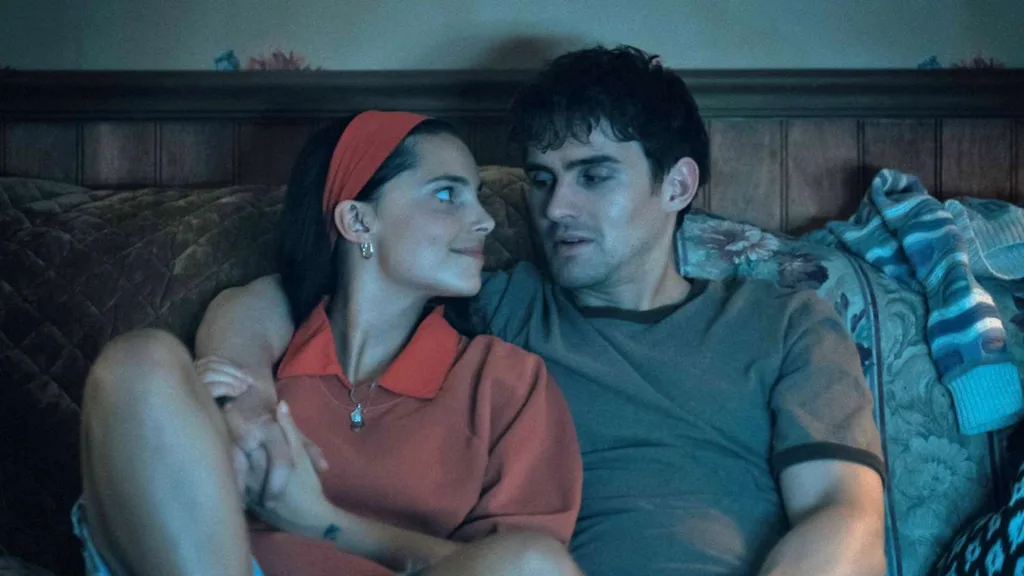
It makes sense, then, that storytelling itself would begin adapting to the spaces where audiences are already spending the majority of their time.
Of course, this evolution is hardly unprecedented. Film has continuously reinvented itself, from silent film to “talkies”, from cinema to television, and from scripted programming to reality TV. Every technological shift has prompted fears about the death of whatever came before. Yet storytelling has proven remarkably resilient.
That is why social media storytelling should perhaps be viewed less as a threat to traditional entertainment and more as an expansion of it.
Yes, there will be plenty of terrible TikTok series. There are also plenty of terrible films, though mercifully most require a longer runtime to reveal themselves. Dismissing an entire medium because some of its output is low-quality risks overlooking the opportunities it creates for emerging talent.
For aspiring writers, filmmakers, marketers and content creators, that opportunity may be the most significant part of this announcement.
TikTok has already begun investing heavily in the format. Earlier this year, Issa Rae’s Hoorae Media partnered with TikTok and Pine Drama for the exclusive premiere of the original microdrama Screen Time.
The Sundance partnership marks another step in that strategy, reflecting TikTok’s growing interest in short-form scripted entertainment while aligning with Sundance’s longstanding mission of nurturing independent artists.
At a time when conversations around AI-generated content and algorithmically produced “slop” often dominate discourse about the future of creativity, it is worth remembering that social media itself is not inherently bad. A platform is simply a tool; what matters is the imagination, craft and intent behind the work it enables.
Not every TikTok filmmaker will become the next Curry Barker. But neither did every aspiring director who attended film school become the next Greta Gerwig or Christopher Nolan.
What Barker’s success demonstrates is that talent can emerge from unexpected corners of the internet. And if social media creates more pathways for creatives to tell stories, experiment with new formats and build careers, that is not something to fear but something to celebrate.
Aspiring writers and creators can now throw their hat in the ring, with applications open globally via Sundance Collab until July 1.