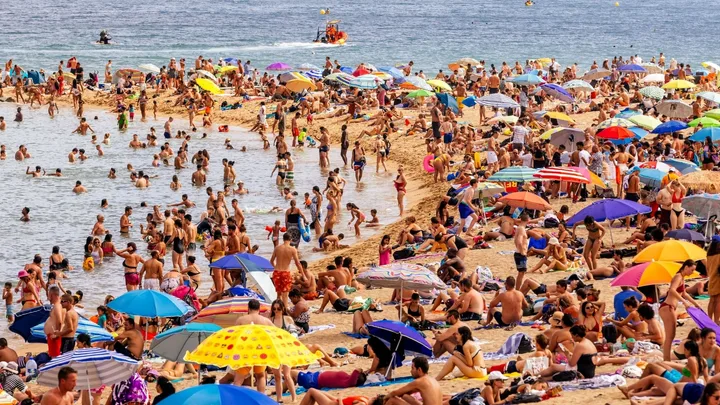
Last year, I wrote a travel story for this very magazine essentially dissing anyone who went to Europe for the summer. I was dismayed at the sheer volume of unsolicited holiday pics on Instagram; I couldn’t fathom why anyone would want to leave the coziness of winter for sweltering days trapped among sunburnt, capital-T Tourists; travelling in the shoulder season was the travel hack I declared, rather smugly.
Well, dear reader, call me converted and give me a solo in the choir because after my first European summer, I am ready to sing its praises. While there is a lot to love about Seville in autumn (shade), Cefalù in spring (breeze) and London in winter (Christmas magic), visiting Europe in summer is like seeing the continent for the very first time. Which is exactly how I behave.
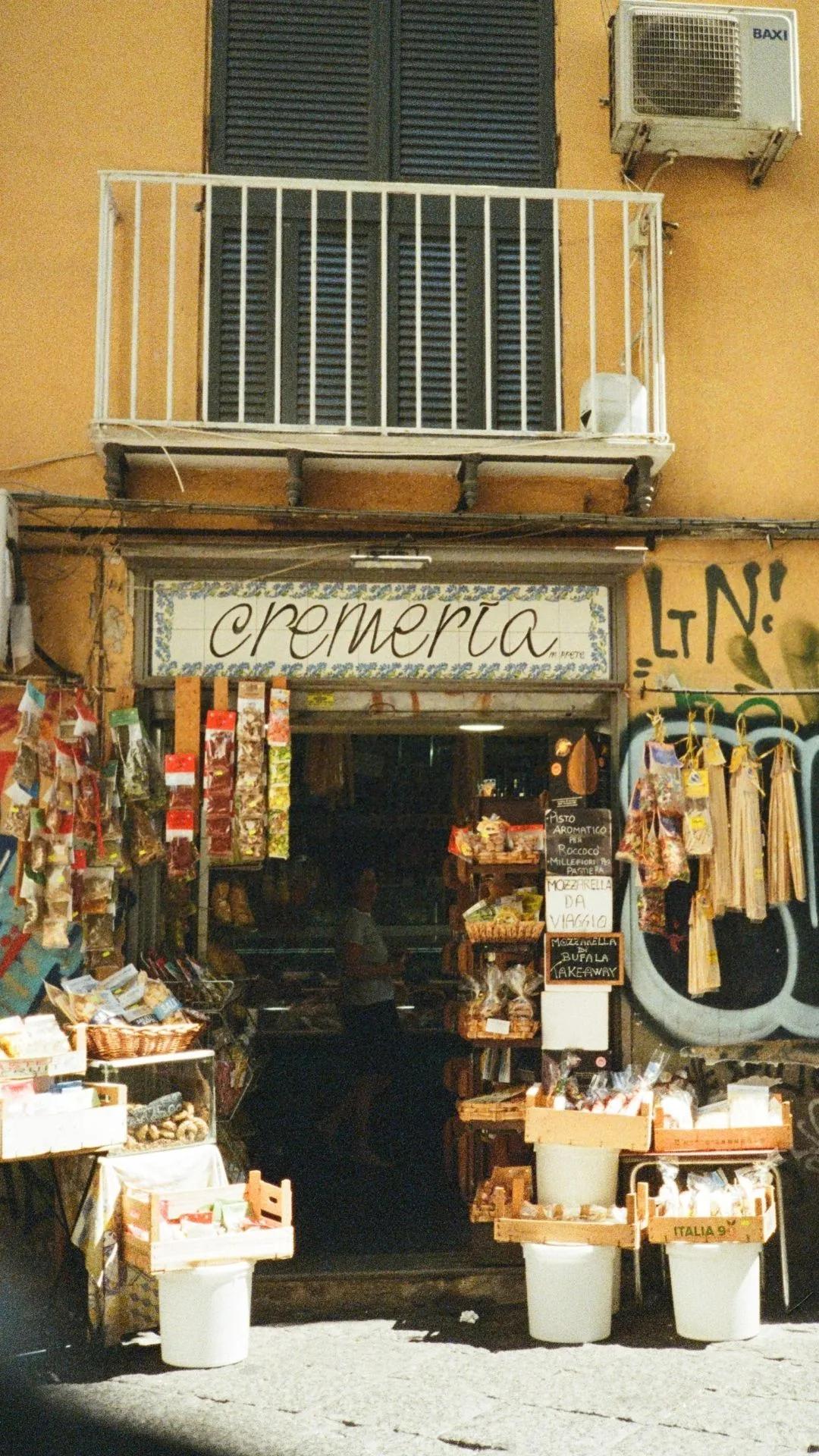
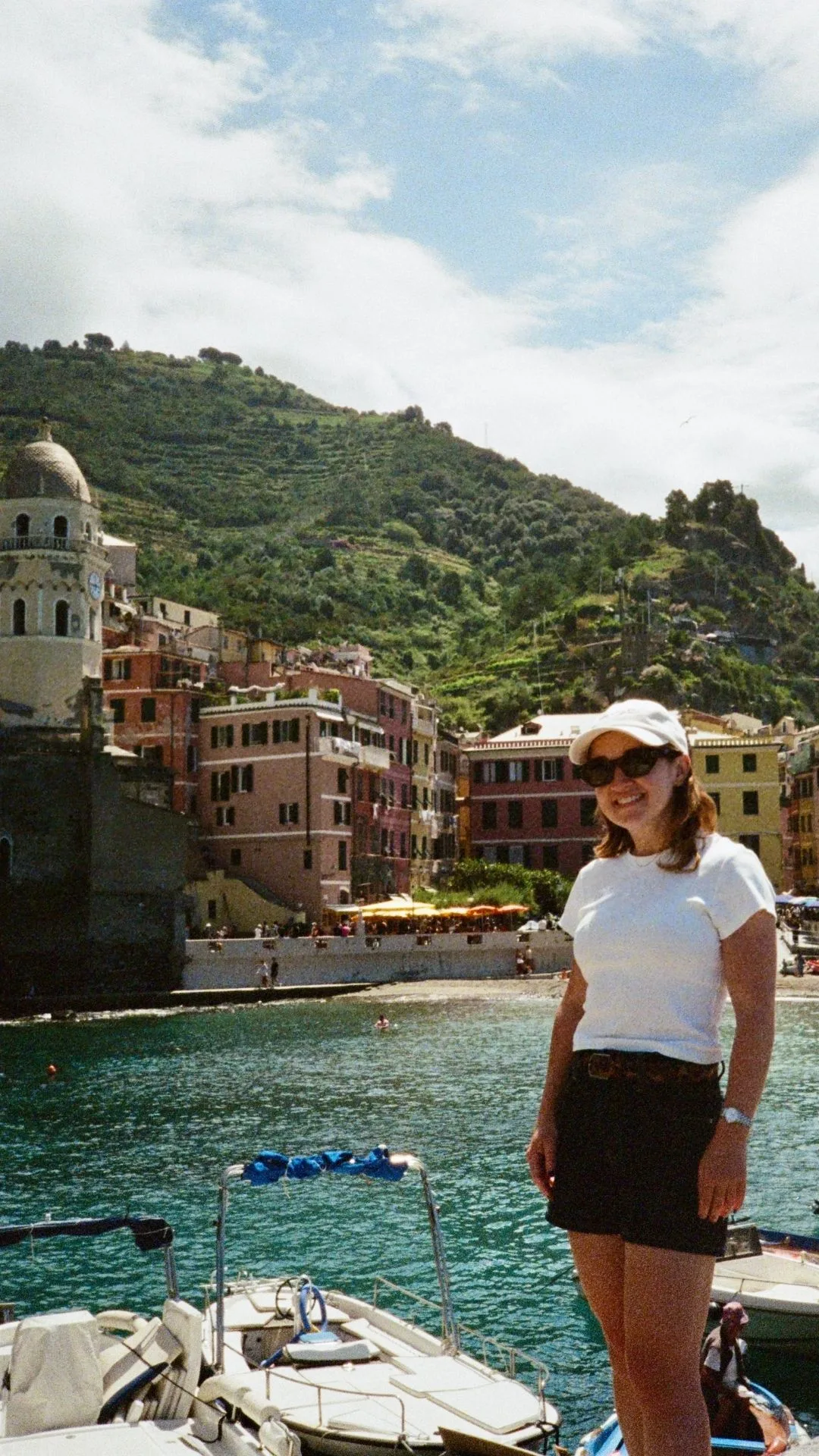
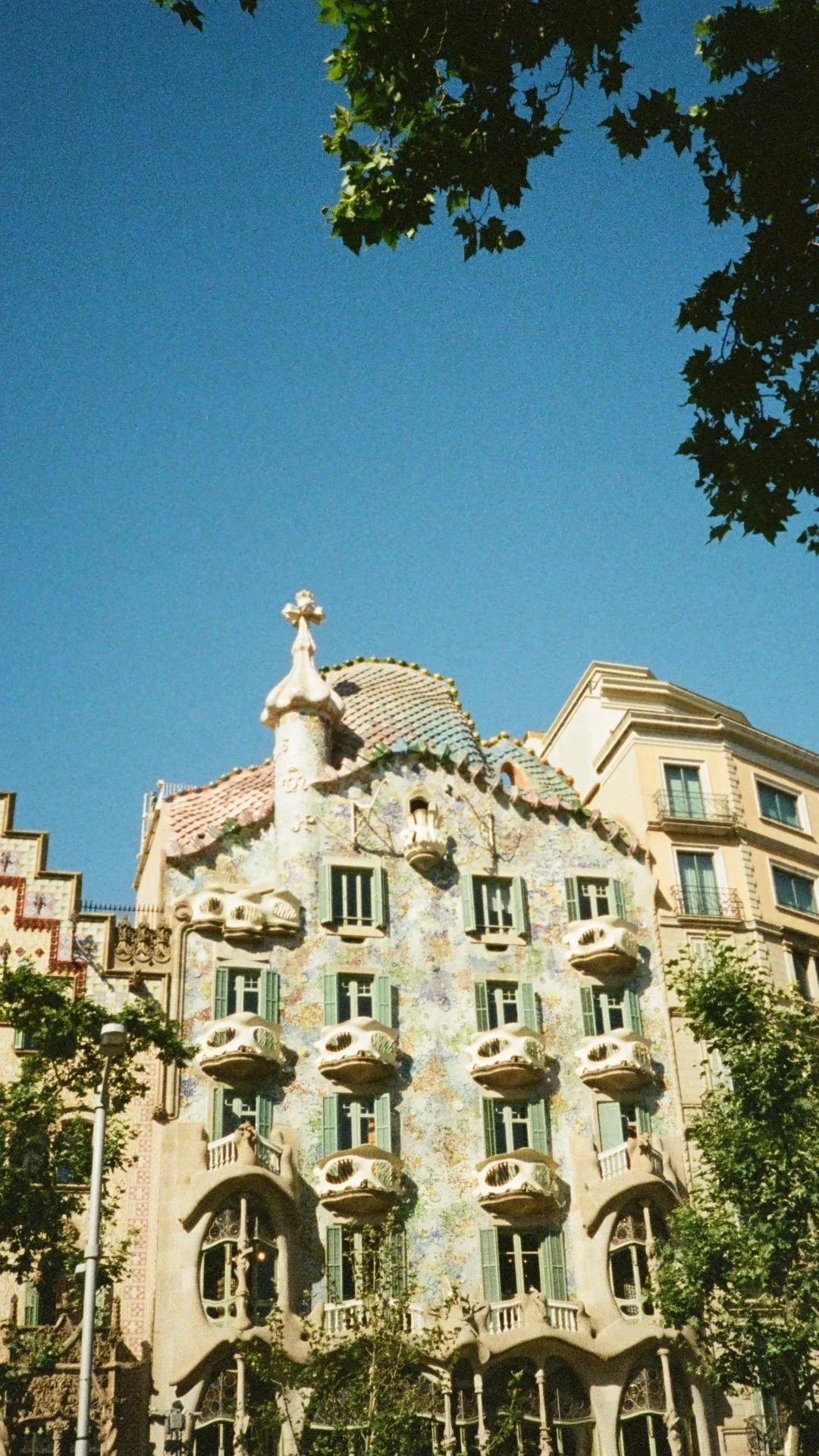
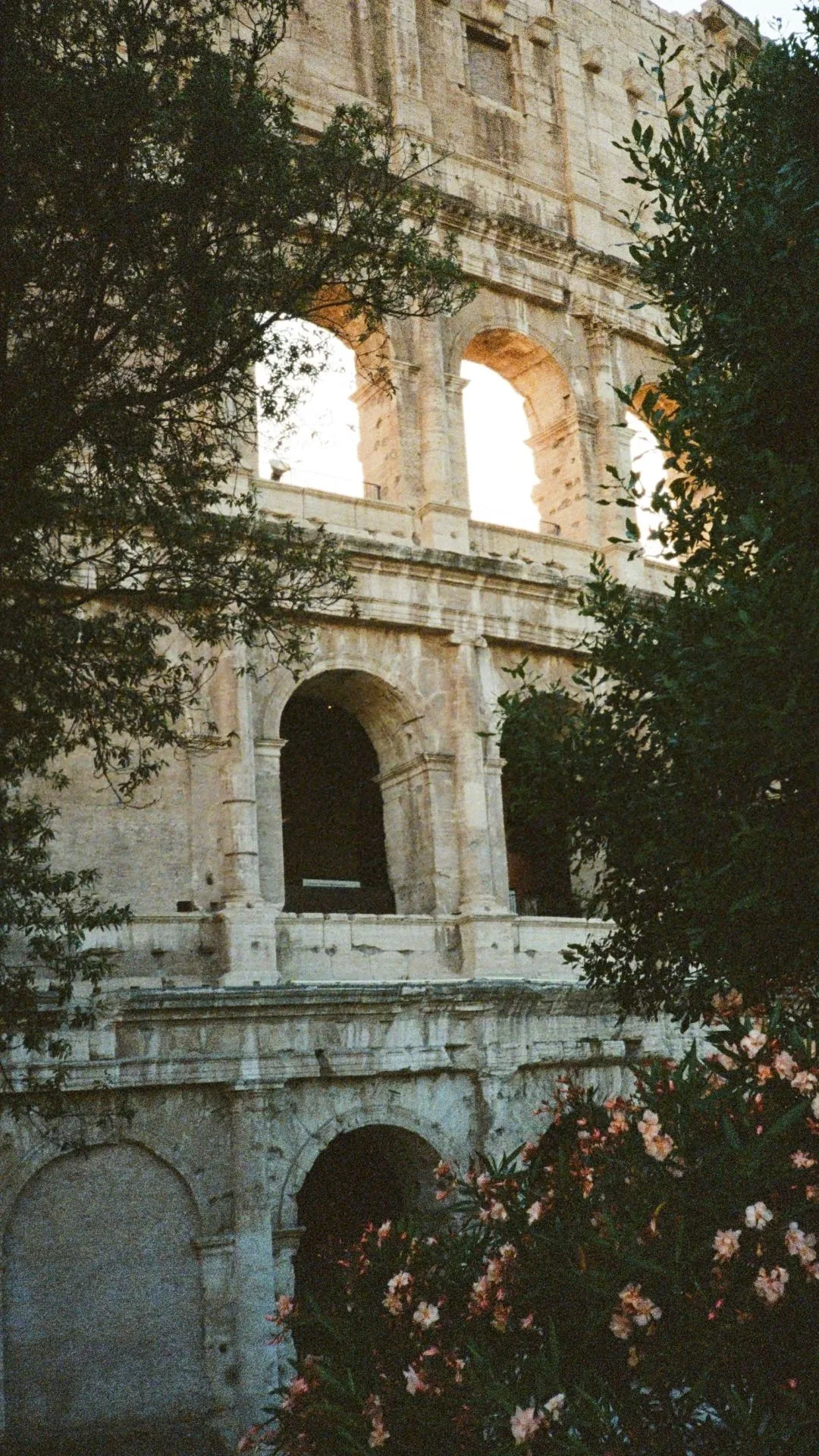
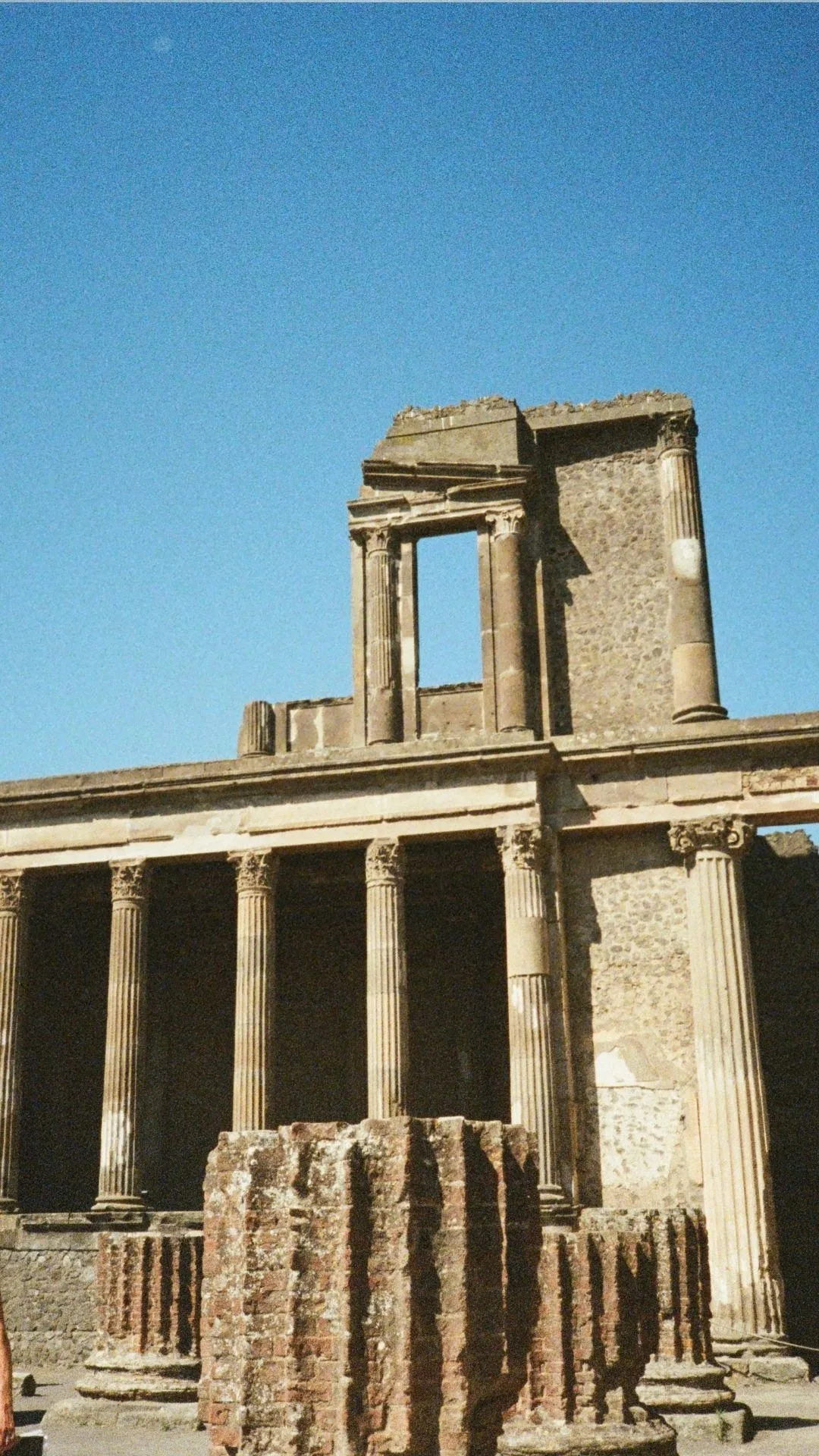
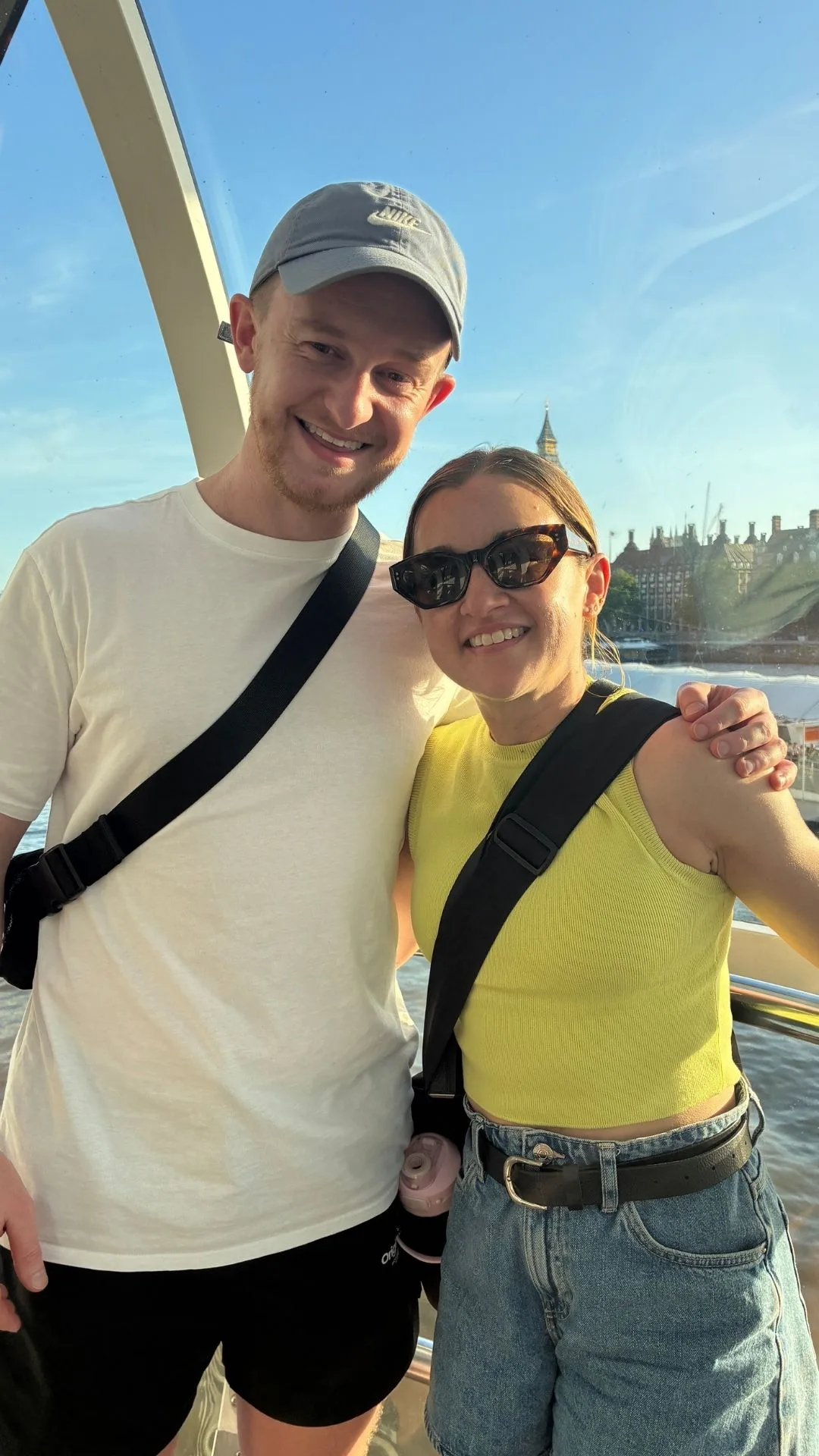
As my partner and I zigzag our way from London to Paris and down the length of Italy before hopping over to do the same across Spain and Portugal, we lean into being Tourists (although not as clueless or as in-the-way as the regular tourists – we’re cool tourists). We take a spin on the London Eye, stomp up the Eiffel Tower, see every duomo Italy has to offer, sing like Lizzie McGuire at the Colosseum, get shivers in Pompeii, marvel at Gaudi’s creations in Barcelona, shop at Mango and Zara in Madrid and watch Portugal play in the men’s FIFA World Cup in Lisbon, where we also ride the iconic Tram 28 and run out of fingers counting how many pastéis de nata we scoff. We see every iconic work of art there is to see, and send a box of souvenirs home – twice.
To cram so much into a month-long trip, it could have been tempting to fly everywhere – because what’s a one-hour flight among Schengen Area friends, right? I’ll tell you what it is: a waste of time, and all you’ll see is an endless rotation of customs security belts and how many creative ways there are to number terminal gates.
Instead, we travel by Eurail and Eurostar, securing first-class tickets via Rail Europe for the duration of our trip. (We only fly twice, and only when we’re desperate, like when we hit the Tyrrhenian Sea.) If my type B boyfriend were writing this article, he would tell you that you could wing it and book tickets as you go, but I prefer to have them all pre-booked and sitting in the Rail Europe app (and also printed in duplicate, a copy in each of our bags, just in case) weeks beforehand. With first-class tickets, we’re guaranteed to sit together and there’s space in the luggage rack for our suitcases. We’re also greeted with a welcome drink and a snack, can recline on huge seats and have plenty of legroom. There are also charging ports within easy reach and a personal garbage bin (I’m not sure why this feels important to mention, but it does). It’s all very comfy.
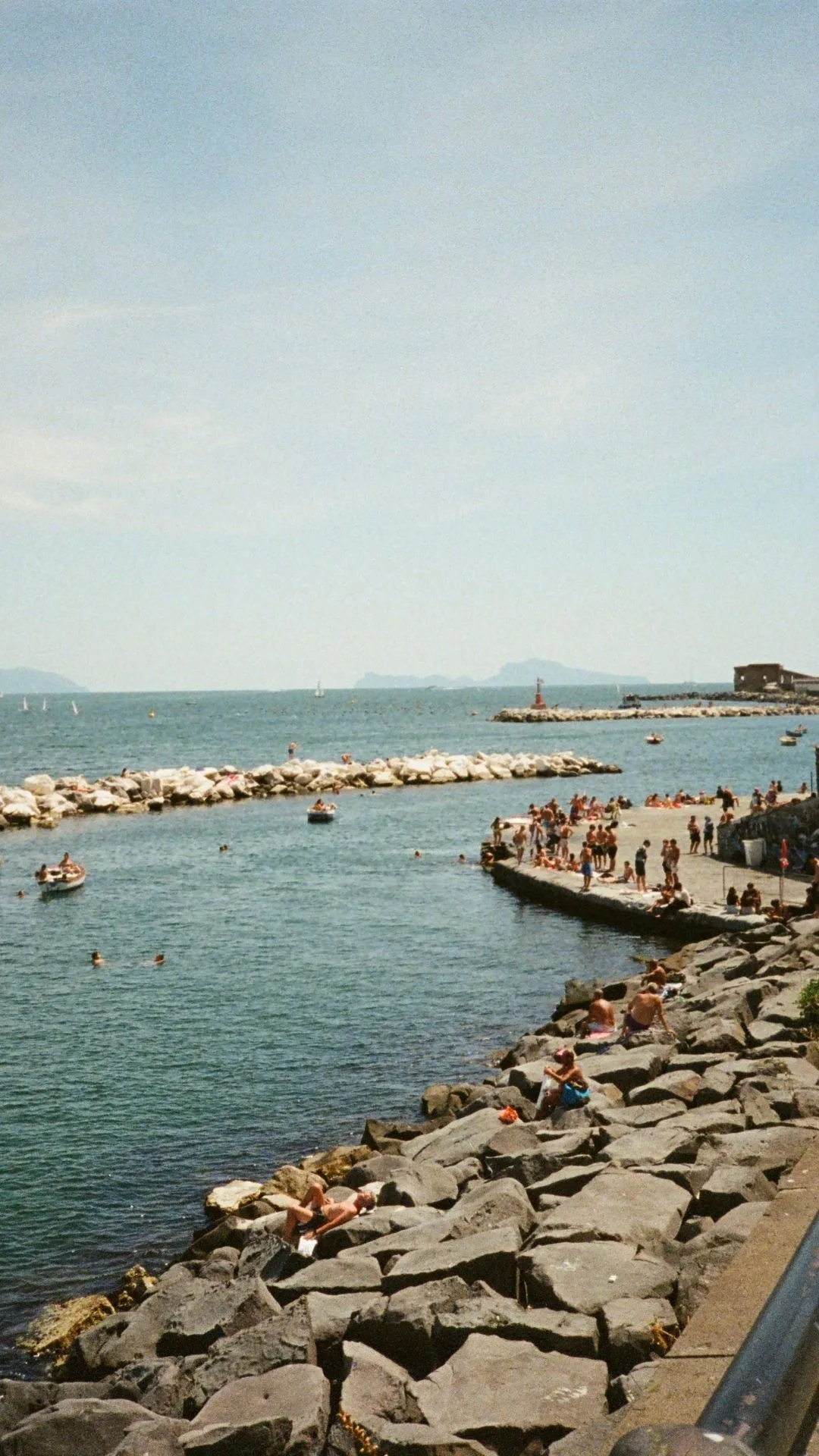
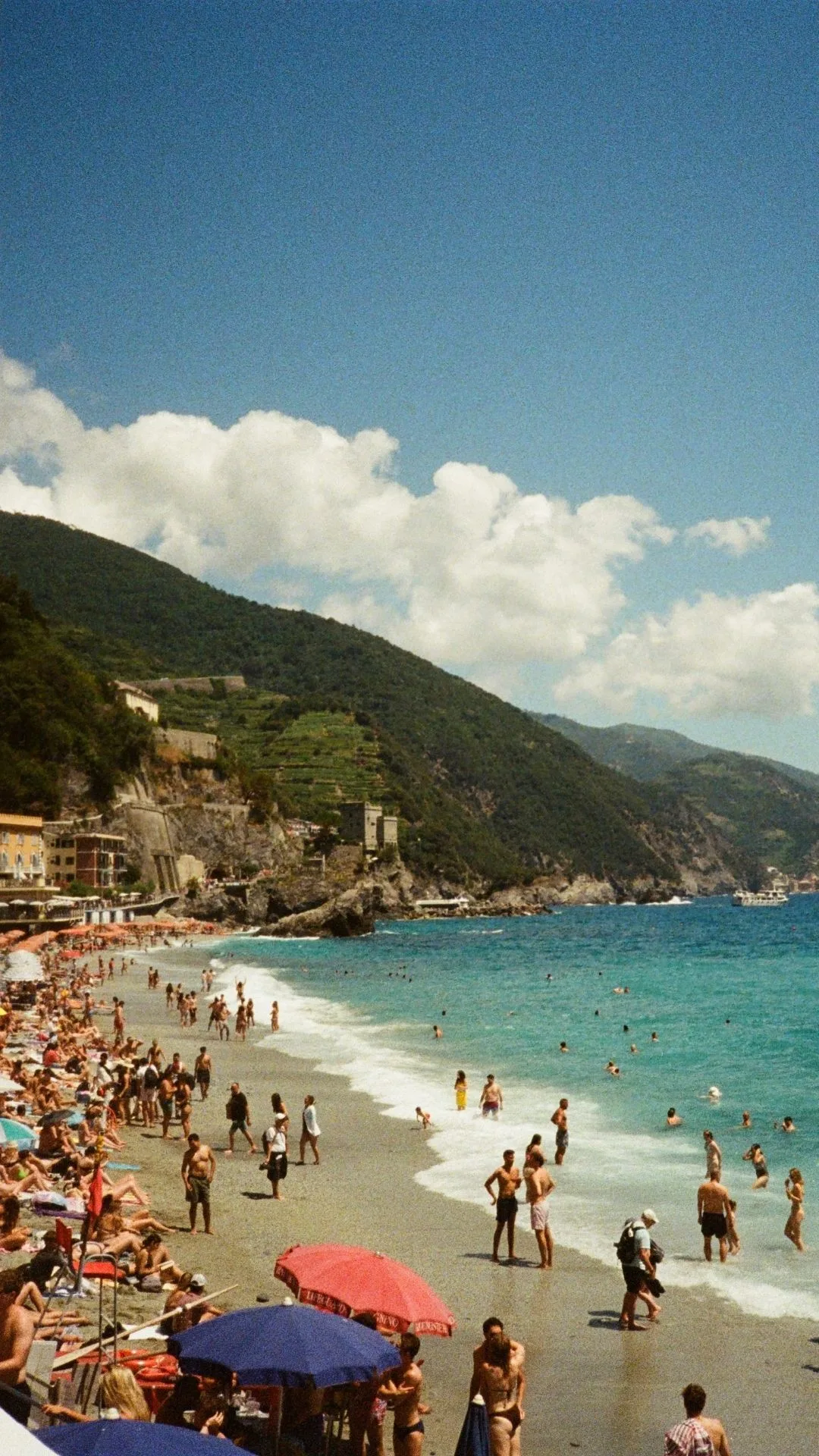
What’s a one-hour flight among Schengen Area friends, right? I’ll tell you what: a waste of time
We tick off 10 cities in five countries in four weeks, but by travelling along the ground, we see far more than that. Rather than catching glimpses of England and France from overhead, on the twoish-hour Eurostar journey from London to Paris, our view changes from blocks of flats to countryside dotted with cottages before we plunge into darkness for about 20 minutes and try not to think too hard about being under the English Channel. When we pop back to the surface, the countryside remains but the cottages have been replaced by distinctly French farmhouses and ramshackle-chic chateaux. Très beau, oui oui.
The eight-hour journey from Paris to Milan is truly majestic. To borrow from Alanis Morissette, I’ve got one hand in my packet of crisps and the other is holding a glass of wine as the horizon goes from flat to slightly rolling to outright mountainous, with snow caps and cloud coverage on peaks so tall you can’t crane your neck enough to see them. The train crosses the French-Italian Alps – home to Europe’s most famous peak, Mont Blanc – before entering the dramatic Susa Valley, where medieval buildings cling to one another on distant hilltops. We feel sorry for anyone seeing this from a bird’s eye view, including the birds.
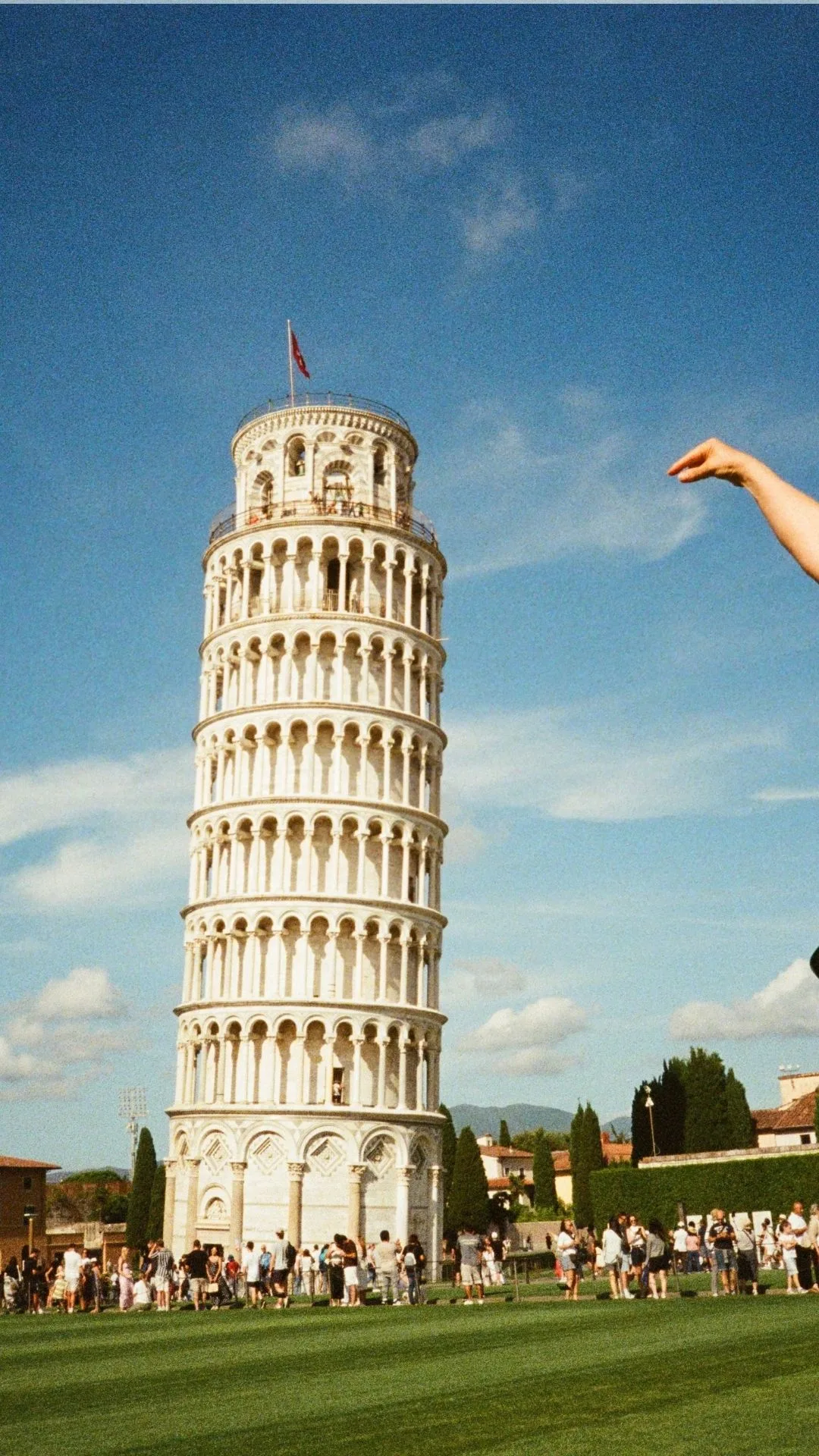
The route we take through Italy isn’t particularly original, but it’s beautiful. From Milan to Venice, we pass the Dolomites and Lake Garda in the distance and cross the four-kilometre causeway that connects the island to the mainland. There, we swap the train for water buses, and a missed stop happily lands us at the Biennale. From Venice, we cross the Venetian plain and speed through the mountains to Florence, where we do easy day trips to Pisa and to pick at fritto misto while sipping on limoncello spritz in Vernazza.
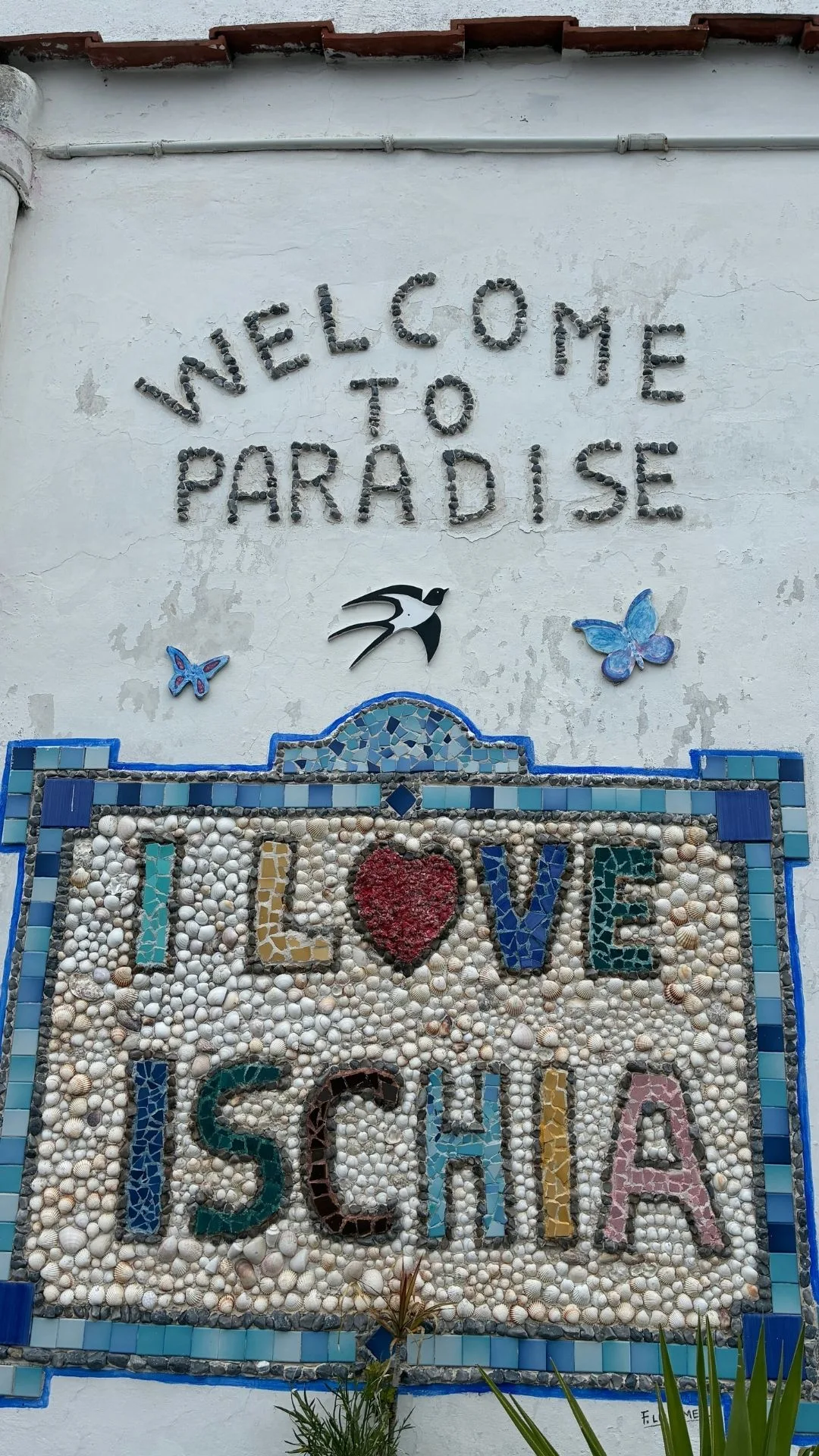
On the way from Florence to Rome, the houses look like piles and piles of terracotta tiles occasionally interrupted by vineyards. It’s very tunnelly going through the Apennine foothills from Rome to Naples, and when we get there, we skip Capri for the tiny yet-to-be-Instagramified island of Ischia. The train from Barcelona to Madrid is three hours of flat landscape as you cross the Aragón; it’s perfect book-reading and wine-drinking time. In the end, we swap the 10-hour overnight train ride from Madrid to Lisbon for an 85-minute morning flight. It’s the only time I will concede that flying is a better option, given the duration is so drastically different it means we get an extra day in Portugal – and that’s a lot of bifana.
There’s no excruciatingly lengthy passport control or customs to get through, and there’s no moment when you think your bag might not have made it
Our experience with the flight at the end just proves the train was the right choice for the rest of the trip. And these trains don’t trundle along – they travel at ear-popping speeds. There’s no excruciatingly lengthy passport control or customs to get through, and there’s no moment when you think your bag might not have made it. You don’t have to press a call button or stay seated; you can go to the bar carriage yourself. There’s no turbulence. Even if the journey takes longer, it’s worth it to save on all the faff and waiting around that surrounds air travel.
For all my superfluous slandering of people who love to summer in Europe, I have emerged on the other side one of its greatest fans (as long as you don’t make me stand among the sweaty, sunburnt Tourists at a baggage carousel, wondering where my bag is).
What To Bring
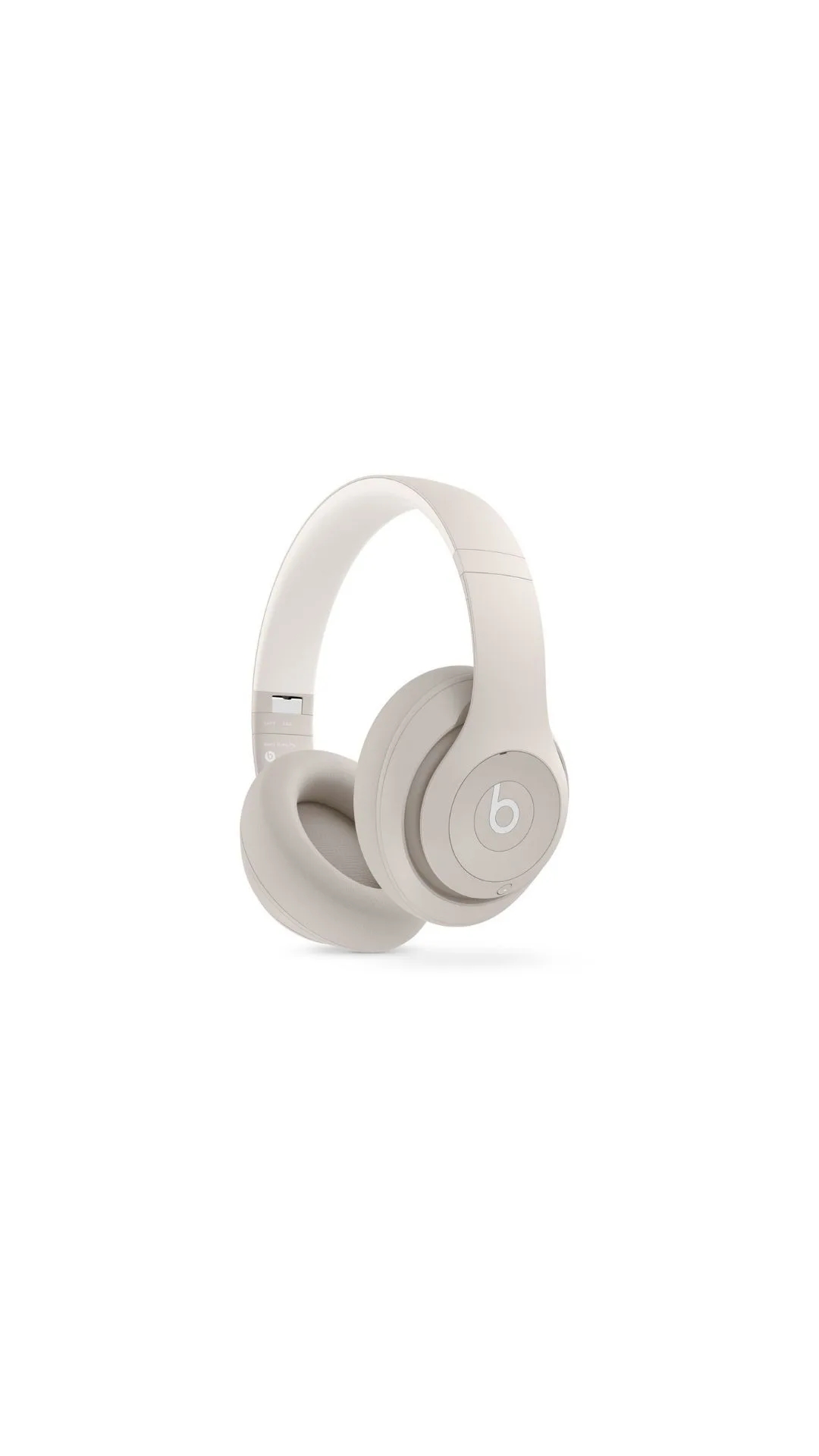
Headphones
Just because you’re in a first-class carriage doesn’t mean it’s quiet. Bring your own headphones so you can drown out everyone who’s not using theirs.
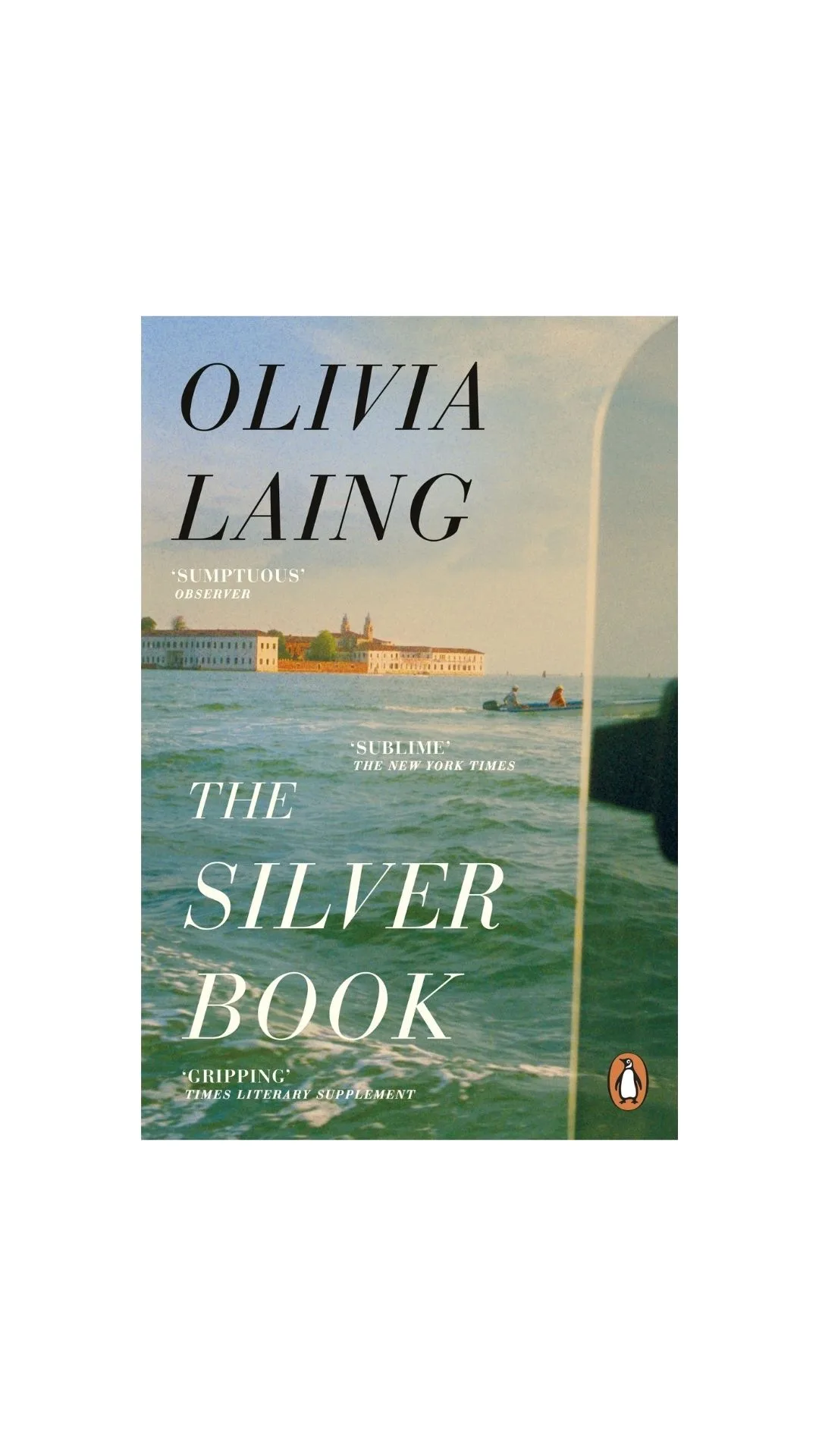
A Good Book
Olivia Laing’s new novel, The Silver Book, is set in 1970s Venice, but also traverses Rome and Florence. It’s a beautiful story in itself, but extra meaningful when you’ve just been to the place you’re reading about.
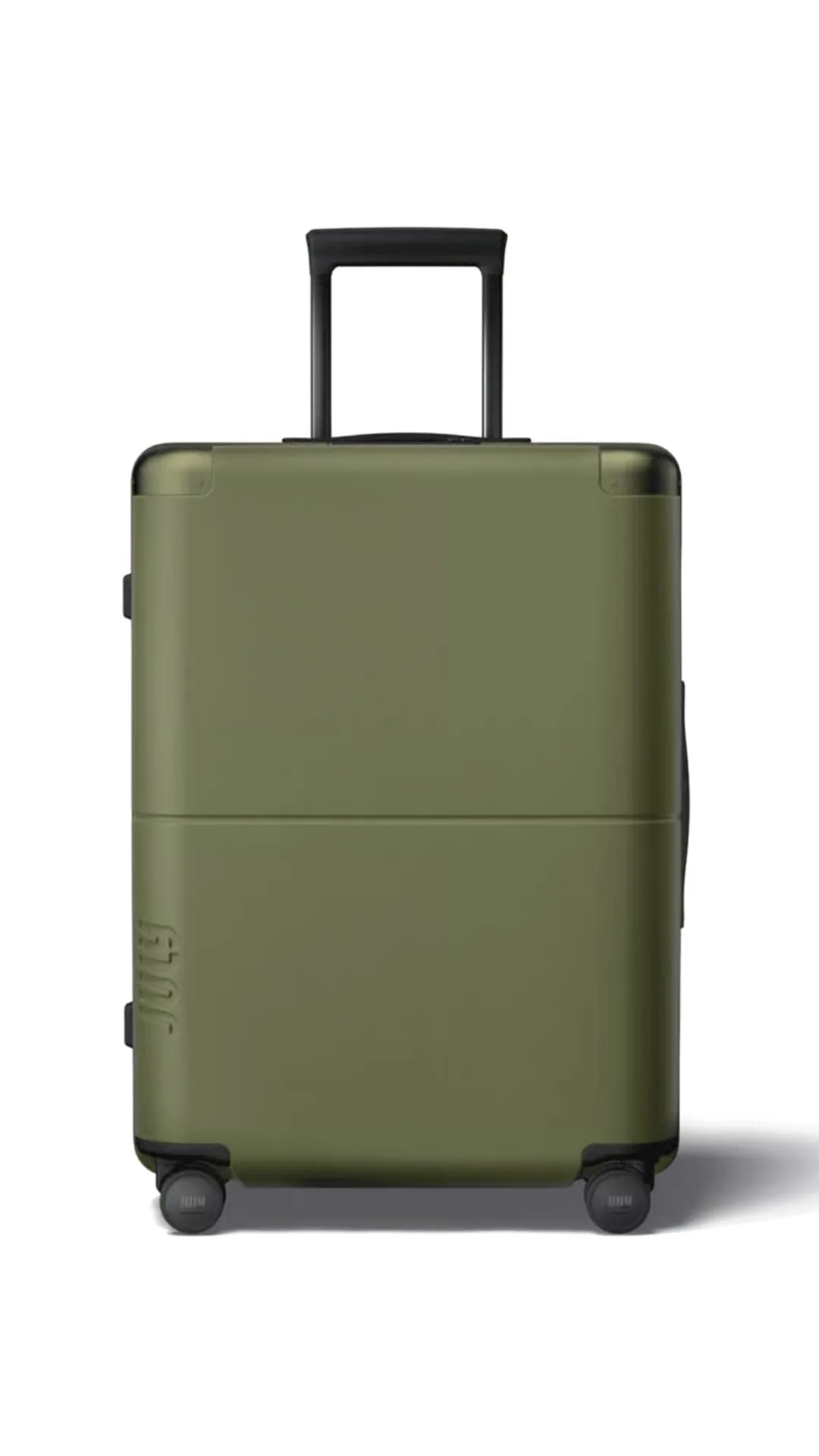
A Sturdy Suitcase
My July CaseSafe suitcase copped an absolute beating by being packed within an inch of its life and dragged along cobblestone streets for four weeks. I’m happy to report no signs of damage though. It’s ready and waiting for our next trip.
Linger Longer In …
… London
London, famously, isn’t new. But even if you’ve been here plenty of times before, it still makes a great jumping-off point for a European train journey. We stay for a week to recover from the jet lag and acclimatise to the heat, as we hadn’t accounted for the temperature conversion that means 30°C in London is equivalent to 45°C at home.
After a full day of hitting all the touristy hotspots (read: trying to stay awake), we’re desperate for something else to do that will stop us from sleeping for three days straight. This is where staying at The Hoxton Shoreditch comes to the rescue: The Hoxton hotel group recently joined the Dis-loyalty Collective, a travel and food membership that rewards never going to the same place twice by offering discounts for first-time visits, and free daily coffee at cafes all over the neighbourhood, ensuring you don’t wind up with an accidental local. A barista or a bartender should never learn your order while you’re on holiday – you’re here to escape routine, not make a new one.
And so not only does exploring the city through the Dis-loyalty app keep us occupied until bedtime, it’s also an excellent way to explore a familiar city, with the app pointing us to newly opened bars and restaurants we wouldn’t necessarily have known about otherwise.
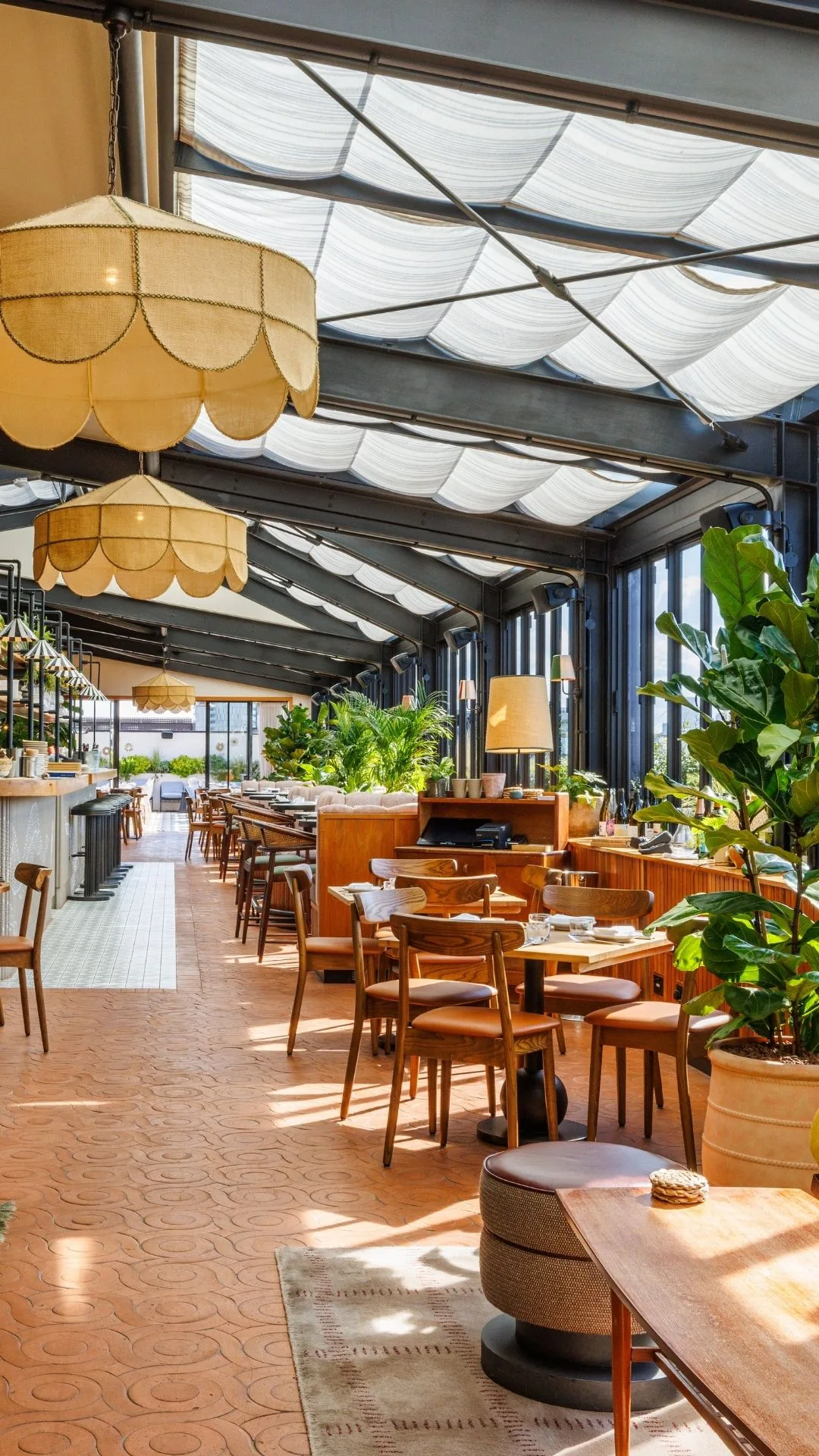
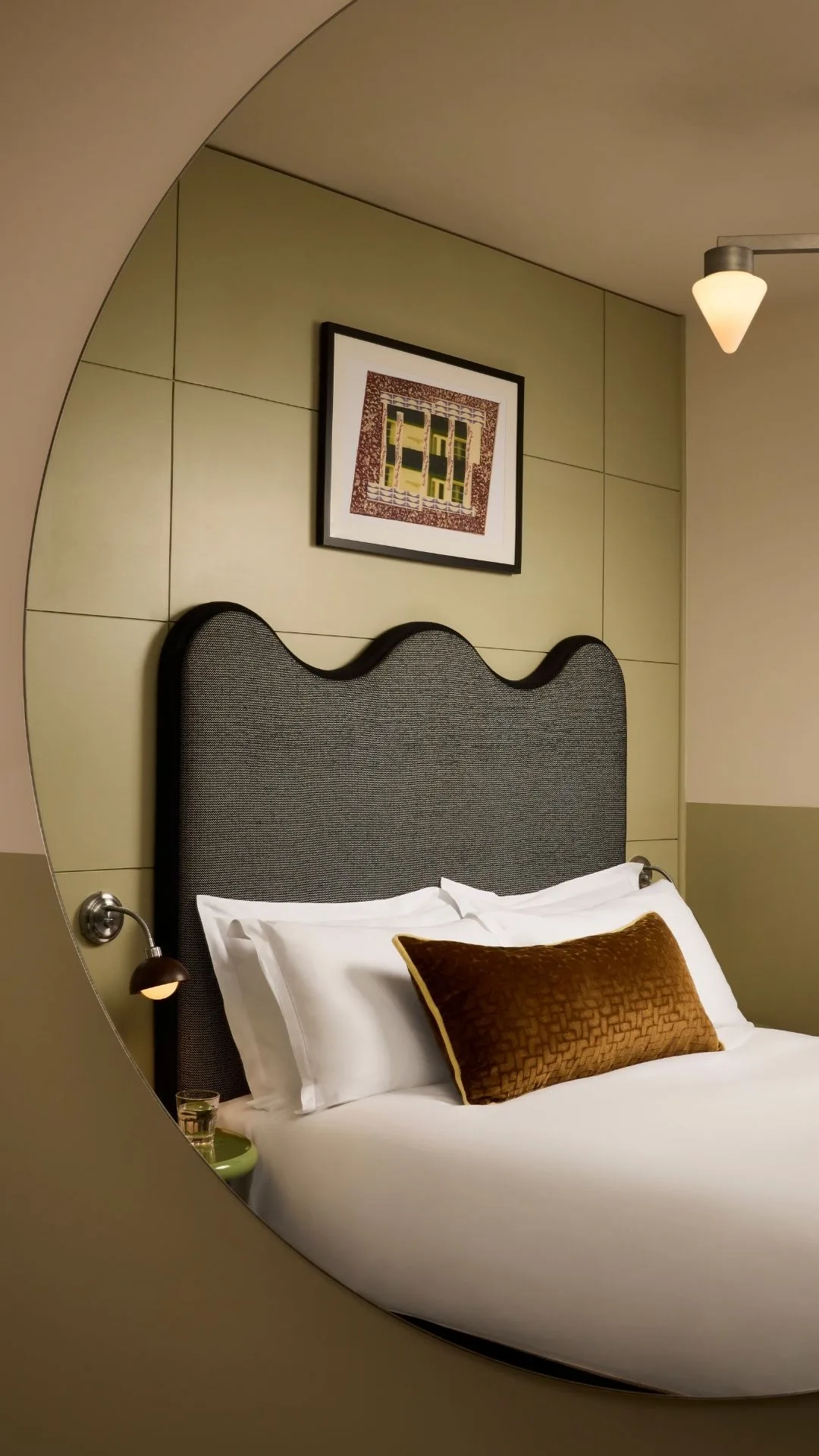
In saying that, there’s so much available within The Hoxton itself that you may not even need to leave if you’re only staying a couple of nights. The hotel recently celebrated its 20th anniversary by undergoing an Anne Hathaway-movie-style makeover of all 210 of its rooms as well as introducing the new Cosy Up room category – a larger version of the Cosy room – which was indeed extra cosy, with its queen bed, velvety mustard sofa and heavenly rainfall shower.
The redesign, led by Aime Studios, started late last year with the Hox Flea – the sale of all the hotel’s old furnishings. All the proceeds went to Shelter From The Storm, an independent homeless shelter, which is important information for those who want to know their hotel not only looks good, but is also doing good.
Completed in January, the makeover has retained all the original hotel’s industrial-chic charm that makes it so Shoreditch, while adding contemporary flourishes such as fun contemporary art and vintage furniture finds. Think: mid-century, dark wood and marble offset by colourful velvet, bouclé and just-right floral upholstery in the dining areas.
The Hoxton recently celebrated its 20th anniversary by undergoing an Anne Hathaway-movie-style makeover of all 210 of its rooms
On the ground floor, Il Bambini Club is an all-day Italian restaurant that serves pizza and spritzes and is a great place to do some “research” before going to Italy (it’s important to know whether your preferred spritz is an Aperol, Campari or limoncello). The buzzy foyer plays host to busy laptop workers and chilled holiday coffee drinkers; there’s a photobooth near the lift, a mini market where you can shop the hotel’s ceramics range, and the tricky-to-find-but-worth-it Peruvian rooftop bar, Llama Inn, which accepts the Dis-loyalty discount, of course.
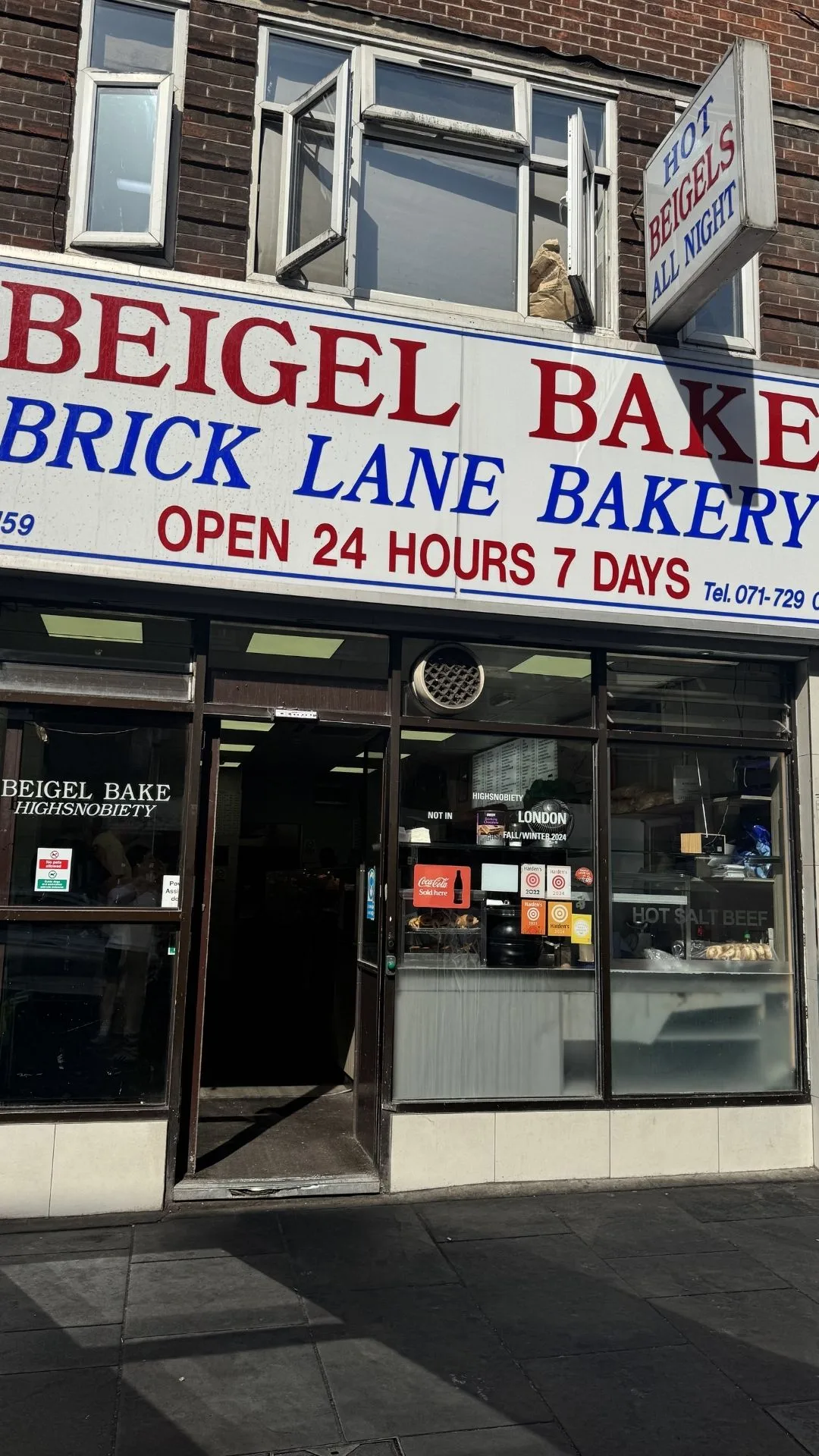
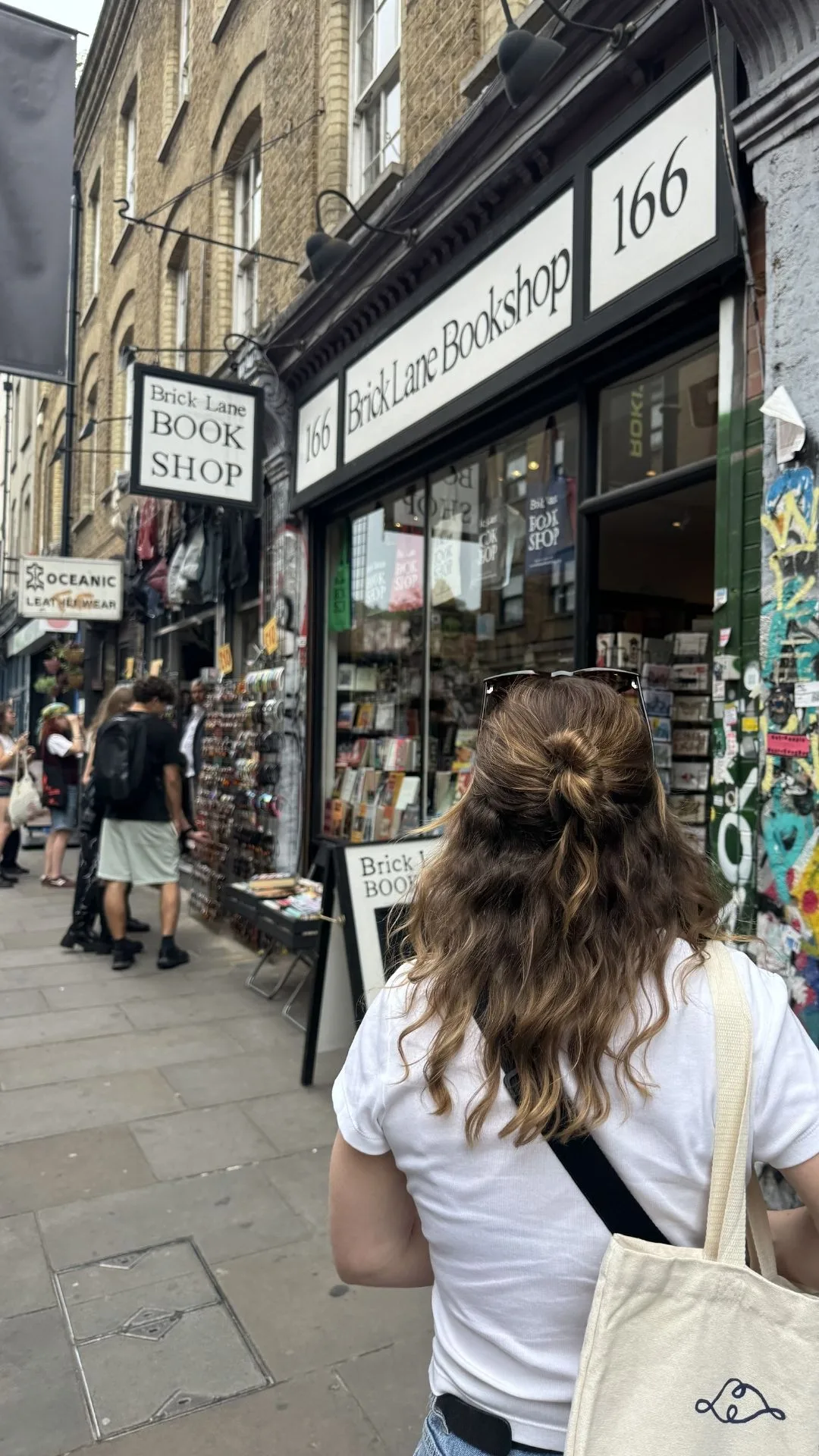
Even without the Dis-loyalty app (which requires a membership fee), there’s plenty to do in the area: going early to beat the line at the Instagramfamous Beigel Bake Brick Lane Bakery (not the one with the yellow sign; get salt beef with mustard and pickle); squeezing past the shelves of contemporary fiction not yet released in Australia at Brick Lane Bookshop; vintage shopping in the multi-level markets; a glass of wine in a classic English pub. The list is endless.
It turns out what’s old can feel new again, after all.
Where To …
Eat
Slayer: This pizzeria is all about New York-size slices in the heart of Notting Hill. Grab a slice to go (no-flop guaranteed) or dine in to add cocktails and dessert.
Drink
Sager + Wilde: This Shoreditch wine bar is famous for democratising fine wine. No longer restricted to the realm of Michelin-starred restaurants, the wine here is served by chatty sommeliers (who likely wouldn’t call themselves that) and paired with cheese toasties.
… Paris
“We can’t all be French.” That’s the opening line of a Vanity Fair article by Marisa Meltzer that I read on the train to Paris and it gets stuck in my head like an earworm. No, we certainly can’t all be French, I think, when my attempts at looking French immediately fail. We can’t all not-heat-style our hair and have perfectly imperfect waves cascade down our backs; we can’t all look good makeup-free save for a bold red lip. Are breton tops even in right now? I blame the heatwave, but really, my surname is English so I never stood a chance at acquiring the insouciant je ne sais quoi of a Parisienne.
And so, instead, we embrace the touristique fadeur of everyone else on a European summer. We’re following the well-trodden path of every tourist who’s come before us: the Eiffel Tower, the Louvre, Arc de Triomphe, Notre-Dame, and so on and so on. It’s incredible and awe-inspiring and amazing, of course: Paris never disappoints (we’ll always have it, etcetera, etcetera). But it feels like we’re missing something special, a bit of effervescence … a touch of, well, how to explain it? Je ne sais quoi.
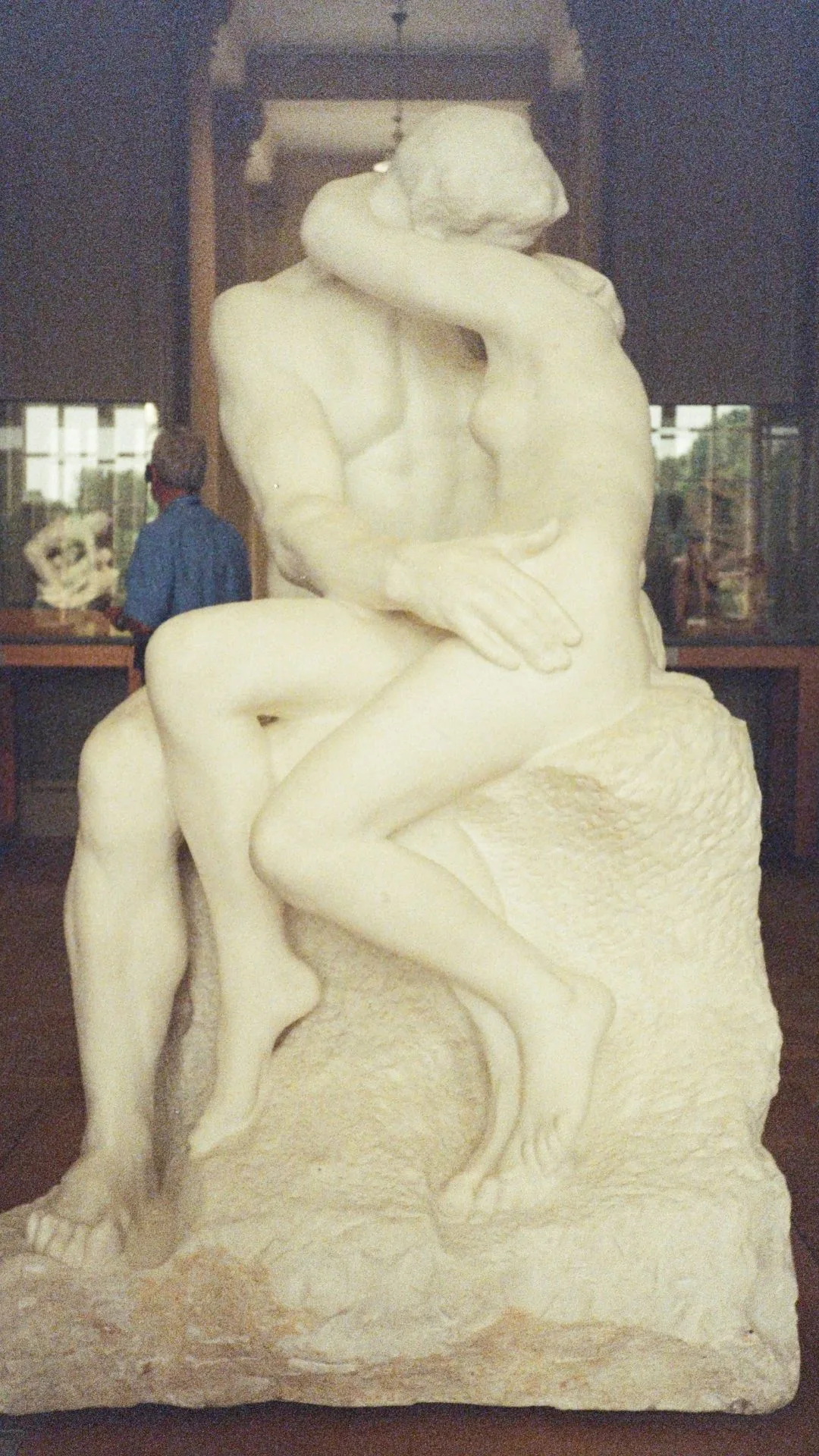
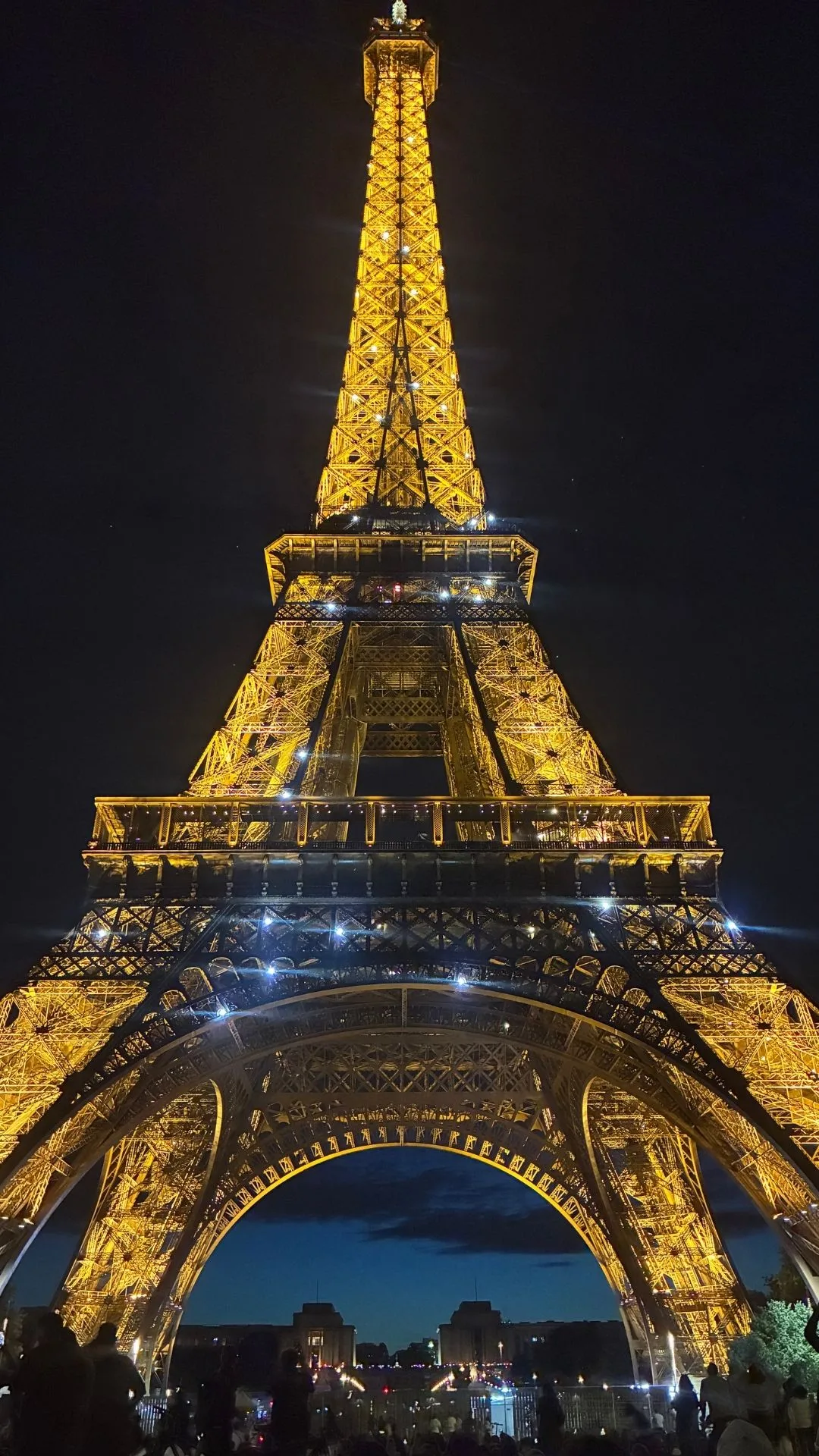
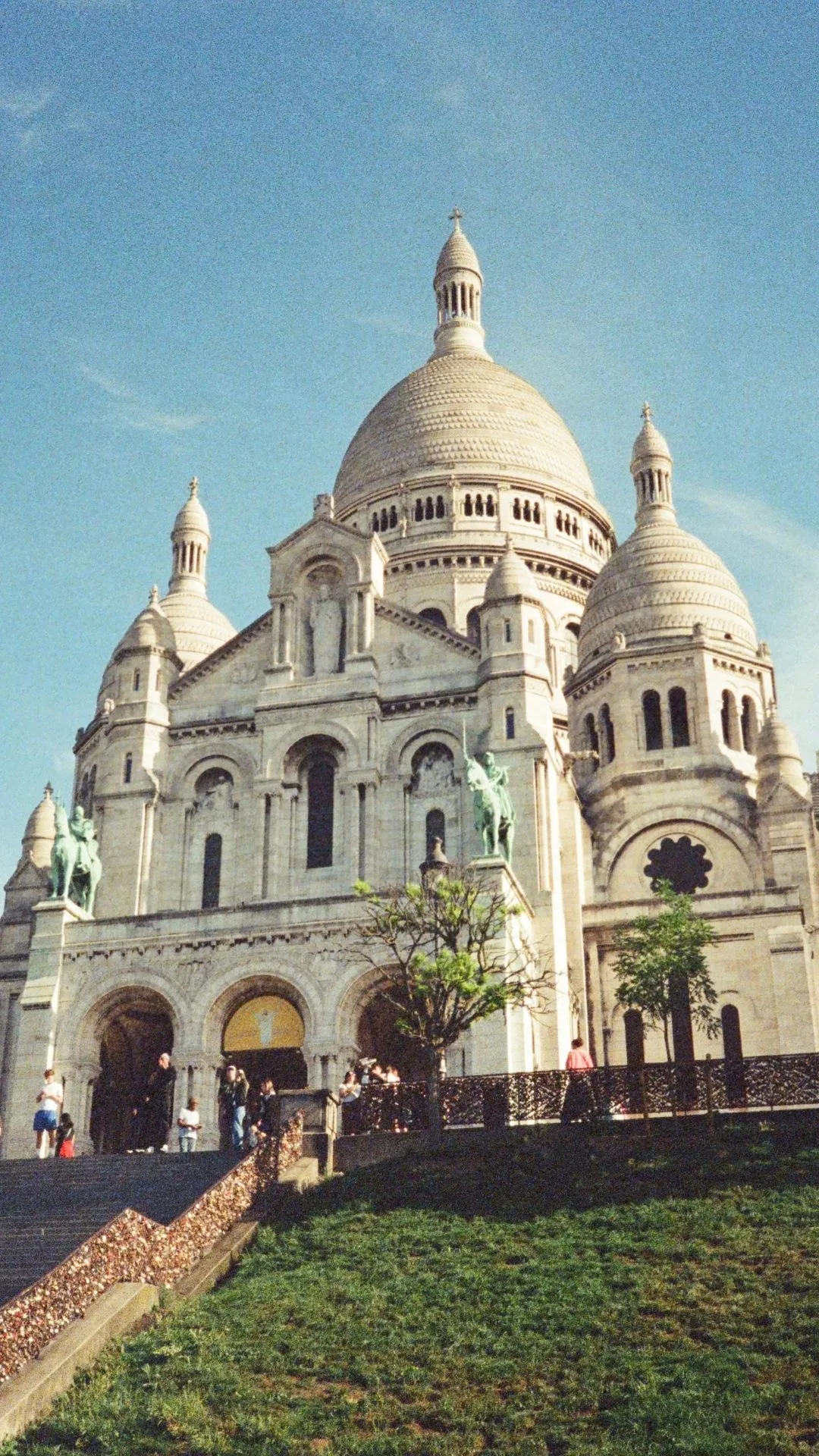
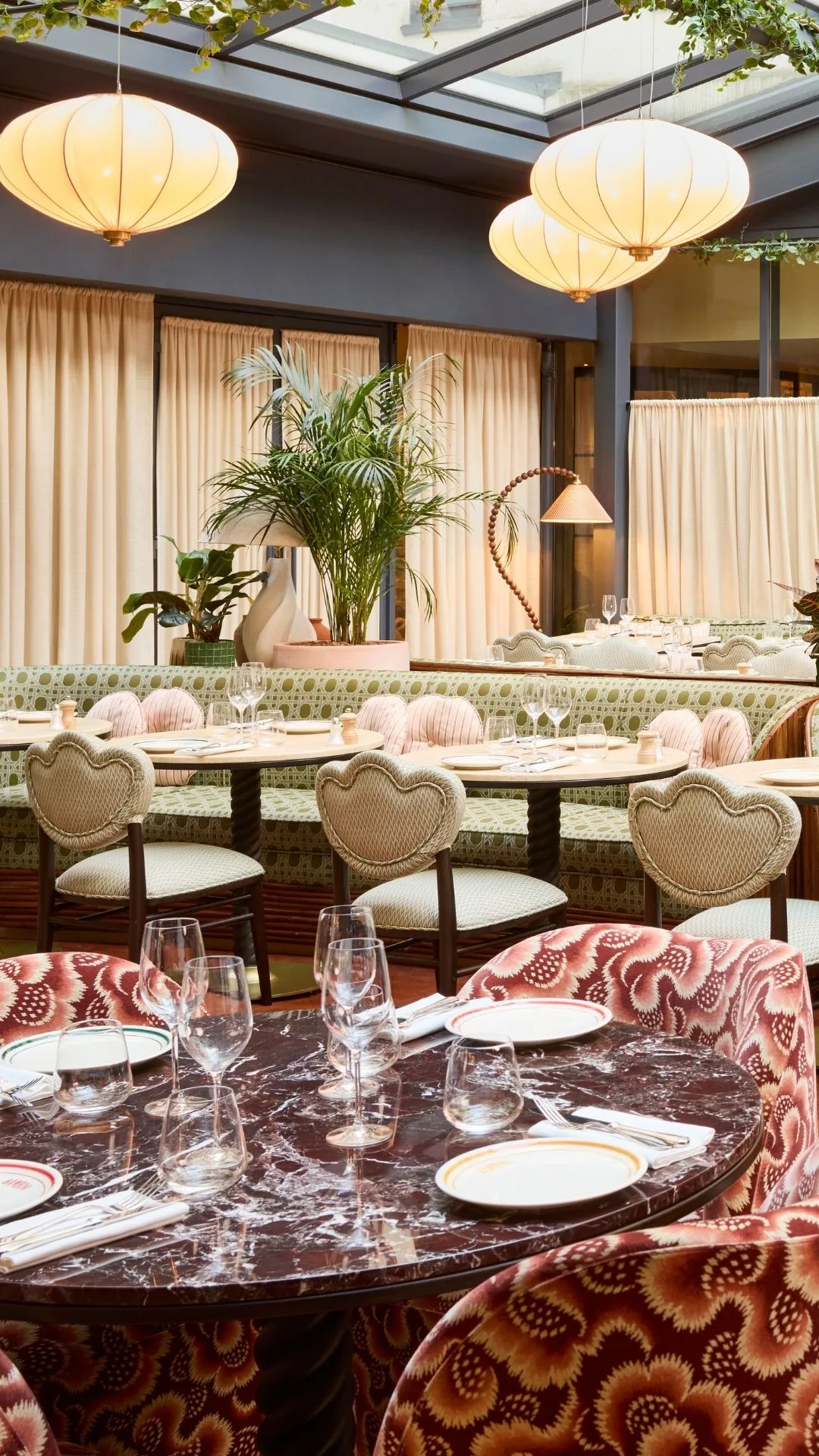
But then we get to our hotel, and there it is. The thing, the fizz, the pièce de résistance: the inner courtyard restaurant of The Hoxton Paris, Rivié, ambiently lit so it seems to sparkle as dusk settles into evening.
There’s a low hum as everyone speaks discreetly over drinks and steak frites, considerate of their neighbours. We order orange wine and cheeseburgers before wandering to the pool area where little two-tops are scattered throughout the garden. Cocktails are being served here and it’s a little rowdier: people are here before they slip into the night to continue elsewhere. There’s also Jacques’ Bar, which you get to by ascending a grand spiral staircase; and Planche, which the concierge tells us is “where the wine and cheese is”. In other words, heaven.
I never stood a chance at acquiring the insouciant je ne sais quoi of a Parisienne
We’re staying at The Hoxton Paris specifically because we stayed at the Shoreditch location before this. Each hotel is so distinct and designed to suit its locale that there’s nothing to overtly connect the two except for the name. The Hoxton Paris is the former 18th-century residence of Etienne Rivié, a counsellor to Louis XIV, and its more than 170 well-appointed rooms are designed in keeping with the building’s character and quirks.
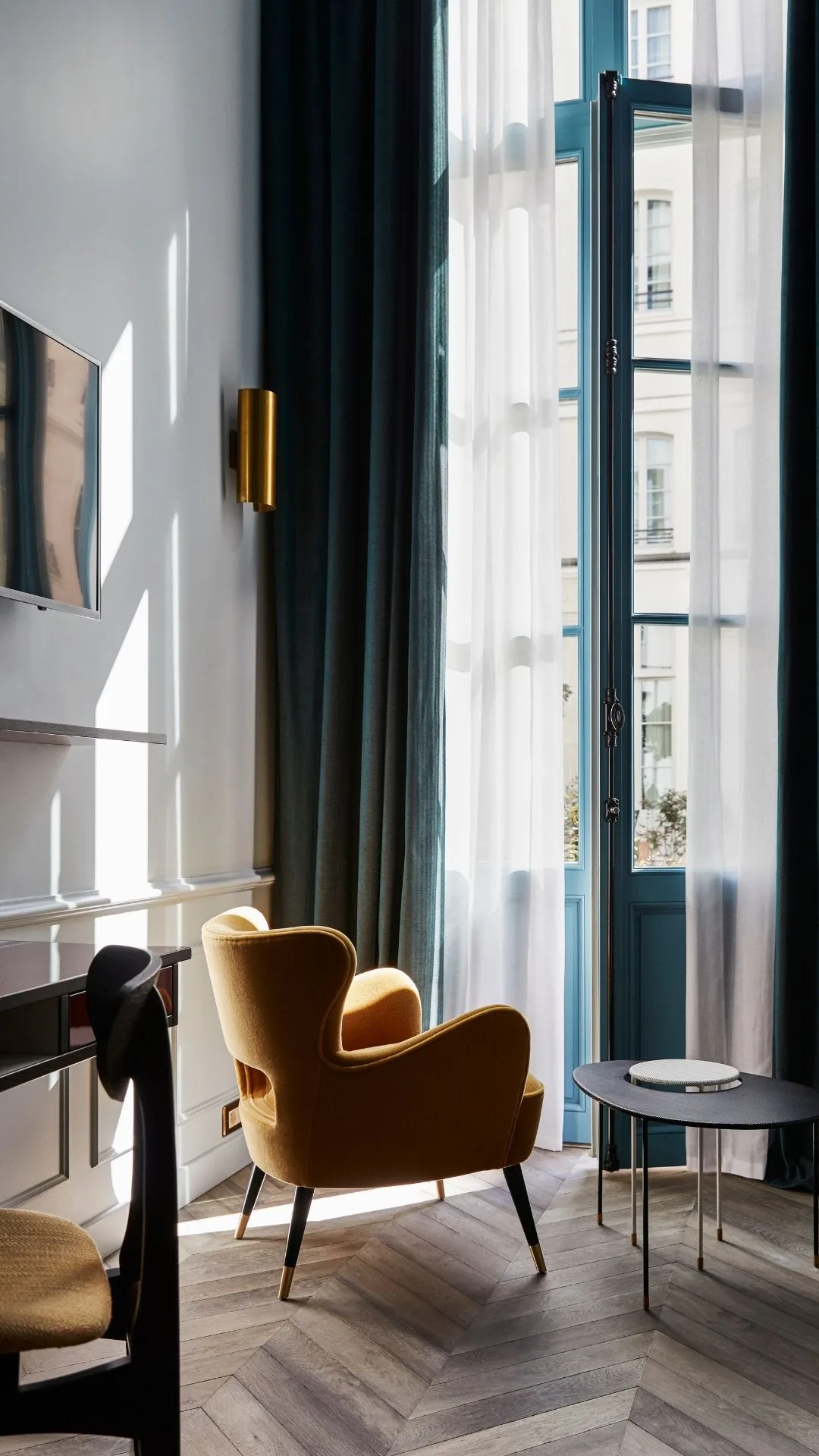
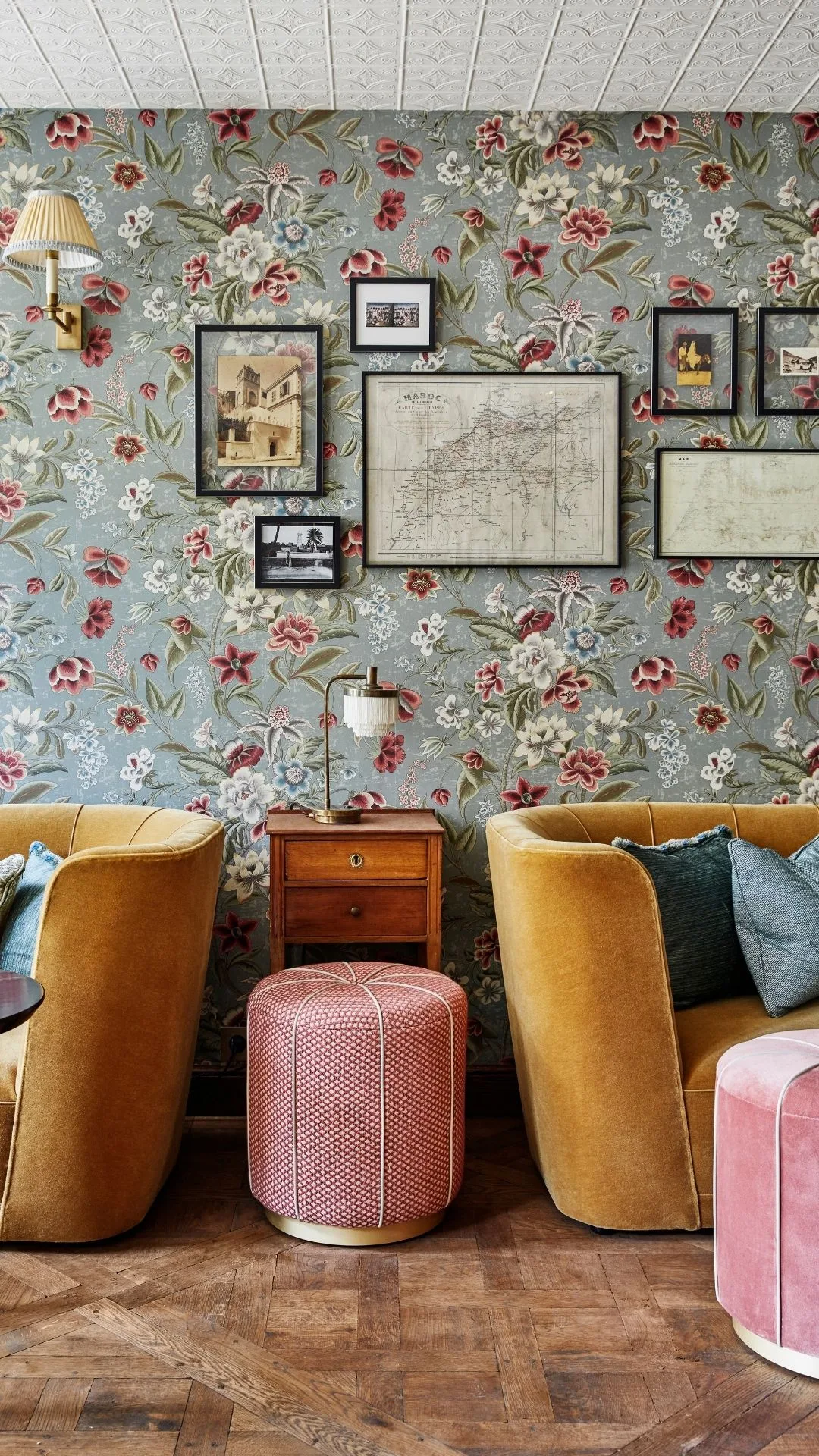
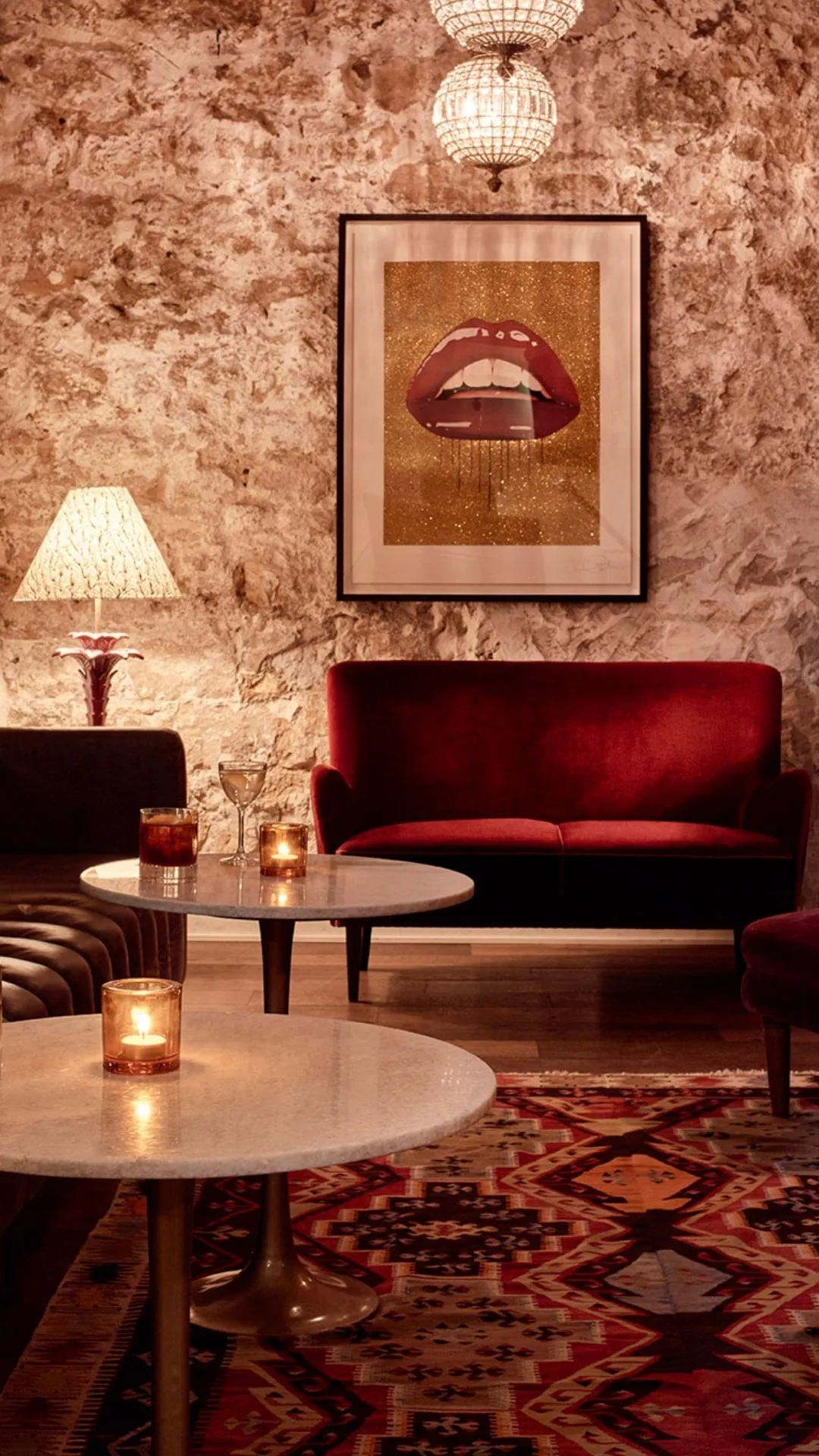
In our Cosy room, there’s a bottle of Moët & Chandon waiting on ice. I’m not the biggest fan of “Mo-ay” at home, but this is delicious. Is it made differently here, or is it psychological? The question remains unanswered and, for the rest of the trip, whenever we encounter something that we think is fine at home but are obsessed with in the moment (margarita pizza in Naples, prosciutto in Barcelona, Portuguese tarts in Lisbon), we refer to it as “The Moët Effect”: is it better, or are we just on holiday?
Of course the answer is that it is better. Europe in summer just has that je ne sais quoi.
Where To …
Eat
Neni: Do you have a very specific craving for Levantine street food with Russian, Moroccan, Spanish, German and Austrian influences? This family restaurant in the 10th serves meals to share on comfy lounges in front of artwork-covered walls.
Drink
Bonnie: This bar prides itself on getting you to stay for just one more drink, so you should plan to do that from the outset. The cocktail list is extensive, and the views of Paris only get better as the sun goes down.
… Lisbon
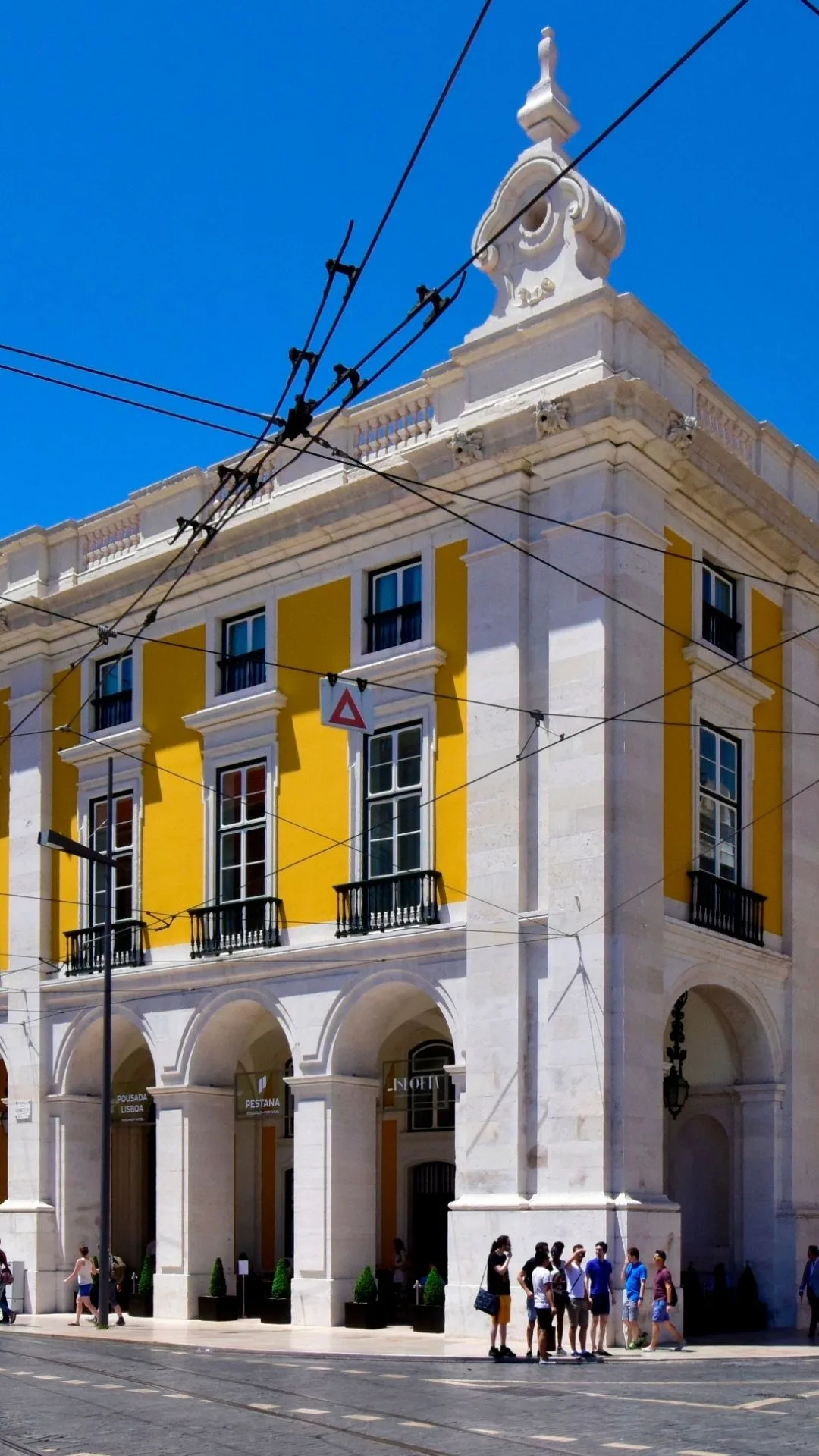
Any hotel that offers champagne upon check-in at 11am is already going to get a good review from me, but Pousada de Lisboa – part of the Small Luxury Hotels of The World collection – really is something else. Bright yellow with white marble trim on the outside, chic and filled with artworks on loan from the Lisbon Museum on the inside, the hotel manages to pay homage to its past as a former royal residence while also being the height of modern luxury. Think indoor pool, sauna, gym, cafe and fine dining restaurant – but more on that later.
With 90 rooms and suites, Pousada de Lisboa occupies a portion of the symmetrical buildings that make a U shape around the Praça do Comércio (essentially the town square, and the site of many a momentous occasion, like the 1908 assassination of King Carlos I and the 2022 engagement of two of our friends). On one side, rooms look out to the Tagus River; on the other, some rooms can see the 8th-century Castelo de São Jorge at the top of the hill.
Any hotel that offers champagne upon check-in at 11am is already going to get a good review from me
When the concierge guides us to our room, the Praça do Comércio Suite, it’s clear he’s building up to something. We spend a little while on the mechanics of the aircon control panel, how to twist the bath plug, dial reception by pressing 9 … and then he finally guides us over to a set of sheer curtains. With a pause, then a dramatic flourish, he sweeps the fabric to the side to reveal floor-to-ceiling doors opening to a balcony with uninterrupted views across the square to the river. The view is so stunning, I need to remember I’m still holding a champagne flute.
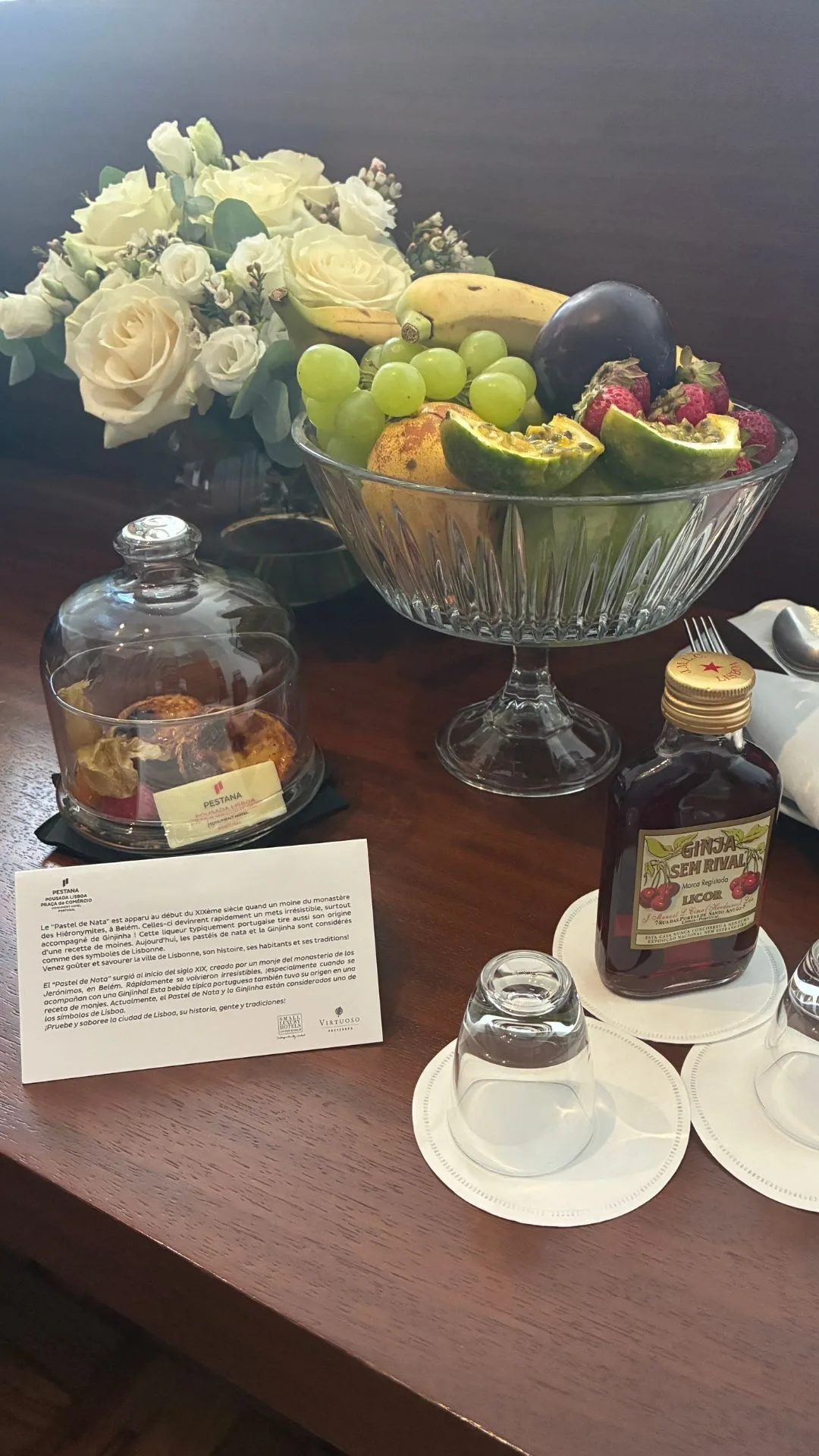
It’s hard to leave this room with its high ceilings, wood panelling, king bed, separate dressing area and giant bathtub, so, for a while, we don’t. We dip into the fruit basket, inhale a packet of batatas fritas em azeite (potato chips in olive oil), and I have a glass of wine in the bath.
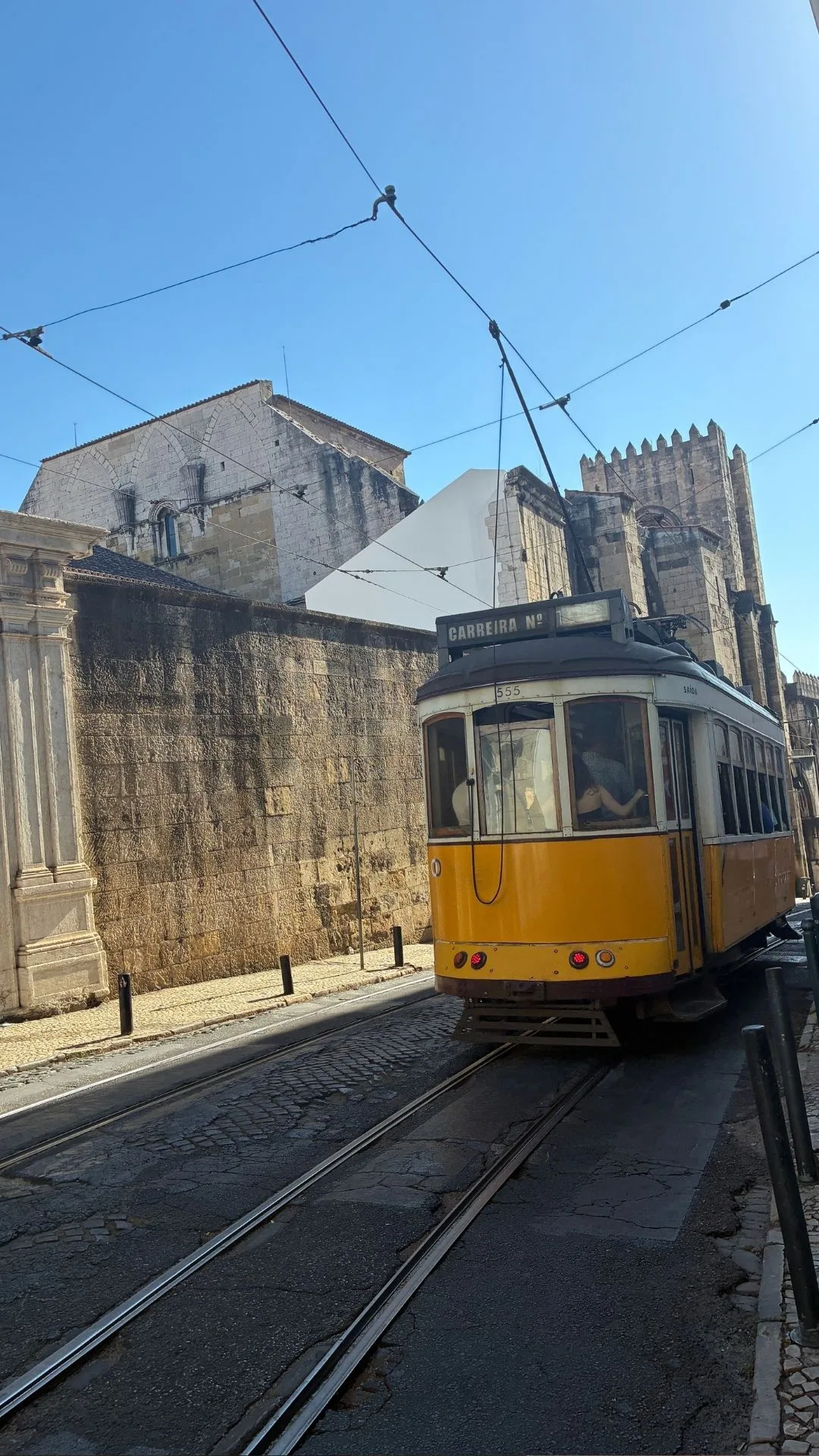
Eventually we do drag ourselves away, because there are five things on our Lisbon list: eat pastel de nata (a flaky Portuguese tart filled with velvety, sweet egg custard and then burnt almost to a crisp), eat bifana (steak or marinated pork sandwiches – “hot porky love”, according to Anthony Bourdain), drink
ginjinha (cherry liqueur), ride the iconic 1930s Tram 28, and take the outdoor Santa Justa Lift, which you can use instead of walking up a hill.
As it turns out, it’s easy to tick off most of those things in one day, so the rest of our trip is full of surprises: a glass of wine in an old bell tower, vintage shopping, the circus-themed sardine store, getting lost in the Alfama and Baixa neighbourhoods, finding rooftop bars and seeing turtles in the pond at Jardim da Praça do Império.
As it turns out, it’s easy to tick off most of those things in one day, so the rest of our trip is full of surprises
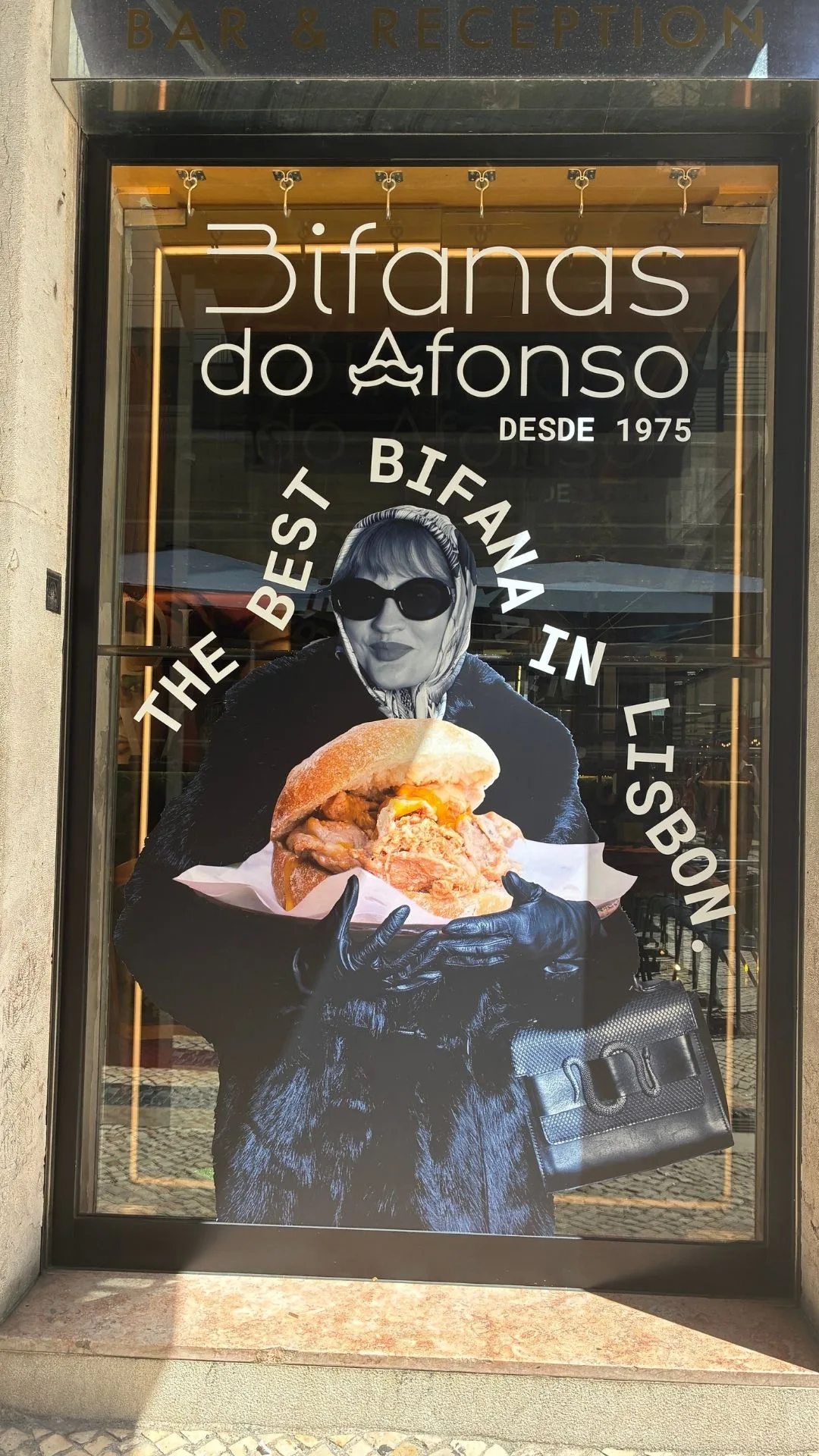
Despite my European Summer Manifesto declaring that you shouldn’t become a regular on holiday, the bifana at Bifanas do Afonso is so “hot porky love” that we go every day (OK, twice). The cash-only, no-table, hole-in-the wall spot near our hotel has a huge, constantly simmering pan of marinated pork, steak cooked to order, and large cold beers you drink in the street. Another favourite is NaBOA, a small bar where the walls are plastered in typographic posters, the tables are small, the chairs are high, and the steak bifana is satisfyingly soggy.
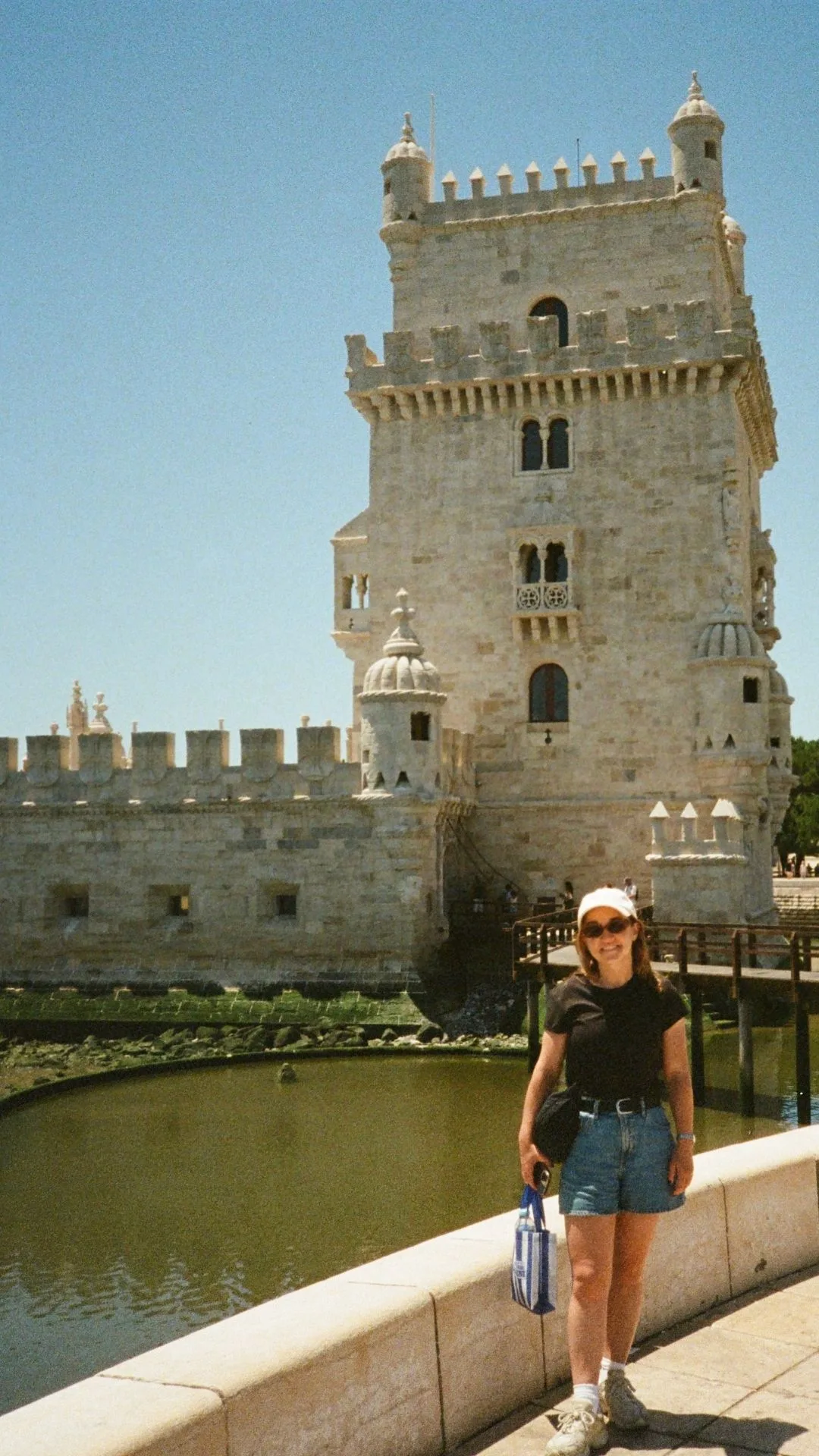
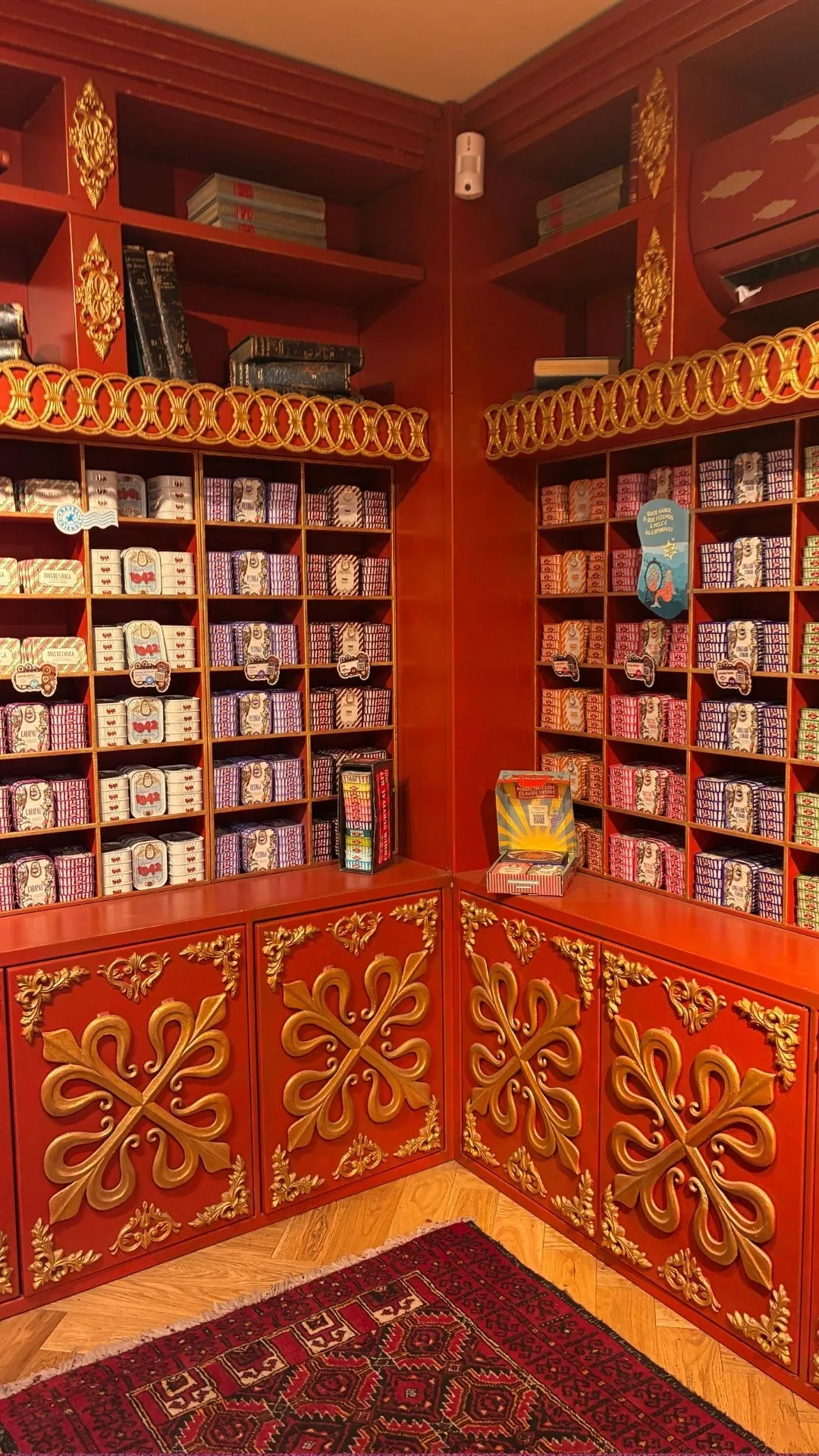
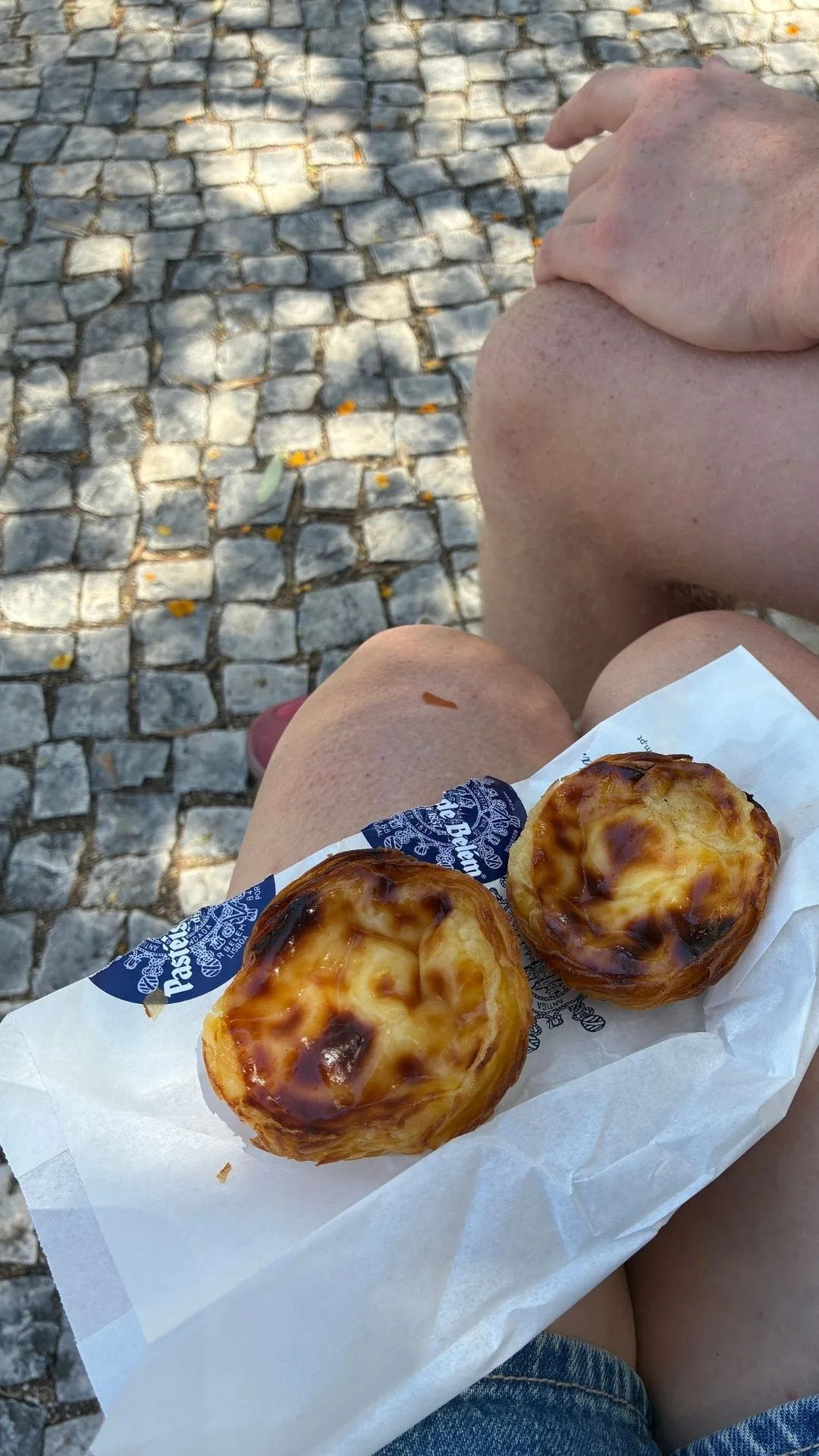
Pastéis de nata are everywhere, but the Instagram-famous ones are in Belém, a 40-minute tram ride away at the fittingly named Pastéis de Belém (which is also what the tarts are called here; these ones are different because they’re made from a top-secret ancient recipe). By some miracle we arrive during a freak lull and go straight to the counter that surrounds the busy bakers. When we leave, the line is up the street. A little birdy (TikTok) had told us that the pink cafe next door, Manteigaria, was just as good, if not better. This cafe claims – a bit passive-aggressively perhaps – to have “no secrets”, and also makes each batch where you can see them. Their recipe involves “eggs, milk, cinnamon and lemon, flour, butter, margarine and passion”.
After a blind taste test of both tarts in the nearby park, we confirm they are nearly the same, with the Manteigaria coming out slightly on top for being less sweet (in taste and temperament).
On days we don’t want to trek out to Belém, Fábrica da Nata near the hotel is so delicious that we go back for seconds before our coffee can go cold. Here, too, the making of the tarts is done in full view. (Because travel stories should also tell you what not to do: avoid the place next door. And while we’re on the subject, don’t bother with Time Out Market – it’s a tourist trap – and Pink Street is mostly stained black by now.)
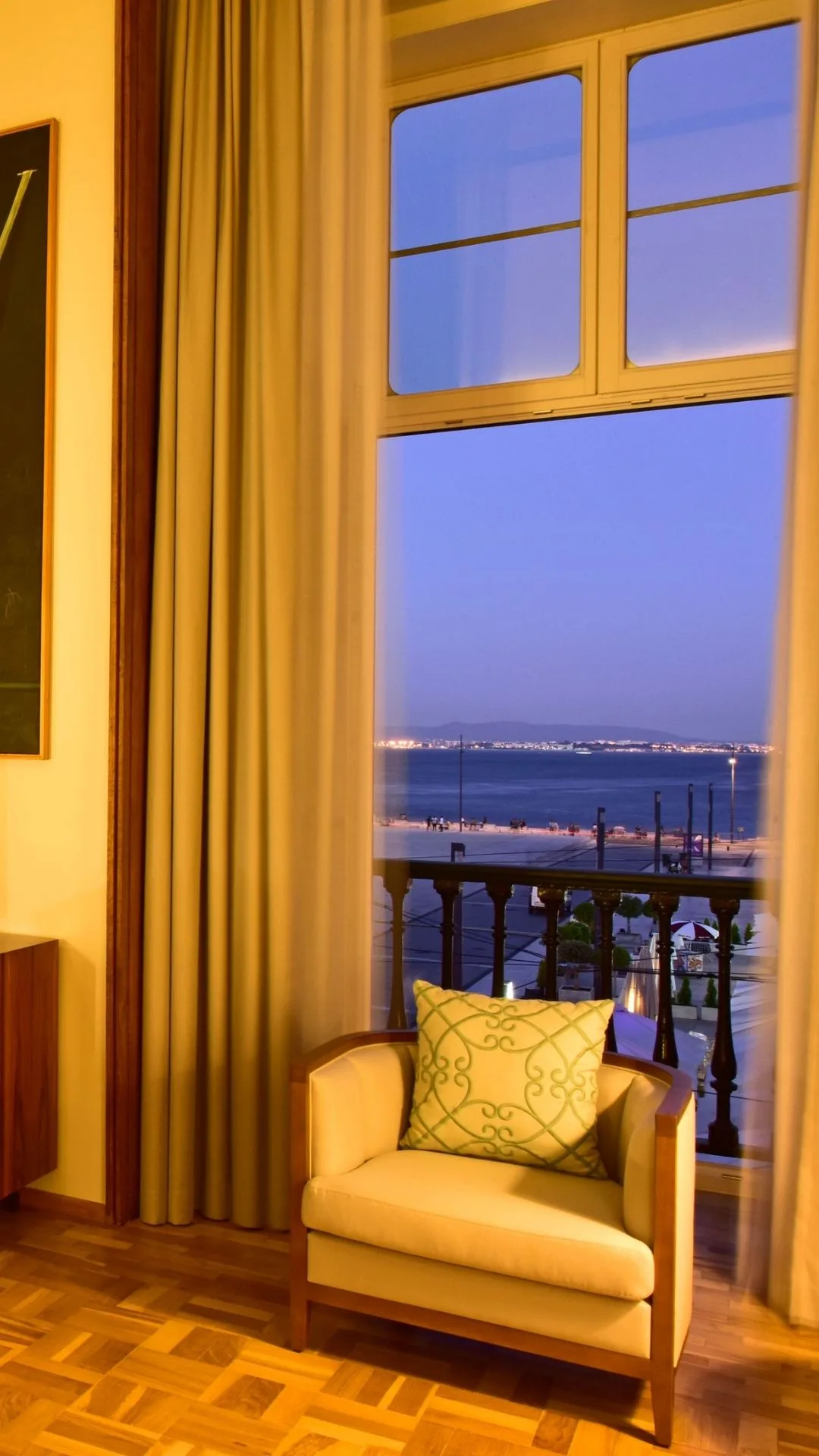
do Comércio Suite; courtesy Pestana Group
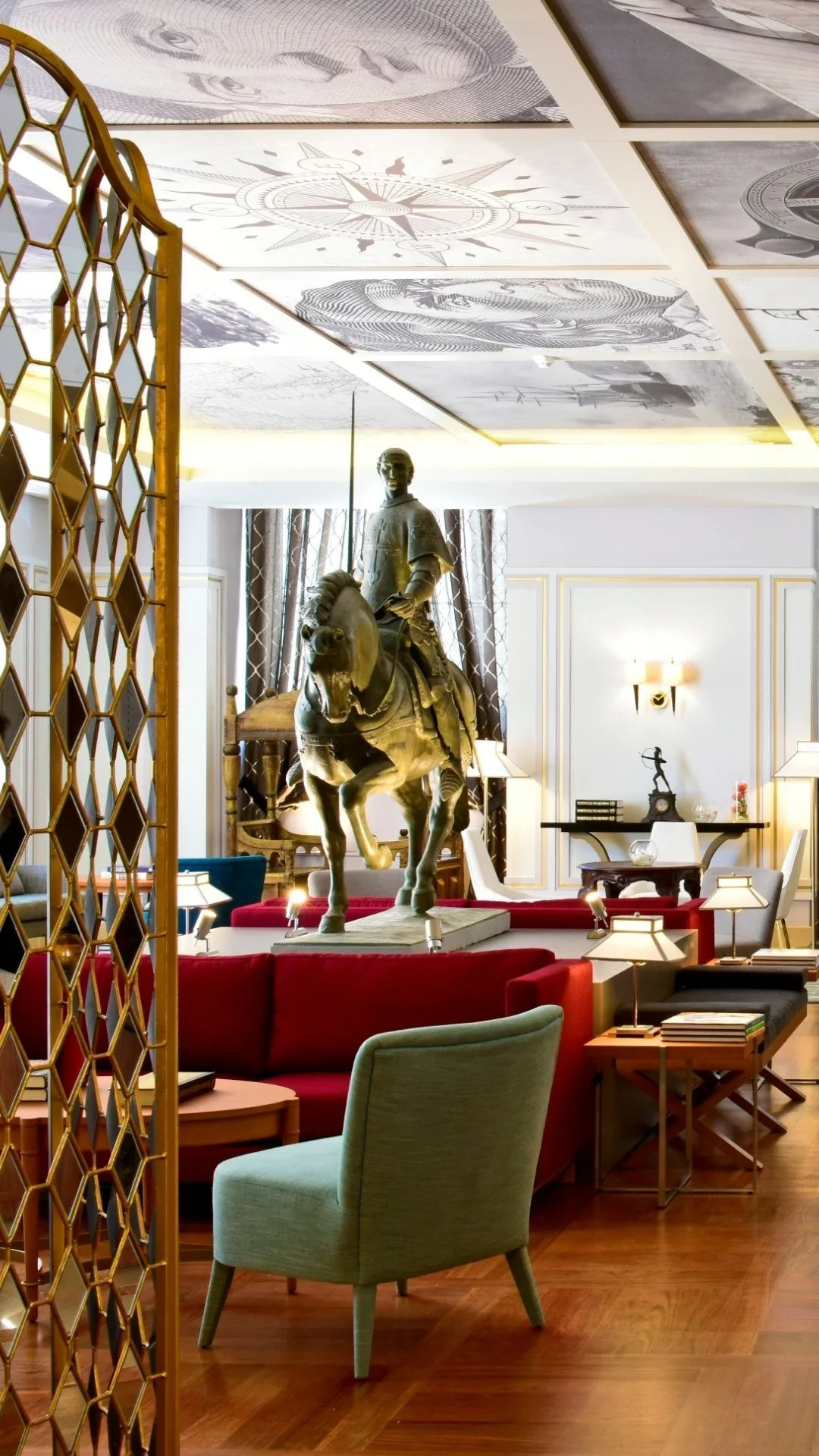
A highlight of the stay is the final day of the entire trip, when we’re exhausted and sad. After the hotel buffet breakfast (read: more pastéis de nata), we go back and forth between the pool and the sauna, reading and lazing about in our room in our robes. For our final dinner, we have a booking on the terrace of the hotel’s restaurant, Rib Beef & Wine, directly downstairs. Helmed by chef Marcos Silva, the restaurant primarily serves meat, which means they’re very good at it.
We start with Beirão sours (starring Portugal’s famous citrus liqueur) and bread with olive pâté, before moving onto slices of oxheart tomato and burrata. For the main event, it’s an A5 Wagyu ribeye, which I’m told is the highest grade of Japanese beef, and the moment it melts in my mouth, I believe it. We pretend to need to be talked into a skillet choc-chip cookie with vanilla ice-cream for dessert, and the staff surprise us by bringing out the only thing on our list we’re yet to tick off: ginjinha.
We clink our glasses of red liquid and, as the tart-yet-sweet cherry flavour hits my tastebuds, I tear up thinking about how sad I am to be going home, about how incredible this month has been, and how, when I get back, I have to apologise to everyone for hating on Euro summer.
Where to …
Eat
Mama’s Restaurant: The chefs here put a Portuguese spin on French bistro, with fresh seafood, pizza and tapas. The grilled octopus is a must-try.
Drink
Lumi: This rooftop bar perched on top of the five-star Lumiares hotel in Bairro Alto offers cocktails, wine and share plates with a backdrop of panoramic views of Lisbon. Try to get the corner lounge on the terrace for views of Castelo de São Jorge.

Related stories
Native ad body.
Native ad body.


The Holiday That Makes You Feel Like Yourself Again

Native ad body.