


Judgment day arrived on a bitingly cold winter’s morning. Flanked by my barristers and lawyers and supported by my husband and eldest siblings, I walked into a needling wind that stung my face like contempt and then through an enormous media pack pressing forwards, microphones extended like bayonets.
Each step towards the courtroom felt like wading through a tide of scrutiny, the air heavy with unspoken expectation. I knew that every word of the judge’s verdict would be quoted in law schools, opinion columns and history books, that every flicker of my expres sion would be captured, dissected and replayed from every angle.
How did I know this? In the months leading up to the verdict, legal academics and teachers had been in touch to share the Lattouf v ABC curriculum modules, case studies and debates their students were wrestling with, with topics ranging from employment law precedents to freedom of expression, war reporting, media inclusion and systemic racism.
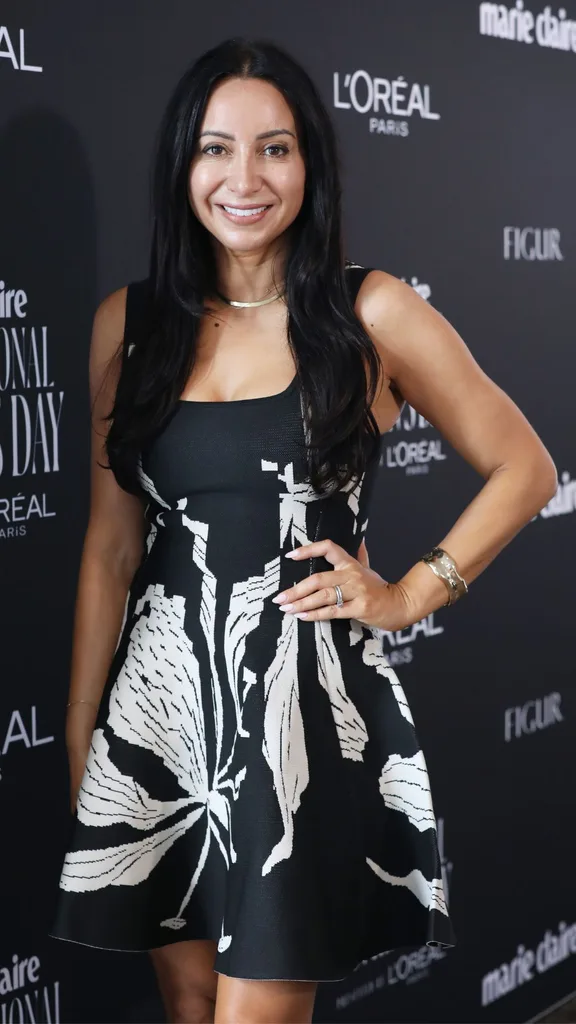
Articles forensically catalogued and priced every outfit and acces sory I’d worn during the trial, down to the sunglasses I’d borrowed from my sister.
One writeup even baselessly insinuated I’d dipped into my GoFundMe money for clothes, their unspoken message being: how dare I look composed while holding the public broad caster accountable for abandoning its principles and while defending my right to highlight war crimes.
The truth is, I was cloaked thanks to the generosity of designers, retailers and stylists with ties to Lebanon, Palestine, Syria and Iran, many of whom have lived through violence, dispossession, the brutality of corrupt regimes and the collateral damage caused by the ill considered interventions of Western leaders who claim to be ‘well intentioned’.
They dressed me for this battle, turning my wardrobe into armour. Women in the public eye are already unfairly scrutinised; as an Arab woman opposing Israel’s endless USbacked assault on Palestinian life and human rights, I was subject to even more targeted and unrelenting scrutiny.
Nothing prepared me for the weight of the hope and expectation strapped to this verdict. It settled across my back with a heaviness no human body should have to carry.
Yet I bore it determinedly and with a touch of theatre in a long, structured black coat, its dramatic faux fur collar framing my face and channelling exactly what I wanted to signal. I fixed my gaze ahead as we edged closer to the courthouse. I didn’t trust my balance, or that my carefully preserved resolve would withstand even the slightest distraction.
I whispered to myself, ‘I am already a winner.’ A half prayer, quartermantra, quarter delusion, on repeat to muffle the shrill chorus of nerves gnawing at my insides.
In the leadup to this moment, my legal team, trained sceptics, had regularly reminded me that cases they thought were slam dunks had shocked them in defeat. While quietly hopeful that at least some of our claims would be upheld, I was told I needed to prepare for a partial loss. This was the team’s anticipated best case scenario.
We would likely win something, but I was urged to brace for the reality that we would lose overall. My internal chant – I am already a winner – came in handy.
It was a way to drown out the inevitable questions from journalists as we scaled the courtroom steps, including one so predictable I could have lip synced it: ‘Ms Lattouf, how are you feeling?’
I’d asked others this question more times than I cared to admit, back when I was the one jabbing a mic forwards, fishing for a sound bite.
I now appreciated why it was the worst of all journalistic clichés: not just because of its mindnumbing banality, but because anyone being asked it is likely already choking on a hundred answers, most of them unprintable and none of them fit for a neat grab.
As I stepped into the Federal Court building, someone called out, ‘You’ve got this, Antoinette – you look like a mob wife and you’re going to wipe them out.’ I didn’t recognise the voice and assumed it belonged to a stranger – a supporter in the crowd – but I smiled inwardly.
My posture, until then a rigid scaffold against a storm, loosened a fraction, reminding me that the persona I’d constructed for battle wasn’t the whole story.
Under the armour stood one woman, a charged blend of fragility, fear and ferocity, yet resolutely set against the wrongful actions of a media giant.
The truth was I had dressed with intent, as if for a vigil: in a borrowed black designer coat, my hair pulled tightly back, sharp lines and angles – not to menace, but to acknowledge this dark hour. That morning, in my sibling group chat, I’d sent a selfie: fingers crossed.
My ensemble, I’d joked, was a sombre tribute to the ABC’s repu tational funeral – a wry cipher for a ceremony that would outlast the day, even as I walked into it.
If the ABC was collapsing due to what I saw as a failure to independently and fairly report on the unfolding genocide in Gaza, which had already killed and permanently scarred so many, the least I could do was turn up properly attired to its wake.
Not to gloat over its metaphoric corpse, but to stand tall beside and show that while one reputation was being lowered into the ground, others might yet be jolted back to life.
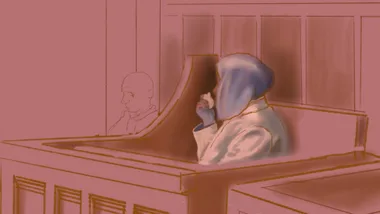
All I had ever wanted was for the ABC’s independence and integrity to rise again. Then I was seated inside the Federal Court once more, my lawyers poised beside me, family members and friends packed in tight, members of the public crammed shoulder to shoulder, some sitting on the carpeted floor.
My husband, staunch as ever, had taken a place just behind me, close enough to anchor but not to shield. The air was thick with anticipation, and I drew deep, slow breaths in a futile attempt to coax my heart back into a regular rhythm.
I had steeled myself for the indignity of being included in the court’s live stream, only to feel a surge of relief when I saw the camera trained on Justice Darryl Rangiah. Phew.
If I mouthed ‘This is bullshit!’, fainted dramatically or dissolved into howling snot filled tears, at least this wouldn’t be clipped, captioned and replayed for eternity. Justice Rangiah’s voice soon filled the courtroom, but in my head that persistent phrase kept ricocheting, louder than the law itself: I am already a winner.
The spell broke when the court associate slipped printed copies of the judgment onto the barristers’ benches ahead of the judge’s delivery.
One of my barristers, Philip, sitting just in front of me, devoured the pages at speed and then turned in his chair with a quiet author ity, leaning back just enough to murmur, ‘We won. We won on both counts.’
I held this news for approximately two seconds before executing my own whiplashswivel to my husband and older brother and sister. ‘We won. Oh my God. We won it all,’ I relayed in a courtroom game of urgent whispers that no doubt left half the gallery bewildered.
Justice Rangiah was still working through his preamble and had yet to publicly deliver this delicious, long awaited justice.
Composure deserted me. The mobwife carapace crumpled; my head dropped, and tears broke free. My lawyer Josh laid a steady hand on my back, fighting his own tears. The gallery murmured, trying to decode my sobs – defeat? Relief? Grief? Joy? I couldn’t name the emotion either.
But I knew one thing with searing clarity: I was a fucking winner. In that raw, disorienting moment, a tidal wave of emotions crashed through me – flooding relief, aching sadness, fierce triumph, tender lightness, dizzy elation, sharp pain – a riot of feelings that left me exhilarated yet depleted, victorious yet bruised, reeling in the wake of trauma.
Still, the mantra I had carried in with me only grew louder and stronger as Justice Rangiah finished delivering his judgment. I did nothing wrong. I am a fucking winner.
Justice Rangiah ruled that the ABC had unlawfully breached section 772(1) of the Fair Work Act 2009 and terminated my employ ment on the basis of my political opinion.
He also found that the ABC had acted unlawfully when it contravened its own Enterprise Agreement (clause 55.4.1(f)) by denying me the opportunity to defend myself against allegations of misconduct.
His Honour noted that emails from proIsrael lobbyists insti gated the chain of events that led to my dismissal, stating: ‘It became clear that the complaints were an orchestrated campaign by proIsrael lobbyists to have Ms Lattouf taken off air. The complaints caused great consternation amongst the senior management of the ABC . . . The consternation of senior managers of the ABC turned into what can be described as a state of panic.’
And he concluded that it was my views, not my professional conduct on air, that had made me a target: ‘I find Ms Lattouf’s support for Palestinians’ human rights was a political opinion.’
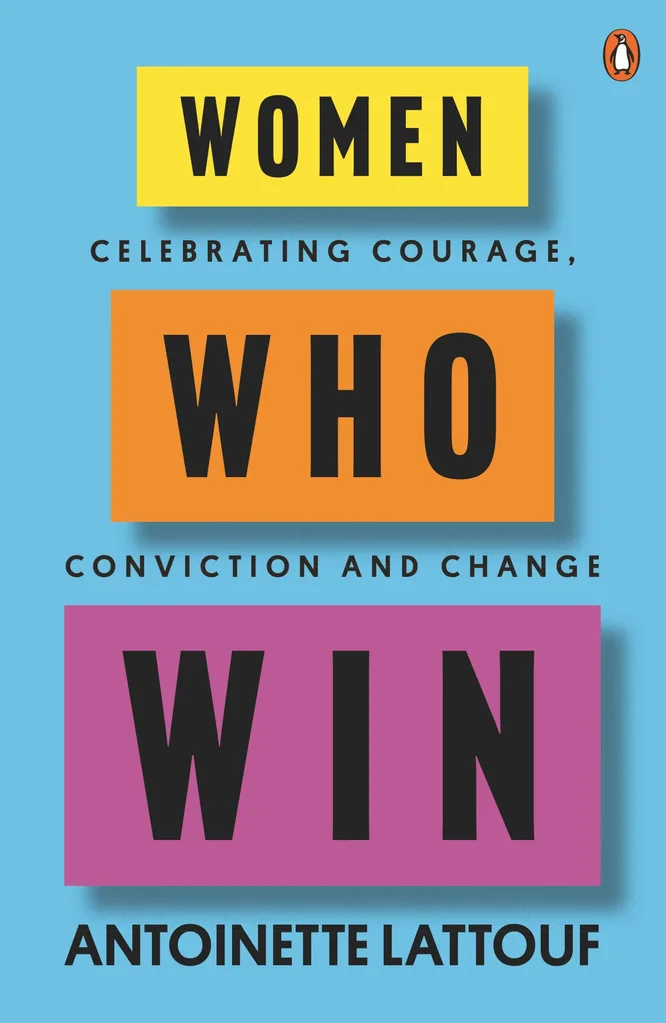
Women Who Win by Antoinette Lattouf (Penguin, $36.99) is out now.

Related stories
Native ad body.
Native ad body.


Native ad body.



Share this post