
There are few things more disorienting than seeing your body debated by strangers. For Jules Robinson, it became a constant, one that followed her across years, sizes and stages of her life. She was praised, criticised and dissected in equal measure.
“No matter what size I’ve been, there’s always been judgement,” she says.


“That was the wake-up call. You can’t anchor your worth to something so external and ever-changing.”
It’s a realisation that took time, one that would go on to shape both her personal philosophy and her professional direction. Public scrutiny clarified something essential: the problem was never the body itself, but the lens through which it was being viewed.
That tension, between how women are seen and how they are made to feel, sits at the centre of Figur, the shapewear brand Robinson launched in 2020. At a glance, it exists within a familiar category that has taken over mainstream culture in recent years. Its premise, however, is subversive.
“I didn’t want to feel like I was being fixed,” she explains. “Everything felt like it was designed to flatten you, to shrink you. I wanted to feel supported, not corrected.”
It’s a subtle shift in language, but a significant one. Where traditional shapewear has long operated on the idea of minimising the body, Figur is built on the opposite instinct: to work with what already exists. In the aftermath of her rise to public attention on Married At First Sight Australia in 2019, Robinson found herself fielding a steady stream of messages from women across the country.
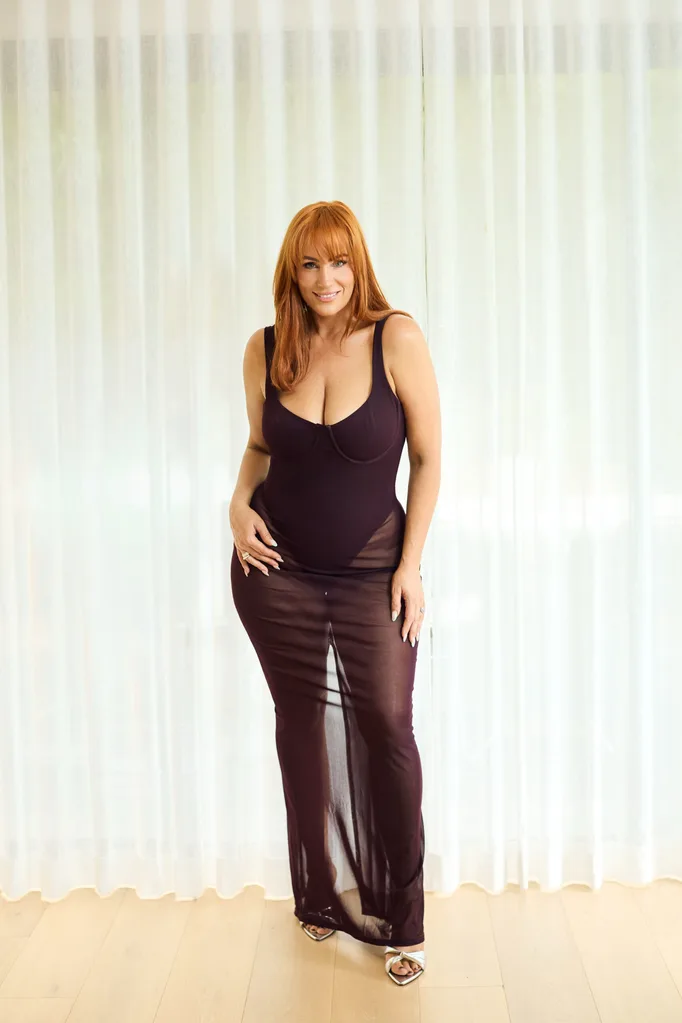
Many saw themselves reflected in her – her shape, her style, her presence – yet struggled to extend that same acceptance inward.
“That’s when it stopped being personal and started to feel necessary,” she says.
“There were so many women who just didn’t feel like they were enough in their own bodies.” In a market crowded with celebrity-backed brands, Robinson is pragmatic about what sustains longevity. Visibility may generate interest, but it is not what builds trust.
“It might get someone to try something once,” she says. “But it won’t make them come back. The product has to work; it has to earn its place.” Instead, Figur has grown through word of mouth, driven by a transparency that feels increasingly rare.
“It’s not about presenting an ideal. It’s about showing up in reality.” Robinson shares her body as it is, across its fluctuations and phases, resisting the urge to present a singular, polished version of herself. This philosophy is reflected in Figur’s campaigns, where stretch marks, cellulite and postpartum bodies are treated not as exceptions but as the norm.
“They’re not anomalies. They’re reality,” she says. “And when you don’t see yourself represented, you start to think you’re the problem.” While body diversity representation has broadened in recent years, Robinson sees the current moment not as a resolution but as a transition.
“For a long time, the pressure was to be smaller, more perfect,” she says. “Now it’s evolved, but the pressure hasn’t disappeared. It’s just wearing a different outfit.”
Where once the expectation centred on appearance, it now often demands a kind of constant confidence, a performance of ease that can feel equally restrictive. “There’s this idea that you should love your body all the time. And that becomes another standard to meet.”
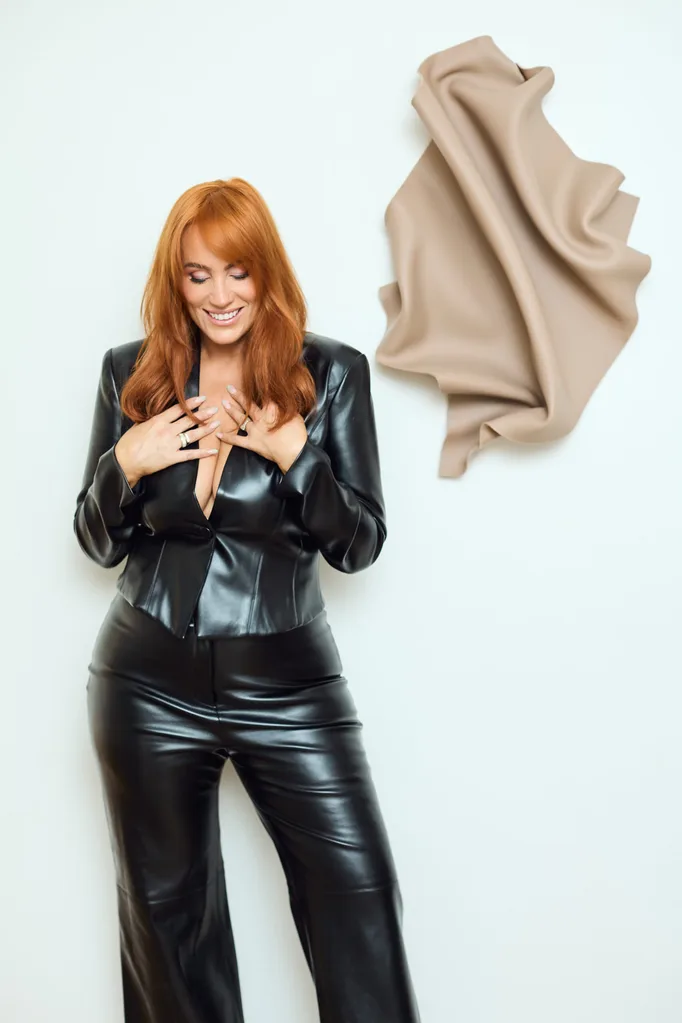
For Robinson, the more meaningful shift lies elsewhere. It moves away from how the body looks, and towards how it feels. “[It’s] less about appearance, more about experience,” she says. “Confidence isn’t something you wake up with. It’s something you practise. It’s something you come home to within yourself.”
If her work is about expanding the way bodies are seen, her personal evolution has been about narrowing what she allows to matter. These days, she speaks less about self-love as performance, and more about something quieter and more sustainable: self-trust. “I think confidence has changed,” she reflects.
“It’s not as loud anymore. It’s less about proving something and more about how you carry yourself in the in-between moments.” In Robinson’s view, this confidence extends beyond the self and is expressed in how women show up for one another, in the ability to celebrate without comparison, and to recognise that visibility is not a finite resource.
“Someone else’s brilliance doesn’t take away from yours,” she says. “There’s space for everyone.” The same clarity shapes her understanding of ambition. Despite the many roles she now occupies – founder, partner, mother – it remains largely unchanged.
“We’re not doing motherhood quietly anymore,” she says. “We’re still ambitious. We’re setting boundaries. We’re showing our kids what it looks like to be a whole woman.” What has shifted, however, is her definition of success.
These days it’s less tethered to scale or output, and more to a sense of alignment. “Inner peace is the new success,” she says. “Feeling connected to my life, having the time to be present – not just physically there but actually there.” It is a perspective shaped by the early intensity of building a business from the ground up. For those standing at the edge of an entrepreneurial idea, Robinson’s advice is direct.
“You don’t need to feel ready to begin,” she says. “Just start. Confidence comes from doing, from building that evidence for yourself.” Because after everything – the scrutiny, the noise, the shifting standards – the starting point remains the same. “You’re already enough,” she says. “That’s where it begins.”