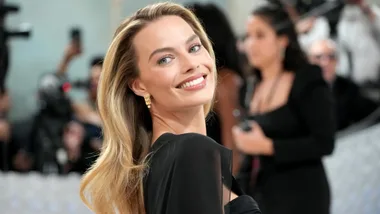
The Sydney premiere of Emerald Fennell’s Wuthering Heights delivered on spectacle, with Margot Robbie and Jacob Elordi in attendance and Hailey Bieber making a brief cameo.
For the past year and a half, Fennell’s adaptation has existed in a near-mythic state: teased through trailers, interviews and meticulous method dressing, debated long before a single frame reached the public. The level of pre-emptive moral panic surrounding a film most people hadn’t even seen is something I haven’t witnessed since Baz Luhrmann’s The Great Gatsby in 2013.
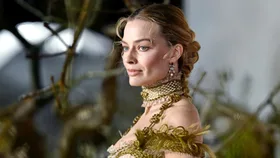
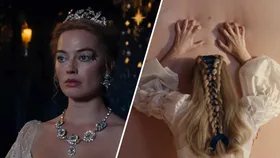
Now that it’s finally in cinemas, the dominant question isn’t simply whether it’s “good” or “bad”, but how far it strays from Emily Brontë’s 1847 novel.
The verdicts were in before the lights dimmed: too sexualised, too stylised, not respectful enough of a 19th-century Gothic classic. The implication, often repeated online, is that encountering Wuthering Heights first through Fennell’s lens is some kind of cultural misstep.
Yes, the literacy crisis is real, but watching one sensual, stylised adaptation without freshly devouring a 416-page classic is not a moral failure.
Fennell opens with a scene that immediately signals her approach. The film begins with breathy, animalistic sounds that first read as sexual, then reveal themselves to be something else entirely: a public hanging witnessed by a young Cathy Earnshaw and her housekeeper, Nelly.
It is grotesque and theatrical, staged with jeering crowds and Punch and Judy puppets. This is less restrained Gothic and more feverish fairytale. Anyone expecting a reverent translation is given fair warning.
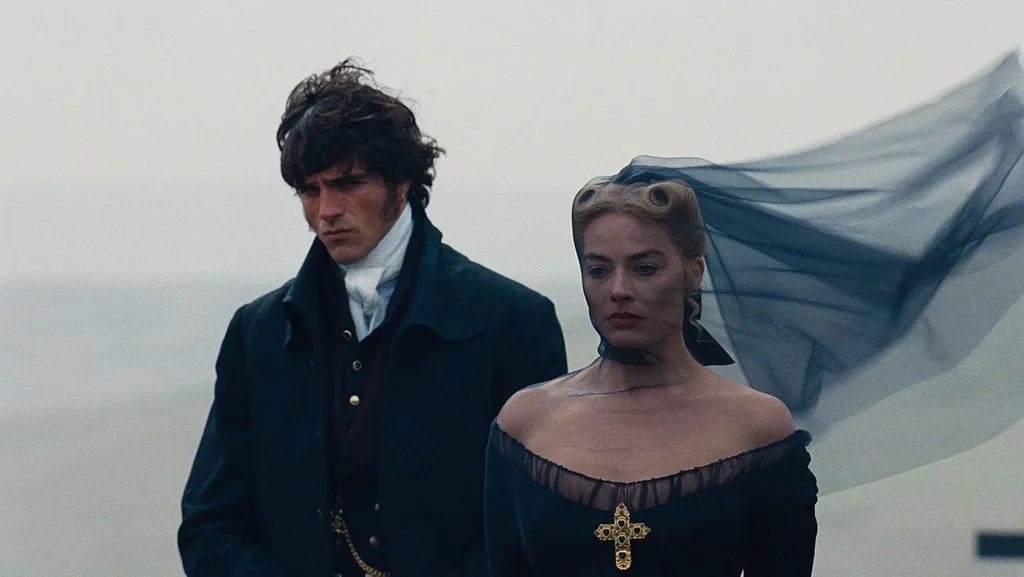
This is not Wuthering Heights as faithful adaptation. By Fennell’s own framing, it is closer to an adaptation of memory than of text, Brontë filtered through adolescent obsession, erotic charge and romantic extremity.
The novel’s generational sprawl is pared back to focus on Cathy and Heathcliff’s destructive bond. Its messier concerns, class anxiety, cyclical violence and the slow grind of time, are compressed into something more immediate and cinematic. Where Brontë’s lovers are morally corrosive, Fennell recasts them as operatic icons of doomed desire.
After its opening shock, the film settles into Gothic pantomime. Cathy and Nelly return to Wuthering Heights and meet Heathcliff, brought home by Cathy’s volatile father. Childhood closeness hardens into fixation.
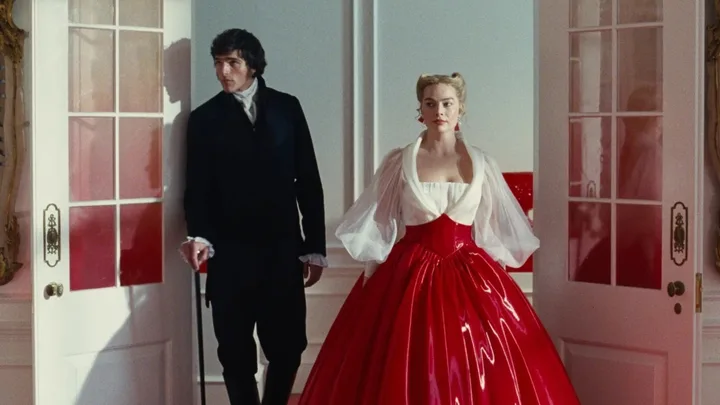
As the characters age, Margot Robbie and Jacob Elordi take over. Robbie’s Cathy is vain and volatile, closer to tragic heroine than destructive moral force. Elordi’s Heathcliff is shaped as a romantic antihero rather than the novel’s feral interloper.
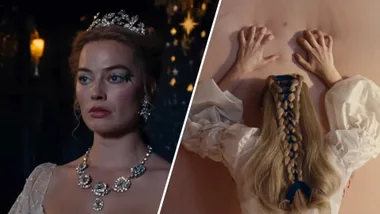
The question of fidelity becomes even clearer in the film’s visual world. Thrushcross Grange is rendered as an exaggerated fantasy of luxury, with lacquered rooms, fur-lined staircases and padded, skin-like walls.
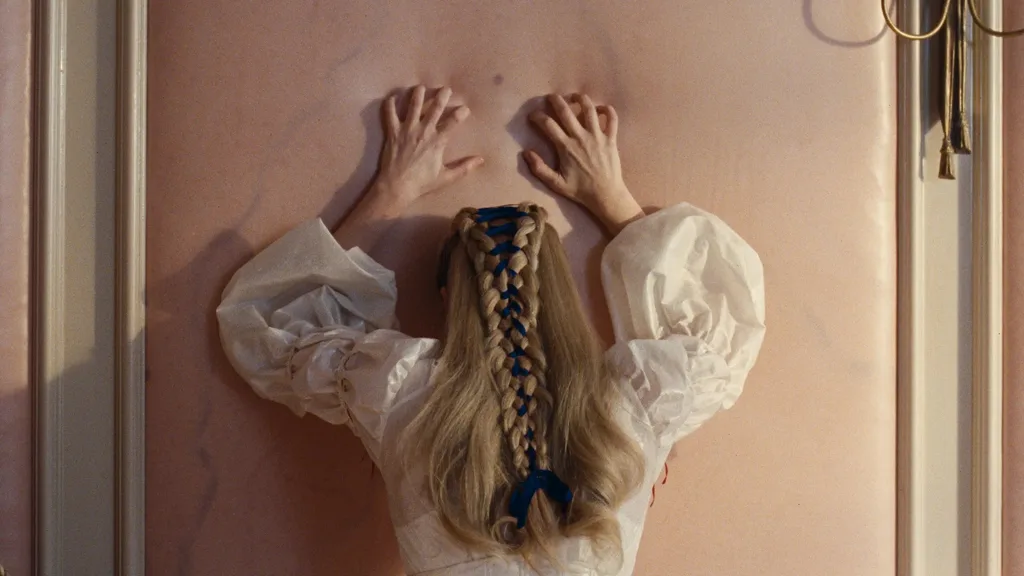
The moors lose much of their social and economic weight, becoming theatrical backdrops for heightened emotion. This version of Wuthering Heights is less haunted by inheritance and class than by bodies, by sex, death and longing played at full volume.
And yet, fidelity may be the wrong measure. On its own terms, the film works as a stylised mood piece, staging Brontë’s central relationship as delirious fantasy rather than social tragedy. Its main weakness is not betrayal of the source material but its uneven commitment to the extremity it gestures toward.
For a director who made Saltburn, the eroticism is surprisingly restrained, and the final act shifts abruptly from camp excess to earnest tragedy. It is a tonal turn that will divide audiences.
Still, Fennell’s Wuthering Heights lingers. It is too strange and too committed to its own vision to be dismissed as empty aestheticism. Any fear that younger audiences will take this version as definitive misunderstands adaptation itself. Classics endure because they can absorb distortion.
No single film can hold all of Brontë’s contradictions, Gothic horror, class critique, generational tragedy and romantic excess pulling against each other.
Is Fennell’s Wuthering Heights faithful to the book? No, and it isn’t trying to be. It is faithful to one strand of the novel’s afterlife, the version that lives in adolescent memory and the cultural fantasy of doomed love. Let the film be its fever dream. Let the novel remain the difficult, unruly thing it has always been.