Longevity is the wellness buzzword du jour—and for once, it’s a trend actually worth paying attention to.
For years, wellness culture has often equated “health” with taking up less space or striving for an ever-shrinking version of ourselves. But that narrative is finally evolving, and for the better. Instead, we’re seeing a much-needed shift toward building real strength—the kind that shows up in everyday life, not just in a perfectly angled Instagram photo.
Your strength era starts here. Try SWEAT free for two weeks.
Of course, wanting to look and feel good will always be part of why we move our bodies. But training in a way that helps us stay mobile and independent well into later life? That’s a benefit that far outlasts any aesthetic goal.
Much of the current conversation around longevity centres on two key pillars: strength training and fuelling your body properly. And if lifting weights has never really been on your radar, consider this your gentle nudge to rethink it, especially if you’re entering your late 20s or 30s.
We’re also here to remind you that strength training doesn’t require a gym membership or going out of your way. The perfect place to start? The Sweat app. With programs designed to help you reach your goals, it’s the ultimate way to work out, even from home.
Set yourself up for success with 20 per cent off and two weeks of free access to over 60 workout programs, 13,000+ workouts and 500+ recipes in the Sweat app.
Jump To:
What Are The Benefits Of Strength Training?
What Are The Benefits Of Strength Training?
Dual-registered physiotherapist and exercise physiologist, Laith Cunneen says, “Strength training becomes critical in the 30s because muscle mass and bone density begin to decline from this decade onward. Hormonal changes, particularly gradual reductions in oestrogen, reduce the body’s ability to maintain lean muscle and bone.”
That’s not to say it’s too late if you’re only just getting started. In fact, Cunneen explains that starting earlier simply sets you up even better long term. “Earlier exposure to strength training, such as in the 20s, is even more beneficial, as it establishes a higher baseline of muscle and bone mass before age-related decline accelerates,” he says.
In other words: strength training matters at almost every stage of life. Without it, the consequences can quietly build over time. As Cunneen puts it, “Women typically experience progressive muscle loss, reduced bone density, and lower metabolic efficiency. Everyday tasks feel harder, posture often deteriorates, and weight gain becomes more likely due to reduced muscle-driven energy expenditure. These changes are gradual but cumulative, and they’re far harder to reverse than to prevent.”
Left unchecked, reduced strength can increase the risk of osteoporosis, joint pain and falls later in life—none of which we want on our future bingo cards.
According to Veronika Larisova, co-founder of Chief Nutrition, nutritionist, exercise physiologist and ultra-marathon runner, strength training is also one of the most powerful tools women have for sustained energy and long-term wellbeing.
“It also supports bone density, joint integrity, and connective tissue strength, which become increasingly important from our 30s onward as hormonal profiles shift,” Larisova explains. “Over time, strength training protects metabolic health, reduces the risk of osteoporosis and sarcopenia, and preserves independence and physical confidence well into later life.”
How Do I Incorporate Strength Training Into My Life?
The good news? It’s never too late to start. And you don’t need to live in the gym to see benefits. If time is tight (and when isn’t it?), Cunneen says strength training doesn’t need to be complicated. Two to three full-body sessions per week can be more than enough to make a meaningful difference.
Of course, not everyone feels comfortable navigating a packed gym, or even has a membership in the first place. That’s where at-home and app-based options can be a game-changer.
Enter: Sweat. The all-in-one fitness app offers a wide range of strength training programs—both gym-based and at home—alongside Pilates, yoga, HIIT and over 500 recipes for those wanting extra support with nutrition..
Launched by trainer Kayla Itsines in 2015, Sweat has grown into a one-stop fitness app designed by women, for women. With a wide range of strength programs you can do at home or in the gym, it makes building strength feel accessible, flexible and far less intimidating, no matter where you’re starting from.
Itsines credits strength training for an overhaul in her health and wellbeing. “Fitness and strength mean something different to me now, and I feel stronger in my 30s than I ever did in my 20s,” she says.
Larisova stresses that strength training works best when paired with proper fuelling. “Strength training creates the stimulus and nutrition provides the raw materials,” she explains. “Under-fuelling can blunt progress and increases the risk of injury, fatigue and hormonal disruption.”
Put simply: strength training doesn’t need to be complicated, time-consuming or gym-bound to be effective. It just needs to be consistent and well-supported. The Sweat app makes it easy to follow structured strength programs at home or in the gym, with workouts that focus on effective compound movements and flexible schedules that actually fit real life.
What Exercises Should I Be Doing When Strength Training?
When it comes to strength training, Cunneen recommends prioritising movements that work multiple muscle groups at once. “Focus on compound movements like squats, lunges, push ups, chest presses, rows, lat pulldowns, and loaded carries,” he says. “The weight should feel challenging by the final few repetitions while still allowing good technique.”
And if fear is what’s holding you back, Larisova is quick to bust one of the most persistent myths. Many women worry lifting weights will make them bulky, but she says “significant muscle growth requires very specific training and hormonal conditions that most women simply don’t have.”
Instead, strength training tends to improve posture, firmness and overall body composition. “Muscle loss and bone loss accelerate with age, but both are highly responsive to resistance training and nutrition even later in life,” she explains. “Starting now means building a base that supports hormones, joints, and metabolism for the decades ahead.”
For women in their 30s and 40s, she adds, this is actually the most important time to start. “The return on investment is enormous,” she says. “And it’s never too late.”
For those wanting a clear place to start, Sweat’s Strength with Kayla and Strength at Home with Kayla programs offer an 18-week progressive approach to building muscle and confidence.
The workouts all sit under 50 minutes and are designed for either the gym or home. Both programs focus on repeated movements, smart training splits and gradual increases in weight—making it easy to track progress and see just how strong you’re becoming.
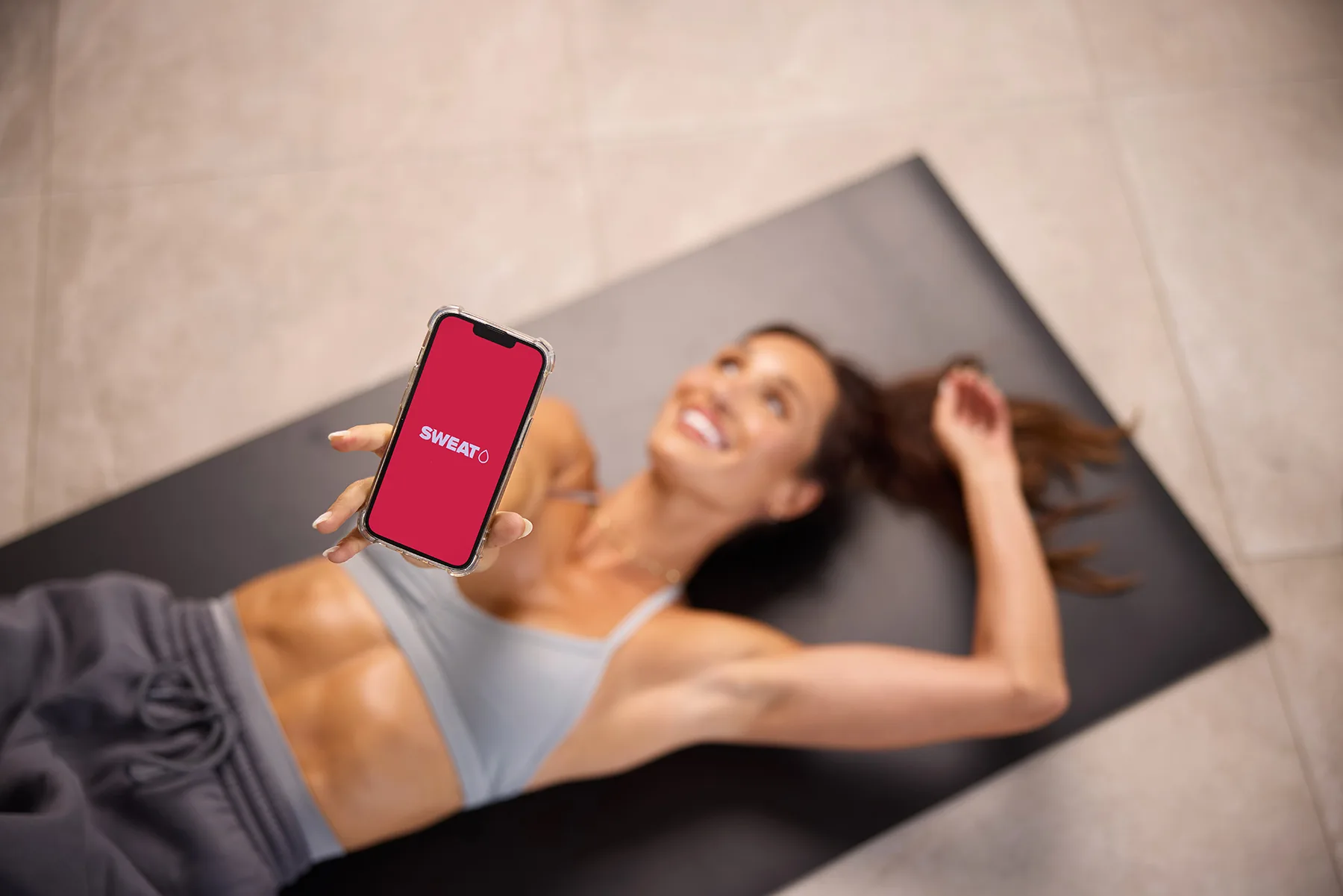
If an 18-week program doesn’t seem quite right for you, you’ll find plenty of other options. Every program on Sweat is designed by experienced female trainers and grounded in proven training principles, so you know you’re following something that actually works. You can explore the programs, filtering by trainer, workout style, fitness level or location to find one that feels right for you.
Beyond aesthetics or longevity, strength training also plays a crucial role in injury prevention and performance. Larisova explains that stronger muscles, tendons and bones are better able to tolerate load—whether that’s running, Pilates or simply carrying groceries.
As Larisova summarises: “Any athlete, in any sport, regularly participates in some form of strength training to prevent injury and improve performance, and I think that says it all.”
It’s proof that building strength doesn’t have to be intimidating, time-consuming or boring. Because when it comes to longevity, it isn’t just about lifting heavier, it’s about living better.

Related stories

Native ad body.

Native ad body.




Native ad body.