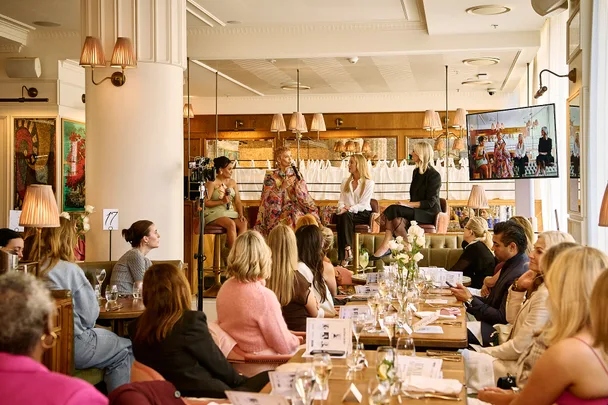
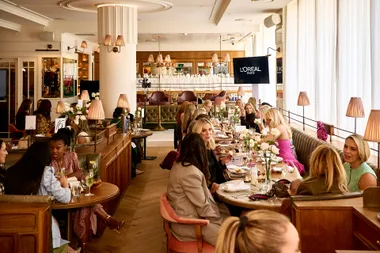
At marie claire’s Mother’s Day lunch in partnership with L’Oréal Paris, Asher Keddie, Jess Rowe and Miranda Tapsell challenged the idea that women fade with age.
There is a familiar cultural script written for women as they get older. Become quieter. Take up less space. Age gracefully, but not visibly. Be confident, but not too confident. Stay relevant, but don’t appear to be trying.
At marie claire’s Mother’s Day lunch, in partnership with L’Oréal Paris, that narrative was firmly rejected.
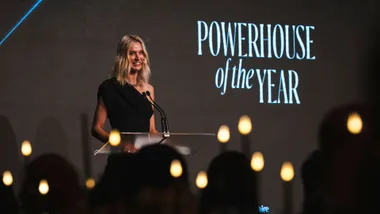
The event was a celebration of motherhood, but also of something broader: visibility, confidence, self-worth and the power that comes with experience. Opening the panel, marie claire editor Georgie McCourt spoke to the way L’Oréal Paris is challenging “the idea that women become less visible as they get older,” instead celebrating confidence, experience and self-worth as things that only grow with time.
It was a theme Asher Keddie returned to with striking honesty.
Asked whether she felt the narrative around women and ageing was changing – and whether she personally felt more powerful or more overlooked with age – Keddie paused before answering.
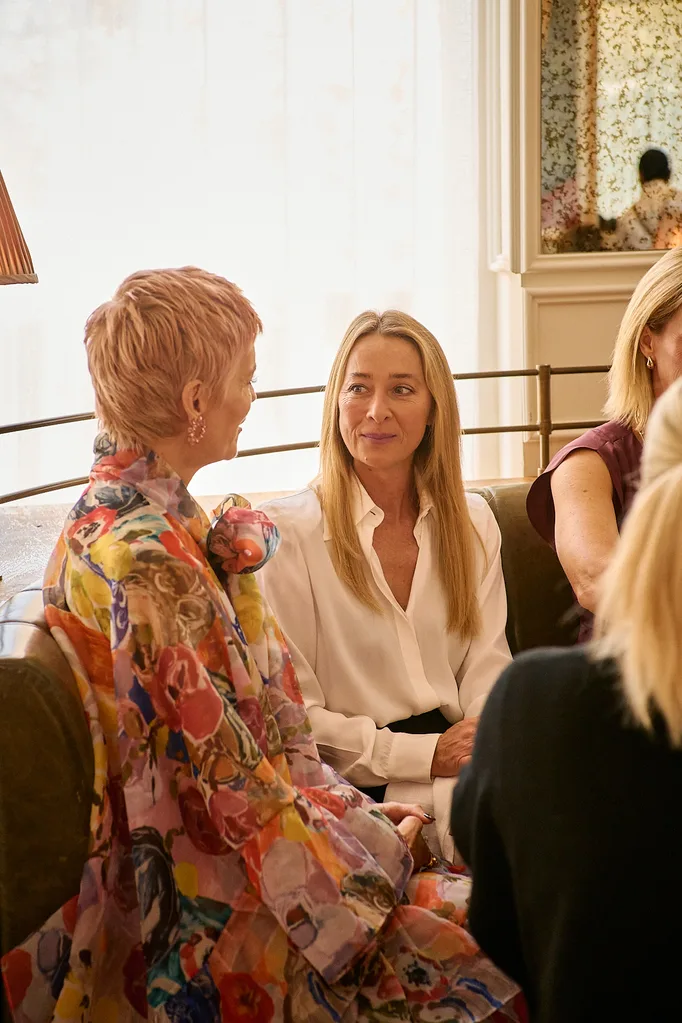
“I do think it’s changing,” she said. “Because I’m getting a lot of attention.”
The room laughed, but the point was serious. For Keddie, visibility is not simply about being seen from the outside. It is about whether a woman feels worthy from within.
“It does have to do with feeling worth it,” she said. “Feeling more worthy, authentically.”
As a L’Oréal Paris ambassador, Keddie said the partnership felt natural because the message aligned with where she is in her own life. “I believe in what they believe in,” she said. “I’m not making it up. It’s not performative. Perhaps it would have been 10 years ago, but it’s just not anymore.”
What made the conversation feel refreshing was that Keddie did not pretend midlife confidence is a clean, uncomplicated arrival point. She pushed back against the neat idea that women over 50 suddenly stop caring what anyone thinks.
“I’m not convinced of this narrative that we have over 50, where we say, ‘I don’t care what anyone thinks,’” she said. “I’m just not buying that entirely, because I think that we do care. It’s just in a different way.”
That nuance matters. Age does not magically remove vulnerability, ambition or the desire to be accepted. Instead, it can sharpen the distinction between what matters and what no longer deserves your energy.
Jess Rowe agreed that ageing had changed her relationship to other people’s opinions. “I love being older,” she said. “I actually don’t care as much what people think, and I love that.”
For Rowe, that shift brings a sense of freedom. “I want to make the most of what I have left,” she said, noting that age has given her a new awareness of time, joy and choice.
Miranda Tapsell framed it slightly differently. For her, getting older has meant better compartmentalising. “The things that I used to really care about as a younger person, I don’t care about so much now,” she said.
Keddie added that the process has also made her more vulnerable, not less. “I probably am more comfortable being vulnerable now than I ever was,” she said. “There’s a different level of acceptance perhaps of who you are and what your identity is, and that it’s going to keep shifting as you grow older.”
That may be the real power of ageing: self-recognition.
Because women are not disappearing as they age. They are becoming more precise about who they are, what they value and where they want to spend their time. And as Keddie made clear, that is not fading. That is coming into focus.

Related stories
Native ad body.

Native ad body.
Native ad body.