

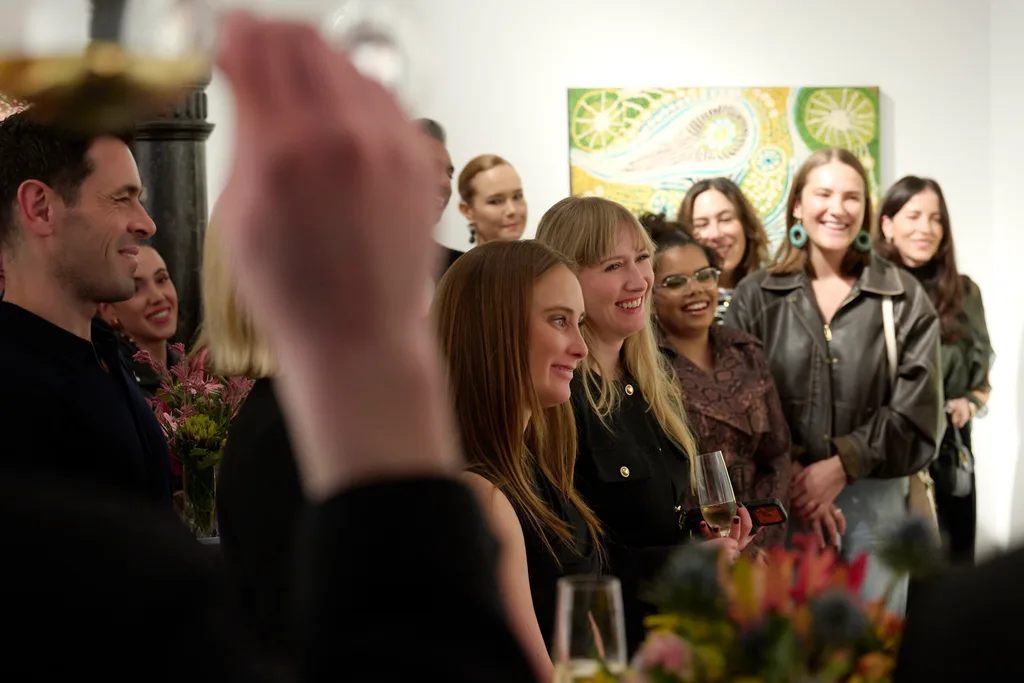
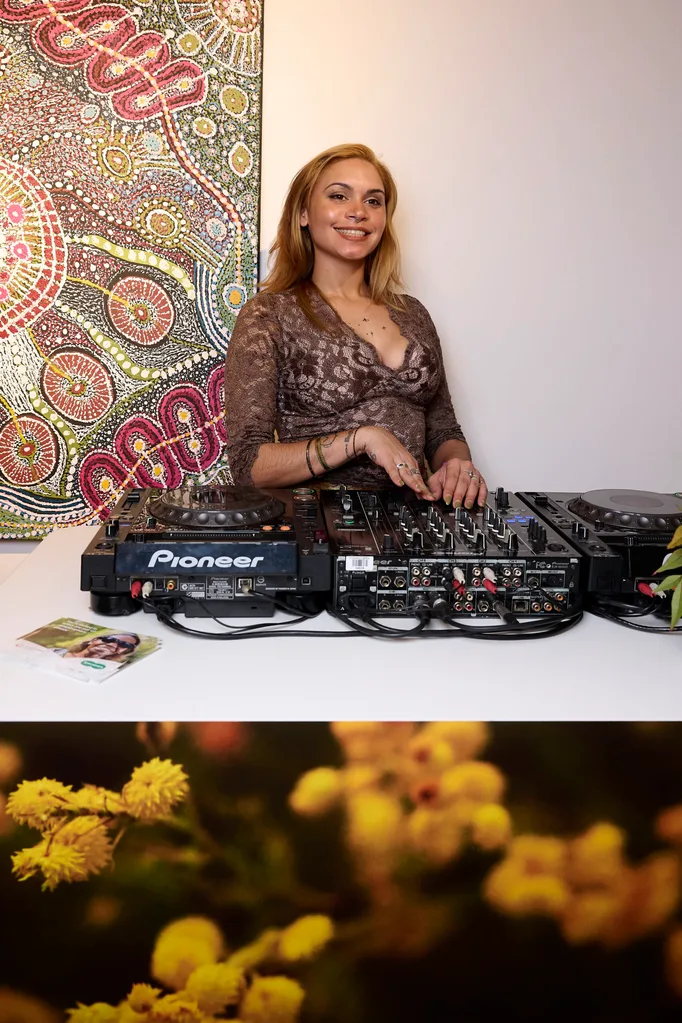
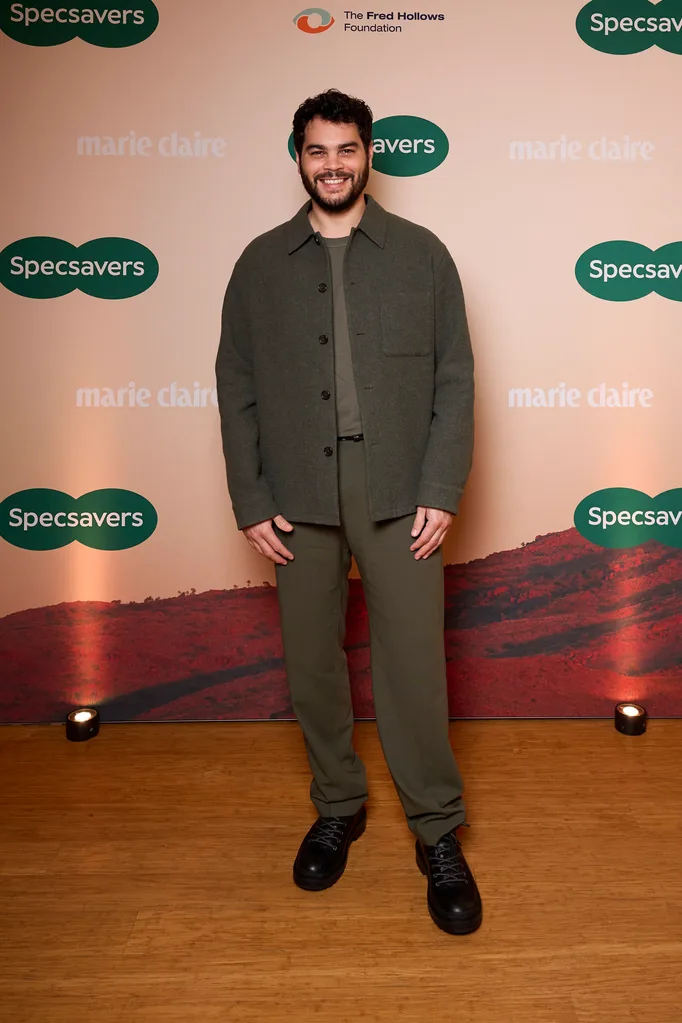
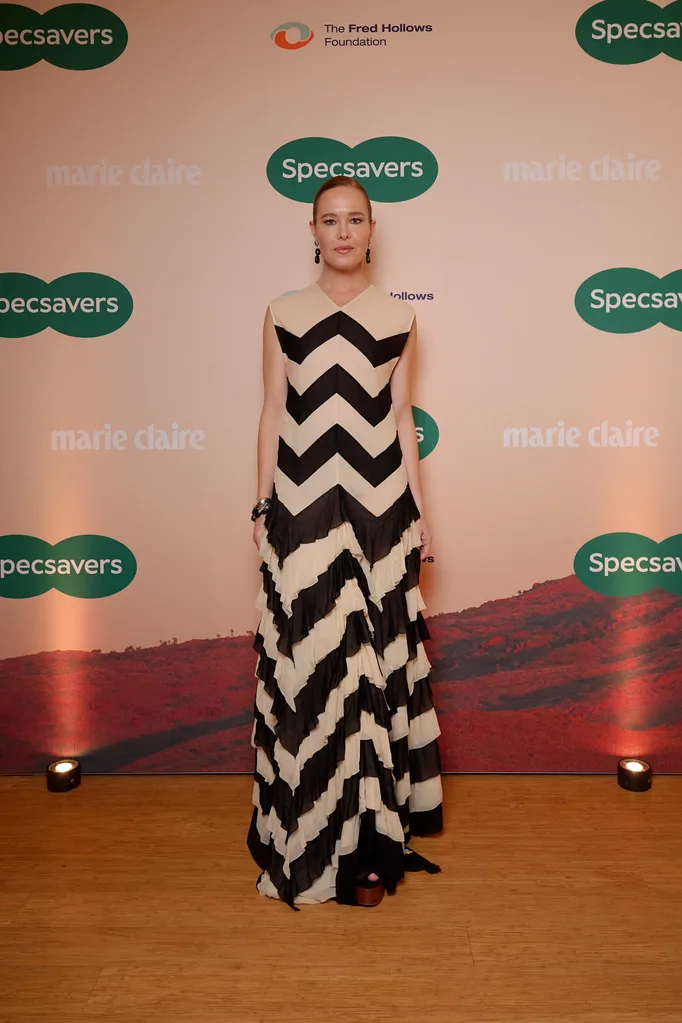
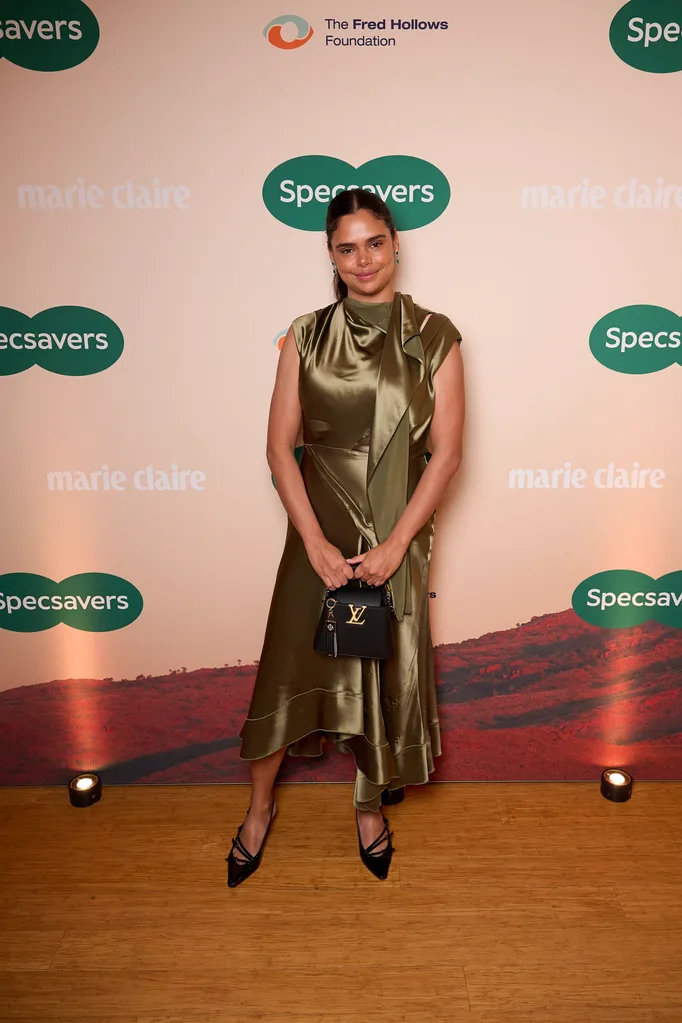
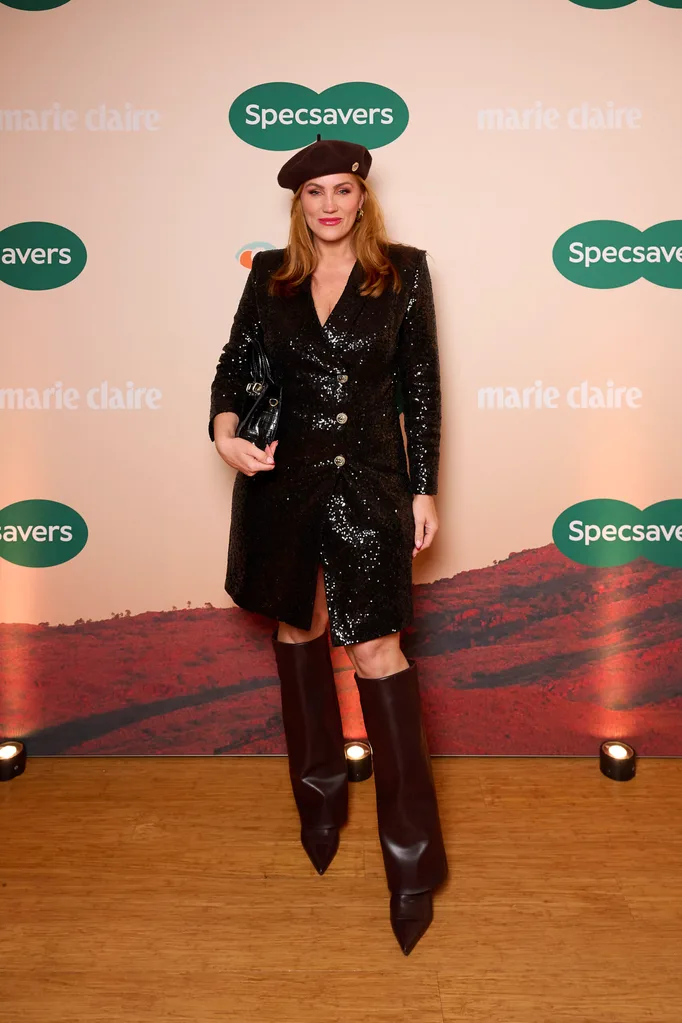
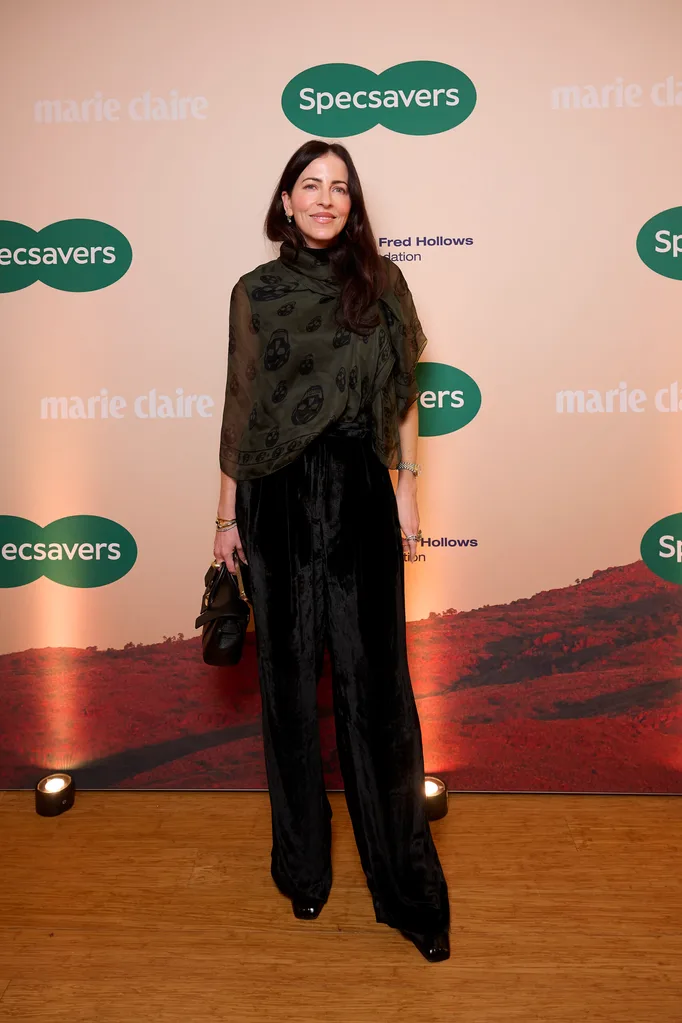
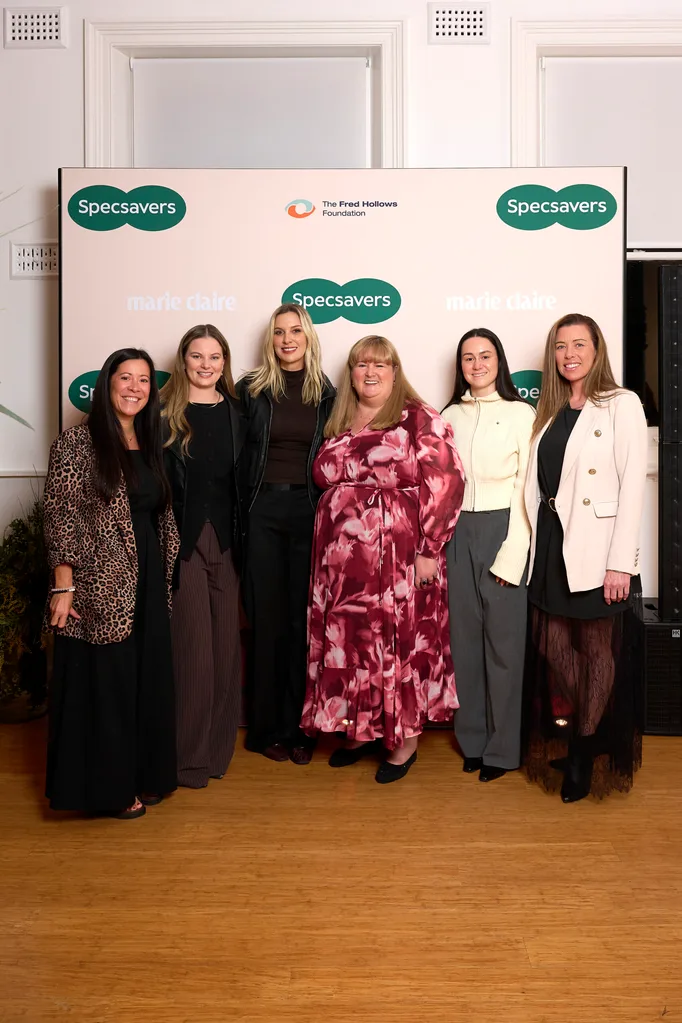
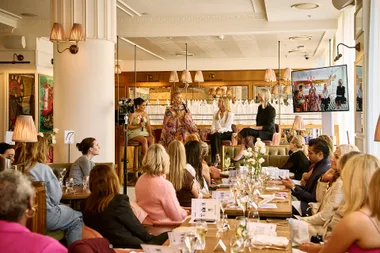
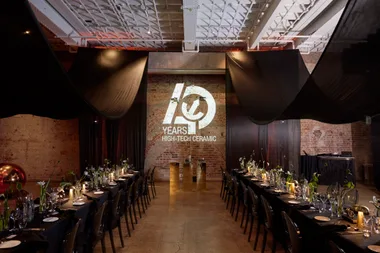
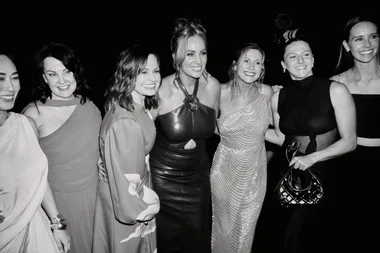
A powerful new collaboration uniting First Nations art, contemporary design and improved access to eye care was celebrated at a special marie claire event last night. Hosted by marie claire Australia editor Georgie McCourt at the D’Lan Contemporary art gallery in Sydney’s Woollahra, the evening marked 15 years of partnership between Specsavers and The Fred Hollows Foundation, as well as the organisations’ tenth limited-edition artist collaboration.
At the centre of the new collection is Tjukurpa Mulayangu, an artwork by senior Ernabella artist and Pitjantjatjara woman Atipalku Intjalki. Atipalku has been connected to Ernabella Arts for more than 50 years, and her work depicts her father’s Country in the western Anangu Pitjantjatjara Yankunytjatjara Lands.
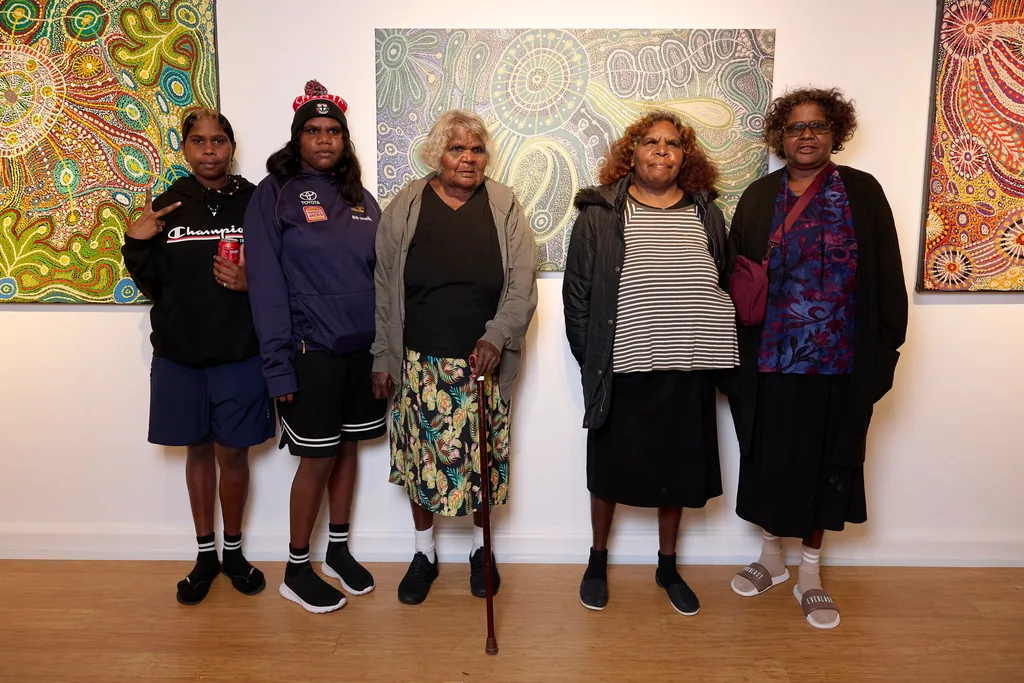
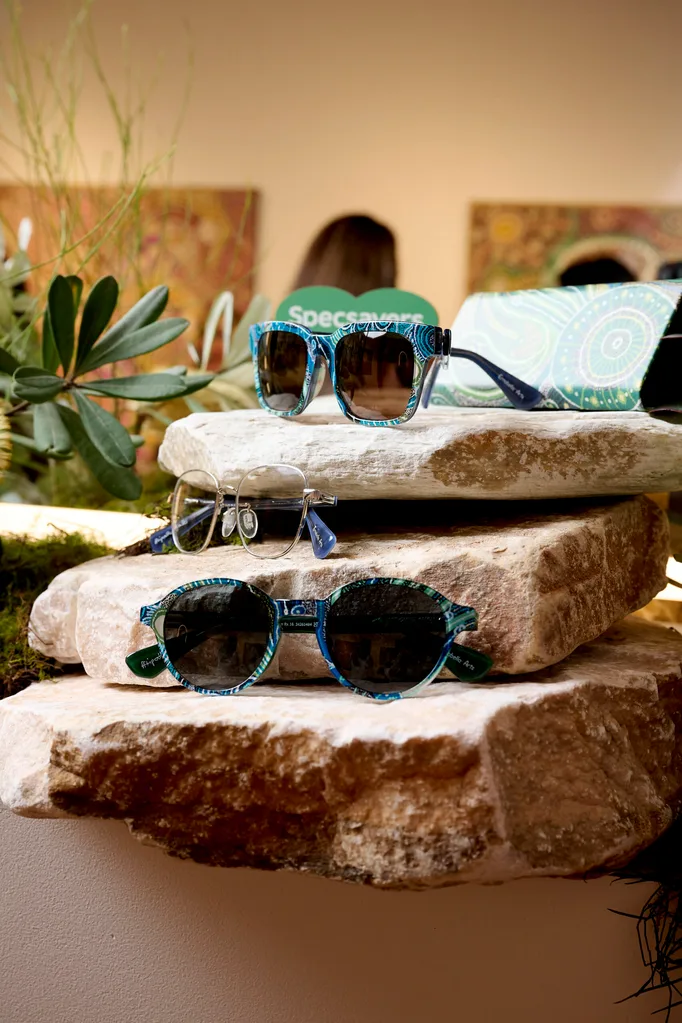
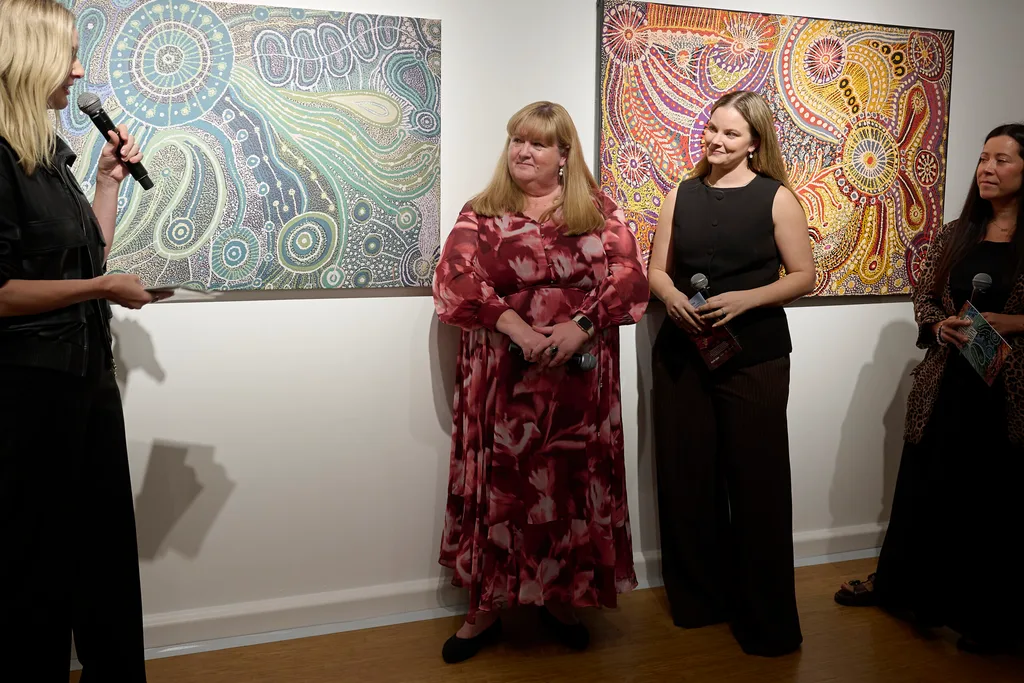
The painting (pictured above right) tells the story of Mulayangu, a wanampi, or water snake, whose journey through the landscape created a series of rockholes. The original works were displayed throughout the event space, allowing guests to experience their movement, colour and connection to Country before seeing how the design had been translated onto the limited-edition optical and sunglasses frames. The collaboration is particularly significant because it returns to the APY Lands, where Specsavers began its first First Nations artist partnership.
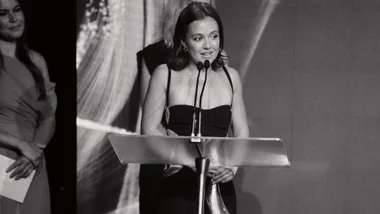
The evening opened with a conversation focused on the artwork, Country and community. Atipalku was joined at the event by her daughter Langaliki, along with Elizabeth and Rowena from Ernabella Arts. The panel explored Atipalku’s enduring relationship with the Art Centre, the role Ernabella Arts plays in supporting artists and preserving culture, and the experience of seeing a deeply personal story transformed into a design that will be worn by people across Australia. The discussion highlighted the importance of ensuring artists, their families and their communities remain at the centre of commercial collaborations involving culturally significant work.
Guests were encouraged to spend time with Atipalku’s original works and consider the layers of meaning held within them before viewing the finished eyewear. The exhibition setting reinforced that the frames are not simply decorative objects, but the result of cultural exchange, consultation and considered creative collaboration.
A second panel brought together Specsavers representatives Imogen Blaskett and Jo Poon with Alison Hill from The Fred Hollows Foundation. Their conversation examined the careful process of adapting Atipalku’s detailed artwork for eyewear, the lessons Specsavers has learnt across ten artist collaborations and the importance of working respectfully with artists and Aboriginal-owned Art Centres.
The speakers also discussed the continuing disparity in eye-health outcomes experienced by Aboriginal and Torres Strait Islander people, and the need for timely, culturally appropriate and community-led care. The event recognised Australia’s elimination of trachoma as a public health problem as an important achievement, while emphasising that significant work remains to ensure equitable access to eye care.
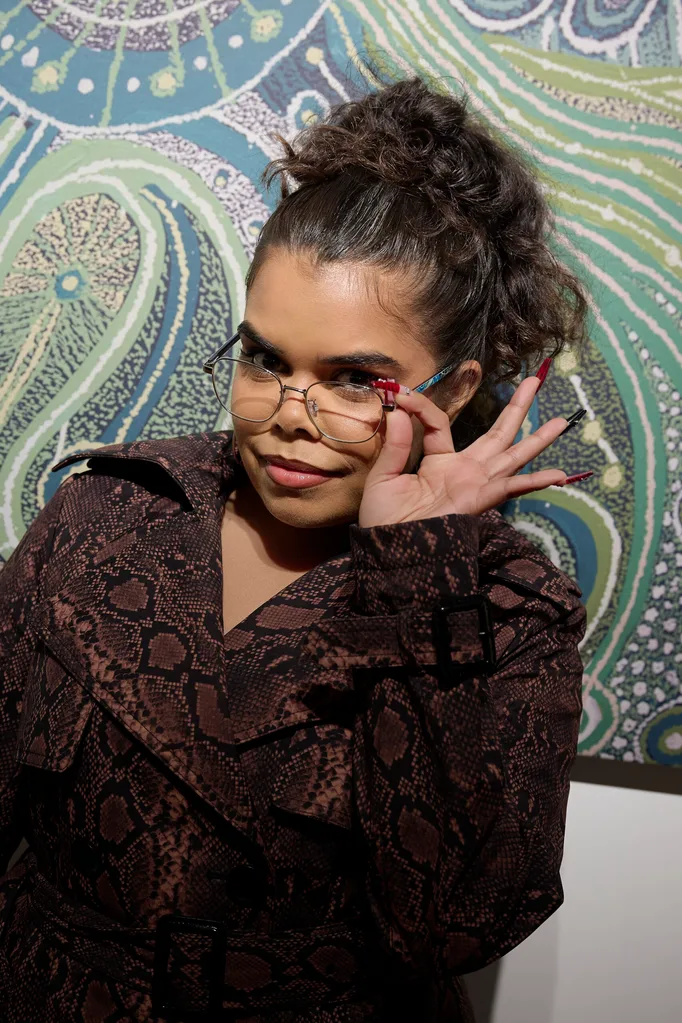
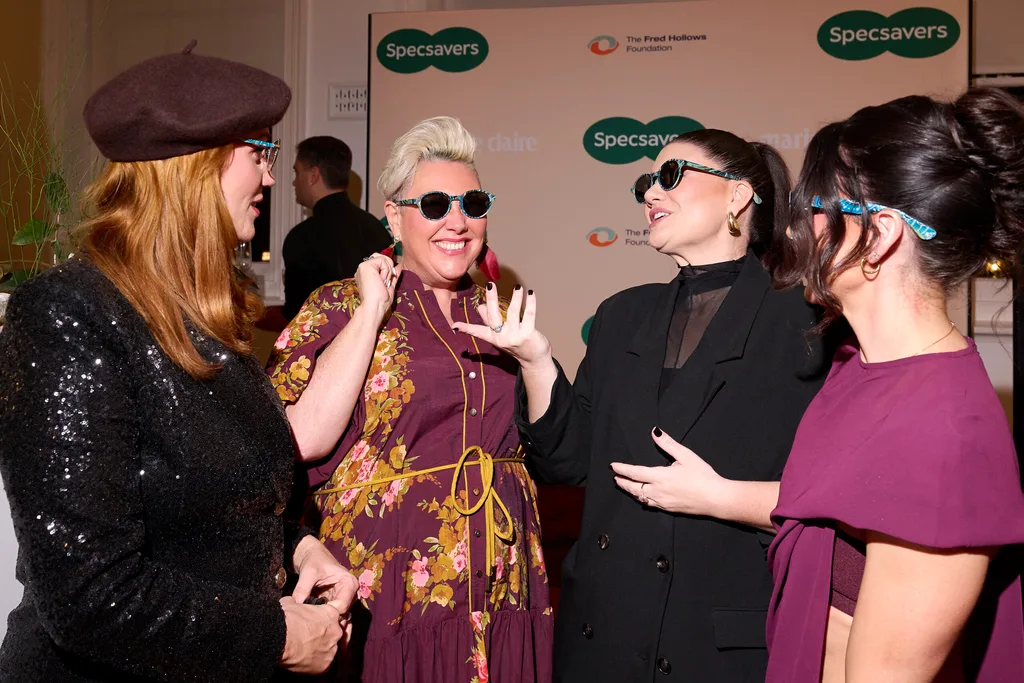

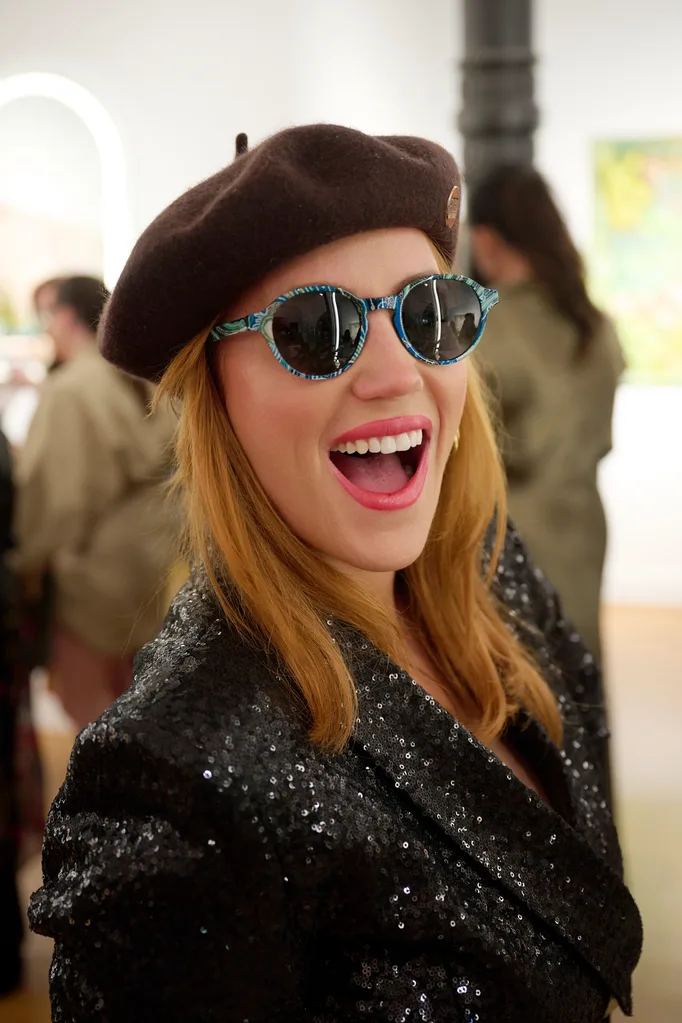
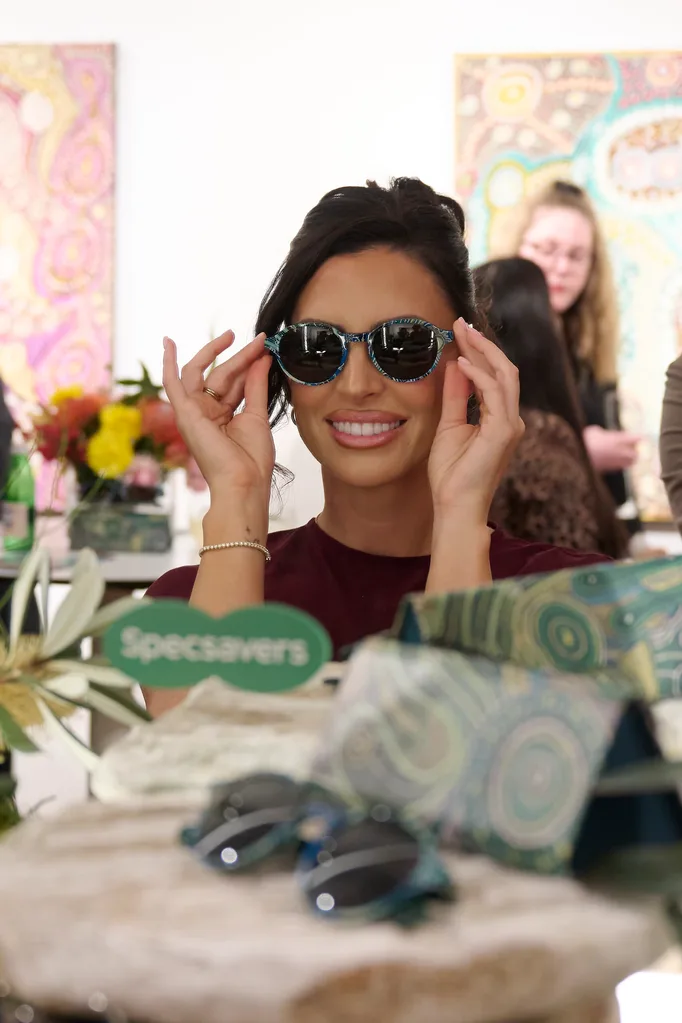
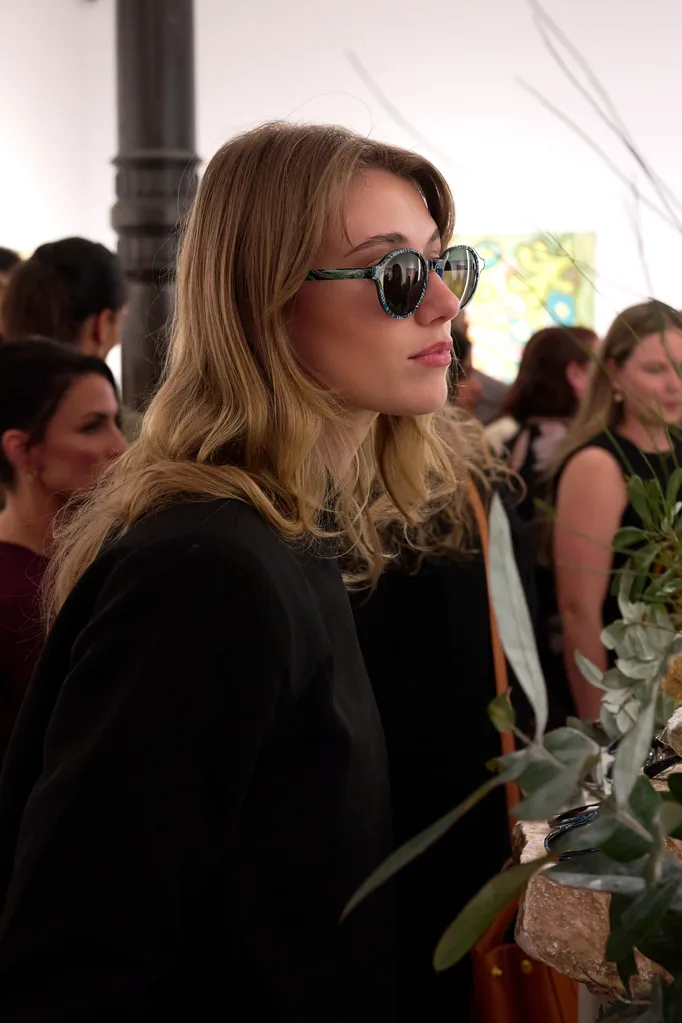
In 2025, funding generated through the Specsavers partnership helped support more than 24,000 eye screenings, more than 330 surgeries and 3,600 diabetic retinopathy treatments. The new collection aims to build on that impact. For every pair of limited-edition frames sold, $25 will be donated to The Fred Hollows Foundation, with Specsavers setting a fundraising target of $500,000 to support Aboriginal and Torres Strait Islander eye health.
Closing the event, McCourt reflected on the interconnected stories behind the collaboration: Atipalku’s relationship with her father’s Country, the strength and continuity of Ernabella Arts, the care required to translate art into design and the tangible health outcomes made possible through a long-term partnership.
More than a fashion collaboration, the collection demonstrates how art and commerce can work together to honour culture, amplify First Nations storytelling and create measurable change for communities.

Related stories
Native ad body.
Native ad body.

Native ad body.


Share this post