

Paris Fashion Week is in full bloom as spring sweeps through the French capital. As the final stop on the fashion month calendar, Paris traditionally carries the greatest weight of the season, with many of its most anticipated shows still to come.
The crammed nine-day schedule, nearly double the length of its counterparts in New York, London and Milan, reflects the scale of that expectation.
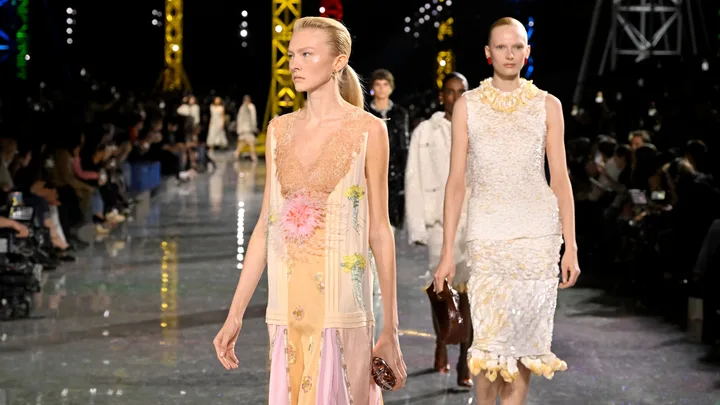
Among the first major houses to show was Dior, which opened proceedings on Tuesday afternoon with Jonathan Anderson’s sophomore womenswear outing. The collection unfolded like a dreamscape of lily pads, ruffles and florals, setting a whimsical tone for the week ahead.
Chanel is still to come, where Matthieu Blazy will present his own second act.
Several other houses are also navigating relatively new creative tenures, including Michael Rider, who will present his debut for Celine on March 7; Duran Lantink, who will show at Jean Paul Gaultier on March 8; and Jack McCollough and Lazaro Hernandez, who will unveil their first Loewe collection on March 6.
Elsewhere, Belgian designer Pieter Mulier will present his final collection for Alaïa, concluding a five-year tenure defined by commercial expansion and critical acclaim. Since taking the helm following Azzedine Alaïa’s death, Mulier has refined what he describes as a vision of “modern beauty”. His next move will see him take the reins at Versace, succeeding Dario Vitale.
Saint Laurent staged its moody evening show on Tuesday, as Anthony Vaccarello continued his exploration of silhouette and form, examining the tension between masculine tailoring, most notably the tuxedo, and the delicate sensuality of sheer lace.
Miu Miu and Louis Vuitton will close fashion month on Tuesday, March 10. In between, the schedule will feature the usual constellation of avant-garde voices from Paris and beyond.
Ahead, the collections and moments shaping Paris Fashion Week so far.
Louis Vuitton
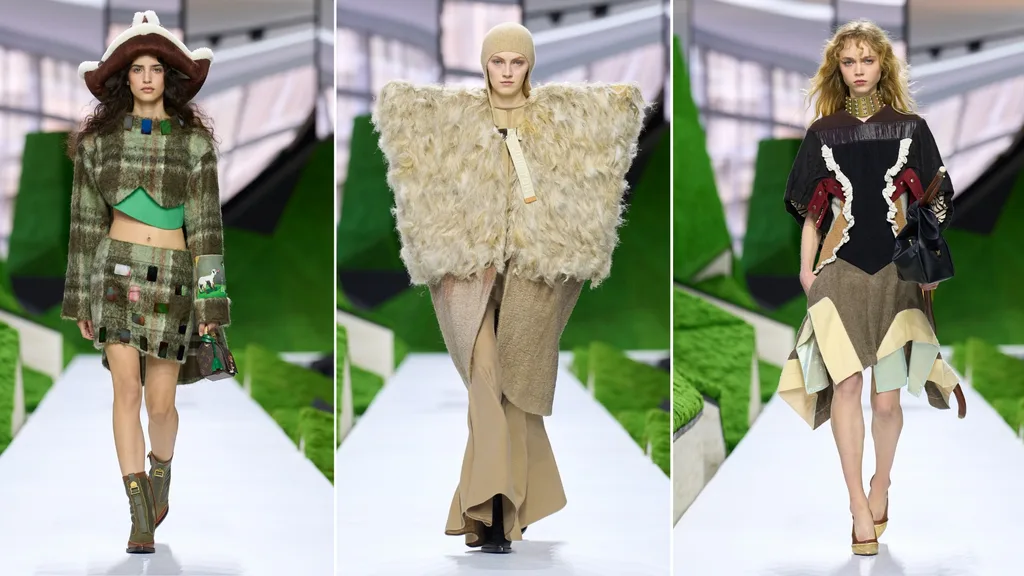
For Autumn/Winter 2026, Nicolas Ghesquière shifted his focus away from the city and towards the landscape. Inside the Cour Carrée of the Louvre, Louis Vuitton staged the collection within a moss-covered “neo-landscape” by production designer Jeremy Hindle, where artificial hills transformed the historic courtyard into a surreal pastoral set.
Ghesquière approached the season as an exploration of clothing shaped by nature. Mountains, forests and open plains informed silhouettes designed to suggest endurance, protection and freedom of movement.
Monumental cloaks, textured tweeds and sculptural leather details evoked garments formed through exposure to wind, rain and rugged terrain, translating elemental survival into Louis Vuitton’s distinctly modern design language.
Miu Miu
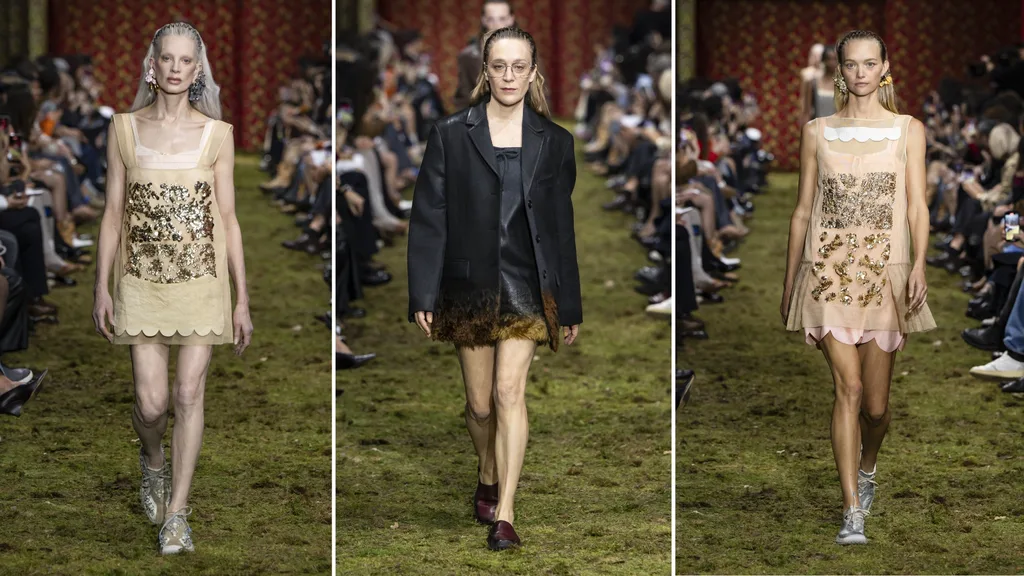
On the final day of Paris Fashion Week, Miuccia Prada assembled a cast that felt as storied as the house itself. Gillian Anderson, Chloë Sevigny, Gemma Ward and Kristen McMenamy were among the faces chosen to present the Fall/Winter 2026 Miu Miu collection, bringing a cross-generational gravitas to the runway.
Staged inside the Art Deco Palais d’Iéna, the show welcomed guests including Alexa Chung, Tyla and Yerin Ha, who watched from a faux-fur-lined front row as models emerged onto a runway carpeted in grass.
The collection drew loosely from Miu Miu’s archives, with cotton poplin, washed double cashmere and wrinkled leather coats appearing alongside caramel and burgundy dresses, bubble-soled leather boots and pieces that felt deliberately worn, as though salvaged from a well-lived wardrobe.
Chanel
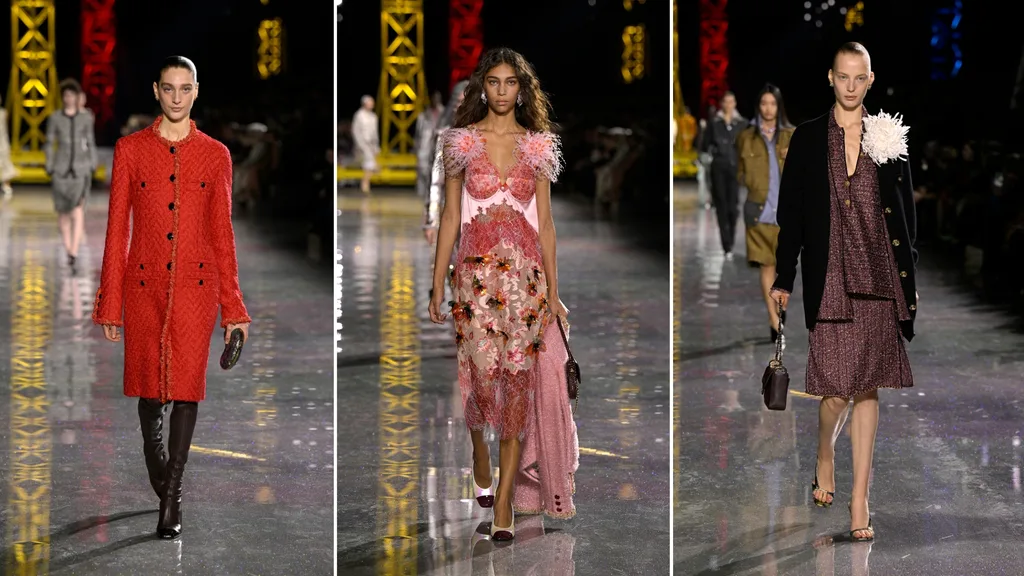
For Autumn/Winter 2026, Matthieu Blazy continues his dialogue with Gabrielle Chanel in La Conversation – Part Two, translating the house’s historic codes into something lighter and more fluid.
The collection unfolds like a quiet transformation, moving from grounded daywear into softer, luminous eveningwear.
Drop-waist silhouettes lengthen the body across jersey dresses, pleated skirts and knit layers that drape with effortless ease, whilst the house suit also evolves, with tweed and bouclé softened into relaxed jackets and swaying skirts.
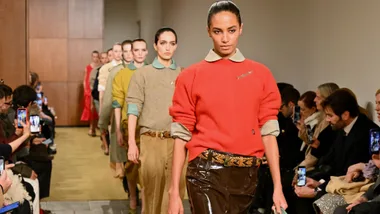
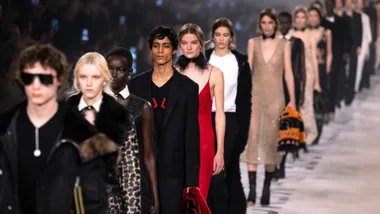
As evening approaches, fabrics grow iridescent and silhouettes flutter, capturing Chanel’s enduring balance between practicality and fantasy.
Balenciaga
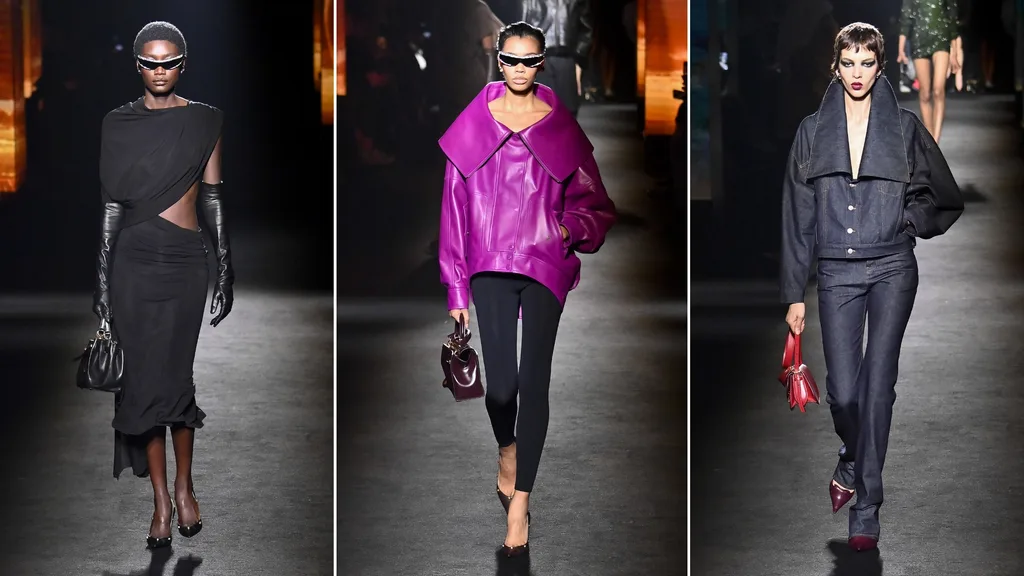
The usual chaos unfolded outside Balenciaga’s show on Saturday night in Paris. Whether the buzz was driven by the brand itself or by the arrival of Heated Rivalry actor Hudson Williams, newly minted as a “friend” of the house, was harder to say.
Creative director Pierpaolo Piccioli had also enlisted Euphoria creator Sam Levinson to shape the show environment ahead of the series’ third season. Inside the darkened Champs-Élysées venue (a former Adidas flagship transformed with black carpeting and concert lighting) video monitors flickered with fragments of California landscapes, prowling wolves and close-ups of the show’s new cast.
The mood set the stage for Piccioli’s concept: clair-obscur, the High Renaissance technique exploring the tension between darkness and light. Here, it became a metaphor for the human condition, expressed through clothes that framed the body like portraits.
Eighty-one models walked beneath a thin strip of light in carefully composed looks anchored by statement coats. Cocooned backs nodded to Cristóbal Balenciaga’s signatures, while dramatic portrait collars and funnel necks framed the face.
Black dominated the opening looks, including a sculptural peacoat and a bubble-shaped leather bomber. Draped jersey dresses offered moments of elegance, while accessories ranged from softened Hourglass bags to studded brogues created with J.M. Weston.
Piccioli also debuted menswear, echoing the collection’s focus on outerwear and sculptural form — a study in shadow, light and the architecture of clothes.
Hermès
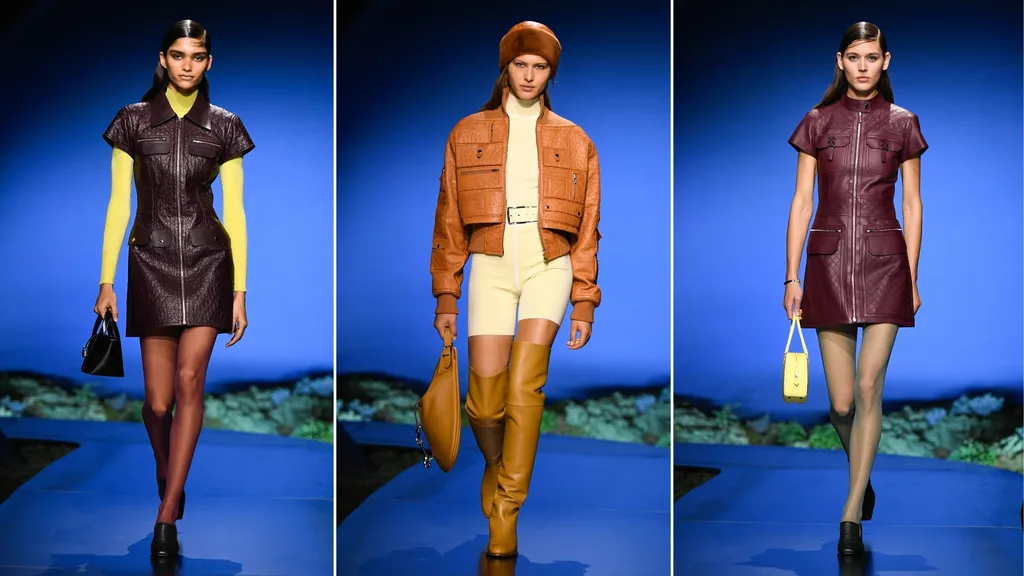
Romance and utility rarely share the same stage, yet Nadège Vanhée brought the two into quiet harmony for Hermès. Her starting point was twilight, that fleeting threshold between day and night when colours deepen and the world feels momentarily suspended. “It’s a moment of change, of movement,” she said.
At the Garde Républicaine headquarters in Paris, the designer recreated that atmosphere with a winding runway set beneath a dusky sky and surrounded by mossy greens, evoking a forest at nightfall. The palette mirrored the transition: sunset tones fading into deep crimson, flashes of green and finally the inky blues of evening.
The silhouettes were sleek and purposeful. Military-style jackets, supple leather coats and salopettes appeared alongside jodhpurs, nodding to Hermès’ equestrian roots. Fur-lined collars, quilted padding and zip-up hoods emphasised protection, while A-line miniskirts, coloured tights and adjustable zips introduced movement, sensuality and a sense of modern female agency.
Vivienne Westwood
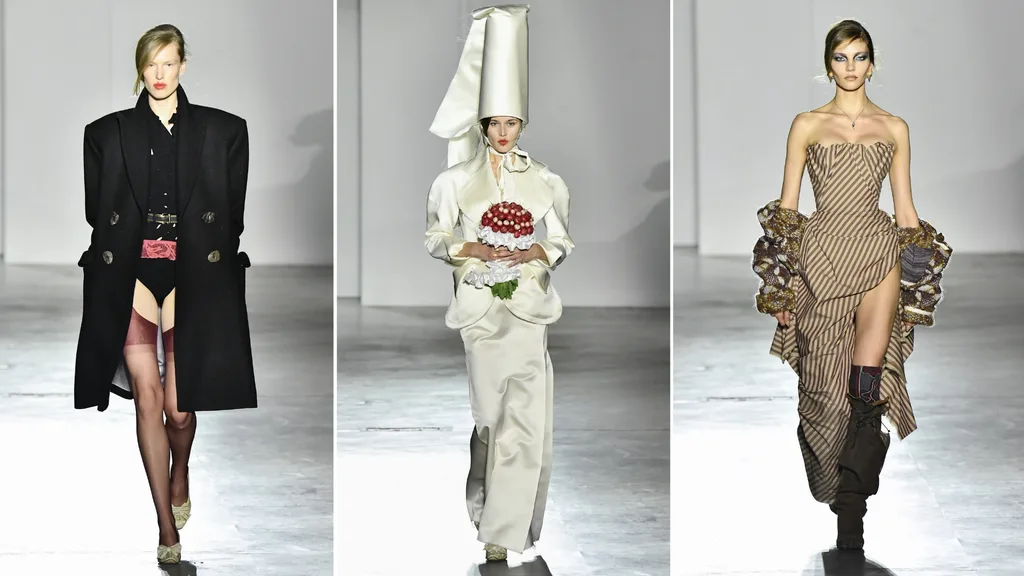
At Vivienne Westwood, Andreas Kronthaler titled his latest outing Catch the Rhythm! Let’s Go!, his 21st collection for the house and, as ever, it was a mix of mischief, memory and a touch of erotic chaos.
Three muses shaped the mood. First was the Austrian actress Romy Schneider, once described by Coco Chanel as “the ultimate incarnation of the ideal woman”. Her chameleonic screen presence echoed through the runway’s cast of characters, their glittering make-up hinting at her many on-screen faces.
That sense of risk appeared in the clothes too, with experimental dresses cut with rough seams and draped unpredictably around the body. “Spontaneity in the cut,” Kronthaler said. “You play with things; they are not fixed.”
The second reference came via Italian costume designer Danilo Donati and his work with Pier Paolo Pasolini, lending the collection a faintly medieval mood. Ribbon-tied smock dresses and raw-cut fabrics wrapped loosely around the body appeared throughout, before the show closed with a bridal look topped with a sculptural headpiece.
The third thread ran through the coded language of erotic underwear. Flashes of garters, bras, fishnets and stockings punctuated exaggerated shoulders, tartan coats and sweeping palazzo trousers. One look paired a vinyl mini skirt with garters and stockings, while a male model wore boxer shorts with garters layered over the top.
Celine
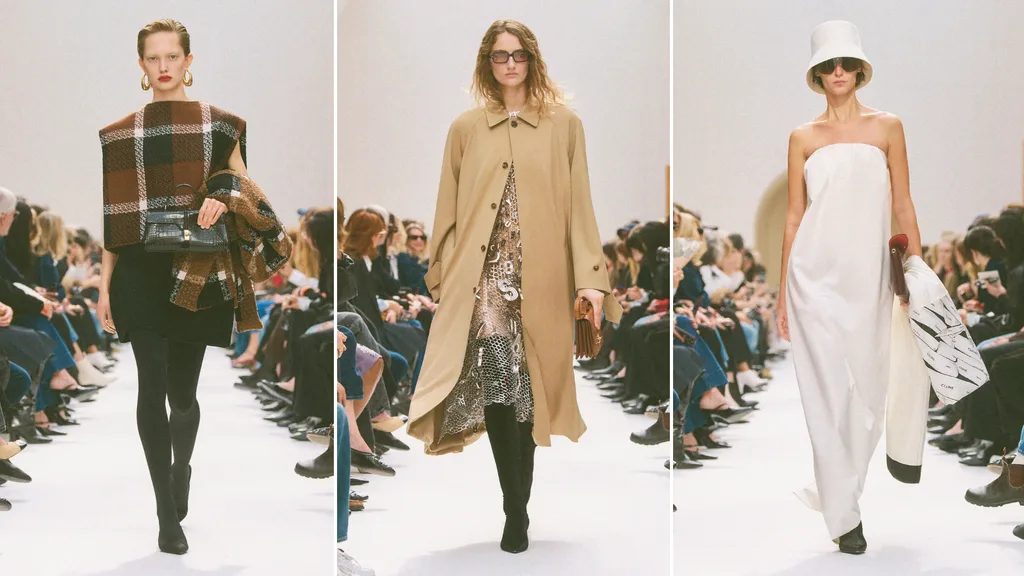
For his third show as creative director of Celine, Michael Rider distilled the house’s ethos into one word: confidence. In his show notes, he spoke of intuition over strategy and rejected the need for a rigid concept, instead proposing Celine as a style. A mix of old and new that feels both urgent and dreamy.
That philosophy translated into a wardrobe of classics with subtle disruption. Long black coats, sharply cut jackets and slim trousers established a sense of authority, while small irregularities added character.
Colour arrived in striking flashes, including a rich purple coat and a vivid red suit. Throughout, Rider emphasised personality over perfection, suggesting the best clothes allow the messy, complex inner lives of their wearers to shine through.
Schiaparelli
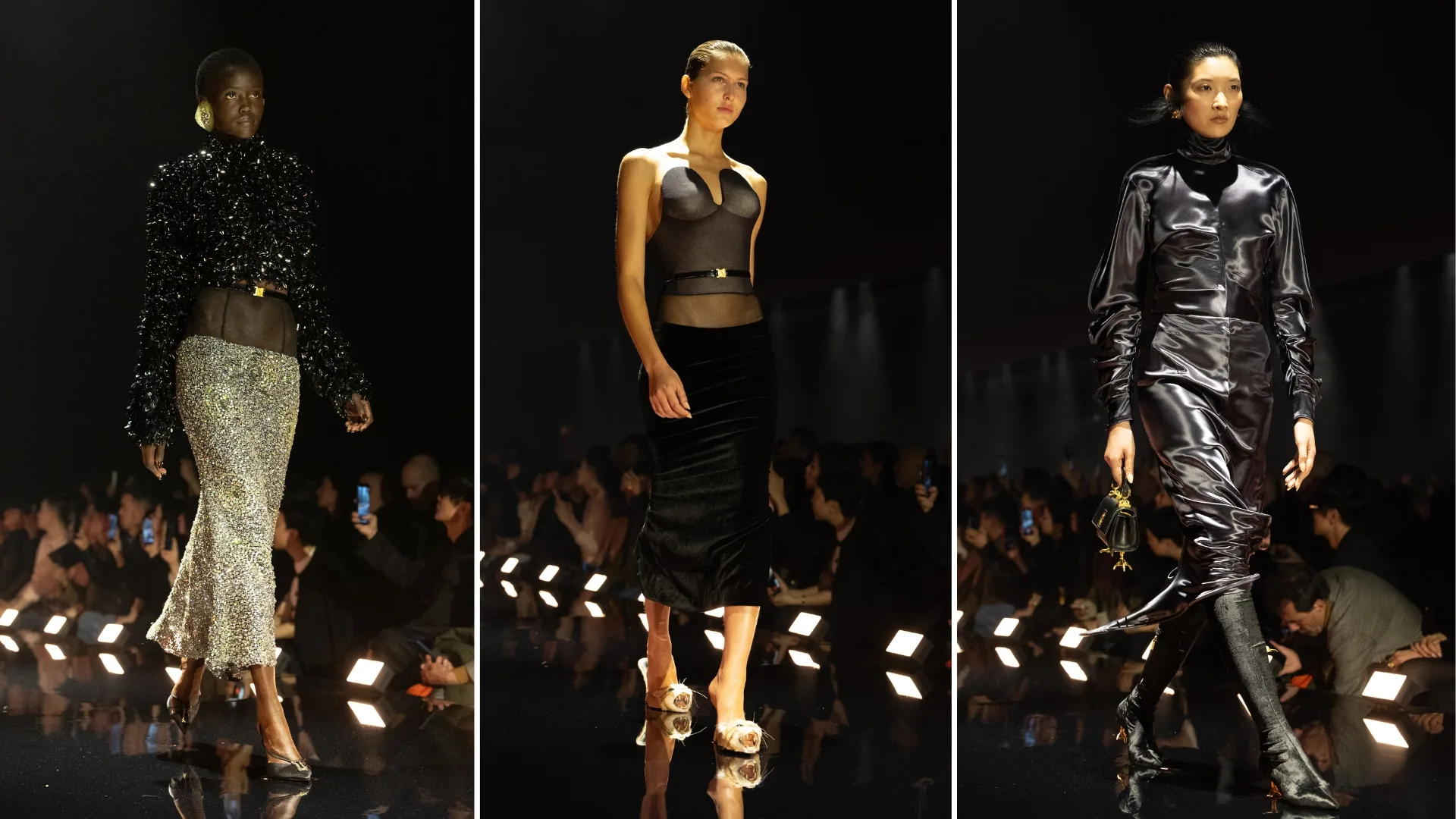
At Schiaparelli, Daniel Roseberry leaned fully into the house’s surrealist spirit for Autumn/Winter 2026. Staged on a raised glossy black runway with floodlights lining the edges, the show placed the audience below the models, forcing them to look up, a theatrical perspective that heightened the drama.
Roseberry’s central idea was mystery, expressed through trompe-l’oeil illusions and playful detail. Among the standout accessories were sculptural cat-head heels, beige leather pumps with hand-moulded feline faces complete with whiskers and bared teeth.
Elsewhere, deceptively light tailoring, satin evening pieces and body-skimming dresses created a sense of enigmatic glamour, reinforcing Roseberry’s aim to bring Schiaparelli ready-to-wear closer to the fantasy of couture.
Dior
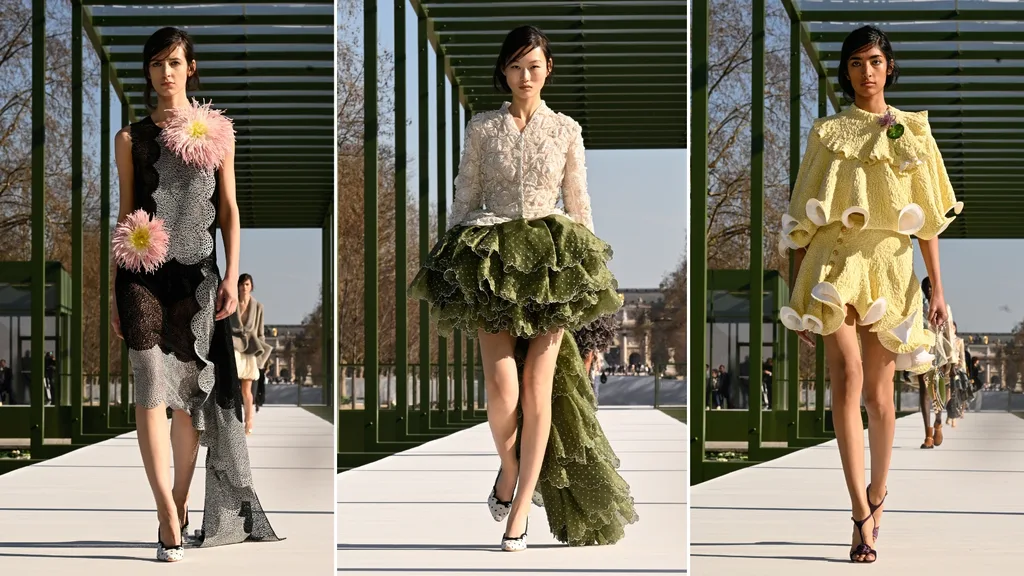
Jonathan Anderson staged Dior’s Autumn Winter 2026 show in the Jardin des Tuileries, where a runway skimmed across a pond scattered with lily pads. Just beyond the garden sits the Musée de l’Orangerie, home to Monet’s Water Lilies, a reminder that the park itself was once an aristocratic pleasure ground before becoming a public space.
That shift from exclusivity to openness echoed Anderson’s evolving approach at Dior.
At the centre of the collection was the Bar jacket, the architectural emblem of Dior’s 1947 New Look. In Anderson’s hands it appeared loosened and reinterpreted: as pastel knits with fluted peplums, frock coats with rippling fronts and abbreviated versions layered over embroidered mini-crinis.
Often paired with jeans, it set the tone for a collection that balanced heritage with wearability. Soft tailoring, washed fabrics and fluid skirts lent the clothes a sense of movement, gently unsettling some of Dior’s most established codes.
Saint Laurent
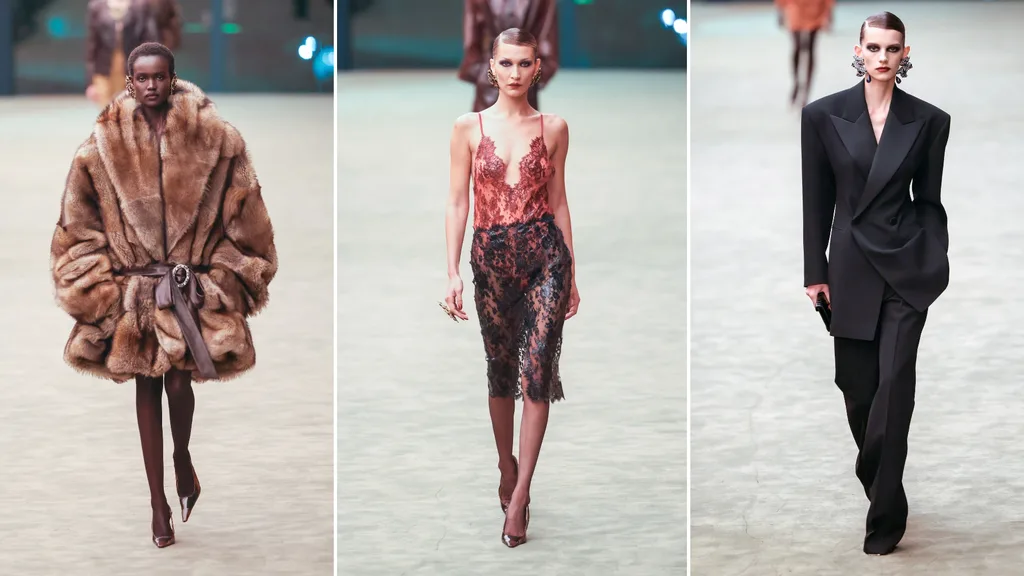
Set inside a modernist residence of floor-to-ceiling glass overlooking the Eiffel Tower, Saint Laurent’s Autumn Winter 2026 show unfolded with cinematic restraint. At the centre of the space stood an oversized replica of a bust that once occupied Yves Saint Laurent’s private home, a subtle tribute to the founder.
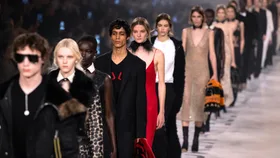
On the runway, Bella Hadid led a cast of top models embodying Anthony Vaccarello’s vision of “nocturnal elegance.” Louche tailoring, sharp tuxedos and flashes of sheer lace defined the collection, anchored by a return to the house’s most radical gesture: Le Smoking. First introduced in 1966, the tuxedo redefined women’s tailoring and remains one of Yves Saint Laurent’s most enduring signatures.
Vaccarello opened with a sequence of bare-skinned tuxedo jackets, styled with smoky eyes and blood-red lips, before sending out further iterations punctuated by oversized crystal dove earrings. Between the suiting came sheer lace and sweeping evening coats, reinforcing the tension between masculine precision and sensual transparency that defines Saint Laurent today.
Dries Van Noten
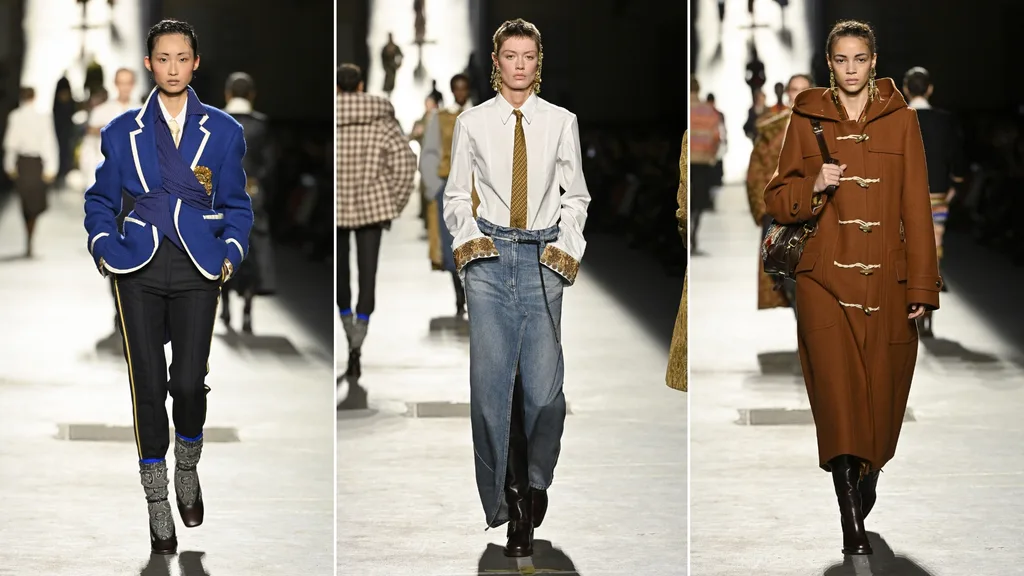
For Autumn/Winter 2026, Julian Klausner staged Dries Van Noten inside Lycée Carnot in Paris’s 17th arrondissement, drawing on the emotional turbulence of adolescence. Models walked to the steady beat of a metronome as Gala Dragot’s spoken reflections on teenage consciousness filled the room.
School uniforms were reimagined through navy duffles, pleated kilts and embroidered blazers, while florals, checks and painterly prints referenced 17th-century Flemish still lifes.
The result was a collection caught between youth and adulthood, where curiosity and self-discovery shaped every look.
Balmain
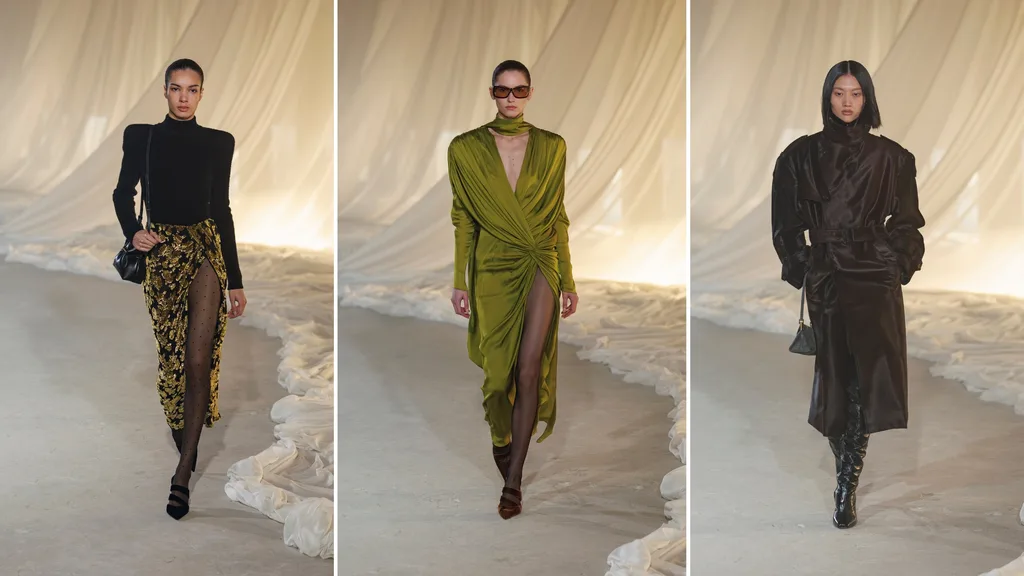
Antonin Tron’s debut at Balmain was one of the most closely watched moments of the season, signalling a subtle shift in rhythm for the house.
Billowing curtains of soft light framed a stark concrete runway, setting the tone for a collection that nodded to Balmain’s signature codes: a gold-and-black palette, strong-shouldered mini dresses, sculptural leather jackets and flashes of glittering animal print.
In his first outing, Tron pared back excess in favour of instinct and clarity. Animal print dominated the runway, appearing through both tailoring and fluid silhouettes that balanced structure with movement.
The mood was bold yet controlled. Honouring the house’s heritage while subtly recalibrating its energy, Tron’s debut suggested a Balmain rediscovering its edge.


Share this post