

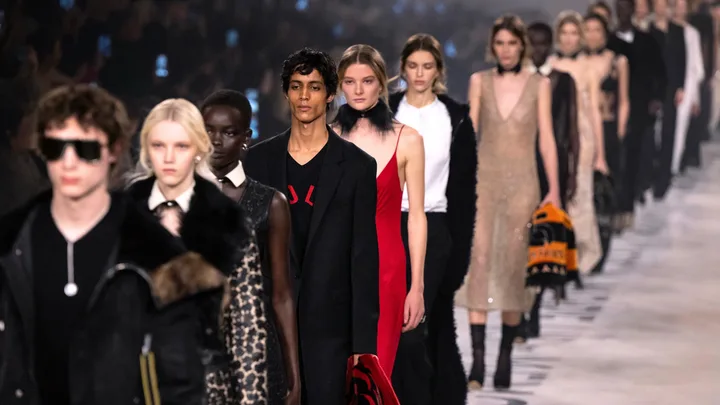
As one of the most decisive stops on the global fashion calendar, Milan wastes no time setting the agenda.
From February 24 to March 2, the Italian fashion capital becomes the industry’s command centre, hosting 52 physical runway shows that will decisively shape Autumn/Winter 2026.
From Prada and Jil Sander to Bottega Veneta, the schedule is punctuated by genuine turning points: Maria Grazia Chiuri’s anticipated debut at Fendi, Meryll Rogge’s first outing at Marni, and Demna’s first (physical) runway for Gucci, each poised to recalibrate the tempo.
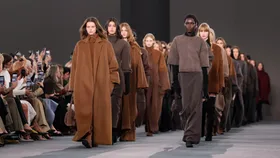

At Giorgio Armani, Silvana Armani and Leo Dell’Orco continue the quiet refinement of the house’s enduring codes.
This is a season of measured evolution rather than abrupt reinvention. Below, the collections and moments shaping Milan Fashion Week so far.
Bottega Veneta
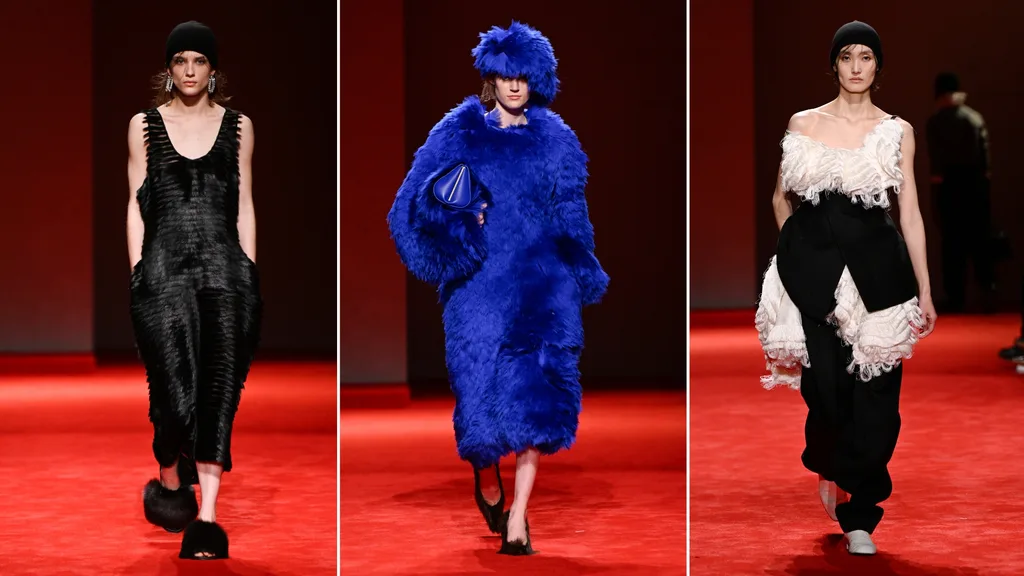
Milan can feel impenetrable — brisk, austere, all slate façades and monumental palazzi. Yet beneath that severity lies a quieter sensuality, a tension Louise Trotter channelled into her second collection for Bottega Veneta, shown at Palazzo San Fedele.
Appointed in December 2024 after Matthieu Blazy’s departure, Trotter has wasted little time asserting her authority.
Fall/Winter 2026 unfolded as a study in duality. It opened in near-monastic restraint: sculptural leather tailoring, softened shoulders, wide trousers and wrap skirts secured with sturdy belt, a subtle nod to the house’s bag-making heritage.
Then texture bloomed. Matte crocodile, velvet-like surfaces carved to resemble astrakhan, intrecciato sprouting tassels, even flashes of plexiglass fringe and hot-pink outerwear disrupted the calm.
Volume remained emphatic, coats cocooning the body yet engineered to feel featherlight. Notably, bags receded from focus. Instead, monumental outerwear claimed centre stage, a powerful reminder that the Bottega woman, like Milan itself, contains multitudes.
Gucci
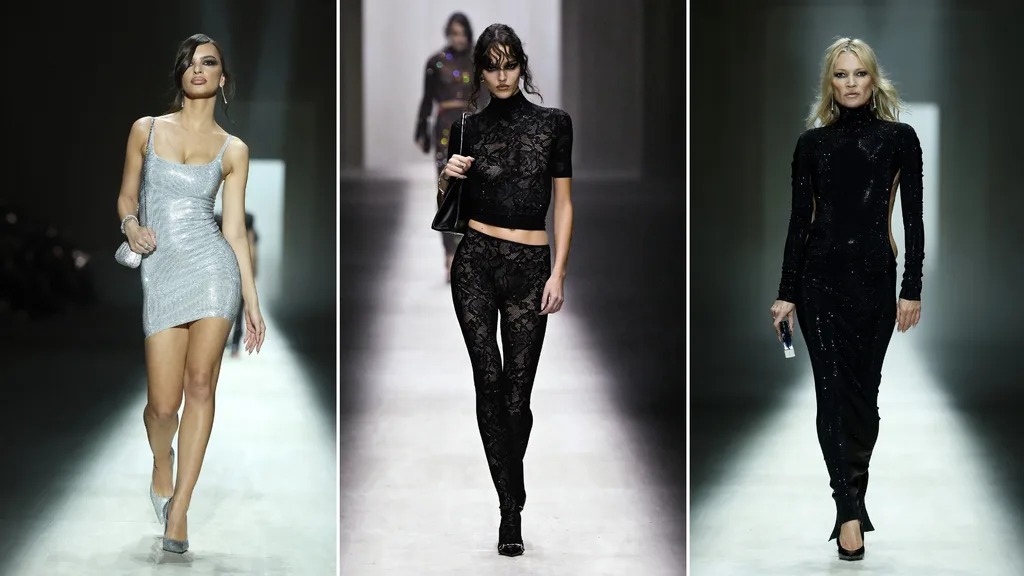
Spring arrived in Milan just as Demna unveiled “Primavera,” his latest chapter for Gucci. Inspired by Botticelli’s painting at the Uffizi, the collection signalled an emotional reset, positioning Gucci as culture as much as clothing.
Seamless, body-clinging minidresses and sculpted tailoring gave way to fluid suits, floral pleats and high-voltage eveningwear. Sex appeal pulsed throughout, from diamond GG flashes to slashed gowns, revealing a freer, more instinctive approach.
Kate Moss, Emily Ratajkowski, Elsa Hosk and Gabbriette led the runway charge, while a star-studded front row including Paris Hilton, Romeo Beckham and Demi Moore looked on. Accessories anchored the spectacle, notably a refined Bamboo 1947, yet it was the mood that resonated most: playful, provocative and entirely Gucci.
Giorgio Armani
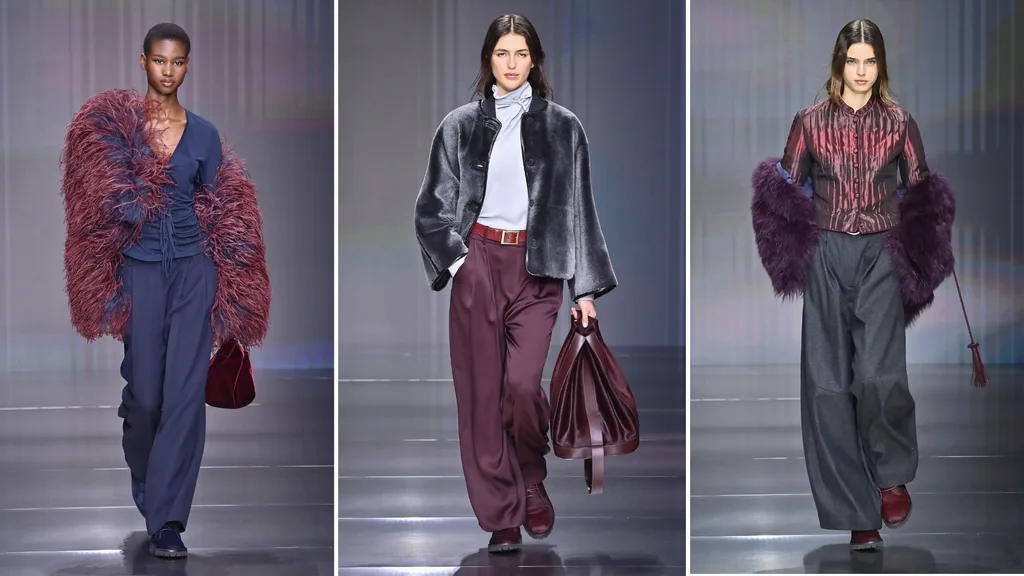
Silvana Armani’s first full ready-to-wear collection as creative director marked a quiet but significant turning point for Giorgio Armani. The house codes remained intact, from fluid suiting to wide-leg trousers and strong shoulders, yet the perspective felt distinctly her own.
A lion brooch on the opening look, followed by a crab on the next, subtly referenced her Leo star sign and her late uncle Giorgio’s Cancer, a discreet nod to succession.
She opened with disciplined flannel tailoring, pale trousers and muted belts establishing a confident uniform. Asymmetric shawl collars and sculpted pleats revealed a careful attention to proportion, while cropped blousons echoed raised necklines seen later in belted jacquard pieces. Trousers anchored nearly every look, reinforcing practicality.
Midway, military touches met East Asian influences in kimono-collared jackets and quilted silk layers. Evening arrived in velvet gowns and relaxed suits, grounded by low heels. The result was pared-back, assured and unmistakably hers.
Fendi
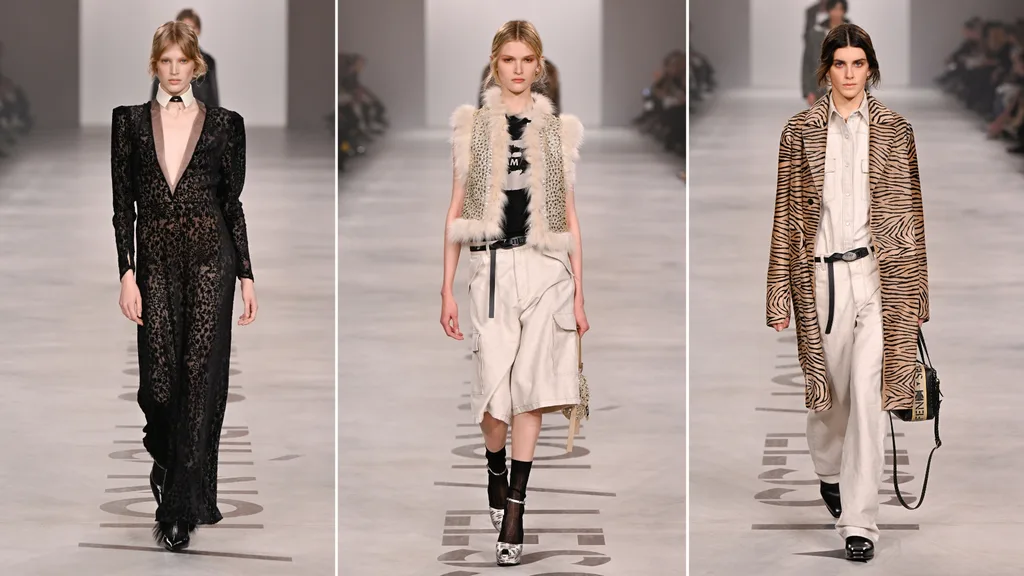
For her debut at Fendi in Milan, Maria Grazia Chiuri quite literally set the tone beneath guests’ feet. “Less I, more us” was emblazoned across the runway, a pointed mantra marking her return to the Roman house where she spent a formative decade under the five Fendi sisters.
Now one of the few women leading a major luxury brand, Chiuri framed the collection as both homecoming and reset.
The coed offering proposed a shared wardrobe, designed by unified men’s and women’s teams and built around pieces resized rather than reimagined. “The coat, the jacket, that is the silhouette of Fendi,” she said ahead of the show, underscoring her focus on cut and construction.
Heavy on black, the opening procession of near-monochrome looks signalled a deliberate shift for a house long associated with bold colour and monogram bravado. Instead, Chiuri leaned into polish and precision through tailored wool coats, lace dresses, laser-cut leather, pleated skirts and panne velvet columns with a faint 1920s air.
Ballet skirts and black lace nodded to her Dior tenure, though here sharpened with a distinctly Roman sensuality, think leather shirt collars worn solo or fur accents reworked from existing skins.
Accessories remained reassuringly classic, including heavily embellished Baguette bags, a design Chiuri first worked on in the late Eighties. Subtle tributes threaded throughout, from white leather chokers recalling Karl Lagerfeld to cross-strap closures that gestured to Kim Jones.
If this was less about grand reinvention and more about staking a silhouette, it was a confident first chapter, one that suggests her “us” approach may steadily redefine what Fendi looks like for a new generation.
Max Mara
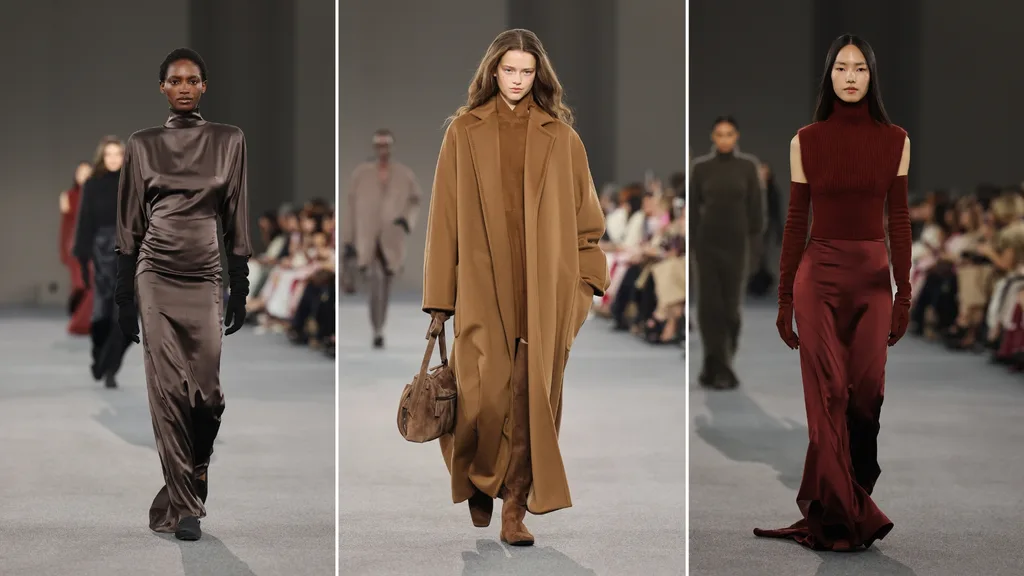
At Max Mara, restraint is never synonymous with retreat. Under Ian Griffiths, the house continues to resist trend-led theatrics in favour of something steadier, collections that champion longevity, material integrity and authority.
For Autumn/Winter 2026, that language was shaped by history. A recent visit to Sutton Hoo, the Anglo-Saxon burial site near Griffiths’ Suffolk home, prompted reflections on objects forged in the so-called Dark Ages that have only grown more resonant with time.
Backstage, before a moodboard layered with ancient metalwork and weathered helmets, he described Max Mara as an object in itself, a coat or suit designed to bear wear with grace.
Matilda of Canossa, the formidable medieval ruler whose roots trace to Reggio Emilia, provided another conceptual anchor: strength articulated through composure, sovereignty without spectacle.
That sensibility translated into hooded, cape-like coats, sculpted cashmere skirts and sweeping wool outerwear in camel, oxblood and anthracite. Plush alpaca and double-face cashmere softened the severity, while leather gloves and over-the-knee boots extended each silhouette with precision.
If winter has a foundation, it is the coat, and here it stood as architectural core. In a season marked by flux, Griffiths offered permanence, clothing as inheritance.
Jil Sander
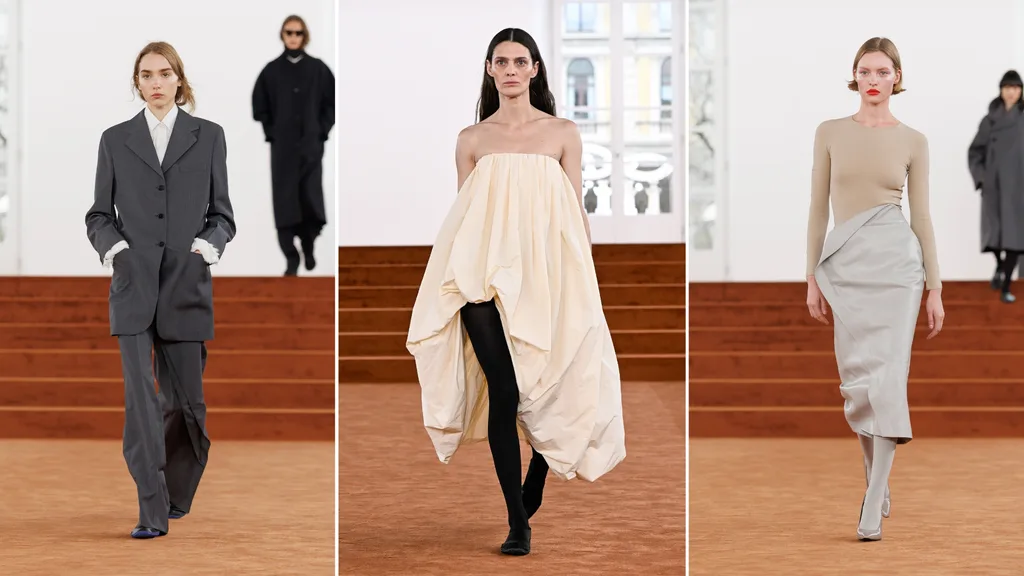
Jil Sander has always understood the persuasive power of simplicity, and this season that clarity of intent felt not only intact, but quietly invigorated.
For his sophomore outing at Jil Sander, Simone Bellotti explored the idea of “home” through the language of the house codes, subtly rearranged rather than replaced.
Heightened restraint remains the foundation, yet it was charged with friction. Prim, high-collared dresses were sliced with decisive thigh-high splits. A padded jacquard mini, sculpted to resemble newly upholstered furniture, nodded to Bellotti’s upbringing while gently subverting minimalism’s flatness.
Double-breasted coats curved inward at the waist; blazer dresses skewed off-kilter with asymmetric hems.
Movement became another form of disruption. Midi skirts were folded and swept to one side while a strapless bubble-hem dress billowed down the runway. Bellotti calls it “moreness with meaning” a careful calibration of excess within discipline. The result feels neither nostalgic nor rebellious, but a confident recalibration of what Jil Sander can be.
Prada
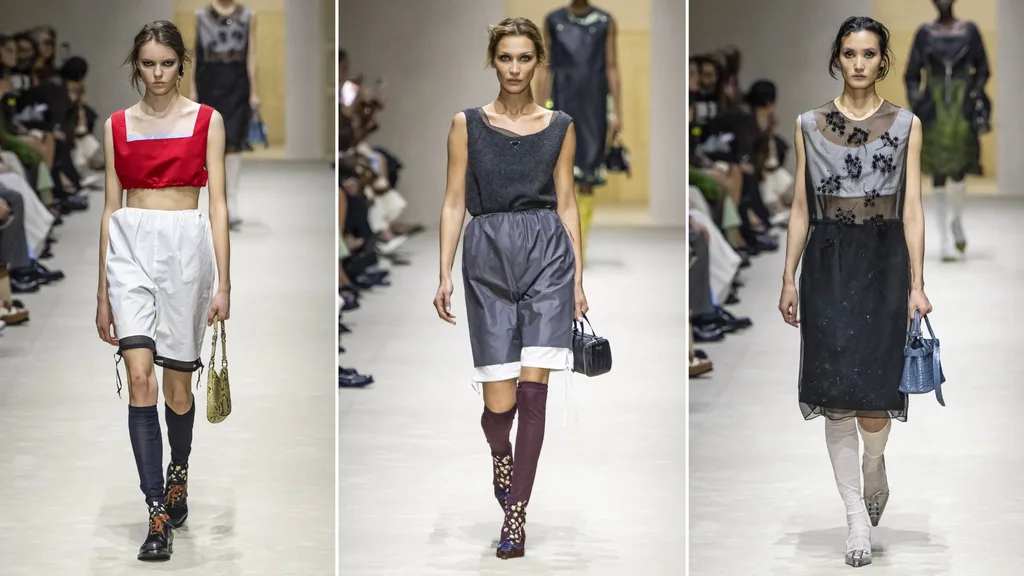
At Fondazione Prada, Miuccia Prada and Raf Simons presented a collection that felt calibrated to the overstimulated tempo of now. If the mood was one of collective overload, from algorithmic noise to cultural uncertainty, the runway mirrored it with restless clarity.
Fifteen models moved briskly across the carpeted space, each returning three more times in evolving iterations of the same look. Layers were peeled away, jackets removed, skirts revealed, proportions subtly recalibrated. The repetition was a deliberate reflection of the reality of how women dress: adding, subtracting, adapting across the day.
In one sequence, a chore coat gave way to an organza jacket, then to a printed dress beneath, each pass offering another styling proposition. Scrunched silks and deliberately creased shirts suggested a studied nonchalance, as though dressed in haste, the iron barely warm and the day already underway.
The collection stood firm in its belief that dressing is not fixed, but fluid. Clothes should move and evolve as intuitively as we do, adapting to the shifting rhythms of modern life rather than resisting them.

Related stories
Native ad body.
Native ad body.
Native ad body.

Share this post