There is something fitting about Dior choosing Los Angeles for its Cruise 2027 show. Christian Dior, who famously understood the power of the dream as an antidote to the grey reality of postwar Europe, would have recognised Hollywood’s grammar immediately — the artifice, the longing, the luminous projection of a better life. At the Los Angeles County Museum of Art on the evening of May 13th, as vintage Americana soundtracked the entrance of guests against the fading Pacific light, Jonathan Anderson made that kinship feel not like history, but like something alive and urgent.
Anderson, who assumed the creative directorship of the house in 2025, has wasted no time asserting his vision. The collection, titled Wilshire Boulevard, is simultaneously an archaeological dig into Dior’s cinematic past and a confident reimagining of what the house can be. The starting point was Alfred Hitchcock’s 1950 thriller Stage Fright, for which Marlene Dietrich — famously insisting “No Dior, no Dietrich” — wore the house’s designs on screen. That anecdote, delicious in its diva logic, captures something Anderson seems drawn to: the idea that clothes are not merely clothes, but declarations of identity.
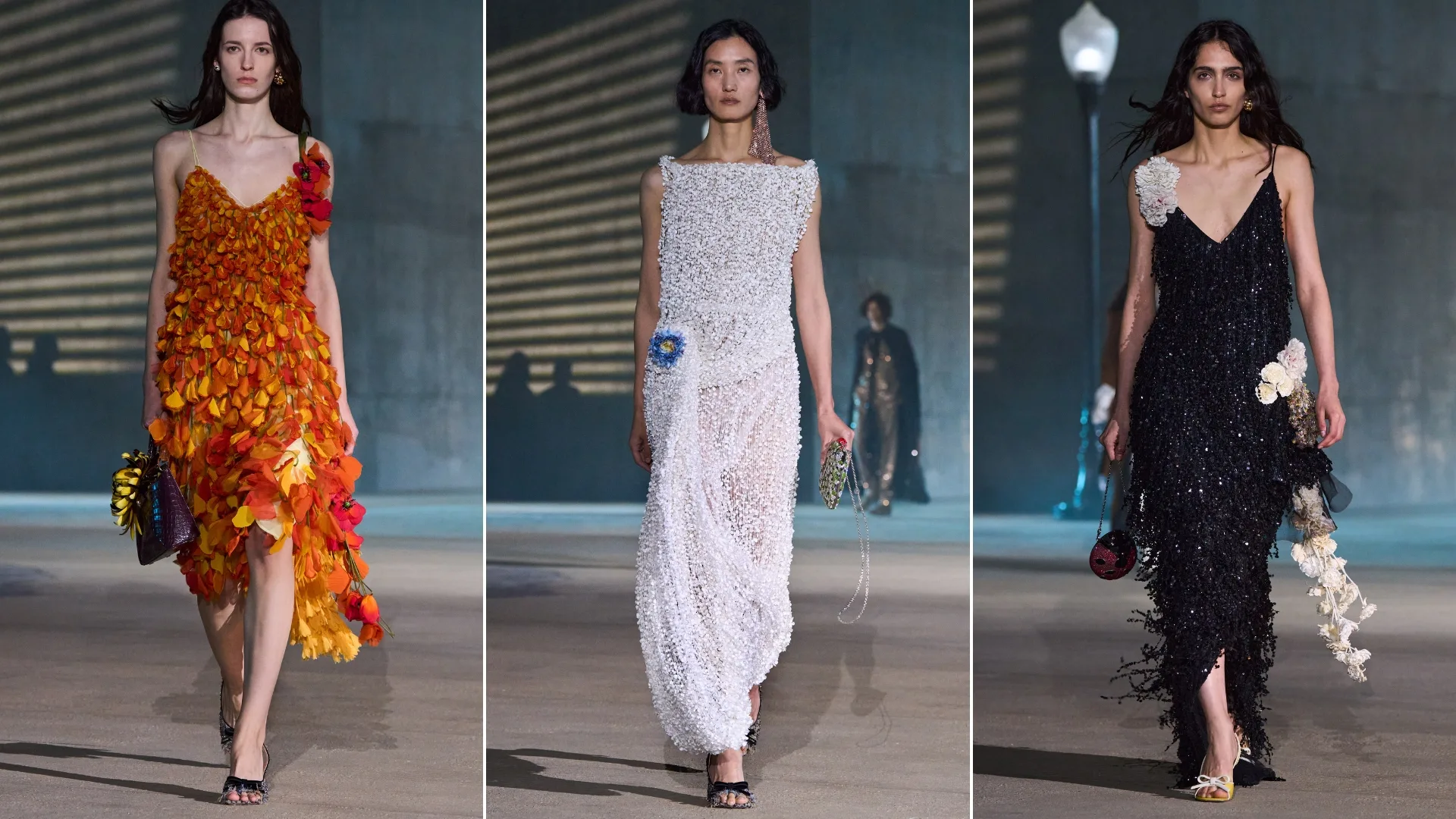
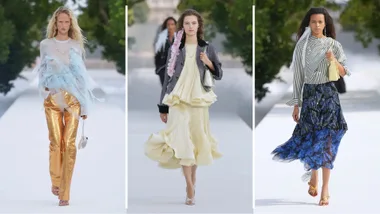
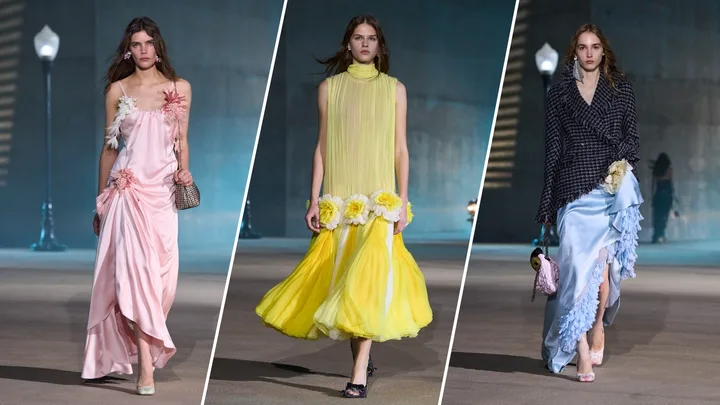
The show opened with a buttercup yellow dress scattered in rosettes — flowers functioning as both Dior signature and California wildness — and built from there into a slow, cinematic procession. A luminous orange gown evoked a field of Californian poppies.
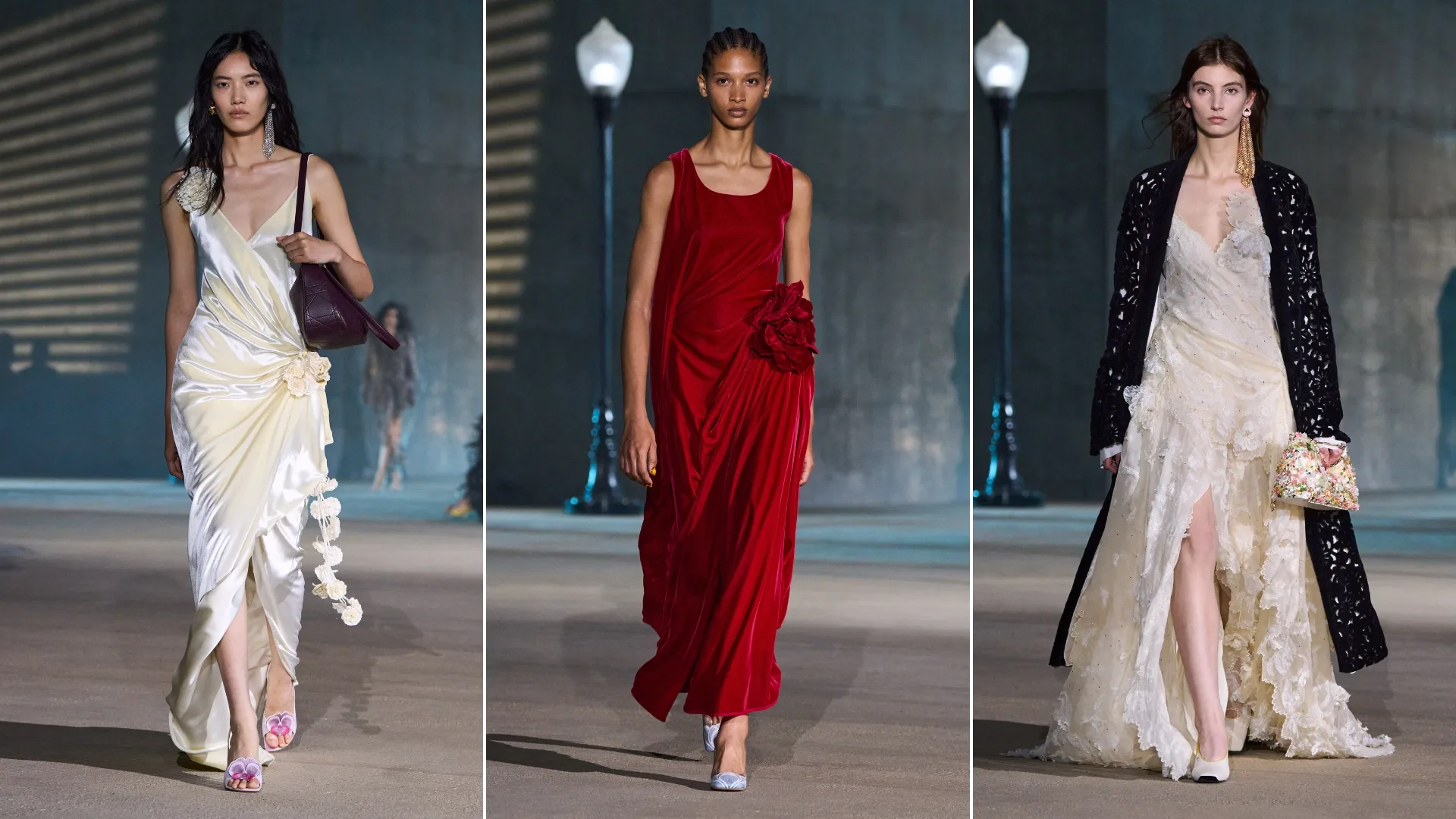
A red dress, placed deliberately mid-show in the tradition of Monsieur Dior himself (who deployed red simply, as Anderson put it, “to wake people up”), stopped the room.
New Saddle bags arrived in car-paint finishes and motor key charms, inspired by vintage American automobiles — a detail that felt both archival and playfully LA. A nautilus-shaped minaudière and crescent-based silhouettes completed a shoe and bag story that was quietly revolutionary.
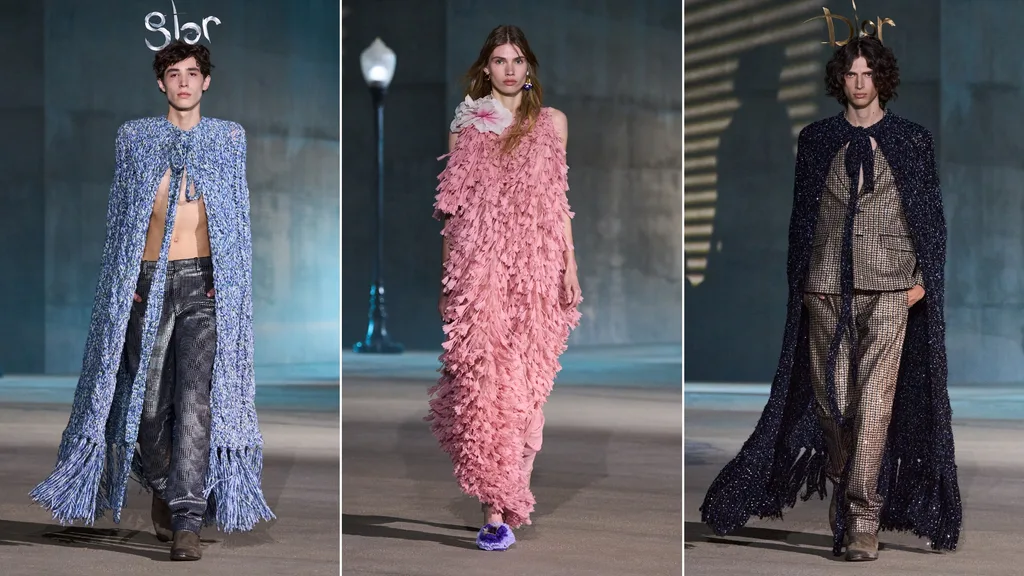
As women’s looks gave way to menswear — a rarer and more interesting transition in the context of a cruise show — the collection deepened. Philip Treacy’s bespoke headpieces opened the men’s chapter: feathers formed into typographic letters with, as Treacy described it, “exacting precision, yet weightless and alive.”
A grey wool flannel coat was striped with the geometric shadows of Venetian blinds, the visual grammar of film noir rendered in fabric. Ripped denim jeans were embroidered with fine silver chains that mimicked cotton strands — the everyday transfigured into something approaching couture.
Shirts designed in collaboration with artist Ed Ruscha offered perhaps the collection’s most intellectually satisfying moment.
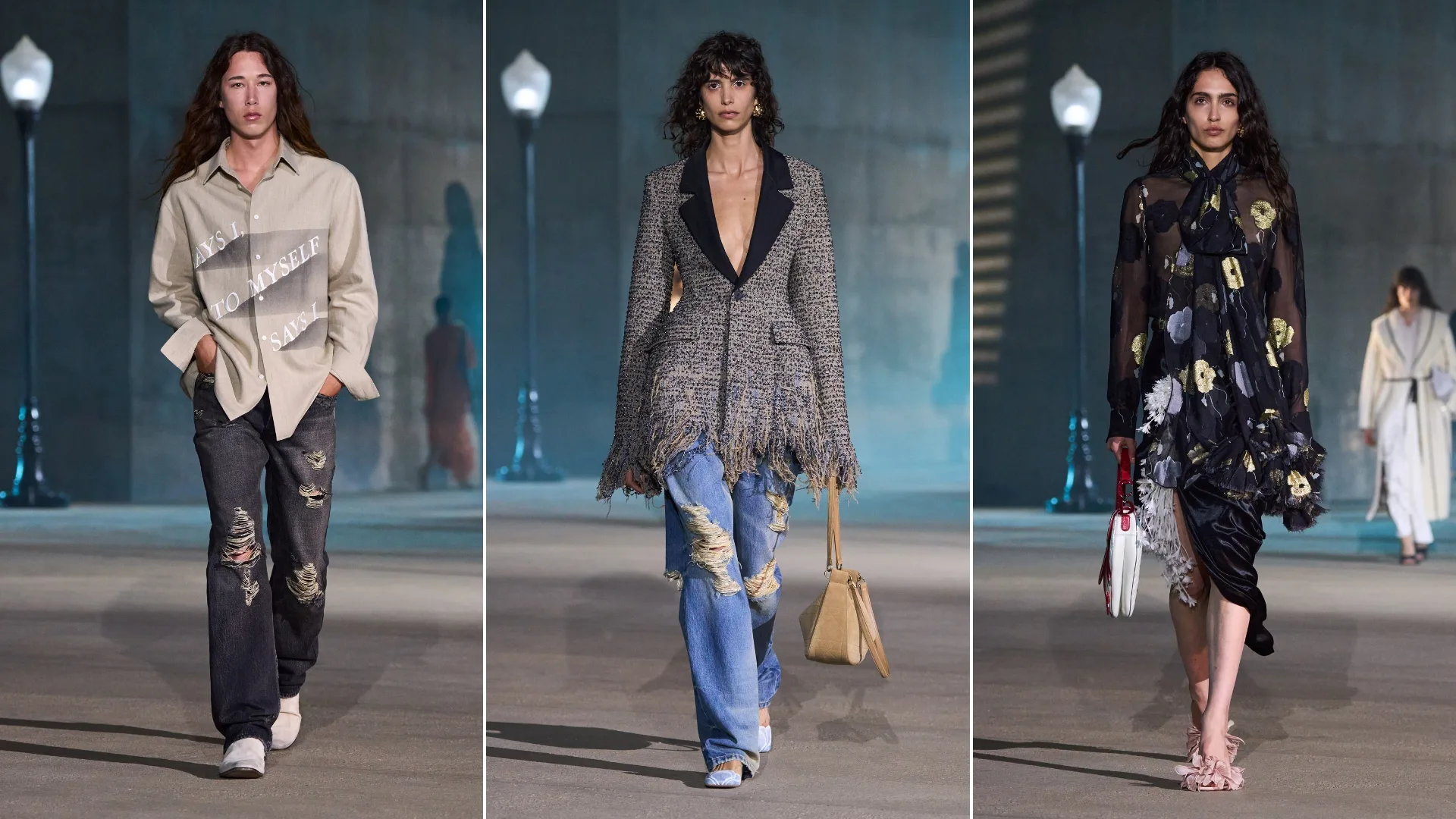
Ruscha, whose work has long mapped the romance and mundanity of Los Angeles in equal measure, is an almost too-perfect interlocutor for Anderson’s themes.
“When I think of LA, I think of Ruscha’s work,” Anderson noted — and in these pieces, the tension between the grandeur of the city and the flatness of its surfaces became something wearable.

Related stories
Native ad body.
Native ad body.


Native ad body.