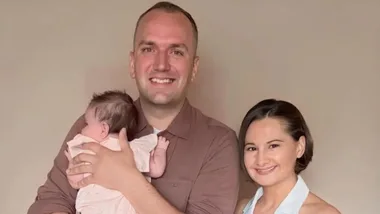
The first days of motherhood were a blur for Letitia. After a long labour and an emergency C-section, she found herself in a crowded hospital room, alarms blaring as nurses bustled in and out. She awoke at each wail, unsure whose baby was crying, and yet she felt she could handle anything.
“I just started having this feeling of euphoria,” she says. At home, Letitia felt unstoppable. “I’ve got this, I don’t need to sleep,” she told her husband, laughing nonstop at the dizzying joy of new motherhood. “This is the best thing!” she’d tell anyone who came to visit. But behind the euphoria, small moments of disorientation began to emerge. “I started having strange thoughts that I could achieve anything, but at the same time I couldn’t make decisions,” she says.
Letitia began considering outlandish ideas, like calling Richard Branson to ask for his money, or spending all her savings on a single lottery ticket. Her euphoria gave way to disorientation, but only when she started showing physical signs such as facial twitches did people realise something was wrong. When she finally called her midwife to describe what was happening, she was told to go straight to hospital.
That night, doctors diagnosed postnatal psychosis and admitted her. “I went into a full-blown psychosis. I don’t really remember much of that,” she says. She could see her baby only a few times a day to breastfeed, and the ward’s chaos – the shouting and alarms – scared her. “I did not feel safe, I did not feel secure and that’s all I wanted to feel,” she recalls. A slow recovery was complicated by living in regional New South Wales, which meant five-hour trips for specialist care, challenging when caring for a newborn.

Perinatal psychosis affects around one to two in every 1000 new mothers. Though less common than perinatal depression and anxiety, it can be severe and sudden, like Letitia’s. Symptoms may include mania, hallucinations and delusions, and it can be life-threatening if untreated.
When it came time for a second child, Letitia had her fears, but through Gidget Foundation’s Start Talking program she was able to meet regularly with a psychologist via telehealth, even before the birth. “It was so reassuring to have that expert advice,” she says.
Letitia had no psychosis the second time and is navigating motherhood with confidence and steady support. Sharing her story has been a part of her healing, her way of turning a painful and difficult experience into something meaningful.
“If opening up helps even one person, then it’s worth it,” she says.
The Gidget Foundation is a not-for-profit that supports the mental health of expectant and new parents across Australia. Named for a vibrant young mother who tragically took her life while experiencing postnatal depression, the foundation was started by Gidget’s family and friends to ensure what happened to her would not happen to others.
In Australia, perinatal depression and anxiety affects one in five mothers and one in 10 fathers. “Perinatal mental illness does not discriminate. It affects mothers, fathers, partners and families regardless of background, income or postcode,” says Karen Edwards, the foundation’s clinical director.
“Early intervention and accessible support can make a profound difference.” Edwards explains that untreated perinatal depression, anxiety or psychosis can have long-term impacts on parent-infant bonding and family wellbeing. “It’s not just about helping the parent feel better, it’s about giving the baby and the family the best start possible,” she says. Edwards highlights the importance of accessible care from the earliest stages, especially for those in rural and regional areas. “Parents need to know that support is available … and that with the right guidance they can begin to enjoy parenthood so much sooner.”
Many who have experienced such challenges choose to share their journeys as Gidget Angels, volunteers with the foundation who speak about their experiences to support and encourage others. Letitia, Lynn, Fatima and Meg are four of these Angels, speaking to raise awareness, reduce stigma and offer reassurance to others navigating early parenthood. Their stories highlight resilience, the power of connection, and the fact that no-one needs to face these challenges alone.
Lynn always wanted to be a mother, but when it became clear she might not realise this dream in the traditional sense, she started her IVF journey solo. Nothing could have prepared her for the years that followed: chemical pregnancies, emergency room visits, an endometriosis diagnosis, multiple surgeries, miscarriages and a D&C with complications. “IVF is a world of extremes, each cycle a beautiful window of hope, shattered by the brutality of loss,” she says.
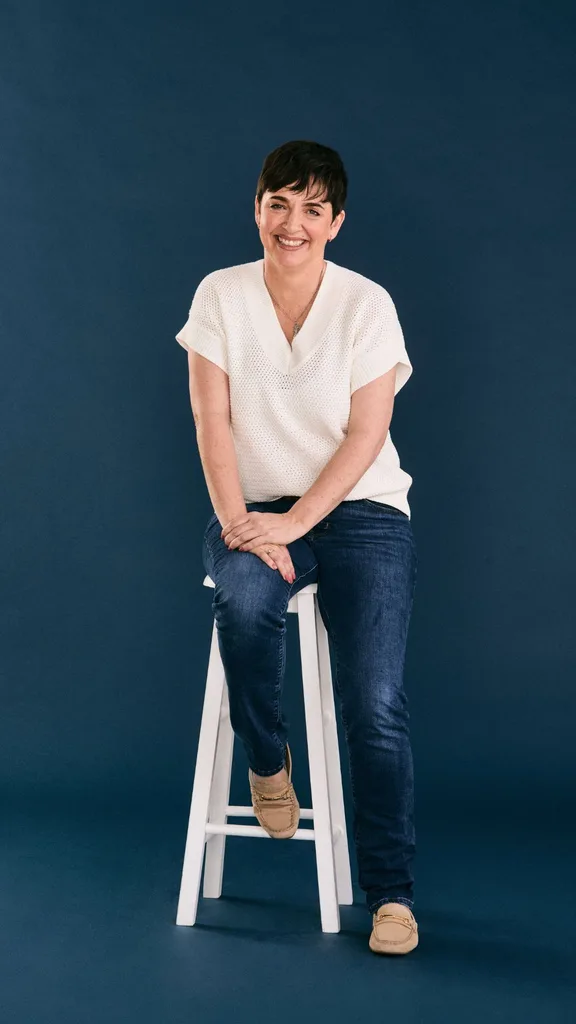
The uncertainty and repeated setbacks took a heavy emotional toll. Every twinge or cramp became a source of anxiety, and the excitement of potential pregnancy was shadowed by fear.
“You wonder if you’ve done something to damage your chances,” Lynn says, capturing the constant fear and fragility of embryo transfers. After giving birth to son Micah, Lynn’s anxiety and intrusive thoughts intensified.
Following visits to a GP specialising in postpartum care, it was suggested she spend time at a mother and baby unit at a mental health hospital. “Desperate to be healthy and make the most of those early days with my son, we checked in when he was three weeks old,” she says. “I never would have thought we’d spend our first weeks together in a psychiatric unit, but it was the best thing I could have done for us.”
Through mindfulness exercises and practical strategies, Lynn learnt to ground herself in her mothering, and was able to savour moments with Micah, enjoying his cuddles without being consumed by fear. Lynn got involved in the Gidget Foundation after reading similar stories and joining its Virtual Village, an online community of parents who share experiences.
“Reading other women’s stories gave me the courage to get help,” Lynn says. “I’m sharing my story to thank those women and hopefully help someone else.” Intrusive thoughts are common in new parents, with research showing most will experience them. They often appear suddenly and vividly: imagining the pram rolling onto train tracks or picturing yourself tripping down the stairs while holding your baby. They can feel shocking and out of character, leaving parents anxious, guilty or ashamed. But as Gidget Foundation explains, it doesn’t mean a parent wants to act on these thoughts. Instead, they’re usually a sign of heightened anxiety, exhaustion or the huge adjustment of early parenthood – and with the right support they can be understood and managed.
After Fatima’s daughter Aya was stillborn, and following a subsequent early miscarriage, the months after the births of her sons were profoundly isolating and emotionally complex. “The most isolating part is that there is no awareness that you’d be suffering during a time like this.”
She notes that her partner also struggled quietly: “Because your partner isn’t getting any support or recognition for their grief, they also can’t extend themselves beyond what they’re going through to be there for you in a way that’s meaningful.”

Fatima first heard about the Gidget Foundation when she was given The Bunny Books – a collection of stories by the foundation designed for little ones but with psychological strategies to support parents. From there, she turned to the Gidget Foundation resources in the middle of the night or while breastfeeding for comfort and guidance.
In part of her healing, Fatima founded The Still Nest, a space for families from culturally diverse backgrounds to share grief and access resources. “The Still Nest represents the kind of support and sanctuary that I needed,” she says. “There are so many others who are suffering in silence, and their pain is even more exacerbated because they don’t know how to explore resources and get support for themselves.”
Fatima shares her story to help break the silence, stigma and shame around the challenges of early parenting; she wants to “normalise that it’s a sacred and vulnerable time when parents need to feel held by their community”.
Fatima also highlights the broader realities of perinatal mental health, particularly for culturally and linguistically diverse families: for many new parents, the stress of early parenthood is heightened by the heartbreak of seeing humanitarian crises unfold in real time on their phones.
“For families with cultural or personal ties to affected regions, the weight is especially heavy,” she says. “Many silence their struggles, feeling not only ‘illegitimate’ but unworthy of care.”
Acknowledging this layered grief and building culturally safe, accessible support is essential: only then can families feel seen, valued and supported as they navigate parenthood in a fragile world. Arabella Gibson, CEO of the Gidget Foundation, wants to ensure that every parent has access to timely guidance, specialist care and practical strategies, regardless of where they live or their circumstances.
“We want parents to feel seen, heard and understood,” she says. “Parenthood is such a joyful time, but it can also be overwhelming. With the right support, families can navigate the challenges more confidently and enjoy the experience.”
Gibson also highlights the role of community and connection in supporting new parents. “Sometimes the difference between struggling in silence and feeling capable is knowing that there’s someone there who understands, who can guide you without judgement,” she says. Gibson points to the foundation’s programs – both in-person at Gidget Houses and via telehealth – as examples of how accessible care can make a real difference.
“It’s about giving families the tools, the reassurance, and the space to ask questions and be honest about what they’re feeling,” she says.
As a midwife and neonatal intensive care nurse, it was assumed Meg would handle childbirth and motherhood with ease.
“You’re a midwife, you’ll be fine!” she recalls being told repeatedly. Feeling bound by that expectation, she waited far longer than she should have to seek help. Her initial anxiety began before her children were born, when she had fertility treatments.

“I truly feel counselling should be required from the start,” she says, reflecting that had support been available earlier, her struggles might have been identified and addressed sooner.
Her second child was 15 months old when she hit rock bottom. Sitting on the side of the road with her baby in the car, she felt overwhelmed, suffocated by anxiety and unsure how to move forward.
It wasn’t until Meg found a psychologist who worked for her that things began to shift. The non-judgemental support allowed her to unpack years of anxiety and learn strategies to manage her mental health. Meg shares her story because, as she says, “shame dies in safe places”.
She hopes that by speaking up, she can give hope to others and highlight the support of the Gidget Foundation. Meg first discovered Gidget while doing her own advocacy work on social media. She got in touch, learnt about becoming a Gidget Angel, and jumped at the chance. “Had I been linked with Gidget earlier, I may not have had such a difficult journey,” she says. “If sharing my story helps just one family, maybe, just maybe, it can be someone else’s survival guide.”
Perinatal mental health challenges can affect anyone, regardless of background, experience, or circumstance. Yet with timely support, understanding and access to practical strategies, parents can thrive, building confidence in themselves and their families.
“Just knowing that there’s support and that you’re not alone is so important,” Gibson says. For her, the ultimate goal is generational change: a world where parents understand and support each other, and where perinatal mental health is openly acknowledged and prioritised.
Perinatal Mental Health Week, held across Australia from November 23 to 29, is an opportunity to raise awareness of the mental health challenges that can arise during pregnancy and the first year after birth. The week encourages open conversations, highlights available support and reminds parents that seeking help is a sign of strength, not weakness.
By shining a light on these issues, the week aims to reduce stigma and ensure all parents know they are not alone.

Related stories

Native ad body.

Native ad body.




Native ad body.