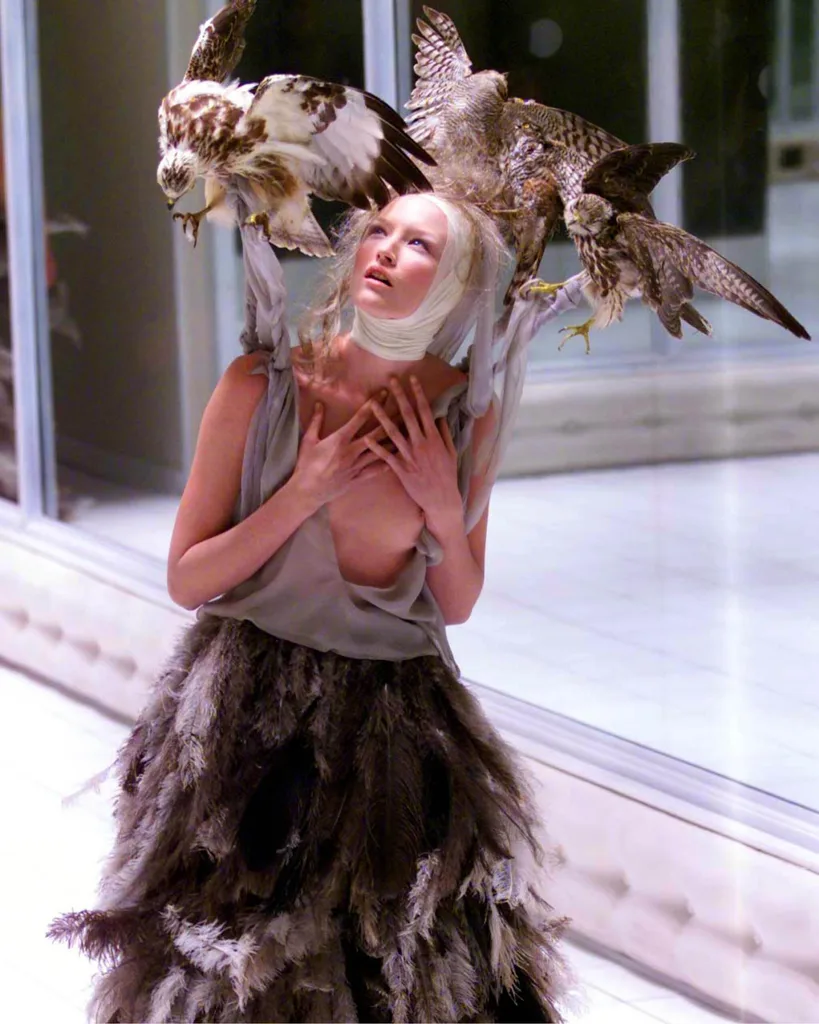
In the 1930s, Elsa Schiaparelli, the famed Italian designer, turned an amorphous idea – the surreal – into a solid thing. Into many-headed dresses, illusory trompe l’oeil jumpers, and hats festooned with birds and beaks. But despite creating so much beauty in the world around her, she was preoccupied with not feeling beautiful herself.
In her 1954 memoir, Shocking Life, Schiaparelli wrote that after being told that she was as ugly as her sister was beautiful, she began to have dreams of her face “covered with flowers like a heavenly garden”. She stole seeds from the gardener, “and these she planted in her throat, ears, mouth”, waiting to be made beautiful, to absorb some of nature’s beauty. Alas, “no flowers grew”.
A doctor had to be called, the seeds systematically dislodged.
Later, once Schiaparelli had become one of the most iconic designers of her time, nature became her vision of beauty – her most famous perfume, Shocking, has a bottle topped with an exploding head of flowers; she used seed packets as an unusual appliqué detail on her dresses.
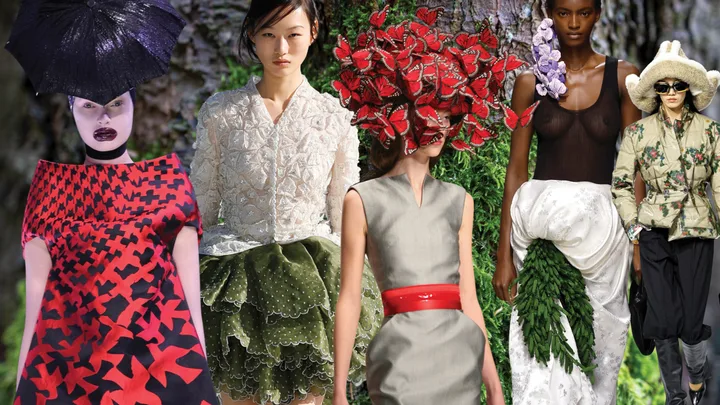
Nature has long found its expression in fashion. Fashion Biologique, an Instagram account with 140 thousand followers, posts composite images comparing a runway look to an uncanny reflection of its textures or colours in the wild: on a bee’s wings, or a lump of coral, or a peacock spider’s graphic abdomen.
One I come back to often is a lace aquamarine blouse paired with a skirt swiped in lines of block colours and patterns (Moschino) next to a fish that somehow manages to parallel its wacky splicing (intelligent design, surely). Fashion and nature have always been friends.
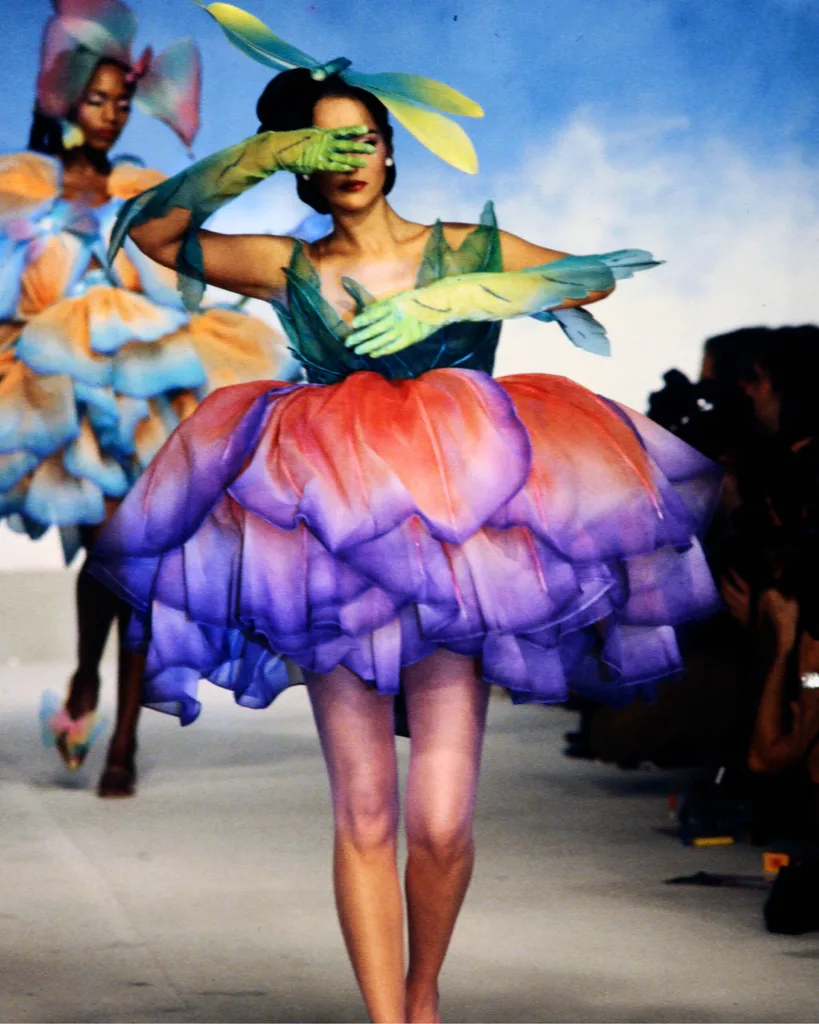
Often, fashion’s fascination with the natural world has bloomed in the form of dainty florals, pastels and palettes that call to mind springtime, dawn and teeming gardens. We think of songbirds and sun, shades of green in the likeness of limes, moss, seaweed; all things verdant and bountiful.
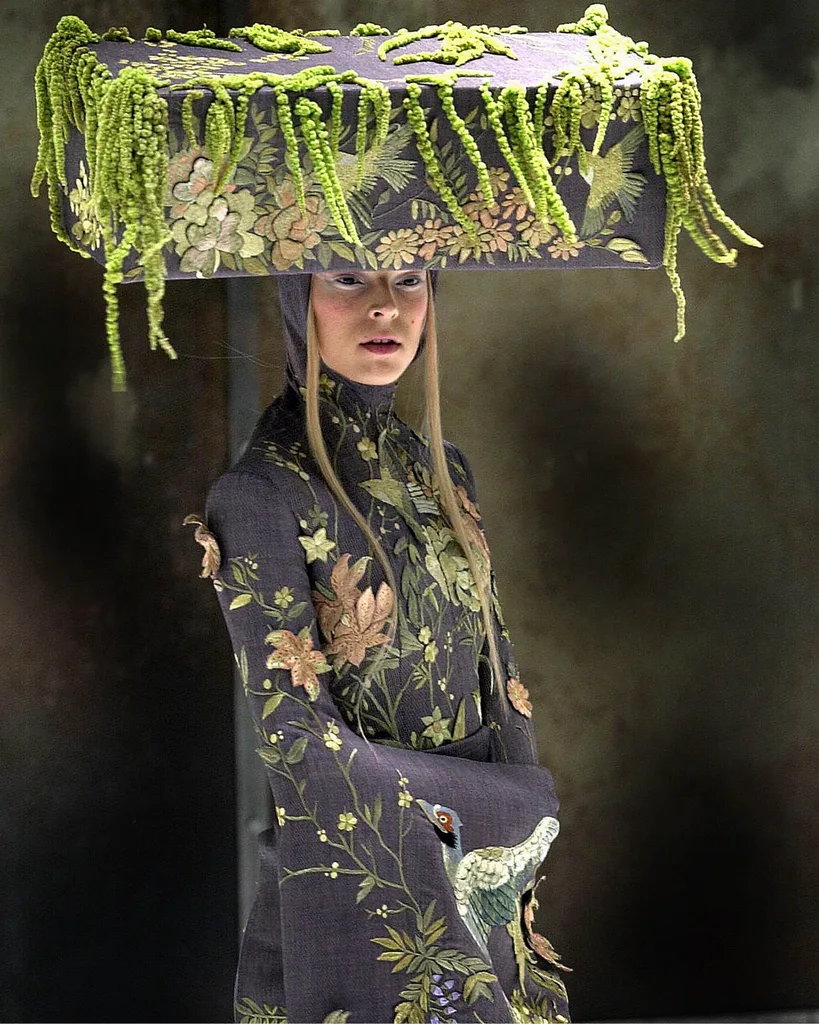
In recent seasons, however, nature has become more than a simple muse. Its expression in fashion has become louder, stranger, more theatrical. We’re now looking at something closer to Schiaparelli’s avant-garde vision (excess, overwhelm, a little unsettling) than the floral wrap dresses of decades in-between.
According to Dior, the Jardin des Tuileries “has always been a stage for seeing and being seen”. This dramatic quality is presumably why the maison chose the Parisian park as the setting for its fall 2026 show, which delighted in the extremes and oddities of nature.
Artificial lily pads were scattered around the stream above which the models walked, paralleling their stilettos, which were also appliquéd with tiny, acid-green lily pads (has a shoe ever been so destined for viral fame?). Proportions took on an unreality as well: the famous Dior Bar jacket was cropped and fitted with a voluminous ruffled hem; shorts were shrunken; silhouettes were tightened and expanded in unexpected places.
This wasn’t about nature’s gentle rhythms, her ease and balance, but about the strange and uncanny. It was nature at her wildest and weirdest.
Other designers have also embraced the kitschy side of the natural world. Chanel’s Métiers d’art apple clutch lacquered the most anodyne fruit to such a high gloss that it looked hyperreal.
The apple has long had otherworldly connotations – immortality in Norse mythology, original sin, Snow White’s curse – and Chanel’s treatment evoked those associations, making it more a symbol than a real thing.
Christian Louboutin also leant into the whimsical, fitting its red soles with artificial lettuce leaves that unfurled from the sides of its stilettos, with a tiny bejewelled snail perched on the vamp.
Meanwhile, this season’s Givenchy mules bloomed with bright red calfskin leather rose petals, an almost indecent display of fullness.
According to Dior, the Jardin des Tuileries “has always been a stage for seeing and being seen”. This dramatic quality is presumably why the maison chose the Parisian park as the setting for its fall 2026 show, which delighted in the extremes and oddities of nature.
Artificial lily pads were scattered around the stream above which the models walked, paralleling their stilettos, which were also appliquéd with tiny, acid-green lily pads (has a shoe ever been so destined for viral fame?).
Proportions took on an unreality as well: the famous Dior Bar jacket was cropped and fitted with a voluminous ruffled hem; shorts were shrunken; silhouettes were tightened and expanded in unexpected places.
This wasn’t about nature’s gentle rhythms, her ease and balance, but about the strange and uncanny. It was nature at her wildest and weirdest. Other designers have also embraced the kitschy side of the natural world. Chanel’s Métiers d’art apple clutch lacquered the most anodyne fruit to such a high gloss that it looked hyperreal.
The apple has long had otherworldly connotations – immortality in Norse mythology, original sin, Snow White’s curse – and Chanel’s treatment evoked those associations, making it more a symbol than a real thing.
Christian Louboutin also leant into the whimsical, fitting its red soles with artificial lettuce leaves that unfurled from the sides of its stilettos, with a tiny bejewelled snail perched on the vamp.
Meanwhile, this season’s Givenchy mules bloomed with bright red calfskin leather rose petals, an almost indecent display of fullness.
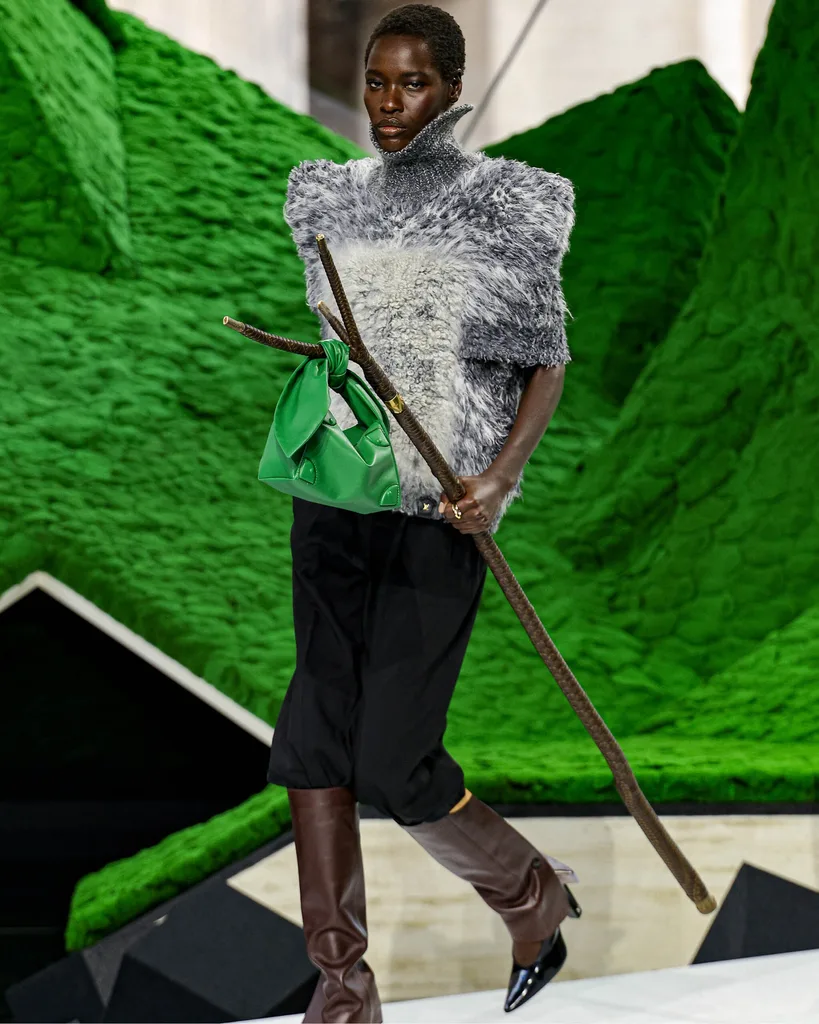
For designer Sarah Burton, the blood hue and the overflowing quality of the petals represented a furious, full embrace of womanhood.
What designers are showing on the runway – overglossed, hyperreal caricatures – is not nature as it exists around us, but a symbol of it, heightened and intensified. It seems to carry an underlying understanding that we’ve mediated so much distance between ourselves and true nature that it only makes sense to us in these memeified, over-exaggerated forms.
In a time of digital overload, the idea of representing nature in its pleasant, serene state seems twee, even dated. Portraying the organic as something closer to its complex and bizarre reality could be the only modern way to connect with the real and natural.
To escape into the woods, in some mimicry of a Thoreau-esque fantasy, still holds us in its grip, and maybe more than ever. And it makes sense: as we live so much of our lives on screens and in digital communication, nature is less present in our day-to-day.
Our worlds are busier and our jobs bring in less, and so our access to leisure and the outdoors – to nature itself – is more evasive than ever. It’s become aspirational. And aspiration is luxury fashion’s arena.
Super Nature, Louis Vuitton’s autumn/winter 2026 collection, represented this evolution. Creative director Nicolas Ghesquière interrogated how nature can play a role in our hyperdigital world as he covered the Cour Carrée du Louvre in moss of a stark and shocking kind of green. The collection moved beyond whimsy and fun and into something darker. “Like traditional costumes, these clothes are shaped by how people have lived, by our sense of belonging, and fundamental truths, past and present,” the designer’s show notes read.
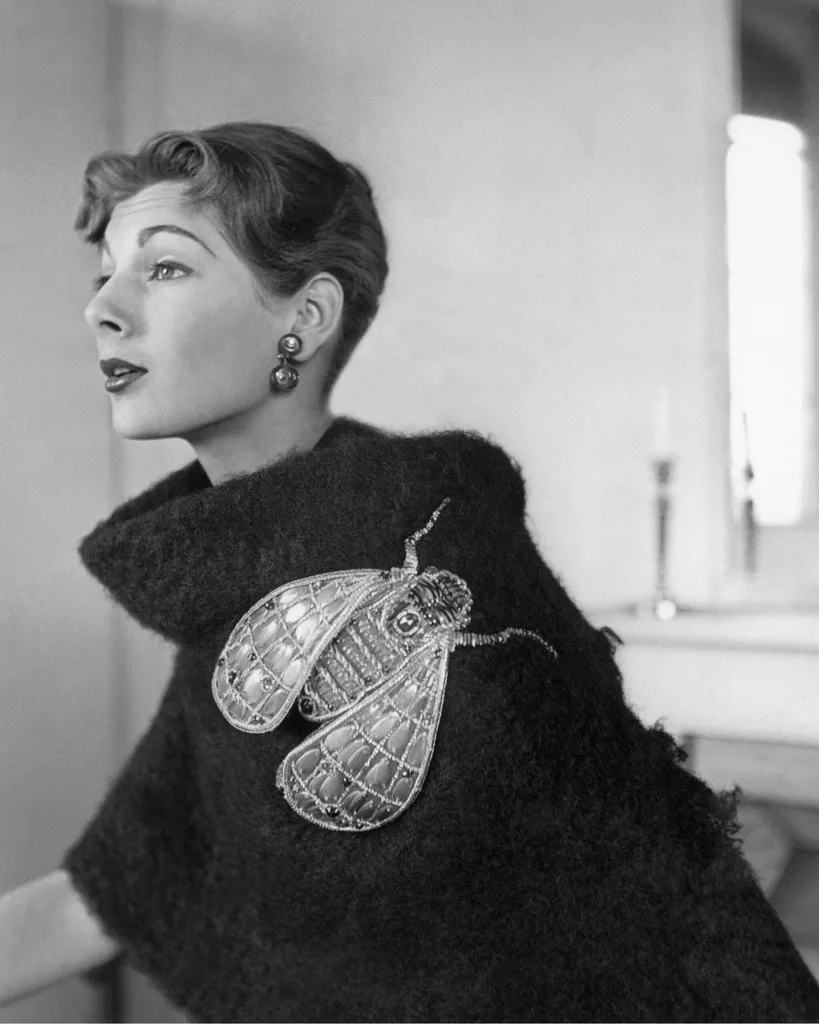
“Today it is necessary to invent this anew, reinterpreting the natural within the shifted context of a digital world. It is not an escape from our realities, but an echo of them.”
It was an enmeshing of the natural and the real worlds; a bit uncanny and over-the-top, yes, but with a clear thread of modernity rather than nostalgia. Heels were twisted into the shape of deer antlers, textured fabrics looked halfway between rough and organic and digitally printed, while faux furs were so lifelike as to be uncanny.
Ghesquière called it a kind of “hyper-craft” – “not imitation, but sublimation of nature, melding technologies with the timeless ingenuity of human artisanship.”
He didn’t exaggerate or manipulate nature, and maybe – in what is an even harder task – avoided portraying it as the beautiful panacea to the damned and tech-obsessed human condition, the pure cure that would elevate us all if only we aligned ourselves back to its rhythms and lessons.
Designers now are doing, in a strange way, something like Schiaparelli did all those decades ago – not showing what nature is, but showing it as a symbol.
Her visions of flowers blooming from heads were shocking and personal, reflecting her own mind-state, her perception of lack, her desire to take from nature.
Today, our own relationships with nature are projected into something fragmented, distorted, often mediated through the digital realm. Seas, snails, cyclamens, frogs, ladybirds and roses are dialled up and blown out to become brighter, bigger, more acidic versions of themselves – and, naturally, more palatable to the digital gaze than ever.

Related stories
Native ad body.
Native ad body.
How To Build A High-Quality Wardrobe Without Spending A Fortune
The CBK Revival Sparked A Renewed Wave Of Off-Duty Style


Native ad body.
All The Real Benefits Of Curating A Capsule Wardrobe