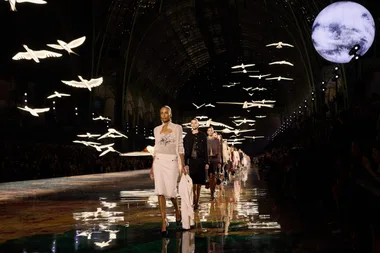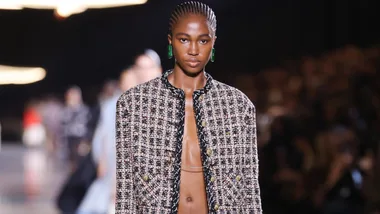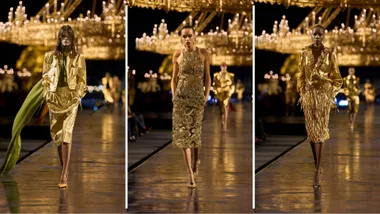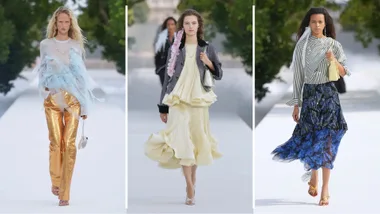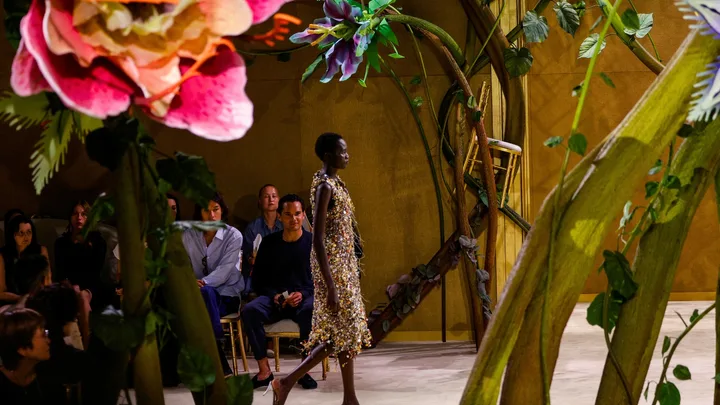
Paris Haute Couture Week has once again returned, with the French capital serving as the stage for fashion’s highest form. Here, craftsmanship is elevated to an art form, technique becomes spectacle and the boundaries between fashion, sculpture and fantasy are continually redrawn.
Alongside the enduring maisons that define the couture calendar, including Schiaparelli, Viktor & Rolf, Robert Wun and Iris Van Herpen, the autumn/winter 2026 season welcomed fresh perspectives from Standing Ground and Indian couturier Manish Malhotra.
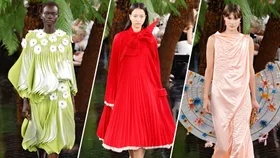
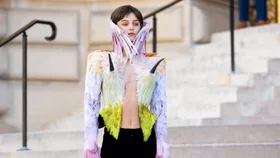
While the absence of Valentino and Maison Margiela leaves a notable gap, the season is no less compelling. Maria Grazia Chiuri is poised to unveil her first haute couture collection for Fendi in Rome after the Paris shows conclude, while Jonathan Anderson at Dior and Matthieu Blazy at Chanel return with their highly anticipated sophomore couture collections.
Below, discover every standout look from the autumn/winter 2026 haute couture season.
Giorgio Armani Privé
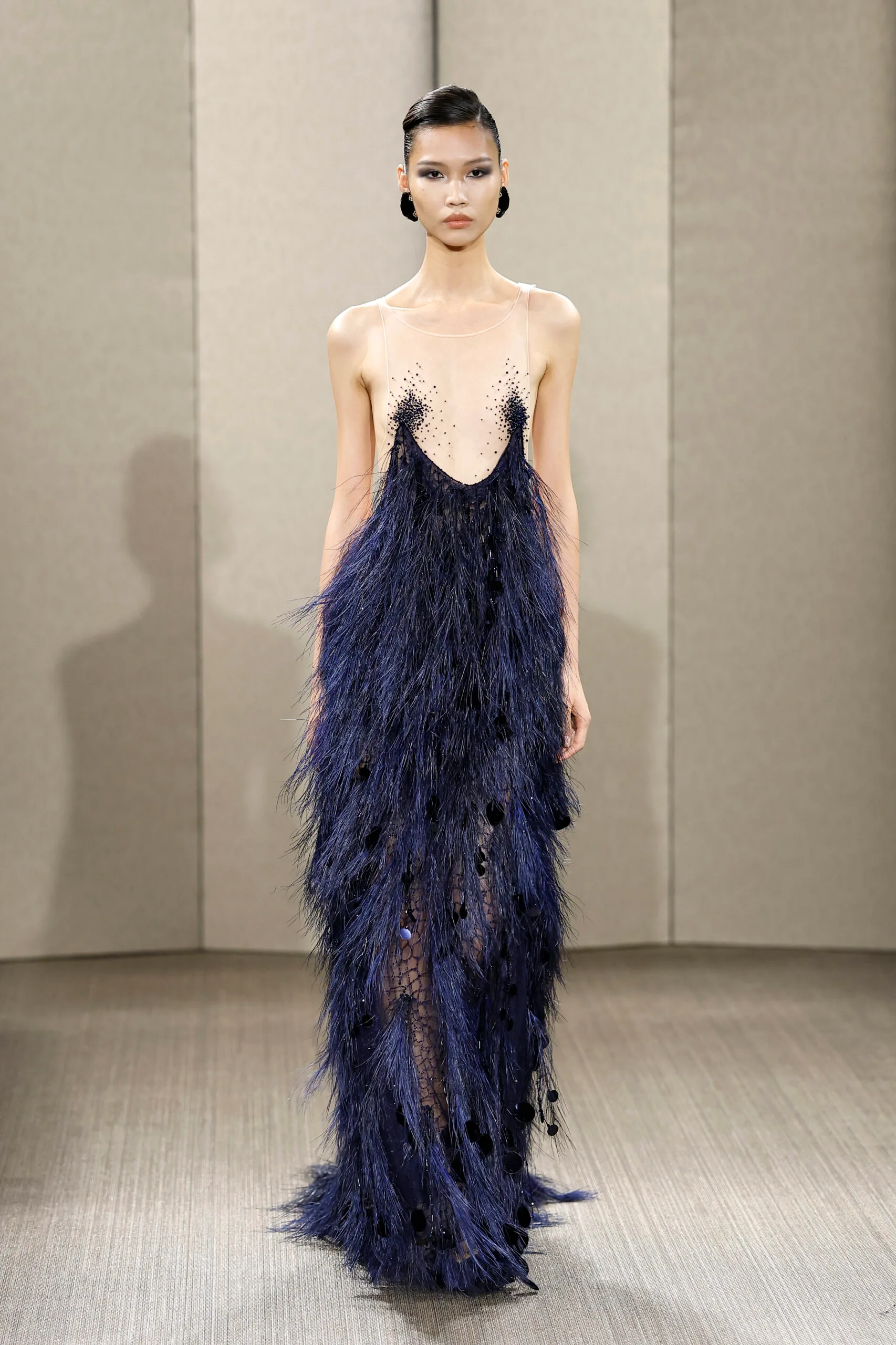
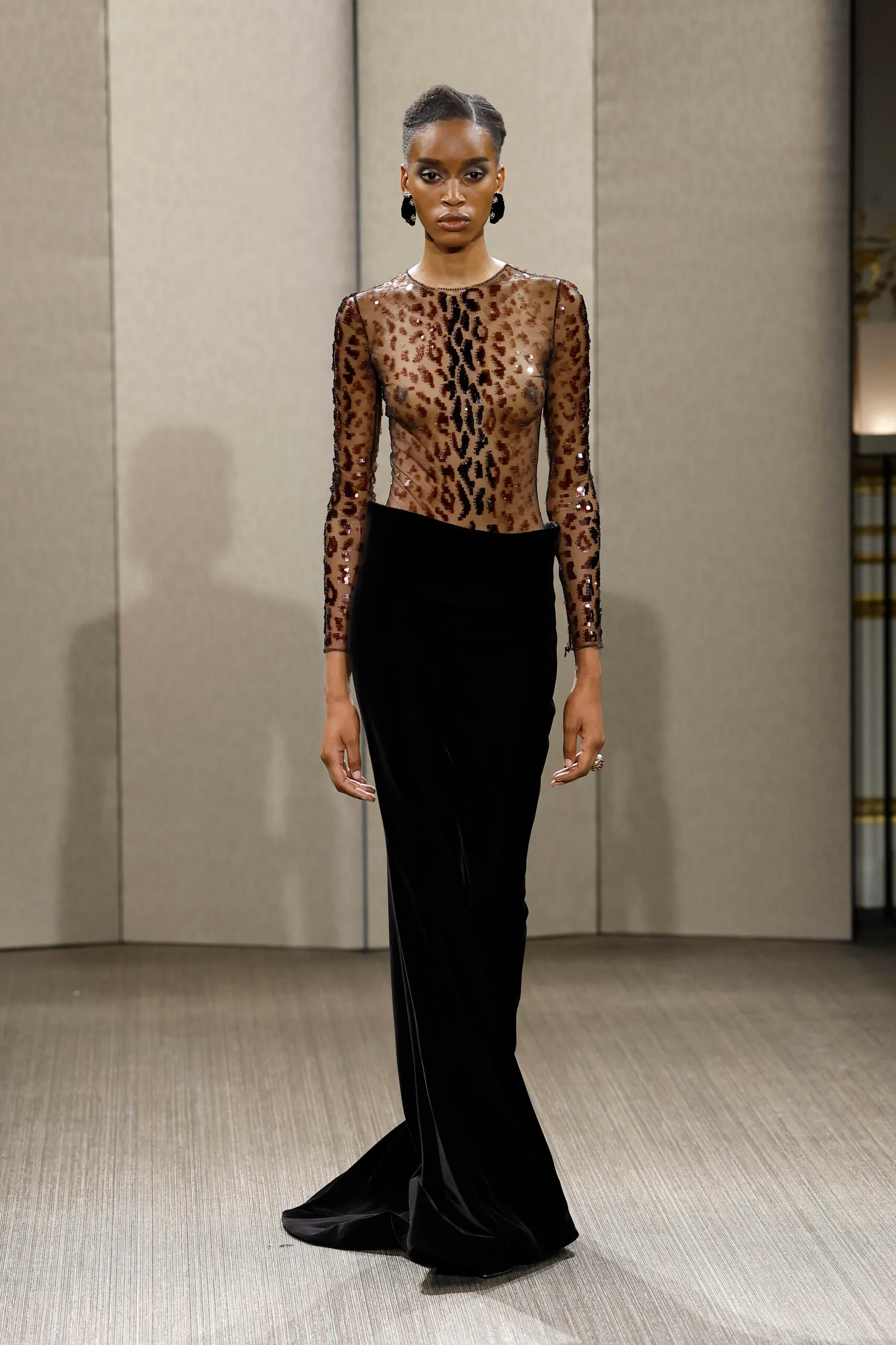
Silvana Armani’s sophomore collection for Armani Privé continued her considered evolution of the house’s couture language, remaining steadfastly loyal to the codes established by Giorgio Armani while gently expanding their possibilities. If her debut was about continuity, this season introduced a more assured perspective, exploring femininity through restraint rather than excess.
Tailoring formed the backbone of the collection. Fluid, high-waisted trousers appeared beneath abbreviated embroidered jackets, elongated coats and bejewelled blazers, extending Armani’s long-standing fascination with masculine dressing into couture territory.
For evening, sculptural gowns provided a quiet frisson of drama. Architectural necklines and fluid silhouettes were rendered in a palette that initially read as muted before revealing rich layers of oxblood, forest green, midnight blue and indigo, illuminated by iridescent embroidery and velvet textures.
Rather than relying on grand gestures, Armani Privé reaffirmed the enduring power of discipline, craftsmanship and understated elegance.
Schiaparelli
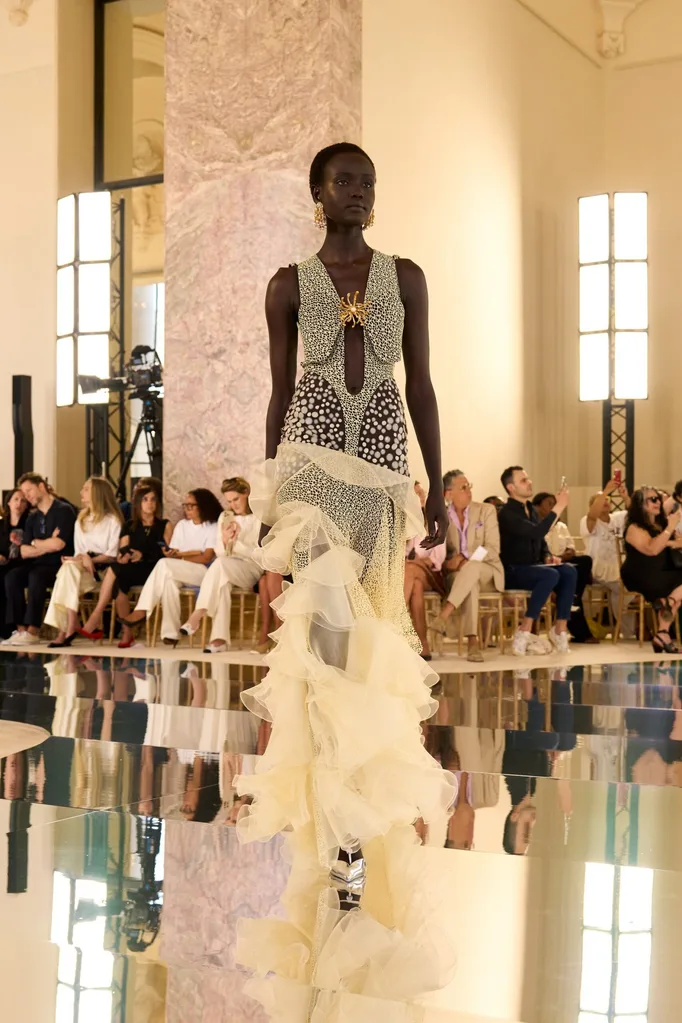
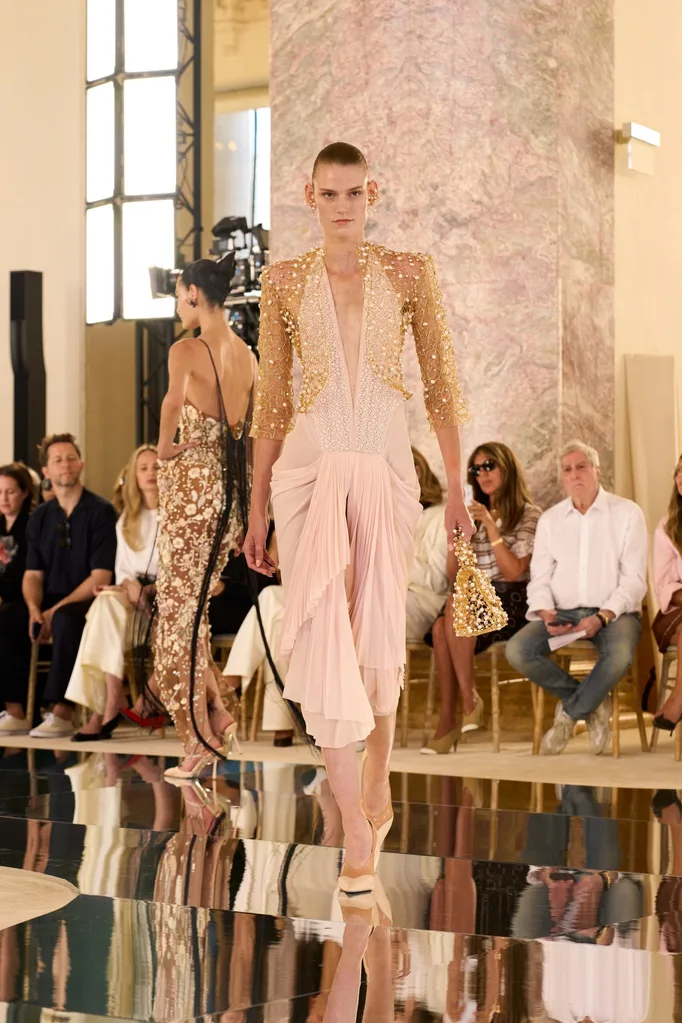
Daniel Roseberry has never shied away from risk, but for Schiaparelli Haute Couture AW26, he found his greatest inspiration in uncertainty itself.
Titled The Call of the Void, the collection emerged from a period of creative paralysis. In his show notes, Roseberry confessed that after the success of last season’s The Agony and the Ecstasy, he attempted to recreate the same process, only to realise that true creativity resists formula. It was only by surrendering to the unknown, he wrote, that the collection revealed itself.
Presented beneath the soaring glass roof of the Petit Palais, Roseberry reimagined haute couture through an unconventional material vocabulary. Silks, satins and wool were replaced with latex, silicone, dried flowers, fish scales and sculpted sheets of baked paint.
In doing so, he embraced one of couture’s great contemporary paradoxes: creating painstakingly handcrafted, made-to-measure garments in an increasingly digital world. The resulting tension between the artificial and the artisanal felt entirely of the moment, with hyper-realistic silicone bustiers and uncanny textures reflecting an era defined by AI-generated imagery, body modification and blurred notions of authenticity.
However, even with all the experimental materials, the collection never felt gimmicky. Instead, it distilled Schiaparelli’s surrealist spirit into something more restrained and refined.
Chanel
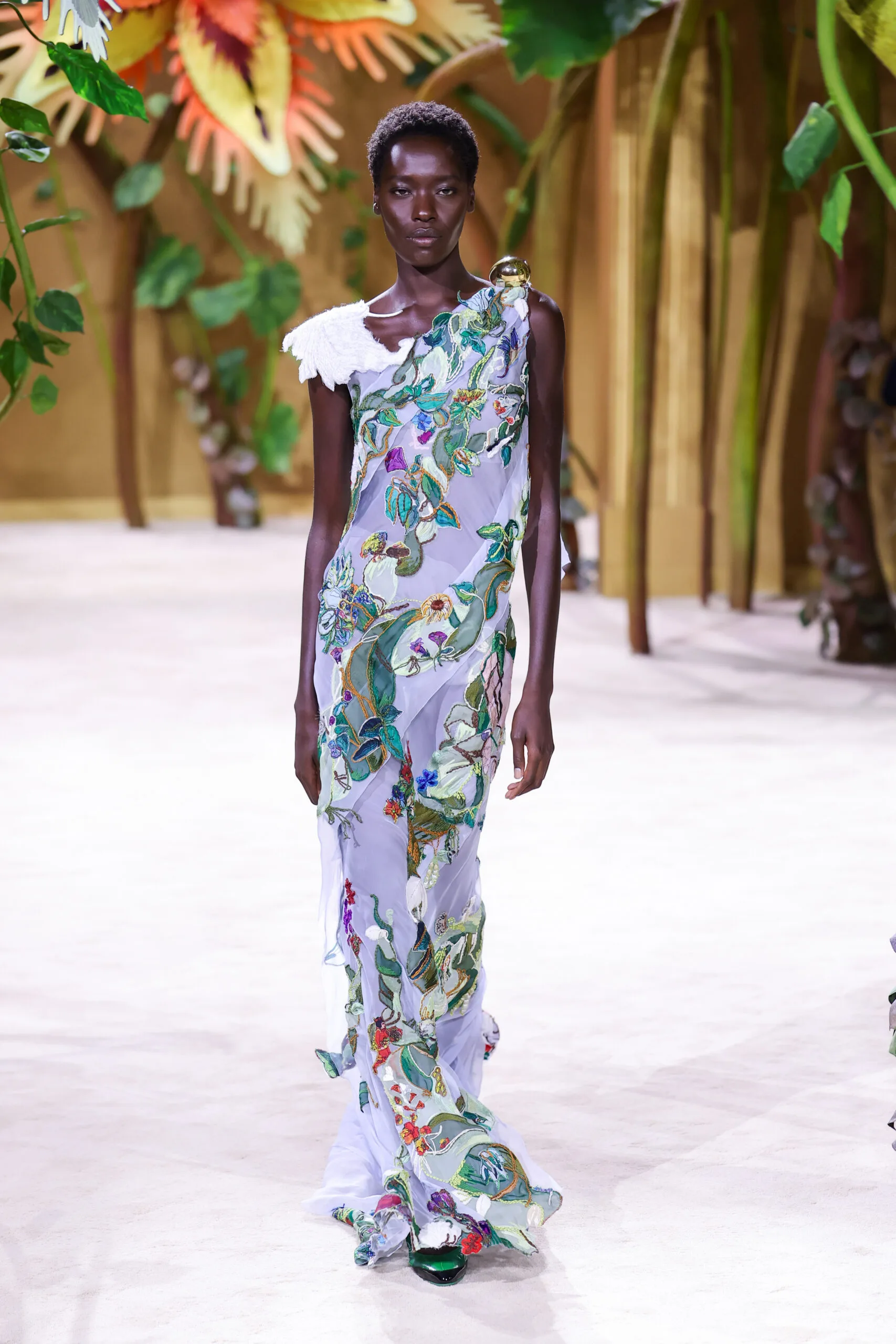
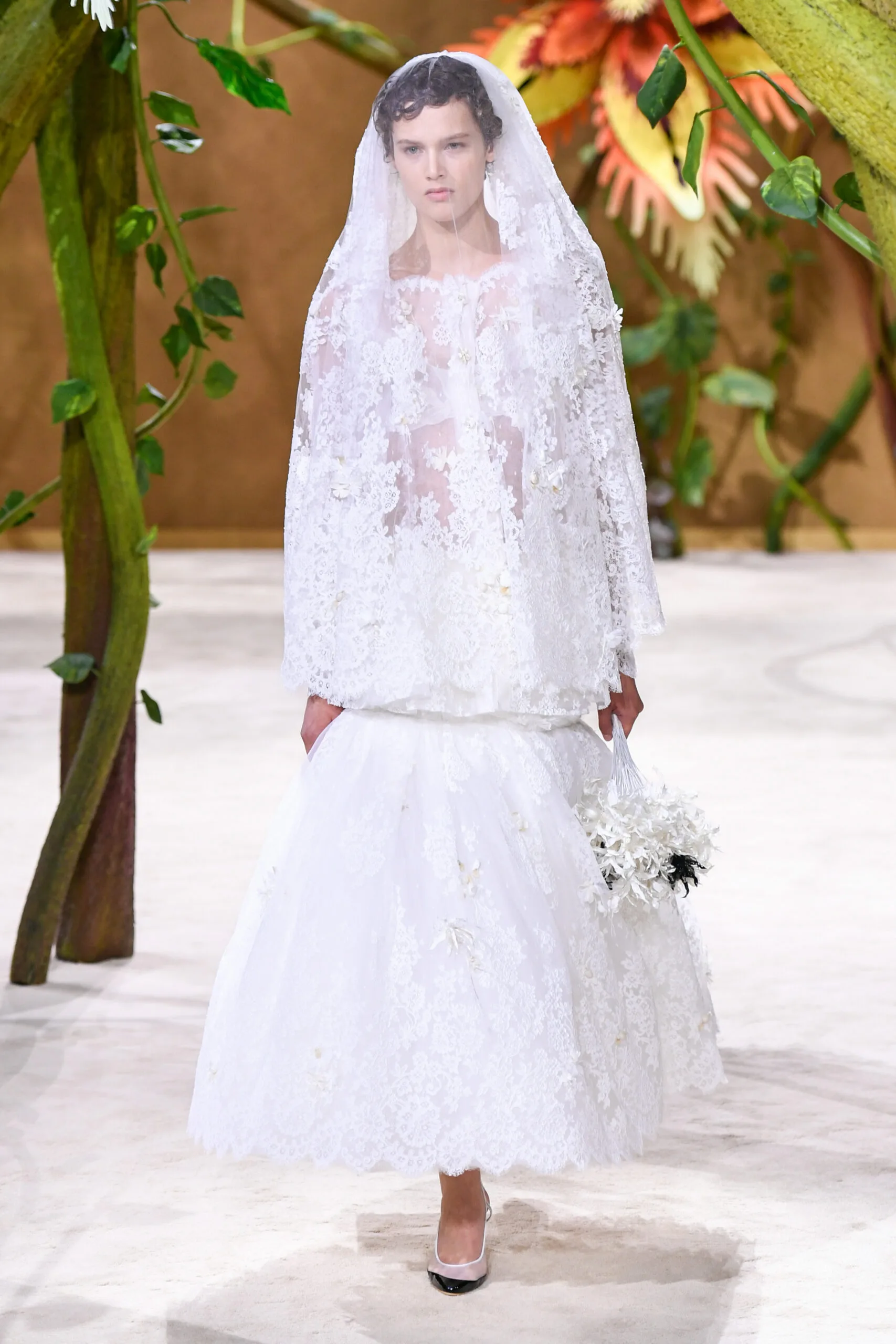
Matthieu Blazy’s second haute couture collection for Chanel ventured deeper into the narrative world he began establishing in his debut, transforming the runway into a modern fairy tale woven through Gabrielle Chanel’s legacy.
Inspired by a book of fairy tales from Chanel’s personal library, the collection imagined couture as a form of storytelling, where every garment concealed its own quiet narrative through exceptional craftsmanship and poetic detail. House signatures, from the tweed suit to intricate embroidery, were reimagined with whimsical flourishes: guipure lace echoed magic beans, vines climbed the heels of shoes, minaudières took the shape of sleeping bears and buttons transformed from ducklings into swans.
The collection was inherently enchanting, but wearability had been considered. Slashed tailoring and fluid silhouettes were designed to be lived in, while painted silk linings, hidden charms and handwritten notes celebrated couture’s deeply personal dialogue between maker and wearer.
Dior
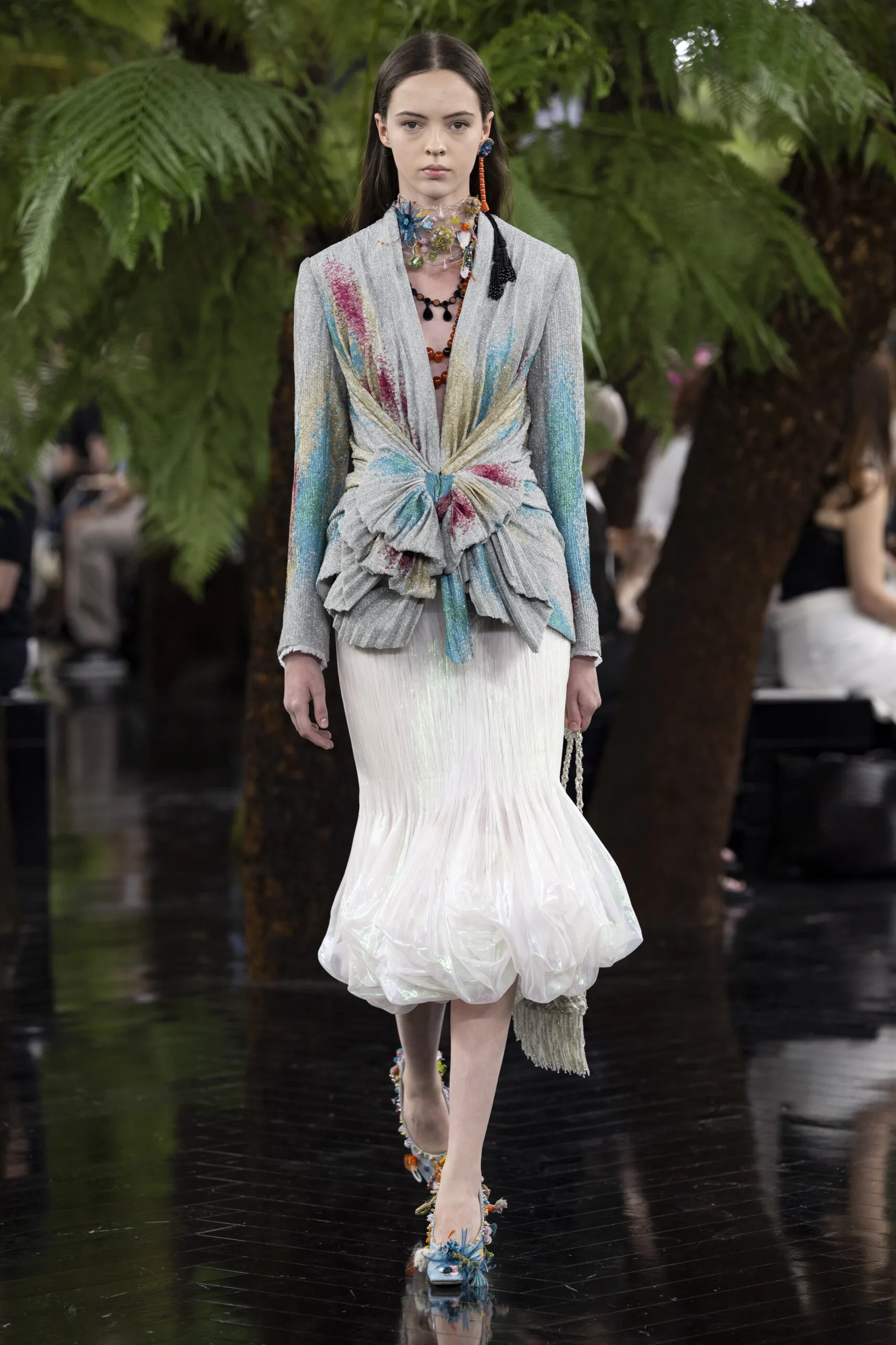
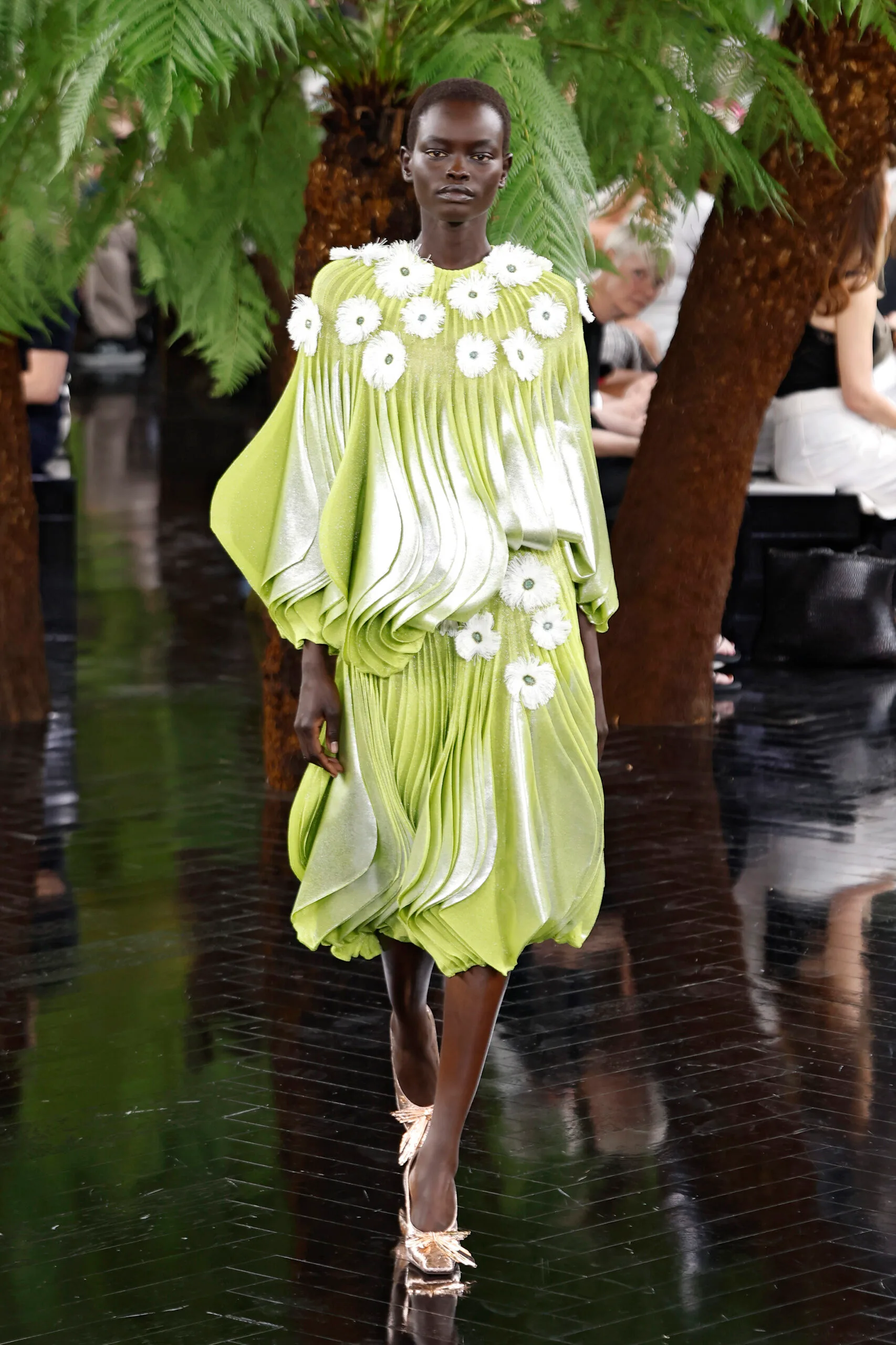
Jonathan Anderson arrived at his sophomore haute couture collection for Dior fresh from one of fashion’s biggest cultural moments. Just days earlier, he had dressed both Taylor Swift and Travis Kelce for their wedding at Maddison Square Garden, a feat that reportedly generated more than USD$15 million in media impact value for the French house over the Fourth of July weekend.
While Anderson described dressing Swift as “a joy,” his attention quickly returned to the artistic references that have long underpinned his work.
This season, the designer looked to the work of American sculptor Lynda Benglis, whose experimental approach to materiality informed the collection. Metallic lamé was folded into sculptural bows, silver netting and chiffon mimicked her wire constructions, while pleated coats and richly textured gowns echoed both Benglis’ fascination with form and Christian Dior’s enduring love of nature.
Throughout, Anderson continued to use couture as a vehicle for artistic exploration.

Related stories
Native ad body.
Native ad body.

Native ad body.