The reel lands in my inbox with a thud. “Do you know how hard you need to abuse a mammal to make them not have children?” asks a long-haired, zillennial Jesus who I later learn is prominent AI safety researcher Connor Leahy, CEO of Conjecture, speaking at the 2025 Nexus Conference, for which the theme was “Apocalypse Now: The Revelation of our Time.”
“I’m 30 years old,” he continues, “and none of my friends have children. Not one.” The reason? Technology. “It’s happening all over the world. People are having less children. Dating apps have sold young people’s dating lives to big corporations,” Leahy concludes.
It’s a point of view shared by almost every single woman I know. “It’s truly an exercise in masochism to keep slogging through coffee dates with men whose idea of a personal question is ‘do you take sugar?’ ” laments one girlfriend, whose most promising online interaction in the past year ended with a previously normal-seeming match lecturing her on chemtrails and the staging of the moon landing.
“I delete the apps every month, re-download them when I’m in my follicular phase and then end up wanting to throw my phone against the wall,” says a former colleague who divorced a few years ago and has been trying to dip her toe back in the dating pool.
“I caught sight of my face in the reflection of my phone screen as I was swiping the other night,” she continues, “I had this look of numb disgust on my face. This can’t be good for me.”
In this era of late-stage capitalism, when it can often seem like the climate crisis and AI are competing on which catastrophe can be first to wipe out humanity, a significant portion of society – those who have had prolonged exposure to dating apps – have apparently decided to quiet-quit on their own.
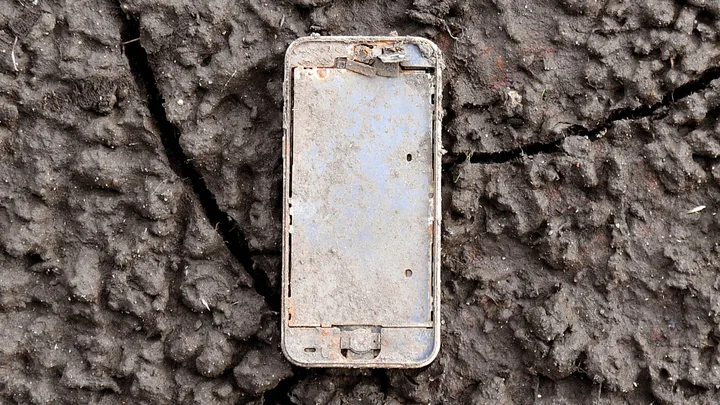
Rather than climate change or an asteroid plummeting towards Earth’s surface, it’s app culture that may turn out to be the great extinction event of our time.
Swift Left
An awareness of the declining global total fertility rate (TFR) – which has halved in the past 70 years – continues to gather steam in the collective consciousness.
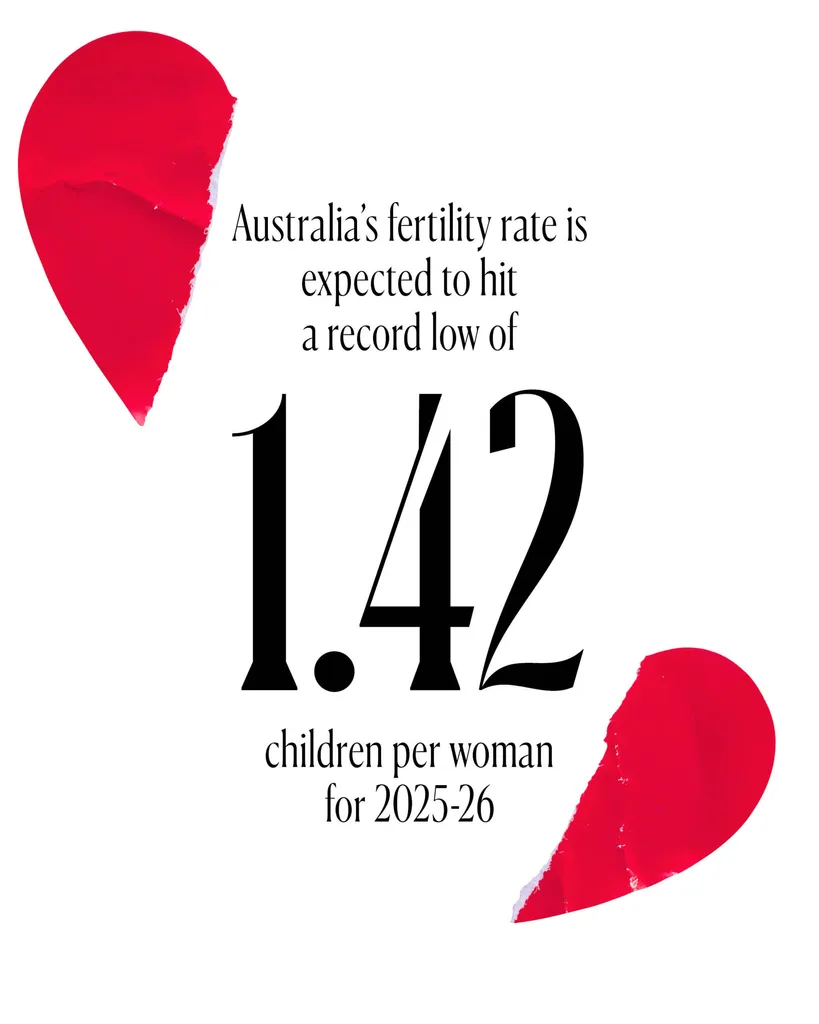
According to the most recent 2026 government data, Australia’s fertility rate is expected to hit a record low of 1.42 children per woman for 2025-26.
This is a sharp decline from the 1.8 to 1.9 range seen just a decade ago, and sits significantly lower than the post-war peaks of more than 3.0. (The “replacement” rate is 2.1.)
“Gen Z is experiencing a sex-recession!” declare the headlines, while the conservatives lament the collapse of the nuclear family and the manosphere whimpers about feminists “discarding” men.
And while this has undoubtedly been a gradual creep fuelled by myriad factors, many of which are beneficial for women (hooray contraception! Hooray divorce! Hooray choice!), it’s a trajectory that is seeing a steeper decline in line with more recent technological innovation.
In South Korea, which has the world’s lowest birthrate (0.72 in 2023, and predicted to fall even further this year), the “4B” movement has been gathering steam for a decade.
The radical feminist movement in which Korean women commit to bihon (no marriage), bichulsan (no childbirth), biyeonae (no dating men) and bisekseu (no sex with men) has exploded online in recent years, breaching the borders of its country of origin in response to the 2024 US election in particular.
Abandonning Ship
Leahy is not alone in his belief that dating apps and panopticon technology have killed our desire to mate. (He also argues that young people don’t dance in nightclubs anymore because ubiquitous smartphone cameras mean they’re always – always – being filmed.)
A 2022 study in the Emerald Handbook of Computer-Mediated Communication and Social Media argued that “choice architecture” in what has essentially become the gamification of romance has led to a total devaluation of dating in general.
Its authors, Dr Olga Solovyeva and Professor Alexander V. Laskin, argue that the endless buffet of options has led to a choice paradox in which overwhelm and what they dub “Tinder burnout” leads to apathy and eventual abandonment of romantic pursuits.
“I am seeing this more and more in my clinical practice,” agrees clinical counsellor and psychotherapist Julie Sweet of Sydney’s Seaway Counselling and Psychotherapy.
“Particularly in young people, there is a certain despondency when it comes to dating via apps, or even dating in general. “Psychologically speaking, it’s unsurprising – we tend to think choice is a good thing, and it is, until it overwhelms us and devalues the human connection,” she says.
“I’m hearing a lot that the sheer number of interactions available to young people through apps somewhat cheapens them as a whole, and many feel they encounter the ‘worst’ side of potential matches, and in turn show theirs.” This might partly explain why young users are abandoning apps in droves.
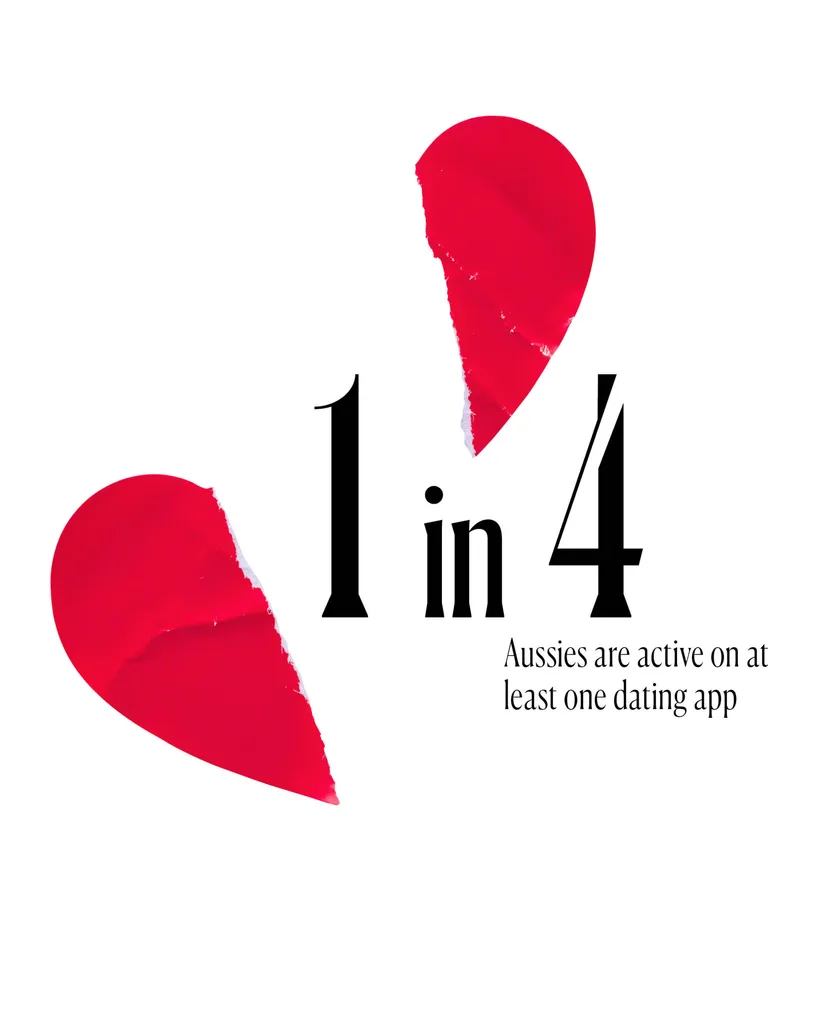
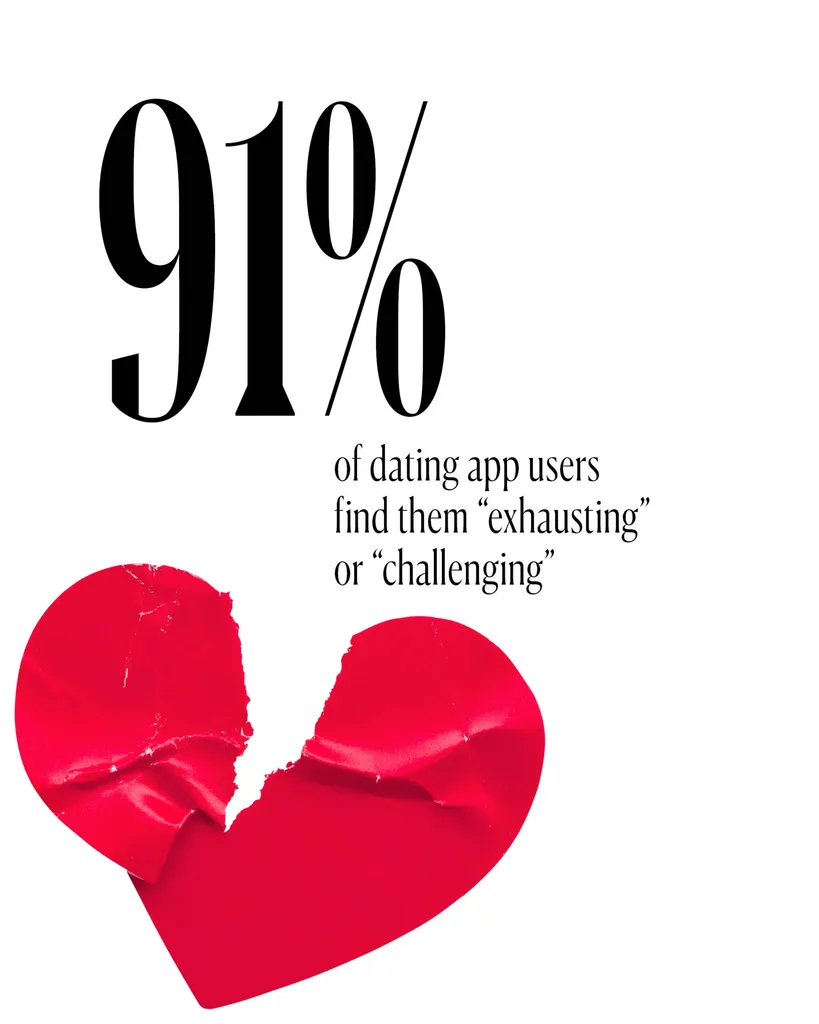
In 2024 in the UK alone, more than half a million users left Tinder, with Bumble and Hinge reporting significant losses too. And while here in Australia we have, paradoxically, record high membership of these apps, with one in four Aussies active on at least one, experts say “zombie” memberships account for much of this, with user satisfaction at an all-time low (91 per cent of users find them “exhausting” or “challenging”). And while this forms part of the picture, there’s a darker theory on why dating apps fail to lead us to happiness: because that was always the point.
The House Always Wins
There is a growing conversation, backed up by an increasing amount of circumstantial evidence, that the reason dating apps always seem to lead either a) nowhere or b) to a match who holds such diametrically opposed political views that they may as well be your Sky News-watching uncle, is this: it’s better for their bottom line.
After all, a dating app that successfully pairs you with the love of your life is a dating app that loses a customer. One that keeps you swiping, dangling enough carrot to keep you coming back for another bite but never enough to lead to a key to his apartment – now that’s a lucrative subscription model.
As Dr Eric Balki writes in his 2025 paper on dating apps and their contribution to male loneliness: “Dating apps are like casinos in a way, in that they have to strategise where the reward needs to be – just enough to keep users coming back for more, but the reward cannot be so high that users walk away and not return.”
A 2023 study from the Tepper School of Business at Carnegie Mellon University noted that not only is there a provable “popularity bias” in dating apps (meaning they recommend highly attractive and popular users over users chosen for compatibility), but also that “unbiased” recommendations (showing you people you might actually match with) result in lower revenue for the platforms.
A landmark 2024 lawsuit in the US brought a class action against Match Group Inc alleging that groups like Tinder and Hinge “are designed to addict users” rather than help them find love.
The lawsuit specifically called out Hinge’s “designed to be deleted” slogan, alleging it staggers incoming “likes” and delays showing mutual interest to maintain a sense of anticipation, encouraging “compulsive use” via its algorithm.
We’ve sent an entire generation forth as the test case for the commodification of our romantic lives. If the data is to be believed, the results of this experiment have been reprehensible enough to convince that generation to give up on love – and mating – entirely.
If ever there’s been an argument to put down the dating app and get outside to touch grass, it’s this one.
You can’t sidestep an asteroid, but maybe you’ll lock eyes with someone at the park and sidestep the app burnout that’s hurtling towards you.

Related stories
Native ad body.

Native ad body.




Native ad body.