
If you want one part of your body to keep working brilliantly as you age, it’s your brain. And yet, for many women, midlife can feel like the exact opposite is happening.
You might notice your memory isn’t as sharp, your focus drifts or you lose your train of thought mid- sentence. Especially as the hormone swings of perimenopause and menopause kick in.
It’s unsettling – I see my patients completely freak out about this phenomenon on a daily basis. Reassuringly, the key markers of brain fog are not permanent, and they’re far more understandable (and manageable) than you might think. But before you ignore the issue completely – stop!
Midlife is a critical window for brain health, and what you do now can have a powerful impact on how well your brain functions for decades to come.
In fact, investing in your brain health in midlife yields the highest dividends of any life stage. That means that ignoring the basics like blood pressure, mental health and lack of sleep at this critical time in our ageing process can be disastrous for our future brain health.
So let’s focus on the stuff between our ears and what can go wrong. And how to prevent and fix it.
What’s this menopausal muddle?
I’ve been very busy lately combining my passions for brain health and menopause. I’ve been supervising my incredible PhD candidate Lina at Sydney University as she researches brain fog.
A client of my menopause-in-the-workplace company, Don’t Sweat It, surveyed thousands of its workers about their menopause symptoms. When Lina analysed this data and her own, she was surprised to find that the biggest burden felt by women going through the menopause transition at work was brain fog – to the point that it made many of them want to quit work.
“Brain fog” is a maddening mix of patchy memory and patchy focus, losing your train of thought mid-sentence, blanking on a familiar name, misplacing your keys (again), re-reading the same email.
It’s incredibly common in perimenopause and often travels with hot flushes, night sweats, poor sleep, low mood and stress.
Those symptoms fuel each other: bad sleep and night sweats raise stress hormones; stress and low mood blunt attention and recall; and the whole thing chips away at confidence, especially at work.
Where brain fog comes from
Oestrogen receptors live in brain areas that handle memory and word-finding (like the prefrontal cortex and hippocampus).
As oestrogen fluctuates and falls, neurotransmitters such as serotonin and dopamine shift as well. Add in sleep disruption from night sweats, menopausal depression and the “busy brain” of midlife pressures and they combine in a perfect storm for temporary lapses in attention and memory.
The key word is “temporary”; for most perimenopausal women, cognition improves as things settle down when they get to menopause.
Many of my patients think this brain fog is the start of dementia. But dementia under the age of 65 is uncommon, and dementia symptoms are progressive and steadily worsen, affecting day-to-day function in a way menopause-related brain fog doesn’t.
How do I cut through the fog?
Honestly, you have to treat the drivers. If your hot flushes or mood are loud, quieting them often clears mental space. Here are some methods.
Try HRT
It can help with symptoms such as hot flushes and mood, so it can indirectly improve brain fog for some. But I’m always careful not to overpromise and underdeliver here. It’s not a guaranteed fix for thinking or memory, and the research is still evolving.
Fix your sleep
Aim for a consistent wind-down, a cool bedroom and alcohol on fewer nights (a cheeky nightcap both fragments sleep and worsens sweats).
Regular aerobic exercise plus strength training improves sleep, mood and attention. Short, regular sessions beat heroic bursts. Tame stress Brief, practical strategies including breathing exercises, reframing thoughts with such methods as cognitive behavioural therapy and mindfulness all seem to reduce the mental noise that crowds working memory.
Use everyday brain supports
Write everything down, use various reminder apps, batch your tasks and use low-tech options such as sticky notes.
Nourish yourself wisely
A Mediterranean-style eating pattern, enough protein and staying socially and mentally engaged all support brain health over time, although the evidence that it helps brain fog in the short term is a bit thin.
Emotional wellbeing in midlife
When I started getting into midlife women’s health, one of the big drivers was the prevalence of poor mental health I was seeing in this group.
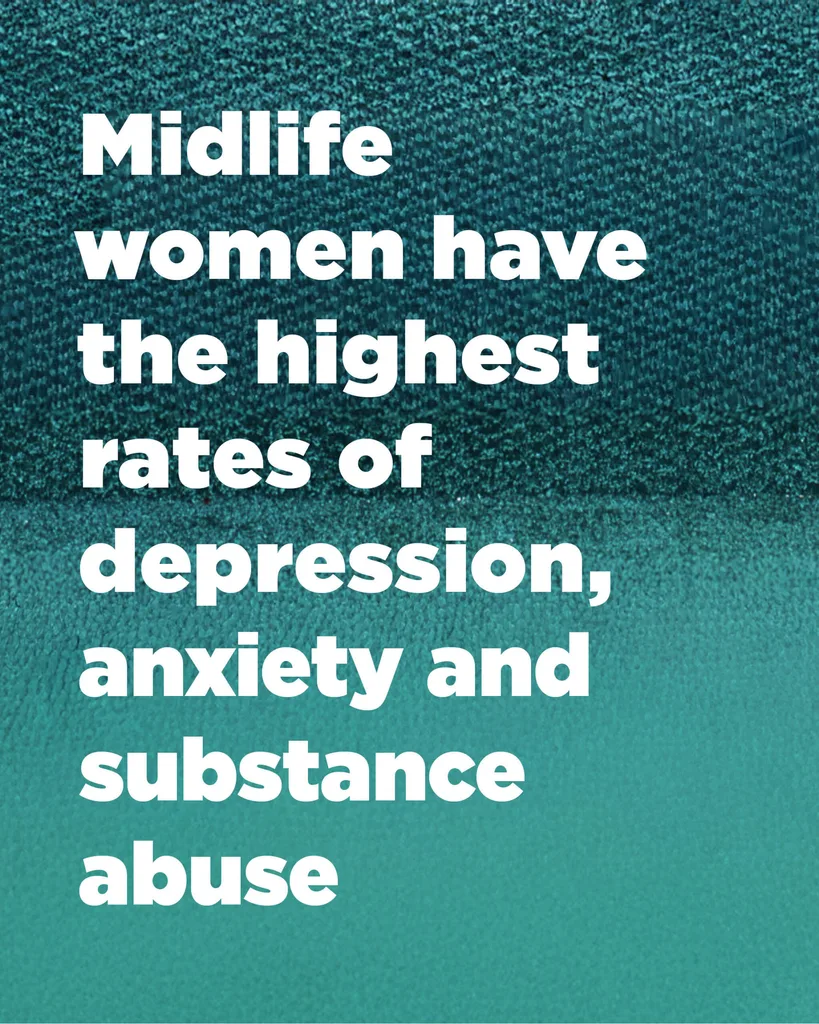
Studies show that this cohort of women have the highest rates of depression, anxiety, PTSD and substance abuse – as well as suicide. For years, people have connected midlife mental health issues with the crazy mix of stuff women go through: stress from jobs, relationships, kids (often teens), caregiving, social circles and ageing in a society obsessed with youth.
These all fuel midlife depression in women, but now hormonal shifts around menopause are being increasingly blamed for this midlife blip.
As you can imagine, this topic needs its own book, so excuse the brevity here. I’m going to give you the basics about the causes and management of the most common mentalhealth conditions.
I’ve written much more on this in both Save Your Brain and The M Word. It’s not just depression. Stress typically means ongoing or repeated exposure to distressing events – such as abuse, neglect, loss or financial problems – that overactivate the body’s stress response.
Studies have found that stress physically alters the brain’s wiring, especially in regions involved in memory and emotion such as the hippocampus and thalamus. And people with high stress levels show poorer executive function and are more likely to have mental health problems like depression or anxiety.
Anxiety disorders themselves – which are defined as severe, frequent, recurring and persistent anxiety symptoms – have also been linked to similar structural brain issues and a higher risk of subsequently developing dementia.
When to see a doctor
If your thinking problems are rapidly worsening – you’re getting lost in familiar places, struggling with everyday tasks you used to manage easily, or are worried because of a strong family history of dementia – see your GP.
They will probably check for other possible contributors to cognitive problems (thyroid issues, iron or B12 deficiency) and maybe screen you for depression or anxiety.
Staying alert and mentally healthy
Here are my tips for maintaining your mental health in this new midlife phase.
Exercise
A 2024 meta-analysis of 218 studies involving 14,000 people found that exercise is an effective treatment for depression.
Different studies showed different degrees of benefit, but the authors did note that exercising was better than antidepressants for mild to moderate depression.
The authors also concluded that walking or jogging, yoga and strength training were more effective than other types of exercise. And just an hour a week of exercise can help prevent depression as well.
Connect with nature
The protective effects of being in nature were kind of a hunch until we got more studies formally studying the benefits. Being out in nature does help both prevent and treat depression.
Practise self-compassion
I often see anxiety and depression impact the kindest, most generous women. They’re incredible friends and family members to those in need – and horrible to themselves. Recently, the evidence became really clear about how good self-compassion is for mental health.
Self-compassion means treating yourself with the same kindness, understanding and support you’d offer to a good friend when they’re going through a tough time. Instead of beating yourself up for mistakes or flaws, self-compassion invites you to respond to your struggles with warmth and care. It’s about acknowledging that life is hard sometimes and that you deserve kindness, especially when you’re feeling low.
Psychologist Dr Kristin Neff, one of the leading researchers in this space, breaks self-compassion into three key elements:
1 Self-kindness – being gentle with yourself instead of harshly critical.
2 Common humanity – recognising that everyone struggles and that you’re not alone.
3 Mindfulness – noticing your pain without exaggerating it or ignoring it. This works. I can’t think of anyone who wouldn’t benefit from following Kristin Neff’s YouTube channel.
Fix up your diet
In a 2023 systematic review of the other systematic reviews, there was consistent evidence that having a healthy diet – with lots of fruits, vegetables and whole grains – is linked to a lower risk of depression. And inflammatory diets high in processed foods, junk food and high meat intake are linked to a higher risk of depression.
One of the things I see in my practice is women completely overwhelmed by life – and often their menopause symptoms. They know about meal prepping. They know that fruit is good and a cheeseburger from Macca’s is bad. But they are so beaten up by life that they feel powerless to change their diet.
You have to apply your self-compassion here and take small steps. Every cucumber you eat is a win. Every chocolate bar you don’t eat is a win. One step at a time.
Get some sleep
There’s a strong association between sleep problems and depression: 97 per cent of people with depression report some major sleep issue. But evidence is emerging that just by treating insomnia (with counselling, not pills) you can really prevent depression and relapses of depression. So, let’s call this a win!
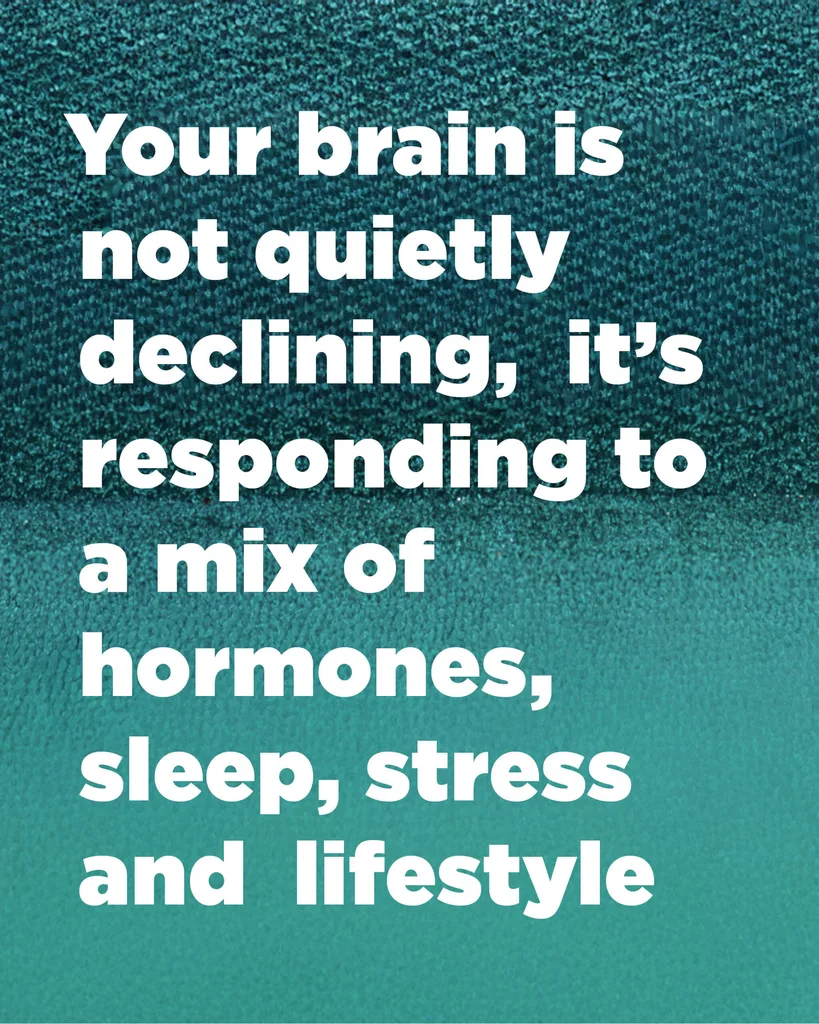
For the vast majority of women, your brain is not quietly declining. Rather, it’s responding to a complex mix of hormones, sleep, stress and lifestyle.
The more you understand those drivers, the more control you have. Small, consistent changes (however boring!) really do add up. Staying sharp as you age is really about giving your brain the support it needs – at every age, but especially in midlife – for it to keep showing up for you well into the future.
The Women’s Longevity Handbook by Dr Ginni Mansberg (Murdoch Books, $36.99) is out July 7.

Related stories

Native ad body.

Native ad body.




Native ad body.