Dating hasn’t disappeared, but it does feel strangely low-stakes right now.
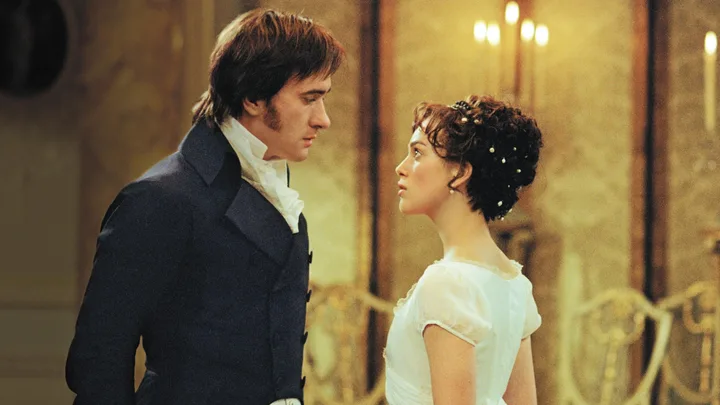
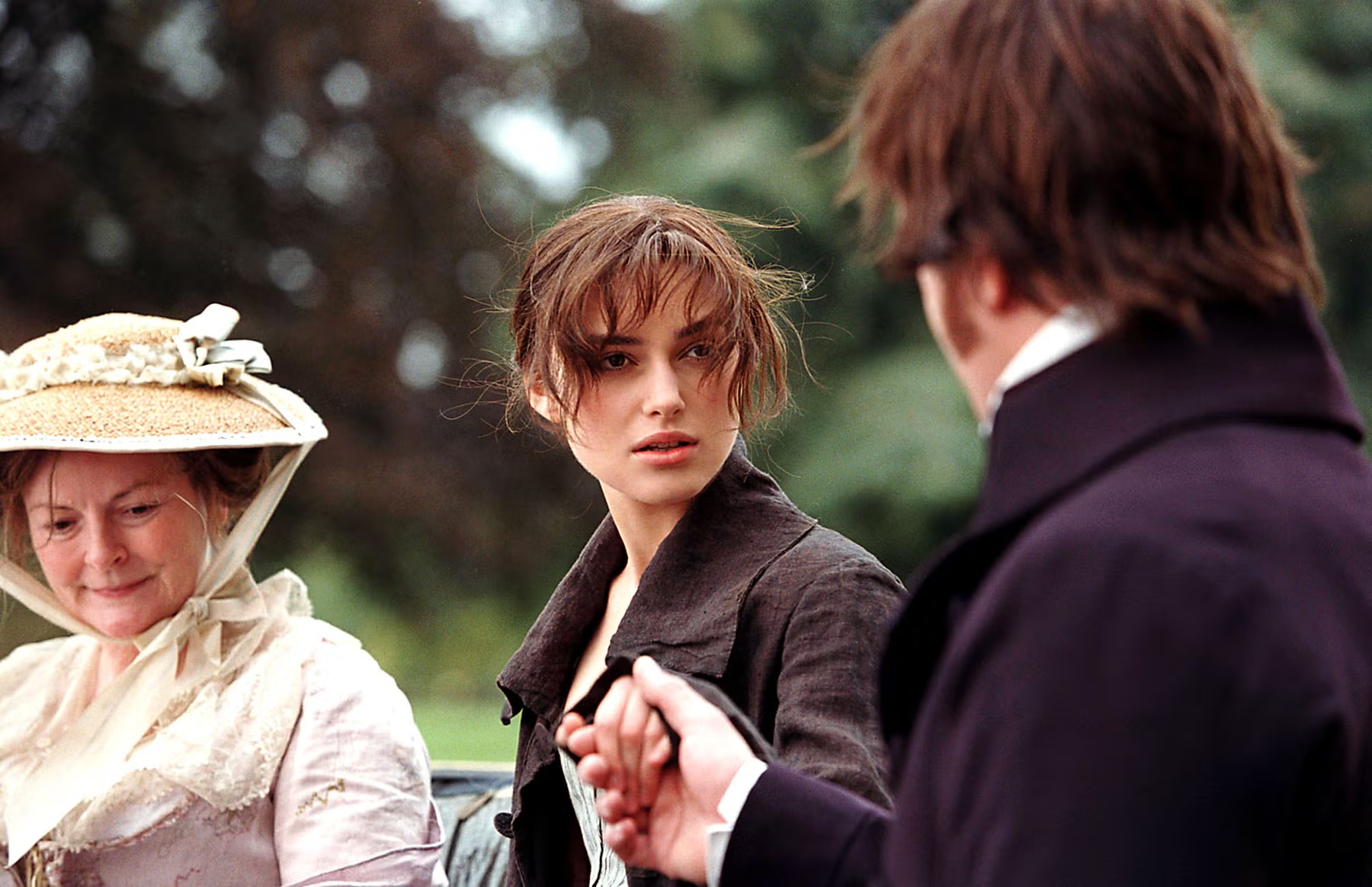
For context, I am extremely single and largely unbothered by it, save for the occasional bout of cinematic yearning induced by Matthew Macfadyen in Pride & Prejudice. If romantic detachment exists on a spectrum, I sit comfortably toward the less-invested end, with only intermittent lapses into delusion.

I also live in Sydney, which has a reputation for being uniquely bleak for dating, although every city seems to claim that distinction with a certain insistence.
Still, between the headlines, hot Substack takes, and the generalised malaise circulating both online and within my own friendship group, it does feel as though something has shifted. Dating hasn’t ended, of course, but it has lost something. Not effort, but intensity. The stakes, the kind of charge and excitement that makes you actually want to go out with someone.
Was there not a time when romance required patience? Not the performative restraint of waiting three hours to reply, but an actual delay, the kind that leaves you suspended in anticipation. A glance across a room. A number exchanged. Heck, even something as minor as holding a door open. Small gestures, imbued with an outsized sense of meaning. The sense that something might unfold, however slowly.
Now, there is no waiting. Only availability.
We can reach anyone at any time, scroll through an entire catalogue of potential suitors before breakfast, and yet, for many young people, dating has stalled. Fewer dates, less connection. A kind of emotional flatness or low-grade boredom. It has been called a relationship recession, which may sound melodramatic, but it’s not entirely inaccurate.
The Real Relationships Report 2025, which surveyed over 1,200 Australians, found that 51% believe dating is harder than it used to be, rising to 57% among women. Nearly half have experienced a “situationship”, a relationship defined more by ambiguity than commitment.
Social media has also accelerated the conversation. Feminist discourse now circulates via TikTok and X (formerly Twitter) at a speed that borders on absurd. We debate the “ick”, oscillate between irony and sincerity when it comes to bimbo-ism, ridicule trad-wifery, and, occasionally, choose a bear over a man in the woods. It is chaotic, contradictory, and strangely generative.
And yet, when it comes to the phenomenon of the ‘yearning man’, there is a curious consensus. No one really interrogates it. To do so would be to position oneself as emotionally austere, a kind of romance sceptic, and most people, despite everything, aren’t.
Because the truth is, a lot of us want a yearning man, and yet the yearner has become increasingly less visible. Not extinct, but much harder to locate. Because yearning, by definition, requires distance. It requires the possibility of not having. And in a culture organised around immediate access, that condition is increasingly rare. Why yearn when you can refresh?
Apps have only intensified this. What was once framed as a tool for connection now resembles something closer to a human marketplace. Choice is abundant, but attention is fractured. People become interchangeable, flattened into a series of images and prompts. It’s difficult to inspire longing when you are one of many tabs open.
We have, in parallel, developed an entire lexicon designed to circumvent vulnerability. Ghosting. Breadcrumbing. Orbiting. Each term a small act of linguistic innovation in service of emotional avoidance. Where relationships once required confrontation, they now drift into silence.
Layer onto this a broader cultural unease. Economic precarity, political fragmentation, a general sense that the future is, at best, ambiguous. None of this is particularly conducive to romantic risk-taking. Dating, for me at least, has begun to feel less like possibility and more like hard labour.
There is also a structural shift. For much of history, partnership was not purely romantic. It was economic, social, practical. Now, particularly for women, that calculus has changed. Financial independence and social autonomy have raised the threshold for what constitutes a worthwhile relationship. The result is, on balance, positive. Fewer people feel compelled to remain in situations that are unfulfilling or unsafe.
But it does mean that the bar is higher. And increasingly, fewer people are clearing it.
A few years ago, I found myself dating a man, we’ll call him Jeremy.
He had all the makings of what the internet might describe, generously, as “a man written by a woman”. Softly spoken, slightly dishevelled, a curated earnestness that suggested sensitivity.
At 21, it felt very convincing. Even aspirational. Jeremy was older, self-employed, vaguely competent in a way that reads as stability when you are young and newly untethered in a city like Sydney. He could fly me to Europe, for God’s sake. There were declarations too, sweeping and insistent, convincing enough to almost pass as sincerity.
And yet, beneath it all, something felt off. Not quite desperation, but adjacent. Like he was entering his mid-30s and couldn’t understand why he was still partner-less (I now have a few ideas).
At one-point, mid-anxiety spiral on my end, I discovered he had been messaging his ex, lamenting their timing. Not uncommon, not even particularly shocking, but clarifying. His version of love was declarative, not demonstrative. Grand in language, inconsistent in practice.
What struck me was not the betrayal but the assumption. That his choosing me, his affection, his intention and intensity should function as a kind of cure-all. As if being loved, in theory, was enough to offset being misunderstood, or worse, unseen.
It wasn’t.
And that, perhaps, is the fracture point. The gap between what is offered and what is actually required.
If this is a recession, it isn’t defined by absence, but by mismatch. Women, with more independence than ever, are less willing to tolerate relationships that fall short. Many men, increasingly unsure of what is expected of them, or how to meet it, retreat into safer, more superficial forms of connection.
And yet, before we sound the alarm, it doesn’t quite warrant being called a crisis.
If anything, it feels like a recalibration. The desire for connection hasn’t disappeared. It has become more selective, less tolerant of ambiguity and more attuned to emotional inconsistency. More willing to wait for something that feels, however loosely, right.
For women in particular, singlehood is not always experienced as a loss. Increasingly, it is framed as a viable, even desirable, alternative. The idea that partnership is the ultimate marker of fulfilment is rightly being reconsidered. I suspect that if a future version of myself appeared, in some vaguely celestial form, and assured me that a life filled with friendship, autonomy and a well-decorated apartment was more than enough to make me happy, I would wholeheartedly believe her.
Still, there is something undeniably strange about a moment in which so many people want love, and yet so few seem to encounter it in a way that feels meaningful.
A relationship recession, then, may not be a deficit of feeling, but of faith. Not necessarily in each other, but in the systems we’ve built to meet, connect, and remain.
Until those systems evolve, many of us will remain just outside them. Not cynical or closed off. Just suspended somewhere between detachment and desire, still hoping, despite ourselves, that it might work.

Related stories
Native ad body.
Native ad body.


Native ad body.