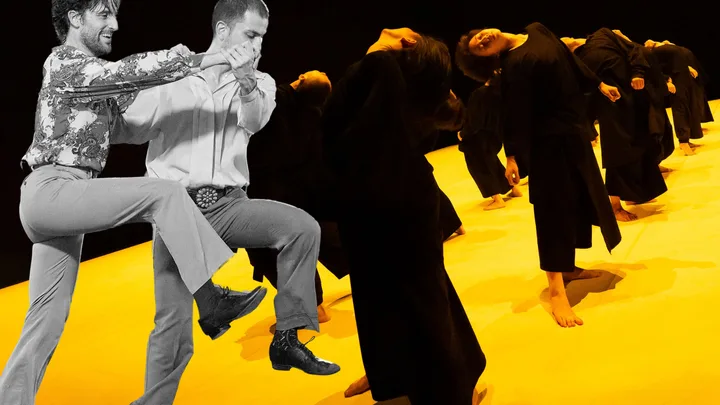
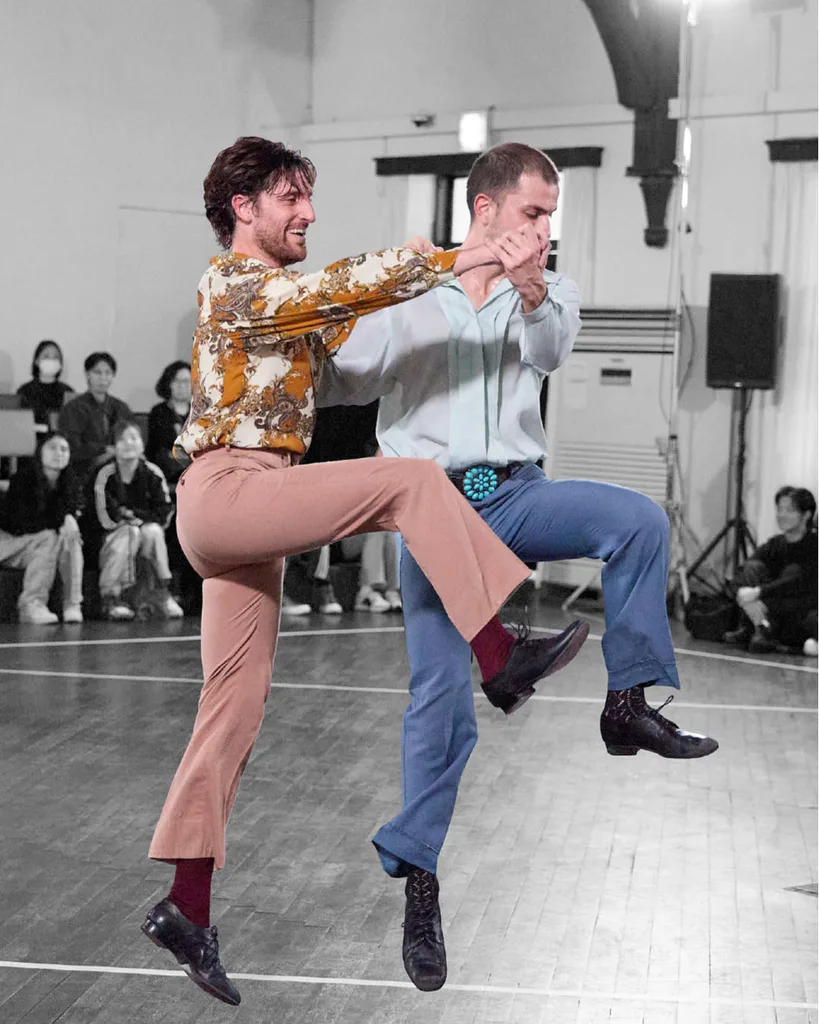
Imagine 1900 Bologna, Italy. In the town square, two young men join hands and walk into the centre of the circle that is forming around them. They turn to face each other, place a hand on the other’s waist, and wait in silent closed position.
Somewhere behind the gathered crowd, a guitar is plucked, an accordion bends, and the music begins. The men start what looks like a ballroom dance, their footsteps so swift and intertwined it’s a wonder they don’t trip each other over.
They move in circles within the larger circle, like a human spirograph. At once, they begin to crouch, knees interlocked and spinning faster and faster, propelled by the force of their partner; centripetal motion.
Slowly they rise: one raises an arm for the other to spin under, then they switch. And so the dance begins again. This is a courtship dance, but these men aren’t courting each other. They’re showing off.
In the early 1900s, young men were not allowed to dance with unmarried women, and so the polka chinata, as it’s called, was an opportunity for them to showcase feats of strength – and hopefully impress the young townsgirl they’d had their eye on.
By the time Alessandro Sciarroni, an artist and curator, heard about the polka chinata in 2017, only five people in Bologna remembered the dance. Once men and women were able to dance with one another, the polka chinata became redundant, remembered only by those who’d had it passed down to them from previous generations.
And then came Sciarroni, and Van Cleef & Arpels, who joined forces to revive the polka chinata for Dance Reflections by Van Cleef & Arpels dance festival. Gutter credit. Dance Reflections by Van Cleef & Arpels dance festival is held twice a year in a different city across the globe.
It launched in 2020 and has been held in New York, Hong Kong, Los Angeles and Kyoto. For three weeks, venues in the chosen city host a variety of international works, new pieces as well as those that honour the history of contemporary dance. This year saw London and Seoul as hosts, the latter in collaboration with Seoul Performing Arts Festival (SPAF), which has been a beneficiary of VCA for the past few years.
“Dance has been a major source of inspiration for Van Cleef & Arpels, and so Dance Reflections was created to support and to give back to this wonderful art form,” says Serge Laurent, VCA’s director of dance and culture programs. “Our intention was to continue writing a beautiful story that started more than a century ago, between a maison of high jewellery and the field of dance.”
Think of the maison’s iconic Ballerina clips, which were first released in 1941 and continue to be made today, as well as less obviously dance-centric pieces, such as transformable necklace-earring sets or watches that have petals that open and close at random or a pair of lovers who kiss at midnight.
“In [VCA] pieces, there’s always movement, which is kind of strange for static objects, especially jewellery,” Laurent says, full of admiration for the maison’s artisans. “[Their] connection to dance is very obvious.”
Along with its twice-yearly festival, the Dance Reflections initiative is also committed to supporting artists, companies and dance institutions across the world. The network currently includes 70 institutions in 17 countries, including The Australian Ballet’s DanceX in Melbourne, which opened a week before Dance Reflections kicked off in Seoul, and the Sydney Festival in January, where it will support two performances.
“Sponsorship is not a strong tradition in the performing arts. Many corporations invest in visual arts … at the core there’s a [tangible] collection,” Laurent says. “But with the performing arts, it has to be pure philanthropy, because after the show there’s nothing left.
So Dance Reflections is a sponsorship program that supports artists to create new works and supports institutions to present the works, but it’s also a way to contribute to the cultural dynamism of the local communities we are connected with.
The sponsorship is continuous, and the festival is a celebration.” It’s also a means of archiving dance for the future. Laurent calls that an act of “transmission”. Throughout history, the only way to preserve a dance has been to teach it to future generations.
Just like the techniques of a high jewellery maison, “you can only maintain them if you transmit them from one generation to the next”, he says. “Think about how today we can still see classical ballets. I wanted Dance Reflections to support creation, but also the recreation of existing works.”
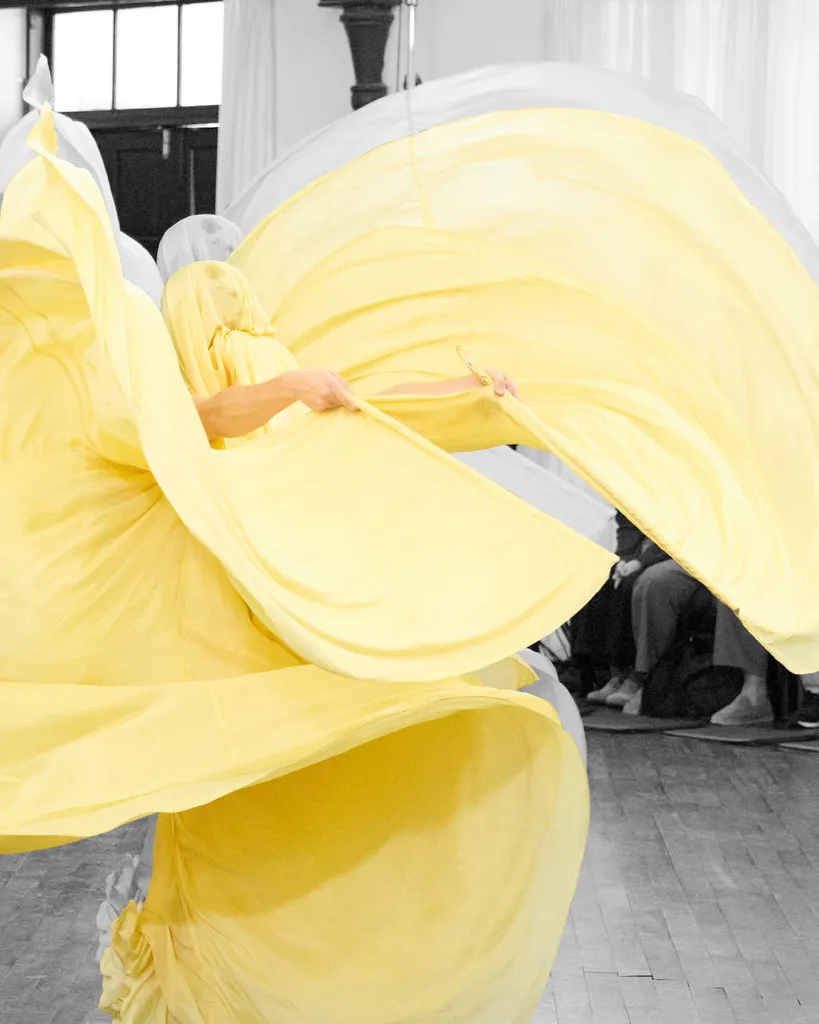
The Polish choreographer Ola Maciejewska is a perfect case in point: her piece literally has “research” on the tin. Loïe Fuller: Research is a 13-year study of the American dancer Loïe Fuller’s Serpentine dances from the late 1800s. With only a circle of silk draped over shoulders (holding bamboo wands that had been stitched to the underside), Fuller swished and swirled, giving the effect of being engulfed by flames or ocean waves.
Last year, Fuller was the subject of a documentary, Obsessed With Light, that makes the case that neither artistic copyright (she confronted many imitators of her Serpentine dances), body positivity or even modern dance would exist without the boundary-breaking Fuller. Even Taylor Swift paid homage, with Serpentine dance recreations on her 2018 Reputation Stadium Tour.
For her study of the Serpentine dance, Maciejewska choreographed Fuller’s movements on Jean Lesca (who performs in very contemporary Asics sneakers). Choosing a male dancer for a piece originally created by a queer woman was less about gender and more about working with someone with whom Maciejewska could have “a dialogue about deconstructing this historical reference”, she says. “That’s something that’s very important in this collaboration.”
Set to a soundtrack of total silence, punctuated only by a stray cough in the audience, Loïe Fuller: Research is a testament to the power of experimental dance: it appears improvised but, as Maciejewska emphasises, the movement is precise and particular.
“This is a focused work that evolves while it’s being performed,” she explains. Sciarroni is another artist who revived an old work for Dance Reflections. His polka chinata is f ittingly titled Save the Last Dance for Me, a nod to the courtship ritual and that it was nearly extinct. “This courtship dance is very strange … I had never seen two men touching each other and dancing like that, and … you also really carry the other person,” Sciarroni says. “You take them and you go down with them, so it’s really a matter of trust.”
Sciarroni collaborated with Giancarlo Stagni, a dance teacher who’d been caretaker of the dance. With Stagni’s permission, the first thing Sciarroni did was change the music. “When I work on a folk dance, I try to respect the shape of the dance. [It’s] not because I don’t like folk music, but because if you remove that aspect, it’s like removing the landscape behind the human beings and you’re able to see something else,” Sciarroni says.
Now, with video and the internet, it’s easier than ever to keep a dance alive indefinitely. Though dance is not merely meant to be watched, it still needs people to move through it. For this reason, Dance Reflections dance festival also contains dance workshops and masterclasses by choreographers and performers.
“These workshops are open to everyone to promote education and raise public awareness of the choreographic arts through practice,” says Laurent. “An anthropologist in Bologna told me that the only way a dance can go into extinction is when no-one remembers it anymore,” Sciarroni says. “If you think about it, [only a few] years ago there were only five people dancing this dance. Now we have many more, and thanks to the workshop there are going to be people in Korea who will remember forever the polka chinata.” Dance Reflections is also about creating something that feels entirely new.
“I want to push dancers who are researchers, who are inventing, who are finding their own voice because it’s because of these artists that dance is in motion, still evolving,” Laurent says. “In any era, there is always an artist pushing the boundaries.”
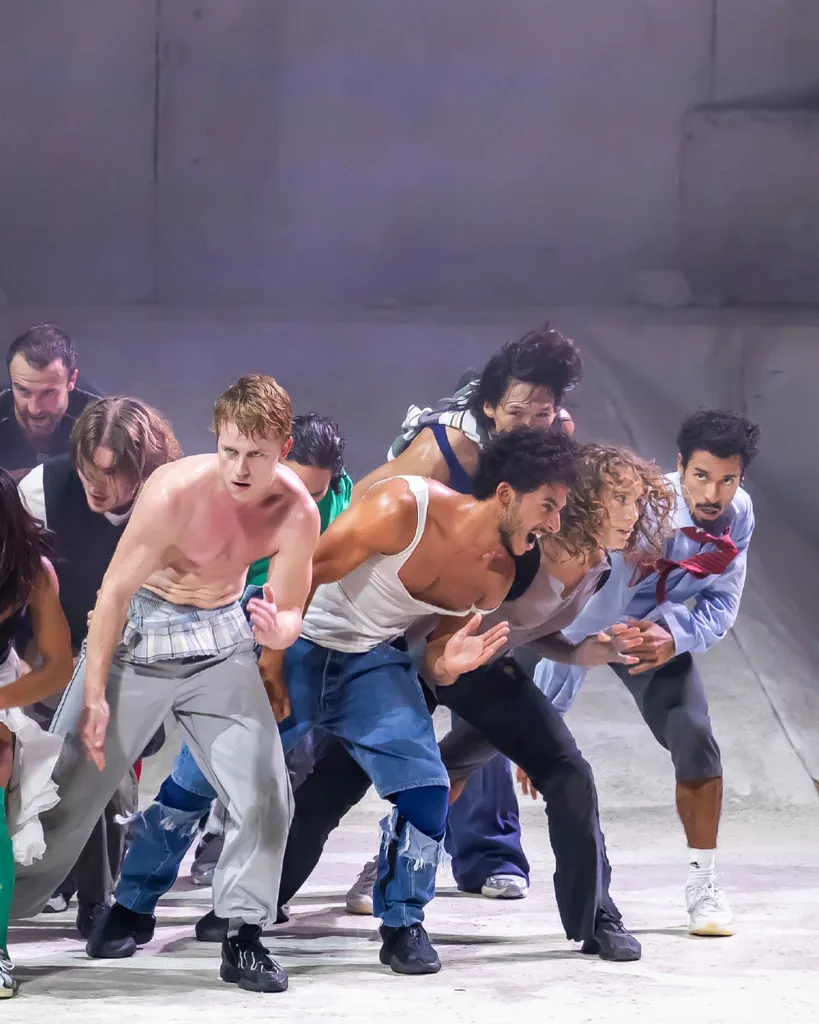
The French punk collective (La)Horde – with Marine Brutti, Jonathan Debrouwer and Arthur Harel – presented Room with a View, a dystopic dance created with artist and composer Rone and performed with the Ballet National de Marseille.
For 80 minutes, 23 dancers of 12 nationalities in various states of undress (including nudity) perform in an apocalyptic landscape. It’s confronting: there are sexual assaults and fight scenes, but also scenes of protest, rebellion, community and love, all while Rone pumps electronic music from a DJ booth. It’s a story of collapsing structures, of the environment, human rights – but also the collapse of the patriarchy, of police brutality.
It’s ballet like you’ve never seen it before. It ends on a hopeful note (what’s more punk than optimism while the world goes up in flames?), but your heart rate won’t settle for hours. The piece, from 2020 (note the pandemic timing) and performed around the world, found its place at Dance Reflections in 2023 by challenging the very notion of what dance – what ballet – can be.
Brutti, Debrouwer and Harel work in dance, music, cinema and fashion: they choreographed a video for Burberry; they’ve also worked with Sam Smith, Spike Jonze and Madonna. Since 2019, (La)Horde have been directors of Ballet National de Marseille. Their manifesto is to eliminate the idea of class and segregation in dance: classical ballet is here, contemporary dance is there, modern is somewhere else, then there’s TikTok and hip-hop and countless others.
At (La)Horde, all boundaries have disintegrated, as have gender and rank. Tao Ye’s Tao Dance Theater also turns traditional notions of dance on their head. A graduate of China’s Chongqing Dance School, Tao also danced in the Art Troupe of the Political Department of the Photography courtesy Van Cleef & Arpels. Shanghai Armed Police Force.
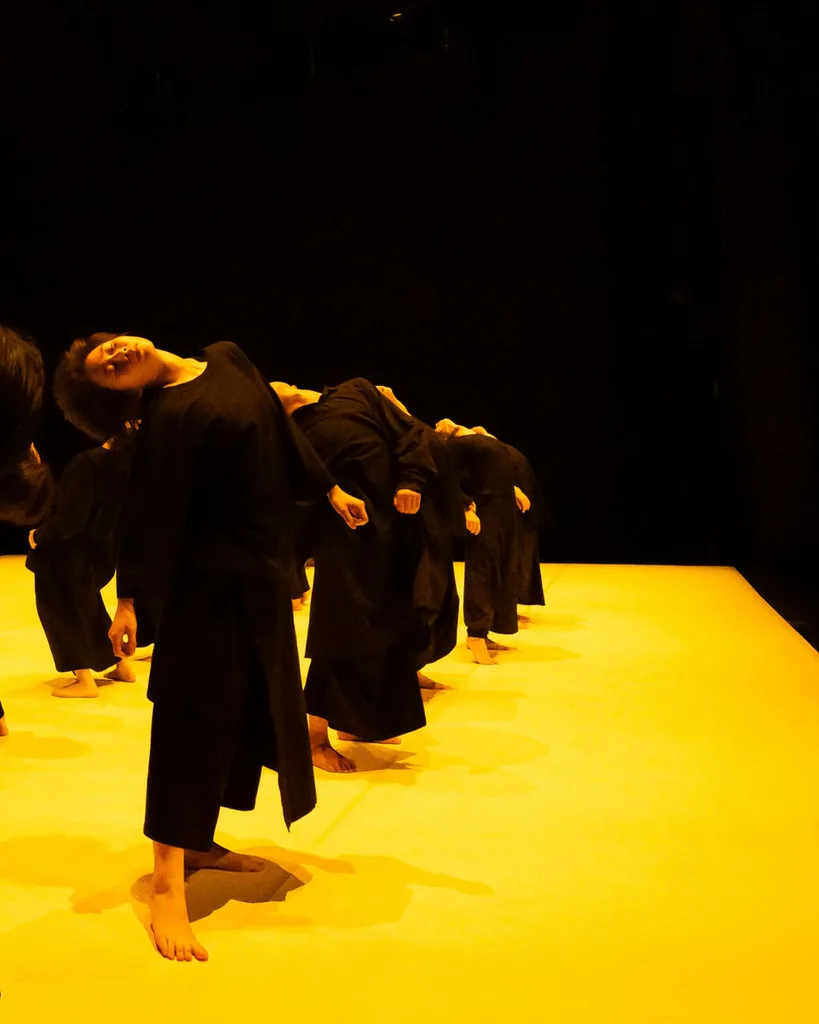
Military precision is evident in his choreography, particularly in the f irst performance of the double bill he presented at Dance Reflections, 16 and 17. His dance company is one of abstraction: props and set design are removed – even the “costumes” are no-frills black – so that the dancers are the sole focus.
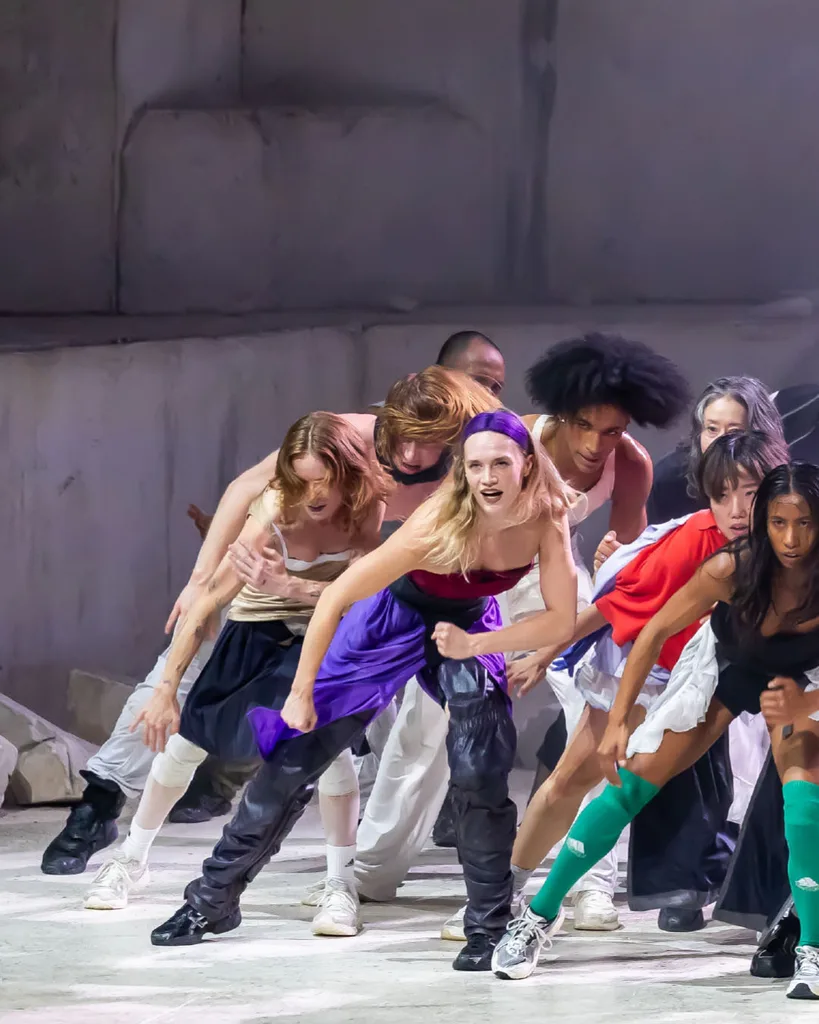
In some of Tao’s performances, there is no music. “Dance is something you feel and something you emphasise with,” he says. “It doesn’t need words.” Inspired by the games Dragon Dance and Snake, 16 sees as many dancers move across the stage in one continuous, mesmerising line. The exploration of movement relies on the body following the head, giving the illusion that the dancers are boneless, like a snake.
The piece feels simultaneously infinite and contained. At a time when the arts are struggling with funding cuts, and the cost-of-living crisis means people are spending less on experiences, as well as the fact everything feels like it’s falling to pieces, patronage of the arts has never been more crucial. “The arts are a way to bring people together, to contribute to the uniquity of the community,” Laurent says.
“It’s part of local culture. But art is also a way to enlarge our vision of the world. Dance is an incredible field of creation, and it can talk to everybody because our bodies are made for movement. Any kind of person can perceive this artform because we share the same thing, the same medium. There is a possible empathy between dancers and the audience because we have something in common.”
Save the Last Dance for Me and Post Orientalist Express by Eun-Me Ahn are at the Sydney Festival from January 8 to 25.

Related stories
How To Build A High-Quality Wardrobe Without Spending A Fortune
Native ad body.
The CBK Revival Sparked A Renewed Wave Of Off-Duty Style
Native ad body.


Native ad body.

All The Real Benefits Of Curating A Capsule Wardrobe
All The Unexpected Ways I Am Styling Jeans This Spring