Balancing my plate, glass and cutlery with the grace of a rookie waiter, I walk into breakfast and scan the space for somewhere to sit.
Every table is full, chatter and laughter resonating around me, and suddenly I’m back at school camp in a retro Australian seaside town.
I’m in Grade 7, the year my friends were all split into different weeks, and mealtimes at long communal tables fill me with angst.
I start hatching a plan to back away slowly and feign a mysterious stomach bug, or maybe melt into the floor like a drizzle of maple syrup when … “Kathryn, over here!” A woman with kind eyes and an American accent snaps me out of my daydream, gesturing towards her table and briskly rearranging the seats to squeeze me in.
Grateful, I walk over and put down my plate, which is piled with golden baguette, wedges of soft cheese and freshly picked apricots – and nary a spoonful of sludgy, syrup-topped porridge in sight. Toto, I have a feeling we’re not at school camp anymore.
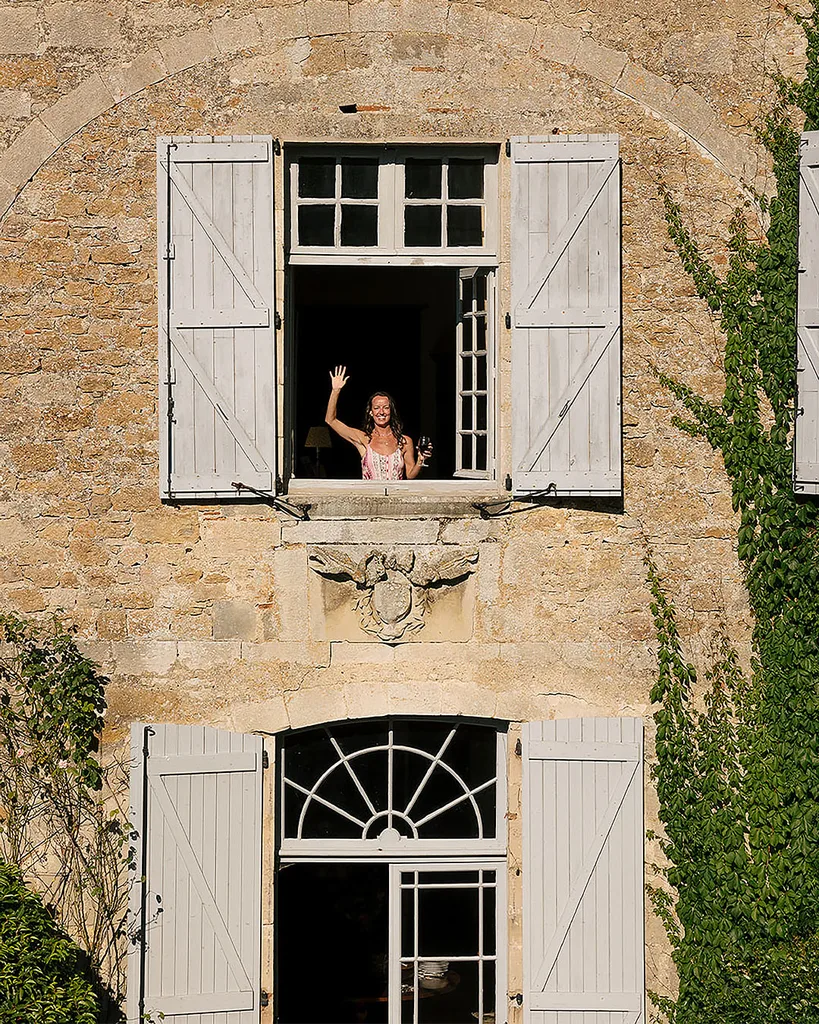
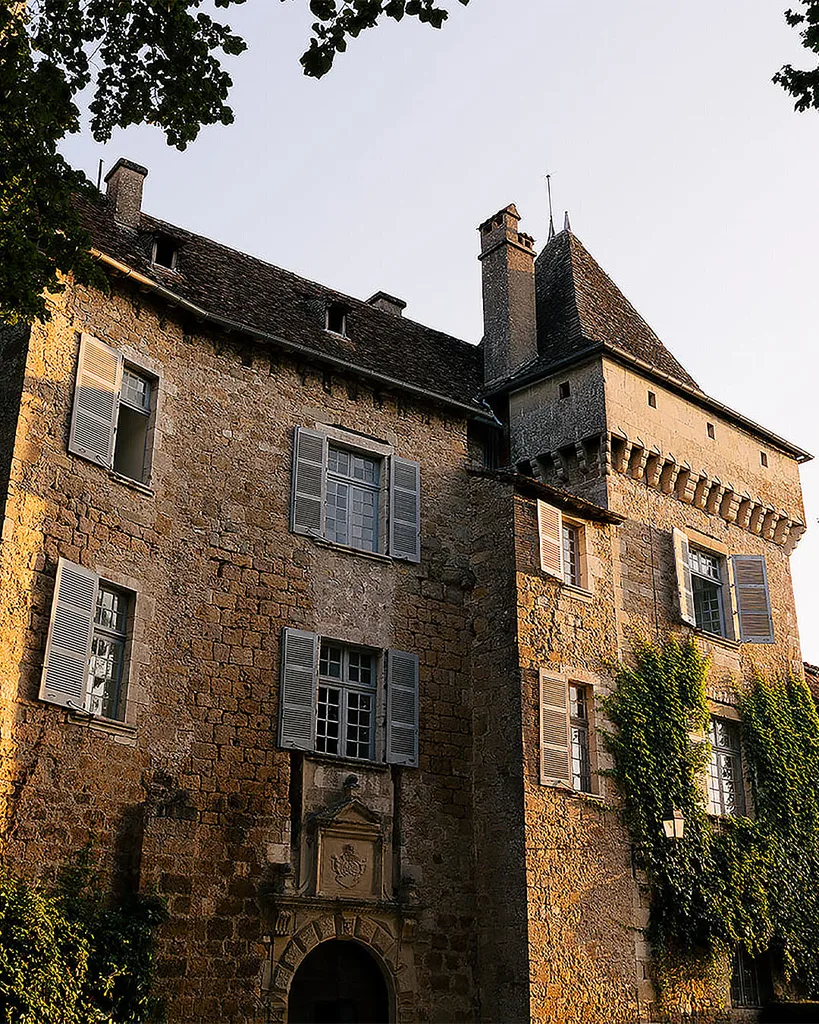
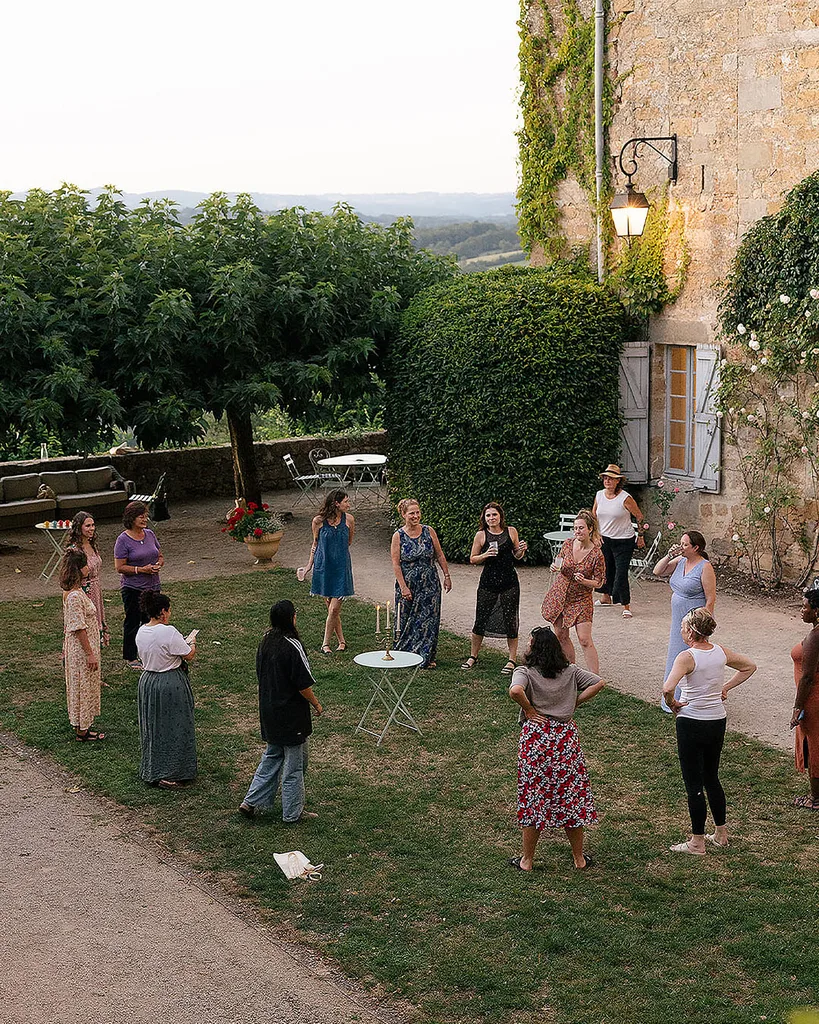
Instead, I’m at Camp Château, a summer camp for women in the countryside of south-west France. Each week, some 50 women from across the world descend on a 13th-century château in the Quercy region and spend their days crafting, kayaking and bonding under the glorious Gallic sun.
Nights are like teenage sleepovers in shared dorm rooms – albeit charming ones decked out in time-worn antiques and with shuttered windows that open onto views of the honey-hued hills.
As an Australian, the concept of summer camp is as elusive as it is romantic, the stuff of girlhood in motion à la The Parent Trap or The Baby-Sitters Club.
But the desire to reconnect with one’s inner child feels universal right now. How else do you explain the parents feverishly collecting monster-faced Labubus? Or the rise of “school excursions for adults” via clubs and communities? Nostalgic hobbies are resurging – crochet, pottery, papercraft – and new studies suggest play is as fundamental to an adult’s livelihood as good nutrition and sleep.
In a world of overwhelm, the case for being a “kidult” is strong. Camp Château was the brainchild of British born, US-based Philippa Girling, a former top-level banking exec, her best friend, Lynda Coleman, and Girling’s daughter, Leah Lykins.
Their vision was to create a place where women and people who identify as women could just be. “We didn’t want it to feel like a corporate off-site – no forced fun, obligations or expectations,” says Girling. Adds Lykins, “And it’s not a self-development retreat.
Self-development is actually work, right? For women, there are really limited spaces where you don’t have any requirements other than to just play. You’re not tasked with self-improvement or any kind of remarkable, perfect adventure.”
With that in mind, I make my way to the electives sign-up sheet and scribble my name next to jam-making. Given I have no aspirations to be the next Nara Smith or Meghan Markle, it seems suitably removed from personal growth.
Though I wonder how they would fare in the inhibition busting warm-up activity, led by a bubbly camp counsellor who has us step-clapping in a circle chanting, “What’s my jam?!” We go on to make apricot confiture using tangy orange fruits plucked straight from the trees, and later spread it on buttery croissants.
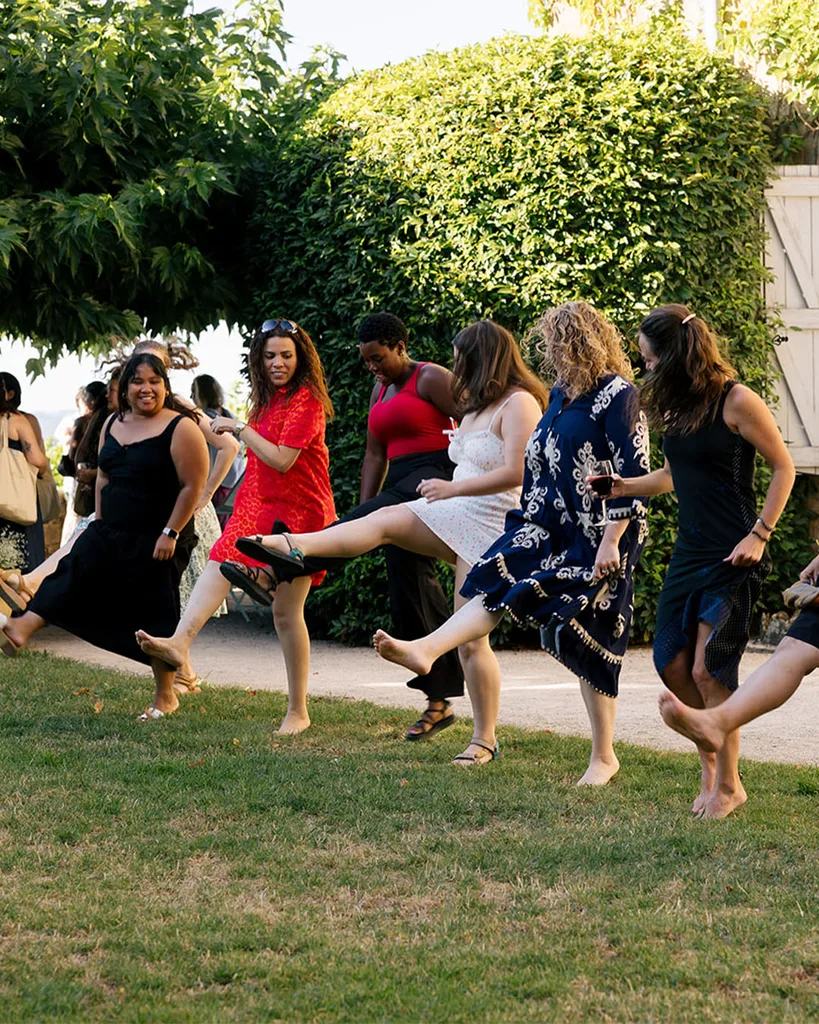
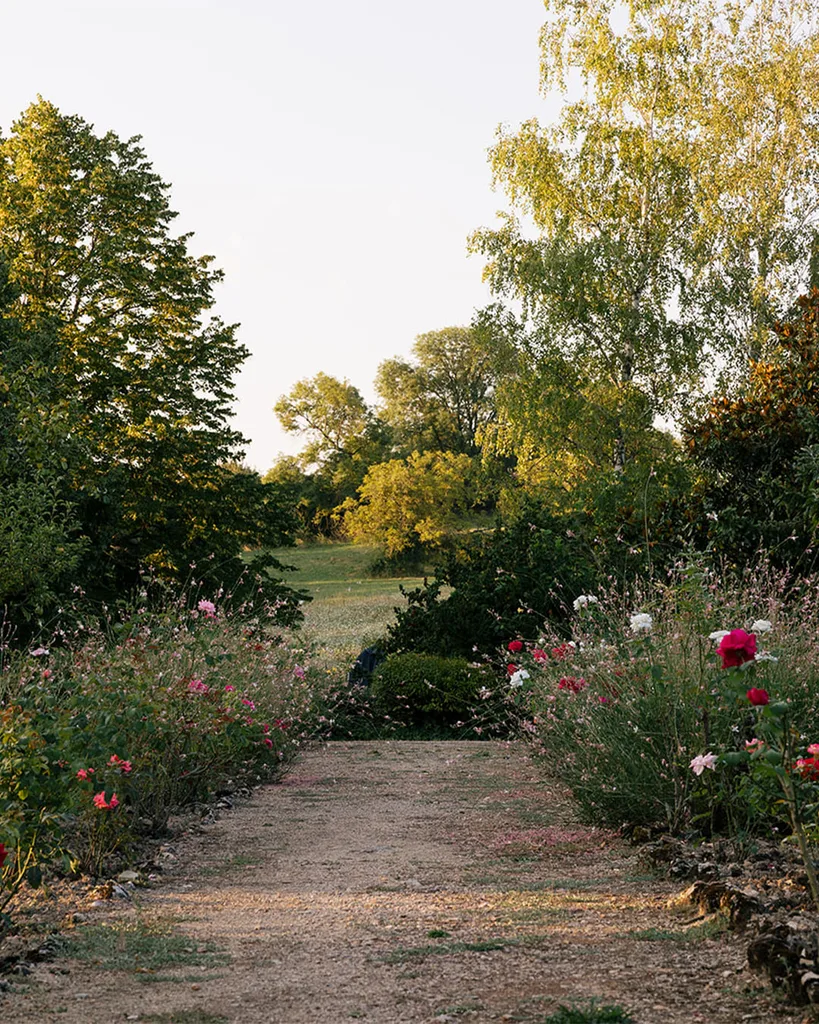
We eat picnic-style on the ground that’s bursting with daisies and dahlias … which we’ll later forage for and turn into flower crowns. And so the cycle of camp life goes. Over the week, opportunities abound for goofiness and good wholesome fun.
There’s a silent disco under the stars, which sees a circle of women aged somewhere between 20 and 80 dancing with wild abandon to “Pink Pony Club” and “Girls Just Want to Have Fun”. The mood in the air is akin to that of a Taylor Swift concert: glittery, joyful, cringy in a good way.
“I’ve had men say to me, ‘We should create something like this for men,’” says Girling, who spent her banking career persevering through patriarchal barriers. “And I say to them, ‘Absolutely you can, nothing’s stopping you.’” Chimes in Coleman, “The world is their camp.”
In the warm bubble of the château, I notice that conversations between women feel different. Defining topics in the outside world – namely, careers and men – seem to slip to the side.
“We don’t really ask people what they do for work,” the kind-eyed American, a return camper, advised me on my first day. Later, I find out she’s a high-flying international marketing consultant.
Another camper works for Planned Parenthood, and a few have risen through the ranks of Wall Street – but those are probably the least interesting things about these women.
Instead, we talk about romantasy novels and Saturn returns; ADHD diagnoses and divorce; wanting to have kids; not wanting to have kids; past adventures and plans to return and reunite, like any good summer camp.
Perhaps the beauty of cosplaying as a kid is not just in eschewing responsibilities and chasing wonder, but in reconnecting with who we were before jobs, partners and families of our own shaped us.
One camper shares that on the last day of the week, she looked in the mirror and saw herself for the first time in years. “We didn’t intend for [the camp] to be a transformative experience,” says Girling.
“Women are already awesome. They don’t need to work on themselves. They need space and a break. The camp is for them to see themselves and love what they see.
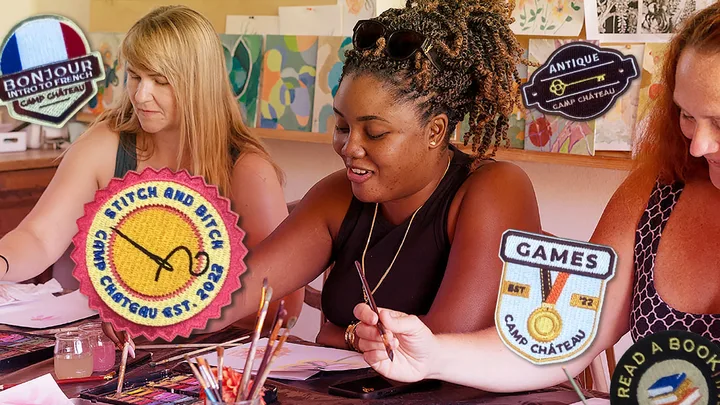
It doesn’t necessarily require a big journey, it just happens. It’s actually in you. All you need is space. And badges.” I collect 15 Girl Guide-style badges during my stay.
They’re handed out each evening in a peppy all-American ceremony that feels like I’ve been plonked into one of those US tween movies.
There’s one for Watercolour Painting. For Jam Making and for Wine Tasting. For Film Night and Taking a Nap. My favourite is for Body Movement. The elective takes place in a sunlit castle garret and only five of us turn up. We’re taken through a series of interpretative dance exercises, undulating our bodies like swaying trees and cats tiptoeing on the creaky floorboards, stifling giggles whenever we catch one another’s eyes.
Suddenly, again, I’m an awkward teenager – not looking for a place to sit, but frolicking about playfully, laughing uncontrollably in drama class. And this time, it feels really good.

Related stories

Native ad body.

Native ad body.


Native ad body.