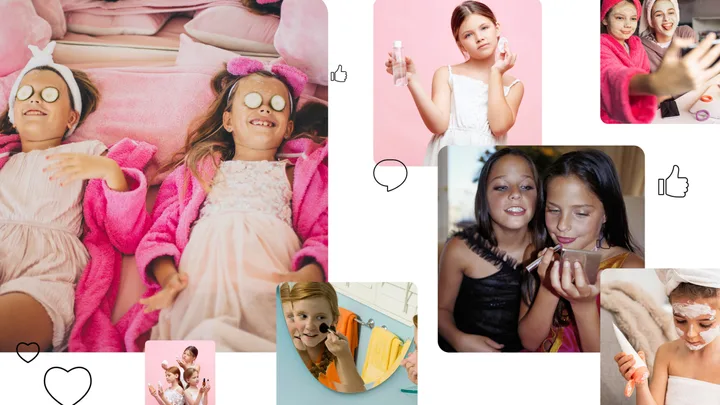
Standing in a Korean beauty store in Busan recently, I was sweating like a scholar trying (and failing) to decipher hieroglyphics. “Anything by Laneige and Beauty of Joseon please Mum!” my 12-year-old’s texts read. “Keep a lookout for glow serums, collagen mask sheets – ones infused with vitamin C are best.”
Huh? I was so confused by her shopping list that I stumbled out of the store in a daze to text my friend.
“When I was 12, I thought grooming was something you did to horses. What the hell is wrong with this generation?” The response was as swift as it was brutal. “[My eight-year-old] just asked for Drunk Elephant products for her birthday, so the sooner the sun devours the earth and destroys us all, the better.”
Quite. To a gen Xer like me, whose beauty “routine” (a quick layer of QV cream and a bold red lip) has stayed unchanged since the 1990s, my daughter’s requests might be alarming, but I don’t know why I’m so surprised: research shows that while the global beauty and personal care industry is worth an estimated $970 billion, sales are largely driven not by women but by children.
According to intelligence company NIQ, gen alpha, those born between 2010 and 2024, are responsible for 49 per cent of skincare sales growth in the United States, with aesthetically pleasing products from coveted brands such as Drunk Elephant accounting for the largest sectors.
Market research firm Mintel predicts their spending power will exceed $7.6 trillion by 2029, funded largely by the bank of mum and dad. Some call them “Sephora kids”, a swagger of too-cool-for-school types who know their Rare Beauty from their Glow Recipe. Others, however, have coined a more confronting term: cosmeticorexia, a growing fixation on achieving flawless skin through increasingly complex beauty routines. My question is, what is this focus on beauty doing to our children?
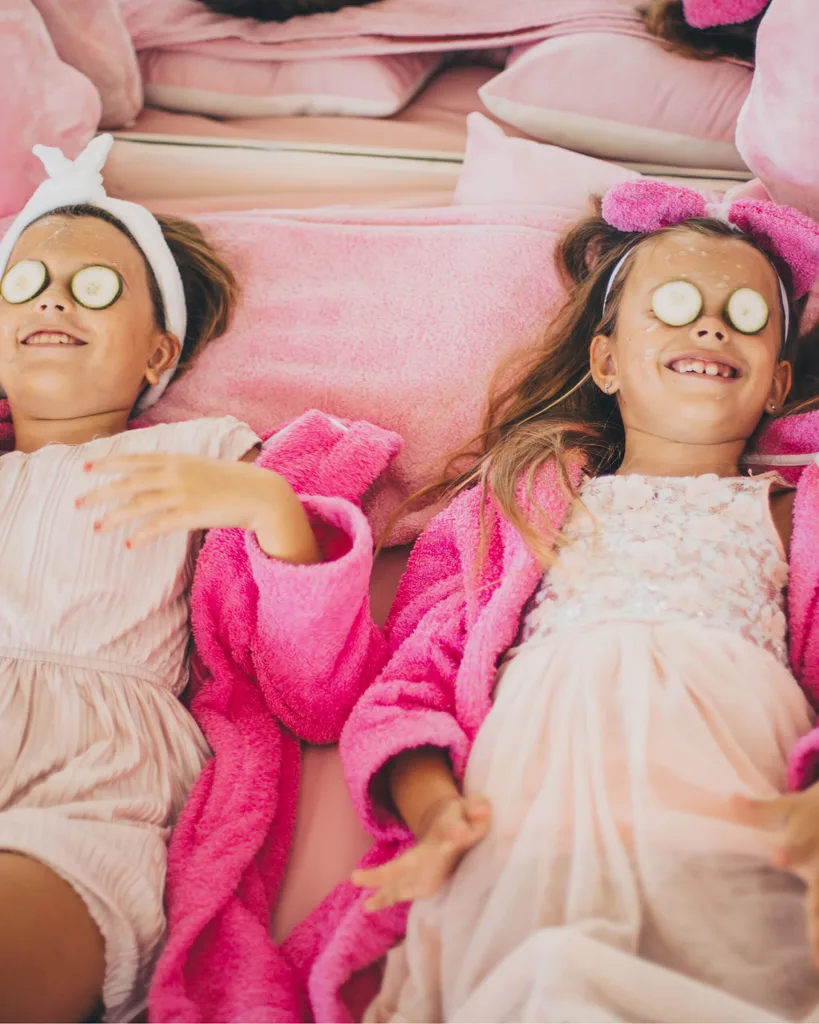
The warning bell sounded in the form of a March 2026 announcement by the Italian Competition Authority, AGCM. It was launching an investigation into several companies owned by LVMH, including beauty brands Sephora and Benefit, for what it alleges are “covert marketing strategies” and “encouraging the compulsive purchase of face masks, serums and anti-ageing creams” to children, including those under the age of 12.
At the heart of the investigation is the use of young influencers – girls my daughter’s age (and often younger) – sharing Get Ready With Me (GRWM) videos or multi-step skincare routines to their followers, which in cases like nine-year-old Oklahoma twins Haven and Koti Garza can number in the millions. Unlike traditional advertising methods, these videos are particularly insidious because they feel like a direct connection to your child’s favourite influencer, explains clinical psychologist Jaimie Bloch of MindMovers Psychology.
“They feel like you’re just watching someone go about their day. But a lot of the time, they’re quietly promoting products, routines and a very specific idea of what you’re meant to look like, and they’re being paid to do it,” she says. Publicly, beauty brands are careful to distance themselves from the trend: LVMH has stated it will “fully cooperate with the authorities”, and back in 2024, Artemis Patrick, the CEO of Sephora North America, said they “do not market to this audience”.
But something is a bit off. While researching this story, I find a wealth of new brands emerging to meet demand from the under-12s. There’s Yawn, which delivers “clean beauty” to the previously overlooked three-and-over market, and Rini (“where skincare meets play”), which drew criticism last year when it launched a sheet face mask designed to hydrate kids as young as four after playtime or being out in the sun.
I could say the cherry on top is the 2023 Instagram post by Drunk Elephant’s founder and CEO Tiffany Masterson, in which she cautions tweens and teens to “stay away from our more potent products” but then lists those she deems suitable and gives examples of the “many” routines “we can create for this age range”. And there’s the fact that within an hour of researching GRWM for this article, my algorithms changed and I’m now being bombarded with sponsored posts urging me to “buy make-up for kids at Sephora now!”
My 12-year-old is, of course, delighted. I am less so. It could be easy to dismiss this as the modern-day equivalent of buying whatever Cindy, Claudia et al were spruiking in the ’90s, but then my 17-year-old daughter hands me her younger sister’s school photo.
“Tell me you haven’t noticed she’s never had an awkward phase,” she says. “Every photo, every year, the kid looks perfect.” And she’s right. Where my own school photos chart a progression of questionable Flock of Seagulls fringes and unfortunate eyebrows, my gen alpha daughter looks camera-ready at every stage. Suddenly this doesn’t feel harmless at all.
From her practice in Sydney’s eastern suburbs, specialist dermatologist Dr Anes Yang has seen the shift play out in real time.
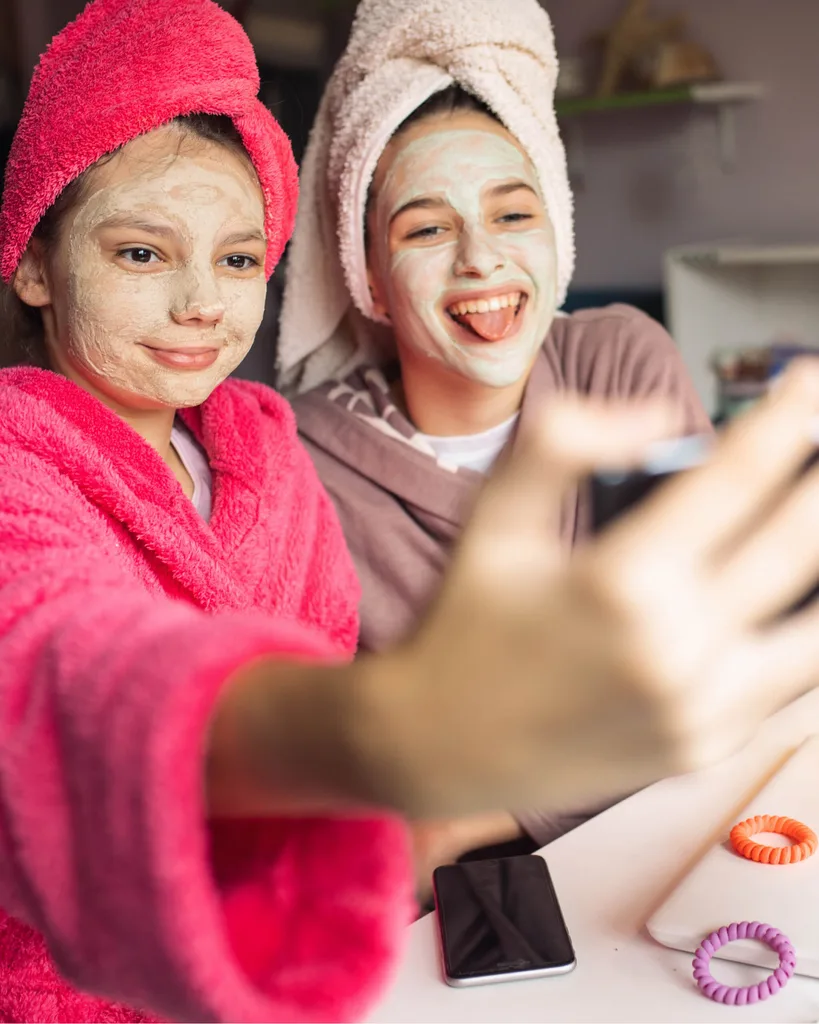
“It wasn’t all that long ago that tweens and teens were coming to me for common skin-health conditions such as acne or eczema, but now I’m finding 11- and 12-year-olds with full makeup and multi-step skincare routines who are worried that their pores are too large,” she says. “I think most parents only make the booking in the hope that I can talk some sense into their children.” Like most dermatologists around the globe, Yang isn’t only witnessing a yearning for flawless skin, but also reporting a rise in the number of kids – now regularly using products designed for mature skin, such as retinol, hyaluronic acid and strong exfoliating agents – presenting with adverse skin reactions such as irritation, inflammation, burning and scarring.
“The issue is that these kids are too young to understand who is credible beyond those who are sponsored to sell products not suitable for immature skin,” she says, adding that underdeveloped skin is particularly sensitive to missing crucial protective oils. Her concern is warranted: in a 2025 study of GRWM videos, researchers at Northwestern University found content creators aged between seven and 18 were applying an average of six facial products at any one time, with the items in the top viewed videos containing 11 active ingredients on average.
Skin health and financial burdens aside, perhaps the most troubling aspect of cosmeticorexia is the effect appearance-based thinking can have on a developing child’s body image and sense of self, says child psychologist, author and parenting expert Dr Deirdre Brandner.
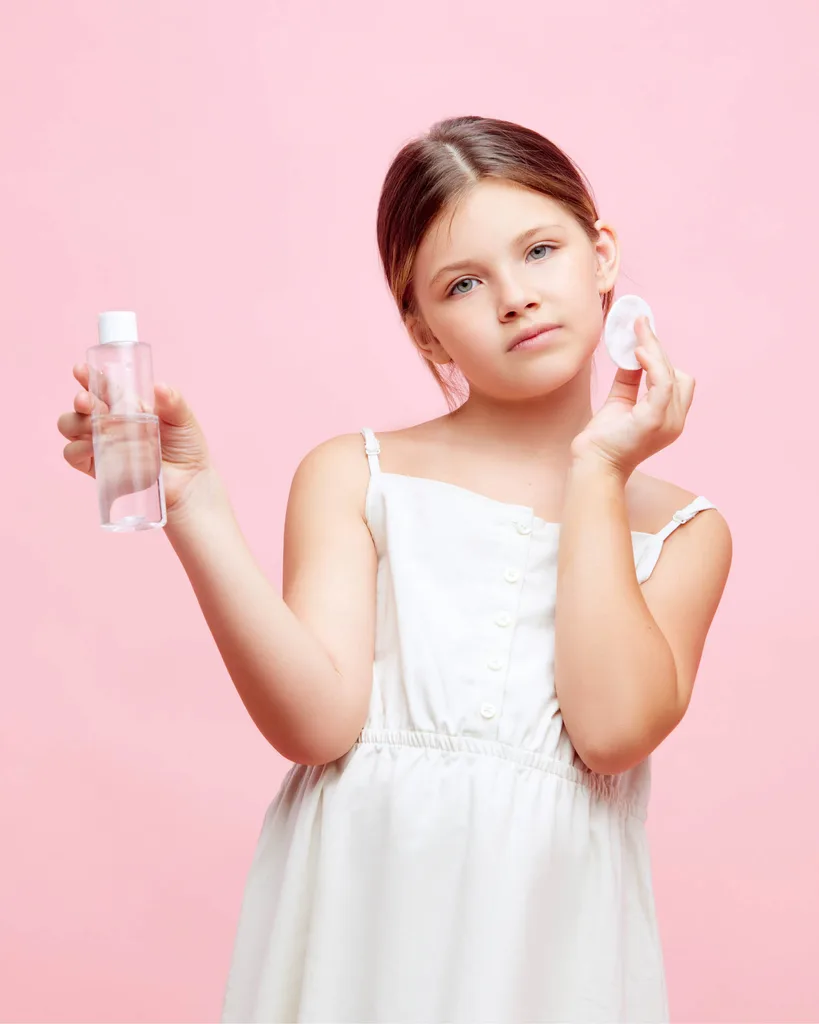
“Childhood should be a time for play, imagination, experimentation and developing a sense of self based on interests, relationships and strengths, not on whether your skin looks flawless,” she says. “When children start to absorb the message that how they look is central to their value, it can lay the groundwork for perfectionism, body dissatisfaction and a fragile sense of self-worth.” Dr Jasmine Fardouly, a social media and body-image researcher at The University of Sydney, agrees.
“I don’t want to say everyone who watches these videos will feel this way, but we know high body dissatisfaction in pre-adolescence and adolescence is an important predictor for eating disorders, anxiety and depression, and it can also predict poor academic performance.”
Here’s the uncomfortable truth: even though my 12-year-old doesn’t have social media, unrestricted access to screens or a mother who cares one iota about a six-step routine, she does have an older sister, a friendship group that worships at the local Westfield and a school where Mecca gift cards are given as rewards (I know).
The messaging is inescapable. Effective role modelling remains the gold standard when helping kids navigate the beauty landscape, but encouraging young people to invest in other areas of their life such as a sport or a hobby can boost resilience when they view appearance-based content, explains Fardouly.
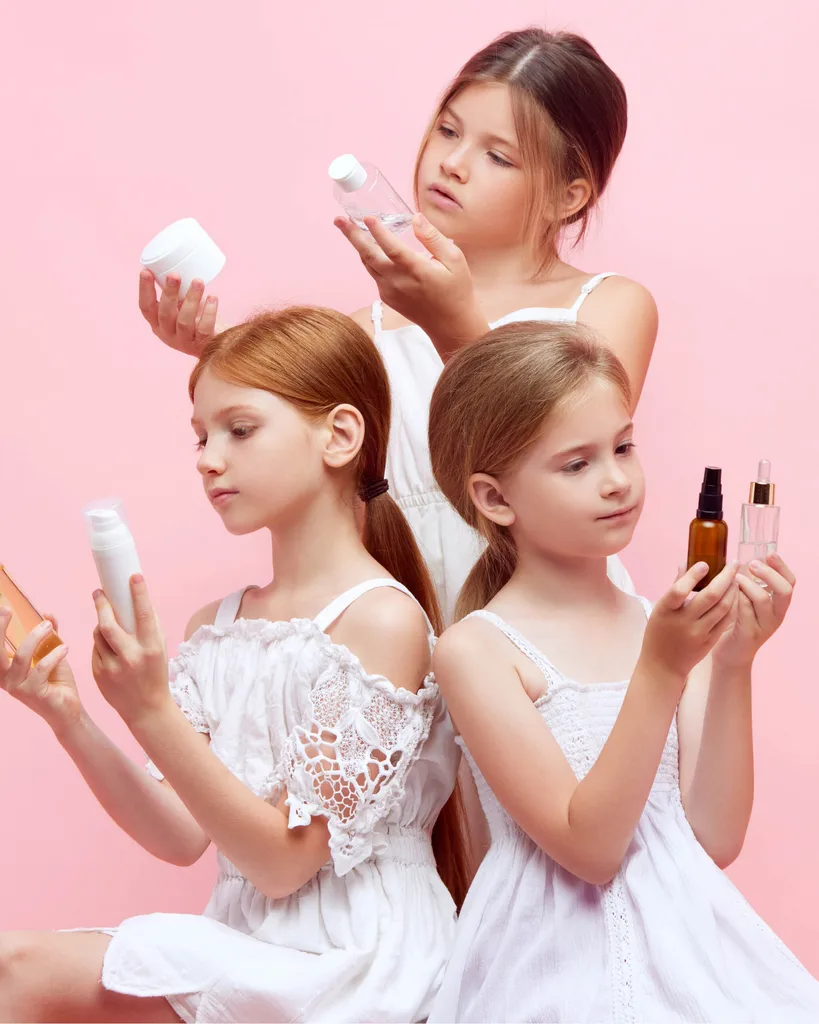
“We know that looking at this imagery doesn’t have the same pattern with everyone,” she says. “If you come into these environments investing less in your appearance and more in other areas of your life, you’re more protected from the harm it could cause.” If we’re not actively helping our children make sense of what they’re seeing online, then social media (and heaven forbid, 12-year-old North West) will fill that gap for us, warns Brandner.
“One of the most important things we can teach children is critical media literacy. It’s taking the time to ask simple but powerful questions such as, ‘What do you think this video or brand is trying to get you to feel?’ and ‘What does this suggest a girl needs to look like in order to be accepted?’” A rolling dialogue is key. Finally, much of it comes down to really listening to our children.
When my daughter’s texts came through, I saw a product shopping list, but Jaimie Bloch says I might have missed the real message. “If your child is into this stuff, there’s usually something underneath about wanting to fit in and wanting to feel grown up. If we shut it down completely, we miss that.” I didn’t buy the items my daughter requested, but I did come back with open ears. Was my daughter thrilled? Of course not, but I get the feeling she will be – eventually.

Related stories

Native ad body.

Native ad body.




Native ad body.