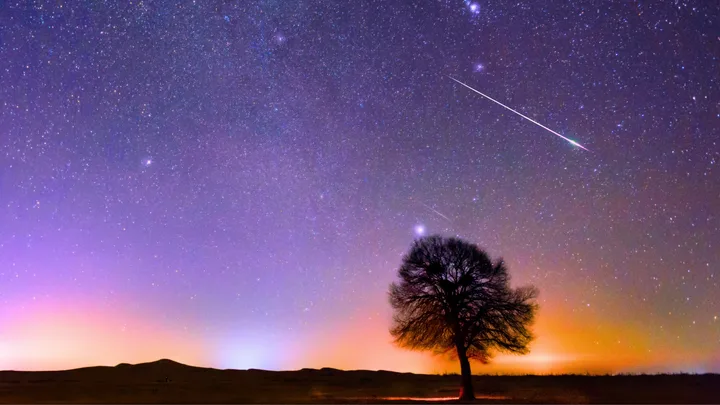
2026 has been a year made for stargazers, and May shows no signs of slowing down. Tonight, Australian skies are set to sparkle with one of the most enchanting celestial displays of the year.
If you don’t mind an early wake-up, the Eta Aquarid meteor shower promises to dazzle.


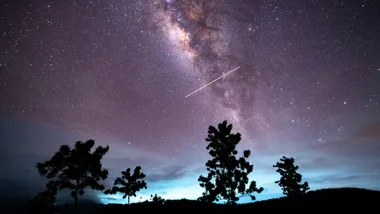
Active for nearly two weeks and continuing throughout May, the shower will reach its peak late on Wednesday night and into the early hours of Thursday morning, offering the best chance to see meteors streak across the night sky.
These cosmic travelers blaze into Earth’s atmosphere at a breath-taking 238,000 km/h, according to NASA, producing up to 50 shooting stars per hour at their peak.
Fast, bright, and often leaving glowing trails, the meteors create a truly cinematic spectacle. Southern Hemisphere viewers will enjoy the most intense shows, particularly in the pre-dawn hours when the sky is at its darkest.
Ahead, everything you need to know to make the most of this stellar event.
Where To Watch The Eta Aquarid Meteor Shower In Australia?
Like April’s Lyrid meteor shower, the Eta Aquarids don’t require a telescope or any special equipment. Your best bet is clear skies and a spot far from city lights. Try to find the darkest place you can and look overhead rather than at the Moon.
Give your eyes about 30 minutes to adjust to the darkness (tuck your phone away) and you’ll be ready to catch the meteors streaking across the sky.
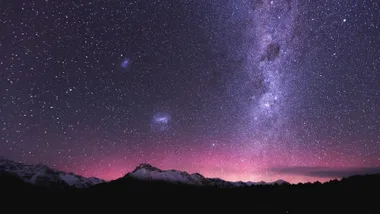
The Eta Aquarids are most spectacular from the Southern Hemisphere, radiating from a point near the brightest star in Aquarius, Eta Aquarii. From there, meteors streak out in all directions, leaving trails of dazzling light.
What Is The Best Time To View The Eta Aquarid Meteor Shower In Australia?
The Eta Aquarids meteor shower is best viewed in the pre-dawn hours, when the sky is at its darkest and meteors streak across from the Aquarius constellation.
Meteor showers can be unpredictable, but clear skies, patience, and a little planning will pay off. This year, the display is expected to hit its height between the evening of Wednesday, May 6, and the early hours of Thursday, May 7.
Below, a table of the best viewing windows for each Australian state. For precise, up-to-date timings, Time and Date’s interactive sky map lets you track visibility from your location.
| State/Territory | Best Viewing Window (Local Time, May 7, 2026) |
|---|---|
| NSW | 2:00 a.m. – 6:30 a.m. |
| VIC | 2:00 a.m. – 7:00 a.m. |
| QLD | 2:00 a.m. – 6:15 a.m. |
| SA | 2:00 a.m. – 6:55 a.m. |
| WA | 2:00 a.m. – 6:50 a.m. |
| TAS | 2:00 a.m. – 7:05 a.m. |
| ACT | 2:00 a.m. – 6:40 a.m. |
| NT | 2:00 a.m. – 6:55 a.m. |
What Exactly Is A Meteor Shower?
A meteor shower occurs when Earth passes through streams of debris left behind by comets or asteroids. In the case of the Eta Aquarids, these particles come from Halley’s Comet. As the debris enters Earth’s atmosphere, it burns up, creating streaks of light across the sky.
Watching a meteor shower is the perfect way to spend an evening, especially as the nights grow cooler. Wrap up warm and make a wish (or fifty) as the shooting stars streak across the sky. And don’t forget to mark your calendar for August, when the Perseids meteor shower takes centre stage.

Related stories

Native ad body.

Native ad body.



Native ad body.