One of the most remarkable solar eclipses in over two decades is set to take over the skies this week. A total solar eclipse will sweep across the Arctic and into southern Europe, plunging parts of Greenland, Iceland, Spain and a corner of Portugal into darkness, marking the first time mainland Europe has seen this kind of astronomical event in totality since 1999.
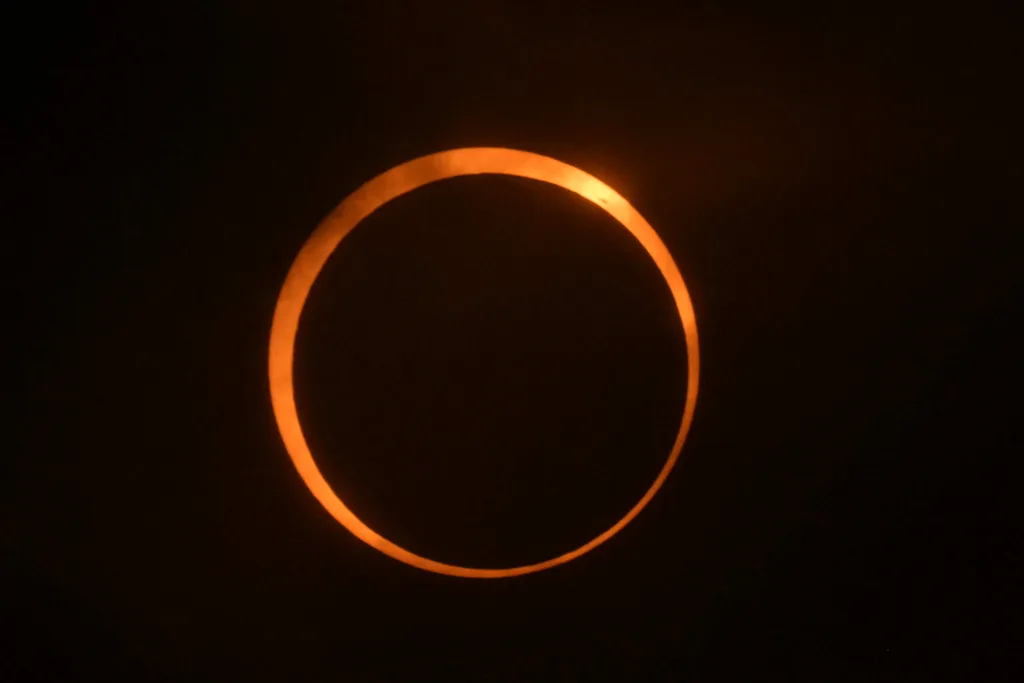
Unlike February’s “ring of fire” eclipse, which left a thin halo of light around the Moon, the August 12th event will see the Moon fully blocks the Sun, turning day briefly to night for anyone standing in its path.
It’s the astronomical event of a lifetime, but unfortunately for those of us living in Australia, we won’t get to glimpse it in real life — but that doesn’t mean we have to miss out altogether.


Where And When Can You See The August 12 Solar Eclipse?
Iceland and northern Spain get the main event today, with the Moon’s shadow also sweeping over Greenland and a sliver of Portugal as it makes its way across the Arctic and down into southern Europe. Reykjavík catches close to a minute of totality in the late afternoon, before the path crosses the Atlantic and reaches northern Spain shortly before sunset local time — the country’s first total eclipse since 1905.
The greatest eclipse, when the Moon covers most of the Sun’s disk anywhere along the path, hits at 5:45pm UTC. For anyone hoping to catch it live from Australia, that’s 3:45am AEST tomorrow (13 August). NASA is streaming the full event from its website, with coverage kicking off from around 3:15 am AEST — set an alarm, or catch the replay in the morning.
At its longest, totality lasts two minutes and 18 seconds, just off Iceland’s west coast.
Can You Watch The August 12 Solar Eclipse From Australia?
While this week’s solar eclipse won’t be physically visible from Australian shores, astronomy-lovers don’t have to miss out entirely.
NASA is streaming the eclipse live via nasa.gov/live, with coverage starting around 3:15am AEST and running through totality. Timeanddate.com is also running a live stream with real-time commentary as the Moon’s shadow moves across Greenland, Iceland and Spain, plus local time countdowns so you can tell exactly when totality hits each location. Both streams are free, and either will get you a front-row seat to Europe’s first total solar eclipse in 27 years — no eclipse glasses required.
When Is The Next Solar Eclipse In Australia?
On 22 July 2028, a total solar eclipse will cross the Australian mainland from the Kimberley in WA, through the Northern Territory and south-west Queensland, and into NSW, passing directly over Sydney.
It’ll be the city’s first total solar eclipse since 1857, with totality lasting up to three minutes and 45 seconds. After that, Sydney won’t see another until 2858.

Related stories
Native ad body.

Native ad body.



Native ad body.