

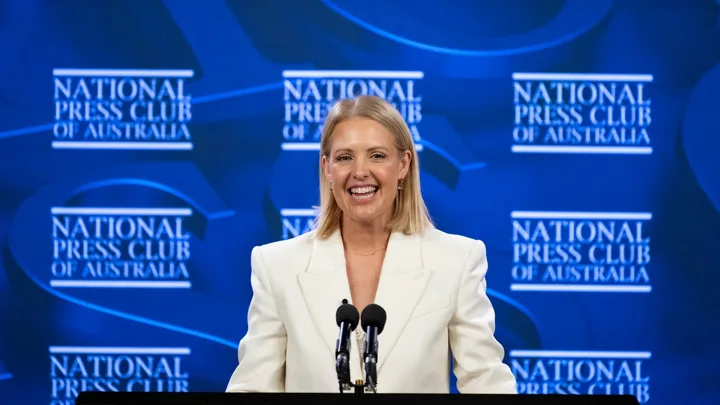
When Georgie Dent became a mother 16 years ago, she and her husband, Nick, welcomed the same baby. But the world seemed to think they had signed up for different jobs. “He could take her to the park on a Sunday morning and be greeted with something akin to a ticker-tape parade,” Dent told the National Press Club in Canberra on September 23. “I could take her on a bus and attract disapproval if she made a noise.”
The contrast might sound familiar to many parents. But in her address, The mother and father of all problems: Australia can’t afford for raising a family to be unaffordable, Dent argued that unequal expectations have consequences far beyond a judgy bus ride.
Citing Treasury research, the CEO of parent advocacy organisation The Parenthood said having children reduces women’s earnings by an average of 55 per cent over the first five years of parenthood. For men, she said, becoming a father has little discernible effect on earnings. “Mums lose income. Dads lose time. Both lose choice.”
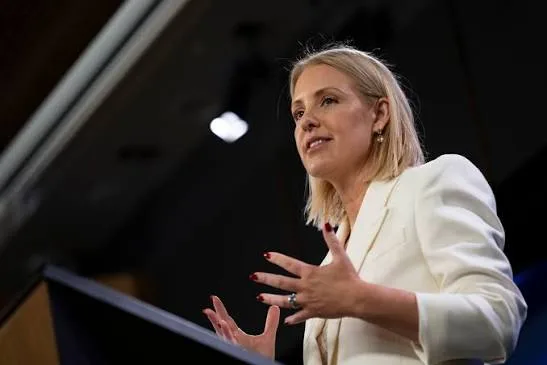
Dent knows what it is to have a career opportunity hinge on finding care. While on parental leave with her second daughter, she was offered her dream job editing Women’s Agenda. It was part-time and flexible, but she and Nick couldn’t secure places for both girls at the same childcare centre. The arrangements they pieced together across different centres and suburbs barely worked on paper. “I was being offered a job championing women’s participation in the workplace and I could barely arrange the care that would allow me to turn up,” she said.
A flexible employer and financial sacrifice helped her take the job. Other parents, she asked, might not get that chance. For some women, being able to earn an income can mean being able to support their children or leave a relationship. “These are enormous things to leave contingent on a wait list.”
Dent’s argument was that families have changed faster than the systems around them. In 2003, around 58 per cent of couple families with children under 15 had both parents in paid work; by 2025, she said, that figure was 73 per cent. Yet school hours, annual leave and the availability of childcare still leave parents trying to cover a gap between work and care.
The money is tight, too. According to analysis commissioned by The Parenthood and presented in the speech, raising one child now costs an Australian family about $17,800 a year. For families with two or more children, the cost exceeds $36,500.
Then there is the time no budget can create. “No parent can meditate their way out of a childcare desert. Or meal-prep their way out of housing stress. Or time-manage their way into
a 25th hour,” Dent said. “When millions of families face the same obstacles, it’s not a personal failure. It’s a policy failure with profound economic and social consequences.”
Those consequences, she argued, extend to decisions about whether to have children at all. Australia’s birth rate fell to 1.48 children per woman in 2024, Dent said, while this week’s Intergenerational Report projects a further decline. Money is not the only reason people have fewer children than they hoped, she acknowledged. But it shapes the conversations many couples have: “Can we afford another bedroom? Two children in care? Another period with one of us not working?”
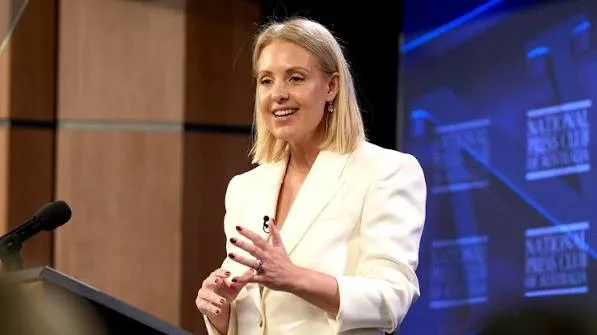
Dent called for three changes. The first is a pathway to 52 weeks of paid parental leave that families can afford to take, moving towards payments based on parents’ usual wages. She also wants meaningful time reserved for fathers and partners, with appropriate provision for single parents.
Australia now offers eligible families 26 weeks of government-funded paid parental leave at the minimum wage. Dent welcomed that progress, but said entitlement alone does not settle whether a family can afford to use it. “We announce a scheme in terms of weeks but families experience it in dollars.”
Her second proposal is universal early childhood education and care, funded more directly through services. Dent argued that subsidies cannot create places where no viable provider exists and cannot reliably control what families pay where services do operate.
“Fund the service, not the transaction,” she said. Under the model she outlined, operating grants would reflect the cost of delivering quality care, with extra funding for communities and children who need more support. Public funding would come with conditions on fees, educator wages, inclusion, safety and quality.
The third change is for workplaces to recognise care as a normal part of employees’ lives. Dent urged employers to offer flexibility where possible and pay attention to who returns, progresses or leaves after becoming a parent. “Supporting parents is not a wellbeing initiative. It is a workforce strategy,” she said.
Dent finished by returning to her daughters. She does not know whether they will choose to have children, but she wants that decision to be a real choice, rather than one dictated by systems built for another era. “Raising a family is personal,” she said. “Making it possible is national.”
To watch Georgie Dent’s speech, go to ABC iview

Related stories

Native ad body.

Native ad body.



Native ad body.




Share this post