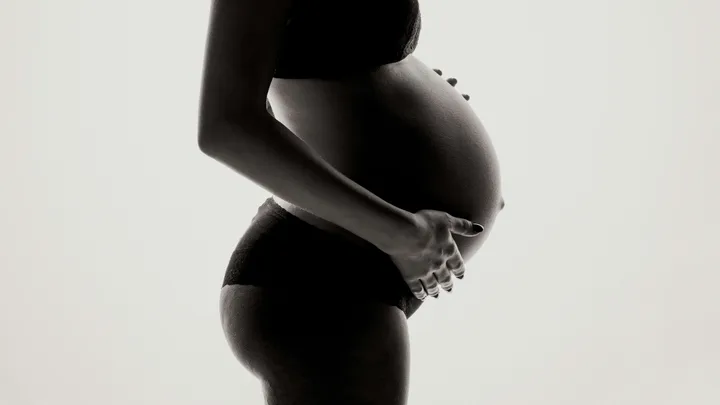
You may have noticed in a new type of shopfront popping up in your local shopping strip: the boutique ultrasound clinic.
Known as souvenir scanning clinics, here pregnant women can marvel at the grey matter of their wombs as many times as they wish, rather than the standard once-a-trimester check-in at their hospital’s overlit, sterile medical imaging suite. It’s cosy here and, if desired, they can even pay for the clinic lights to commemoratively turn neon pink or electric blue, depending on the sex of their foetus.
Some of these private scanning businesses offer their clients deluxe packages with twee names, such as “Key To My Gender”, “Key To My Heart” and “Key To Get To Know Me” (which involves having a 30-minute session recorded onto a DVD for safekeeping and paired with the mother-to-be’s choice of background music). Others sell plush-toy keepsakes that, when squeezed, play back the heartbeat recording of the foetus in question.
It all sounds lovely, but members of the Australian Sonographers Association (ASA) are wary of such businesses. “Anyone can buy an ultrasound machine, with little restriction for non-medical purposes,” a spokesperson tells marie claire. “Our concerns about non-medical scans include the risk for patients to be misled into thinking these ‘keepsake’ scans provide medical assurance or diagnostic information. These scans should not be used to guide pregnancy care.”
In a 2025 investigation into the boom of private ultrasound clinics, The Age found that “reassurance” ultrasounds can inadvertently lead to stillbirths, late-term abortions and incorrect foetal diagnoses, due to potential medical complications being missed. But despite their lack of credibility, these ultrasounds are having a moment online. The ASA attributes this to “social media, influencer marketing and a broader shift towards consumer-led and wellness-oriented healthcare”. Questionable, sure. But Instagrammable? No doubt.
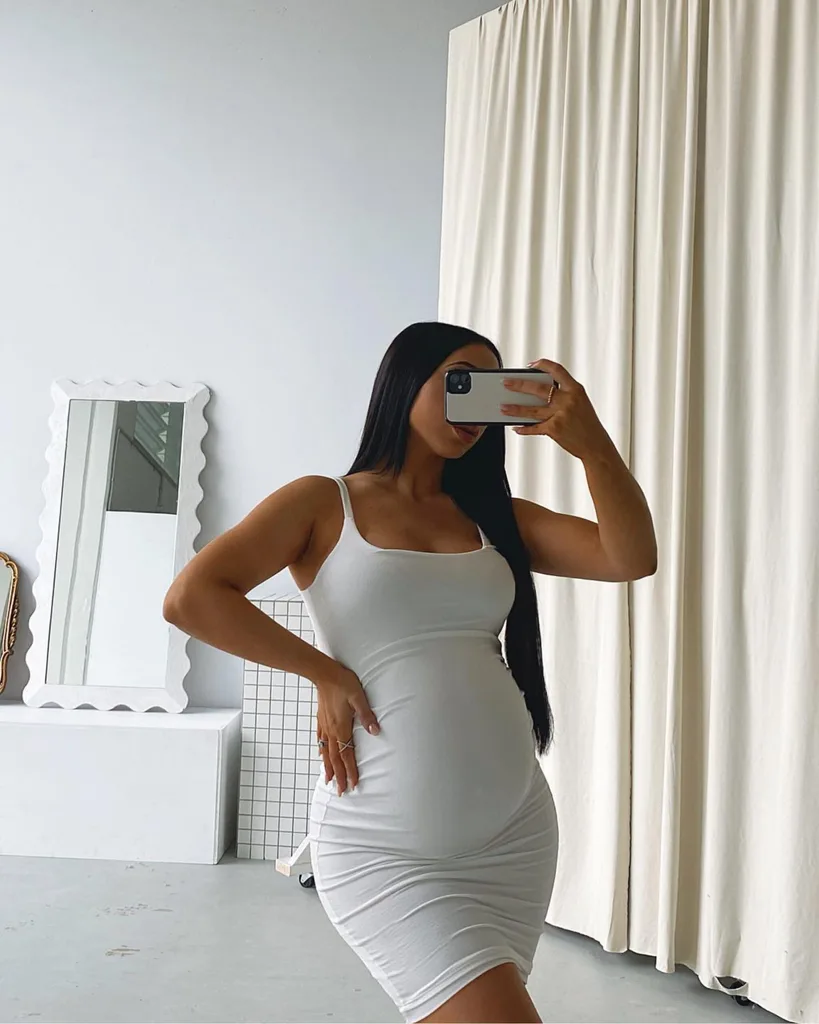
Pregnant influencers have flocked to souvenir scanning suites in droves. They record themselves gaping at their unborn babies on large flat screens, the view bookended by reed diffusers and pink vases. “We are aware that some private ultrasound clinics are working with influencers and content creators to promote ultrasound services,” an ASA spokesperson tells marie claire. One such Sydney-based influencer broadcast to her 110,000 followers in a collaborative post with Early View, a boutique private scanning business based in Sydney’s south, that the souvenir scanning clinic was her “favourite place to visit when pregnant”, alongside the hashtag #pregnantbeauty.
On Instagram and TikTok, influencers – or “bumpfluencers”, rather – have laid claim to pregnancy. In short clips, they lather their bellies with “firming” oils, recommend chic maternity bras, tag their obstetricians in their pregnancy announcements, and make reels of their fertility journeys. Online, pregnancy appears a misty-eyed affair made cute, sentimental or slapstick depending on which influencer is talking, and what they are being paid to say.
Rachelle Chee, a midwife and lecturer based at CQUniversity, whose research focuses on maternity care, social media and women’s experiences of pregnancy and birth, is sceptical as to just how authentic the show-and-tell of pregnancy on social media really is. “While it is essential for success that the influencer presents themselves as ‘real’, what we actually see is a highly curated representation of a persona, which is designed to engage interest,” she says. “For most women, [pregnancy] is the most transformative experience of their life, and many experience it for the first time with little knowledge of the truth of the experience.”
On Instagram, pregnancy doesn’t look half bad. Draped in dappled light, pregnant influencers swear by cult companies’ prettily packaged firming oils and lotions as they massage them into their luminous bellies. Some popular brands admit to reaching out to influencers when they spot a pregnancy announcement in the hopes that they’ll share their products. Despite limited scientific evidence that stretch marks and other dermatological markers of pregnancy can be remedied with serums and creams, some firming oils and lotions – explicitly advertised to pregnant and postpartum consumers – sell out time and time again.
Dr Linda Martin, dermatologist at Melanoma Institute Australia, is familiar with expectant mothers being wooed by the empty promises cosmetic manufacturers make online when it comes to pregnancy-related skincare concerns. “It’s hard for the consumer to know who to trust,” she says. “On one hand, there isn’t enough regulation around whether these products actually achieve these claims and whether they’re even safe. On the other hand, women are being bombarded and told that nothing is safe. We are making women feel guilty for things that are not their fault. There’s a real dichotomy in the messaging, which is really anxiety provoking. Most cosmetics cost between $1 and $5 for the bottle; $1 for ingredients and everything else is in the marketing. There isn’t really ‘magic’ that is going to prevent stretch marks. The evidence is soft at best. A lot of it is just basic moisturiser.”
Maternal anxiety is, after all, a reliable cash cow. It prompts expectant mothers to comb through social media ads with momentous urgency. Amid pregnancy-related fearmongering and conflicting advice, they are greeted by the sweet grins and smooth bellies of bumpfluencers, who promise them a pastoral snapshot of what’s to come. At once, the body’s greatest metamorphosis is neatly flattened to fit within a vertical aspect ratio.
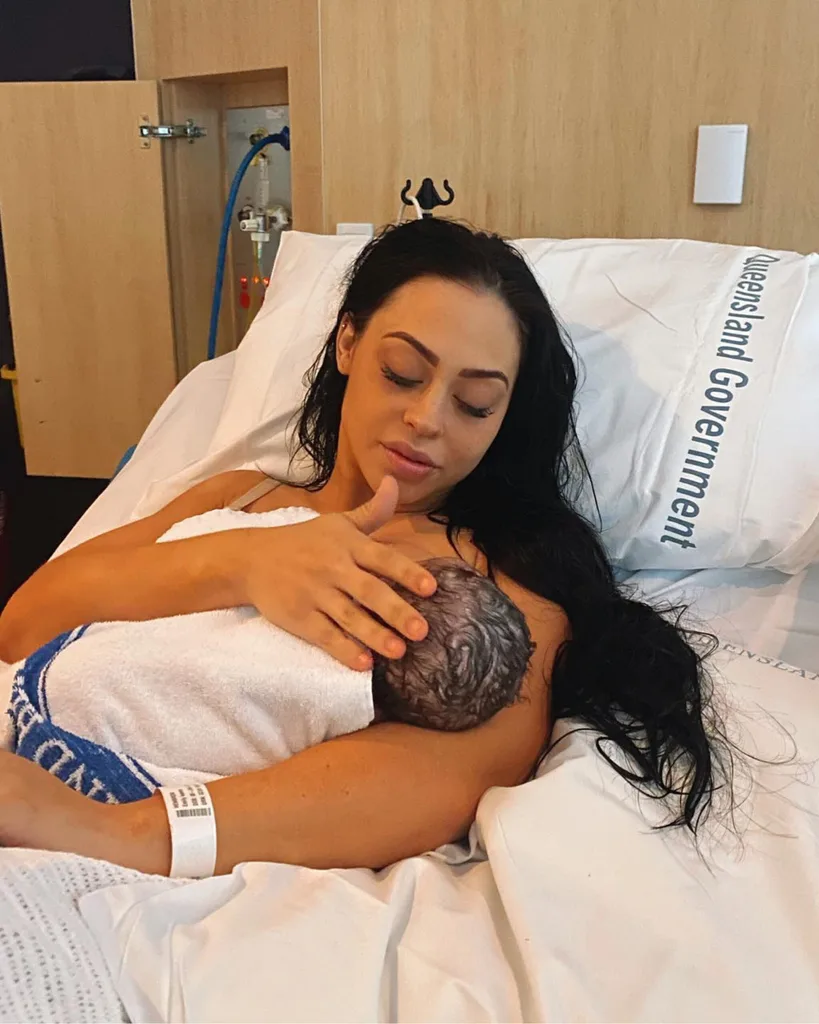
For many women, pregnancy is a hard-won journey. Which is why, when Melbourne’s Monash IVF dipped its toe into the online treasure trove of influencer-led advertising in 2023 by offering Big Brother star and influencer Tully Smyth a sponsored brand deal, many felt aggrieved. The company’s decision to partner with Smyth in exchange for digital content sparked widespread debate about social media’s role when it comes to promoting and “gifting” reproductive technologies. As a response, the federal watchdog warned that the use of social media influencers to advertise egg freezing may breach Australia’s Health Practitioner Regulation National Law.
Dr Lynn Burmeister, medical director at Melbourne’s No. 1 Fertility, is no stranger to content creation. She posts reels in which she struts towards the camera in candy-pink platforms and poses in her office in front of a neon sign that reads Fertility Queen. She acknowledges the stories told on Instagram “rarely reflect the uncertainty, grief and complexity of fertility treatment” and, as such, never partners with influencers. “Instead of feeling supported, many patients report feeling overwhelmed, constantly on alert, and more anxious about their own journey when they spend too much time scrolling fertility content,” Burmeister says. The emotional toll of infertility is often shoehorned into a 60-second teaser trailer for an often expensive and regularly fraught pursuit.
In September 2025, a rapid review of Australia’s $810 million dollar IVF industry was announced, and Monash University IVF expert Dr Karin Hammarberg is hopeful that it will “lead to more scrutiny of clinic marketing and advertising practices”.
Amid novelty ultrasounds and baby buys, the maternity market naturally banks on the safe arrival of an influencer’s newborn. But tragically, this is not always the case. In November 2024, 29-year-old Brooklyn Larsen – a Utah-based influencer – posted a heartbreaking carousel of greyscale photographs on Instagram. In them, she captured herself in a hospital bed alongside her husband, the grieving pair cradling their stillborn baby. “Our hearts are completely shattered. Our perfect little boy didn’t make it,” she announced. Her son’s death amassed thousands of online reactions. And Larsen’s pain was compounded in March the following year, when cult baby brand Happiest Baby, which had gifted Larsen a SNOO Smart Sleeper (a popular electronic bassinet) during her pregnancy, requested their product be returned. Without a baby to put in their crib and photograph, she was a business investment gone awry.
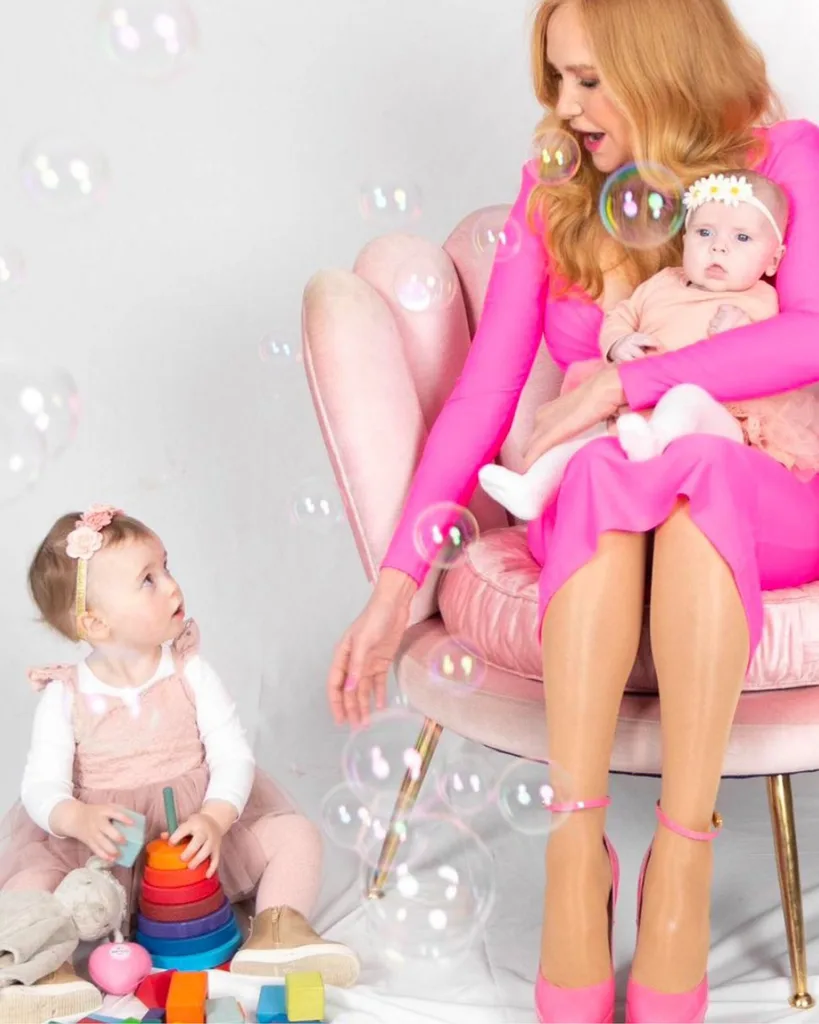
Then again, for Emilee Hembrow, a Gold Coast-based influencer with close to a million followers, Instagram was a safe haven after experiencing a stillbirth at 29 weeks. Hembrow leant fervidly on her followers. To this day, a story highlight detailing the loss of her son remains fixed to her page, labelled with a single emoji: a baby angel. “I then got pregnant quite quickly after that, and that pregnancy was completely different,” she tells marie claire. “I hid it offline until I was seven or eight months [pregnant], so nearly the whole pregnancy. I hid my bump, took photos in advance, stocked up on content I knew I had to produce, and wore baggy clothes. I kept it offline until the very end.”
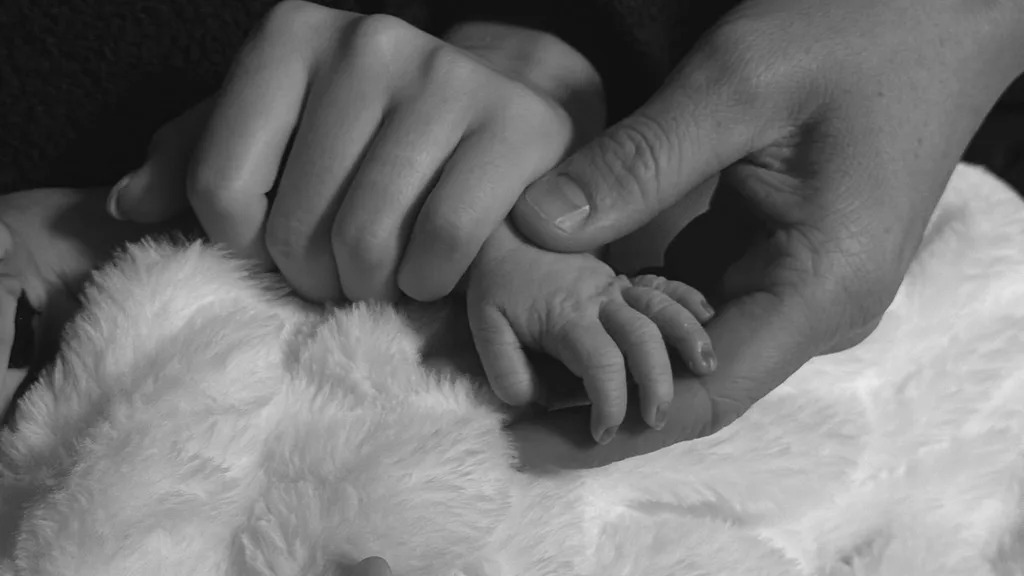
Hembrow may have been able to conceal her bump, but the social media algorithms, of which she is inevitably a part, cannot be fooled. With sophisticated analytics tools, these platforms are able to track more than likes, shares and reposts. They can easily trace a pregnant woman’s “dwell time”, the brief window she spends lingering on a particular post. Among an onslaught of unsolicited advice, week-by-week foetal development posts and “must-have” product hauls, some of the most successful pregnancy content is the kind that lends itself to fear-based engagement.
On TikTok, videos of women cradling their stillborn children amass millions of likes. While raising awareness of perinatal loss online is an honourable mission, zeroing in on pregnant women and making them the recipients of such content ought to invite explanation from the tech giants that are banking – quite literally – on their engagement.
In their attempts to avoid the same fate, parents-to-be can be tempted by dubious at-home tools such as handheld foetal heart monitors that allow them to check their unborn baby whenever they like.
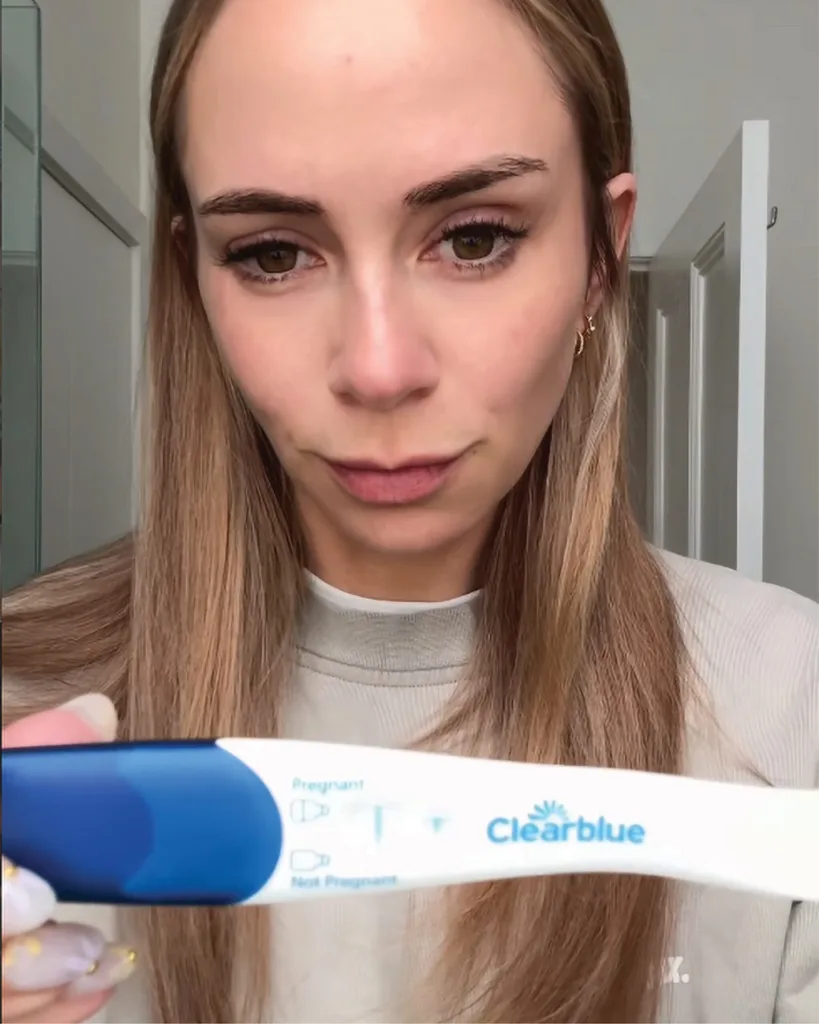
In August 2025, the advertisement and sale of these monitors was banned in Australia, with the Stillbirth Centre of Research Excellence warning the devices “may provide false reassurance that the baby is well and lead to a life-threatening delay in seeking appropriate care from maternity health care professionals”.
But just three months later, Brisbane-based influencer Mindful Jess published a reel in collaboration with BabyNera, a global maternal tech e-commerce brand and the creator of the Heart Echo foetal doppler. In it, Jess lathered her bump with gel before trailing the instrument across it. It was “one of my favourite ways of bonding with baby girl throughout my pregnancy”, she declared as she listened closely to the static resounding of her womb.
The ban may still be in effect in Australia, but the content is easily available. As recently as June, BabyNera’s Instagram featured a pregnant American influencer alongside the caption: “There’s something so special about those quiet moments spent connecting with your babies before they’re even here.”
Among the infinite scroll of pregnancy-related anxieties, bumpfluencers appear a tried-and-true source for mothers-to-be. They swear by oils and imaging devices, film themselves stuffing hospital bags with lavish items, spruik prenatal vitamins and promote the fleecy plush-toy that carries the sound of their baby’s heartbeat. They present an image of pregnancy that has others yearning. “The key to feeling 87.87 per cent less like a blob when preggaz: TAN THURSDAYS,” influencer Holly Kingston once wrote on Instagram in an advertisement for an Australian fake tan brand. Later, in an interview on the Life Uncut podcast, she stated candidly, “I’m going to say it right here. I hated being pregnant.” She attributed her discomfort partly to the social media pressure. In the business of creating life, sometimes it’s better to fake it. Even if others end up paying the price.
If this story has raised concerns, you can call Lifeline anytime on 13 11 14, or Red Nose Australia on 1300 308 307 for 24/7 grief and pregnancy support.

Related stories
Native ad body.
Native ad body.
Native ad body.