Every night, John, 35, sits in front of his computer trawling Reddit. He’s not weighing in on pop culture debates nor seeking recommendations for the best tacos in his Los Angeles neighbourhood.
Instead, he’s exposing lies and misinformation, and offering counsel to men who’ve fallen down the manosphere pipeline. It’s a descent that John knows well, although for him the fall was more like a trip − an unexpected stumble that sent him sliding slowly into a world built around hyper-masculinity, muscles and money-making.
“I was 28 and I’d started online dating,” he remembers. “I wasn’t getting the amount of matches I wanted, and I got a little desperate and looked up tips on how to be more attractive [to women]. I think this made me an easy target for men who encourage toxic views.”
He began lurking on Reddit forums like r/Seduction and r/Dating Advice, where he was schooled on manipulative push-pull dating tactics and the 80/20 rule (which proposes that 80 per cent of women are attracted to only 20 per cent of men).

“I looked up to Robert Glover and Corey Wayne,” says John, noting that while these figures – a psychotherapist and life coach respectively – didn’t peddle woman-hating extremism, their views were tinted with misogyny packaged as reasonable advice. John’s pathway to the manosphere, an online network of men’s content and communities rooted in anti-feminist ideology, is a well-trodden one.
According to a report commissioned by Movember last year, 68 per cent of Australian men aged 16 to 26 engage with masculinity influencers, and 38 per cent have acted on their advice. For some, seemingly benign self-help or dating content serves as a gateway into more extreme spaces, where increasingly hostile beliefs about women start to seep into their psyche.
At worst, men become embedded with incels (involuntary celibates who feel excluded from sexual relationships), pick-up artists (who promote power games and transactional techniques for dating women), or the “red pill” (based on a metaphor from The Matrix, where taking the red pill means awakening to a hidden truth; in this context, it claims to uncover that men are oppressed by women). While John never swallowed the whole pill, even a taste proved potent.
“It made me an insecure asshole with the women I talked to, though those interactions never lasted long,” he admits. “I began to believe that looks matter and matter a lot, and that women aren’t perfect angels.”
But at a juncture he can’t exactly pinpoint, perhaps when he turned 30, he “became put off by this idea that you must be some confident douchebag in order to get women to date you – that nice girls only like bad boys”, and started plotting his exit strategy. “I’m not sure when I left [the manosphere] per se, as my detox was gradual,” he says. “But I started caring less about what other people thought and decided to just be my true authentic self.”
It’s a message he now spreads to some 16,000 weekly visitors to r/exredpill, a subreddit founded in 2014 to help former and exiting red-pillers deprogram and deradicalise. At the top of the page, a pinned post titled Red Pill Detox First Aid Kit features a list of recommended reading that rationally debunks the principles of the ideology.
And on the forum, users from across the world share their questions and concerns about renouncing their beliefs, while reformed red-pillers like John (who’s also a moderator) – plus individuals with no prior affiliation to the manosphere, motivated by goodwill – extend advice and words of encouragement.
“The Red Pill ruined my life and I’m attempting to pick up the pieces and rebuild my life … It all started off with Andrew Tate and JWaller [Justin Waller],” shares one user. “I’m [now] doing significantly better due to the help of a self-help group.
However, I still struggle with truly trusting women.” Empathetic replies roll in. “I went through the same thing,” says one user. “What really helped was building friendships with women and through exposure realizing they’re people just like you with their own feelings and autonomy.”
Another offers: “Can you listen to podcasts at work? Maybe you can look for female hosts for topics you’re interested in. I’m sure it’s probably not as effective as real friends, but it might help?”
A cheerleader chimes in: “Proud of you!!!” One member of the subreddit, who chose to remain anonymous, tells marie claire, “I’m embarrassed I got sucked into the red pill. I thought I was smarter than this. Intelligence has always been my strength, not my looks or personality. I think I got into this stuff because I was lonely. I use [r/exredpill] to hear from other people who’ve also been damaged by it. I don’t feel like I’m judged here.” John, who’s now happily married and says meeting his wife dispelled every red pill myth about women, hopes his story strikes a chord with men feeling lost, bitter or disenfranchised.
“I’ve been where they are and can understand the insecurity these men face,” he says. “Some can be quite stubborn and hard to interact with, but many come around to it. It’s always satisfying to see someone grow out of the red pill and other toxic worldviews.”
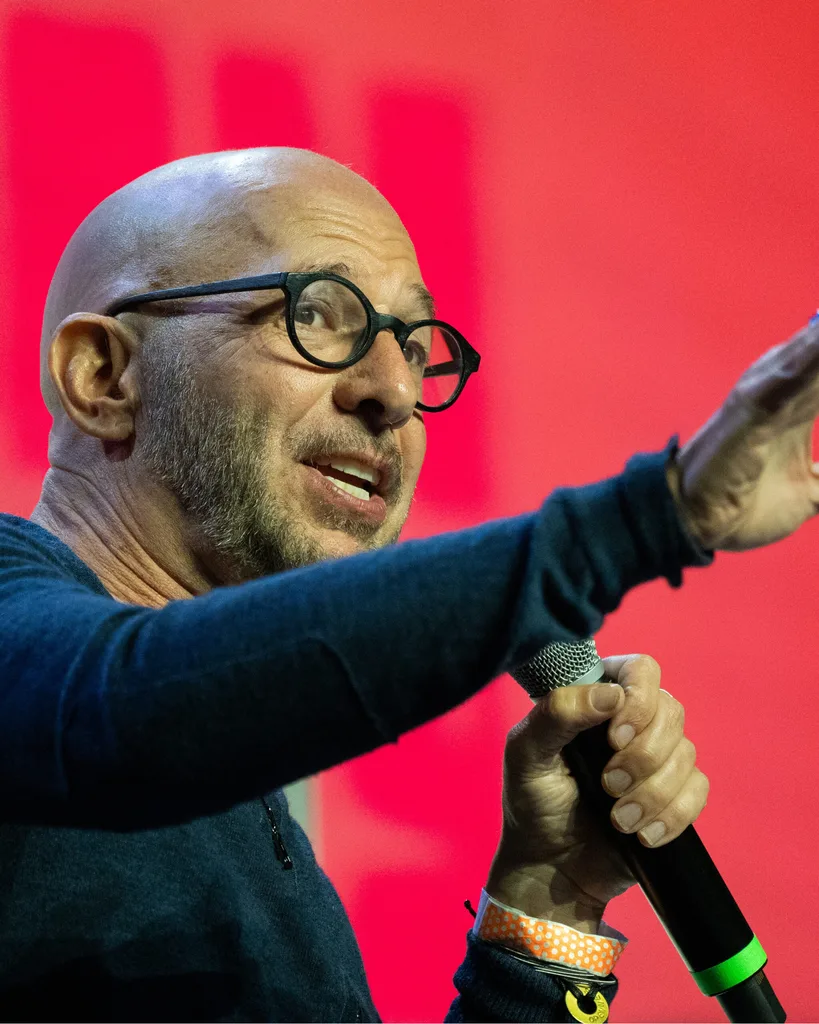
Like John, Dr Joshua Thorburn has spent hours scrolling subreddits. As a researcher on the manosphere, femosphere, gender theory and deradicalisation, he’s studied the potential of r/exredpill and r/incelexit, a parallel forum for former incels.
“They’re promising spaces,” he says, pointing to the power of peer-to-peer mentorship built on shared experience. “Generally, people are more likely to trust and model behaviours from those who appear similar to themselves,” he explains.
“Research in countering violent extremism shows that programs where former extremists help mentor people as they leave extremist groups can be very effective. [The mentors] can empathise with the moment in someone’s life when they might be more vulnerable to believing in these ideas, and they appreciate the alienation and confusion that stems from losing a very black-and-white worldview.”
The subreddits also provide meaningful insight into why someone might find themself drawn to these dark corners of the internet in the first place. Rarely does it appear to start from a place of deep-seated, all-consuming hatred, but from vulnerability, pain and isolation, from frustration, romantic rejection and struggles with self-image, especially in a climate of filtered realities and impossible body ideals.
“One post that struck me was from a 15-year-old user who described how he’d been a really lovely and respectful friend to this girl he had a crush on,” says Thorburn. “He was worried that doing all these nice things meant that he was a ‘simp’, which is a pejorative term. So there was this fragile, impressionable 15-year-old boy believing that just being a nice person was inherently emasculating or bad.”
Another story that resonated was a man who spat out the red pill after realising that although he was overweight and not wealthy – markers of undesirability in the ideology – his wife still loved him.
“Often, leaving the manosphere isn’t instant or linear,” notes Thorburn, but sometimes it comes in a moment of clarity, a revelation that the beliefs being instilled are fundamentally erroneous. Intriguingly, it’s not just men airing their anxieties and epiphanies on these forums.
Women seek advice on how to get through to their partners or fathers who are becoming indoctrinated; others admit they’ve internalised the red pill themselves, conforming to its restrictive feminine ideals in the hope of finding love.

A few speak about the emotional impact of being on the receiving end of manipulative dating tactics, and some attribute an abusive turn in their partners’ behaviour to their engagement with the manosphere. One user subtitles her post: “My experience as a woman who was red pilled and why it was worse than being r@ped.”
The devastating details highlight the limitations of Reddit, which, as a user-driven platform, lacks professional oversight and has no structured support for vulnerable users.
“Often the challenges that people are describing are pretty significant, and there are definitely instances where more direct, personal therapy would be appropriate,” says Thorburn. “But realistically, unfortunately, depending on your economic background and where you live, that sort of support may not always be accessible. And a lot of people, especially men, are worried about the vulnerability and the social stigma of seeking support. So while these forums are imperfect, broadly I believe they do have a lot to offer, and the success stories show that. The more that people are aware of them, the more it might stop them from going down the manosphere pathway in the first place.”
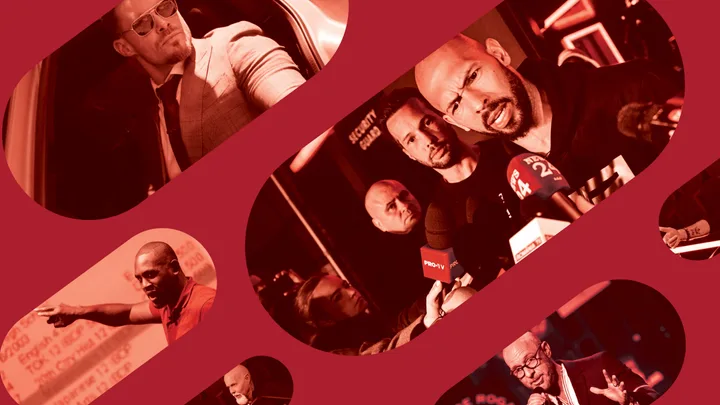
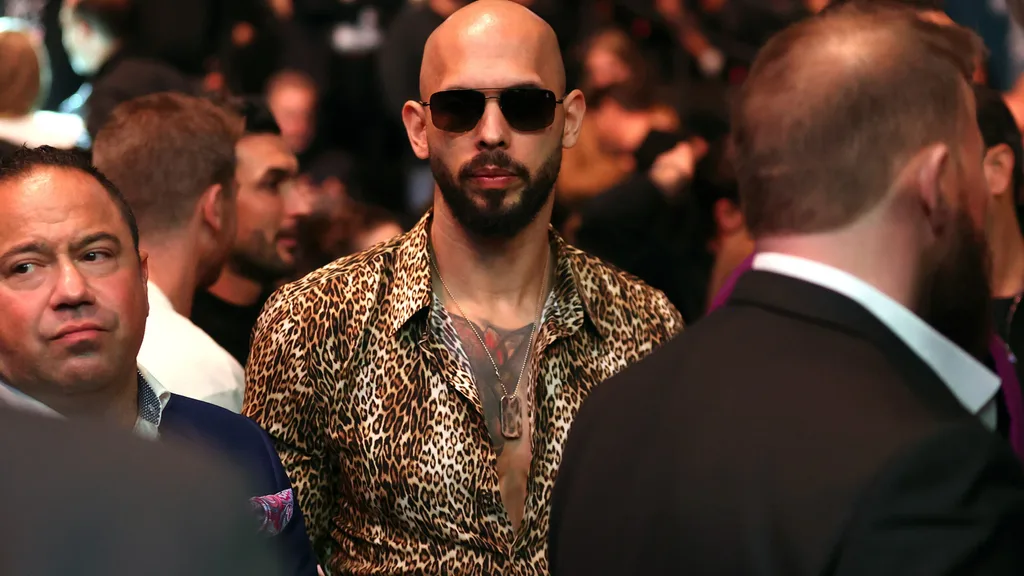
Building awareness was a motive for Ed Latimore, 41, to speak out about his red pill past. A former boxer who was initially influenced by Neil Strauss’s The Game – a 2005 dating manual now seen as central to the origins of pick-up artistry – by the late 2010s he was moving in high-profile manosphere circles, speaking at conventions and even dining with Andrew Tate, the manosphere influencer and self-described misogynist accused of human trafficking and rape, who’s currently under investigation in three countries.
But being up close and personal with the subculture exposed its flaws. “I got to see how the sauce is made,” explains Latimore. “I saw the lives these guys were living and how they were approaching their relationships and conducting themselves and I thought, ‘You guys are not what I signed up for.’ Many didn’t have any actual accomplishments outside of getting on the internet, having petty battles and talking shit about women.”
Concurrently, susceptible young men were sitting at home, watching their content, convinced that if they could just follow the blueprint (get rich, get women, show dominance and suppress weakness), they too could “win” at life. “I started talking about the negative, destructive force of the red pill because I have a young son and I have to think about what examples are set,” says Latimore, who now shares his message via blogs and videos.
“I don’t want him to feel like he’s got to follow some guy on the internet for advice about how to get girls and Lambos. I still believe that the self-optimisation and self-improvement ideas behind the red pill can be useful, but not when they spiral into paranoia and bitterness.”
He asserts that men pulled into the manosphere shouldn’t feel ashamed. “I liken it to street gang recruitment,” says Latimore. “Both groups prey on vulnerable men – young men who might not have had a strong male influence, whose brains haven’t finished developing, whose hormones are surging and who feel like the world doesn’t understand them. Like street gangs, the red pill promises safety and protection in a hostile world. But it doesn’t deliver … That’s why it’s so positive that ex-red pillers are going into online spaces and forums and providing advice on how to detox and escape.”
Yet these misogyny-fighting keyboard warriors are up against a powerful force: the algorithm. It takes just 23 minutes for a social media account mimicking a 16- to 18-year-old boy to be exposed to toxic, misogynistic content, regardless of whether they searched for it.

And the influence of said content is strong; in one 2025 study out of the United Kingdom, about 50 per cent of male respondents endorsed some regressive or red pill-coded ideas. Comparable research in Australia doesn’t exist, but a 2022 report suggested 23 per cent of Australian men find it acceptable to use sexist or misogynistic language online.
The correlation between the spread of this misogynistic thinking and the ongoing epidemic of gendered violence – with 53 women killed in Australia last year and six at the time of print in 2026 – is cause for grave concern.
After the 2024 stabbing attack in Sydney’s Bondi Junction, where five of the six victims and most of the casualties were female, incels identified the attack as their own and celebrated online. An inquest later denied a misogynistic motive. But there’s also cause for optimism. In a world of deep divides and opposing sides, of “us versus them” and resounding echo chambers, forums like r/exredpill awaken something we’ve almost lost. “They reveal the capacity of humans to change their minds,” says Thorburn. “And that’s really exciting.”

Related stories

Native ad body.

Native ad body.



Native ad body.