

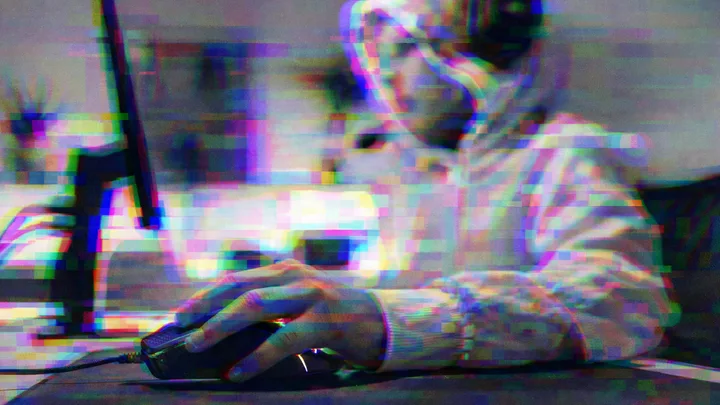
You may have noticed on March 9, if you were so inclined, that Pornhub went dark. Or, rather, it went into Safe For Work mode. Gone was the nudity, the close-ups and the explicitly worded clip titles, and in their place thumbnails of content more suggestive in nature.
A woman in a graduation gown with the title “That’s One Way To Celebrate!”; two women in a yoga studio captioned “What Happens Next?” The same happened on RedTube, YouPorn and Tube8 – some of the world’s most popular porn sites, all owned by Canadian company Aylo.
It wasn’t just the landing pages that changed. Suddenly, only existing subscribers could access explicit content, and no new subscriptions were being accepted. Australia had entered a porn blackout. It seemed sudden, but this was a long time coming.
Aylo geoblocked Australian users in protest against a landmark online safety crackdown enforced by the eSafety Commissioner, the government’s online regulatory body led by Julie Inman Grant. Talks about age-assurance measures began in 2021 and ramped up last year, with the rules coming into full effect in March.
Within a week of the rules’ implementation, adult-content creators and sex workers began speaking out about how the restrictions were stripping them of income and pushing viewers to unregulated porn sites where women are being exploited. Given women and LGBTQIA+ people dominate the adult-content creator market, they felt that the new rules were a moral judgement on their work being passed under the guise of online safety.
Nikki Justice is a comedian, mother and OnlyFans star. She started creating adult content when she could no longer work. “I made all my income from comedy tours, but I can’t go away now; I need to be present with my children, so [creating content] has become survival,” she says.
“It’s the only job in the world that will pay me this kind of income. It’s the one industry where women are valued more than men. The patriarchy has made it so that women get paid more for sex work than any other job we do, and they want to take that away.”
A spokesperson for the eSafety Commissioner explained that the age-verification rules – which require platforms carrying adult content to take meaningful steps to prevent children from accessing it or face penalties of up to $49.5 million per breach – are aimed at stopping under-18s from stumbling across pornography online.
“[It’s] about protecting children from content they are not emotionally ready for,” the spokesperson told marie claire. “These protections are intended to reduce children’s exposure to age-restricted material online, particularly where it is accidental or unsolicited.”
This is fair enough. Research shows that the age that people see porn for the first time is getting younger. One in three Australian children aged 10 to 17 have seen sexual images or videos online. A 2024-25 parliamentary inquiry heard the age of first exposure to pornography is 13, and that some six-year-olds had shown signs of exposure.
Anti-porn activists including Maree Crabbe, co-founder and director of the Australian violence prevention initiative It’s Time We Talked, and Teach Us Consent’s Chanel Contos have spoken out about the potential for porn to influence sexual violence.
Pornhub itself faced major backlash in 2020 when an article in The New York Times titled “The Children of Pornhub” alleged the site was hosting child sexual abuse material, non-consensual content (such as assault videos and revenge porn), and videos uploaded without proper consent verification.
As a part of major reforms, Aylo’s sites stopped allowing unverified users to upload videos and made it easier for people to request content removal. AI is a new concern.
In February, a 19-year-old man became the first person in Australia to be prosecuted for creating deepfake pornography, which became a federal offence in 2024. And so, clicking the “I am over 18” button is no longer sufficient. eSafety has left it to individual platforms to determine which age-verification method to use, as long as it is deemed an “appropriate age-assurance measure” such as photo ID, facial age estimation, credit card checks, digital ID wallets or AI age estimation based on a user’s data.
The mode of verification must comply with Australian privacy law, and companies must “minimise the collection of personal information”. On the surface, this sounds good. Protecting children from harmful content must be ensured by everyone in the online ecosystem, from Big Tech to content creators.
Whether or not to protect kids from harmful content is not what is up for debate; what is being questioned by those in the sex industry, however, is the eSafety Commissioner’s approach. Justice says she unwaveringly supports the government’s goal of protecting children, but believes the new restrictions are fundamentally flawed. “One hundred per cent I want to protect kids from seeing adult content online, but this is not the way it needed to be done,” she says.
While age verification may reduce the chances of a young person stumbling onto adult content, a tech- savvy teen who wants to find porn will be able to get around restrictions. They might download a VPN, a virtual private network that hides their IP address so they can access Pornhub from a country that doesn’t require age verification. (VPNs come with their own privacy concerns.)
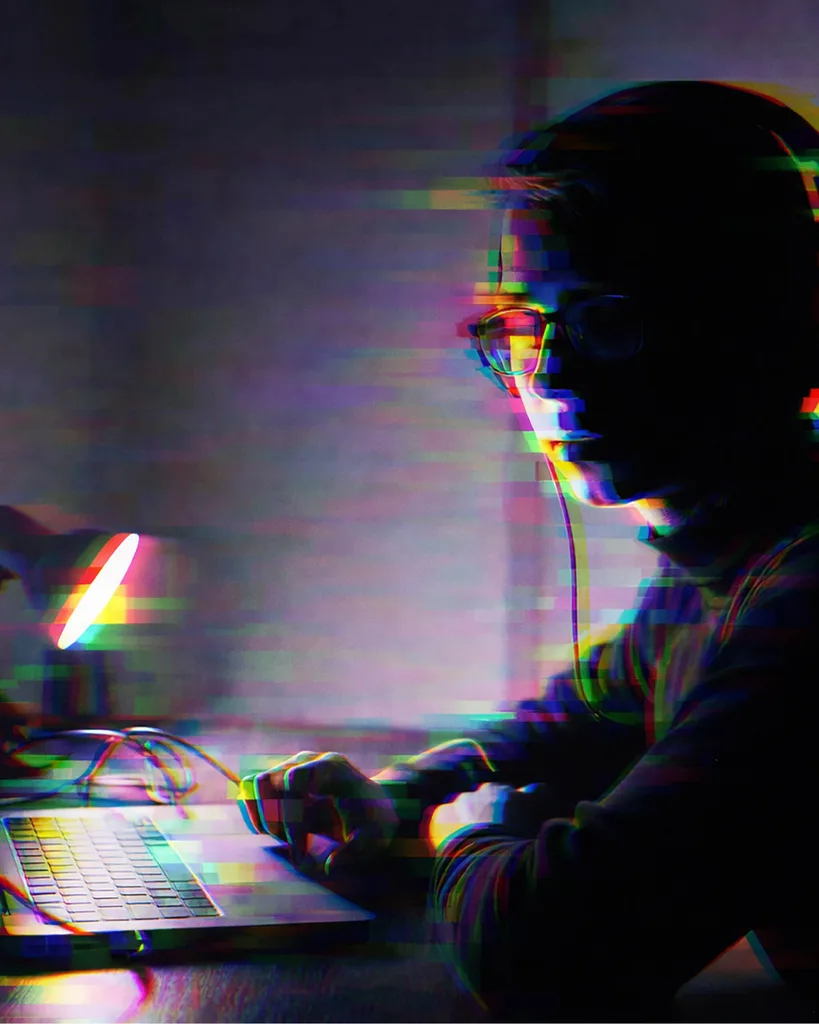
They might also find unregulated porn sites that are infested with non-compliant, unregulated, non-consensual and harmful content. Adults, meanwhile, don’t necessarily feel comfortable having to link their facial data or government-issued ID to their sexual viewing habits.
Over-18s then take the same steps as the under-18s: a potentially dodgy VPN, or a potentially dodgy porn site where they may not realise that they could be watching content that’s been stolen and hosted without its owner’s consent or knowledge – and certainly without payment. These sites are less likely to check who is in the videos (their age or their consent), and are less likely to respond to takedown requests.
“We can protect our privacy and we can protect the children, and we should absolutely do both,” Justice says, “but whenever they create a black market for things, it just pushes people further underground and makes it more dangerous for the participants. If there are already concerns about content that’s legal and mainstream, it’s only going to be worse there.” Mish Pony, the CEO of Scarlet Alliance, the nation’s peak body for sex workers, agrees.
“Sex workers don’t want children accessing our content,” they say. “When you make it harder or impossible for people to use legal, regulated platforms, you push both workers and audiences towards more precarious, less regulated spaces.” For its part, the eSafety Commissioner says it will be keeping an eye on this. “Smaller providers are not getting a free pass. We will be watching for migration to their services.” But Pony doesn’t believe this goes far enough. “These sites don’t really care if they get shut down. They can easily pop up with another domain name. It’s like whack-a-mole.”
The eSafety Commissioner tells marie claire that it held roundtable discussions with industry players, including the Scarlet Alliance, between November 2021 and July 2022. “These codes were drafted and written by the tech and adult industry themselves, subject to registration by eSafety,” the spokesperson says.
“They reflect what the online industry considers appropriate community safeguards to protect children from exposure to age-inappropriate material.” Pony, though, feels their recommendations were largely ignored. “We’ve been engaging with successive governments and eSafety Commissioner since the Online Safety Act of 2021 was being formulated,” they say. “We essentially think both the Act and its regulations are not fit for purpose; they do not achieve the outcomes that they sought to achieve and infringe upon the rights of adults, including sex workers.”
So what’s the solution? Can we strike a balance between protecting children as well as viewers’ privacy and creators’ safety and livelihoods? Justice says yes, pointing to a February article from the University of Queensland titled “Age verification online can be done safely and privately. Here’s how.”
It involves “highly advanced cryptography that communicates to the platform that a person possesses a digital document proving they’re older than 18, but without revealing any further details,” it says.
“That means neither the government nor the platform can track a user’s activities despite being able to accurately verify their age.” Think of it like Apple Pay – your device stores your details; the company you’re purchasing from doesn’t get your information. eSafety stands by its recommended age verification methods, explaining to marie claire that the government conducted a trial last year which “found that effective, accurate and privacy-protecting age assurance can be achieved and that the [adult] industry has matured to be able to achieve the dual imperatives of privacy and safety”.
Critics of the legislation say that once suitable age assurances are in place to protect young people, the next step should be to increase sex education while decreasing the stigma associated with pornography. Ideally, a lack of shame about viewing preferences would mean adults wouldn’t fear verification and so wouldn’t pursue unregulated content.
“The issue isn’t porn, the issue is that we do not talk openly and honestly about sex in the real world,” says Cindy Gallop, a British-American entrepreneur and founder of MakeLoveNotPorn.tv, a user-generated and human-curated platform with the tagline: “pro-sex, pro-porn and pro-knowing the difference”. “If porn is the Hollywood blockbuster movie, [our platform] is the badly needed documentary,” she says.
Pony agrees. “Porn is often a fantasy, often a form of entertainment,” they say. “I think people are often blaming porn for society’s inability to have open, frank, honest discussions with young people about sex that should happen well before 18 – especially given the legal age [of consent] in Australia is 16.”
“Ensuring young people have digital literacy skills is so important because once they turn 18 and can suddenly access pornography, it’s not like a light switch goes on and all of a sudden they can critically navigate these things,” says Dr Sarah Vrankovich, a researcher on the Partners in Prevention of Sexual Violence Project, the largest government-funded sexual violence research project.
“We know young people are turning to pornography because they’re missing sex education,” she says. “If we’re going to take porn off the table for them, we need to supplement their education, but there’s been no discussion about that – they’ve just cut young people off from this source of information.”
A NSW parliamentary inquiry into the impacts of pornography came to the same conclusion – that better education is needed. “We heard evidence that harmful pornography can distort perceptions of intimacy, reinforce gender stereotypes, and contribute to unhealthy relationship dynamics,” it said. “Despite this, young people, particularly LGBTQIA+ individuals, may be turning to pornography for education about their sexuality and intimate relationships, highlighting gaps in our curriculum.”
This is what Gallop is trying to do with the MakeLoveNotPorn Academy, an educational platform connected to the site. “Our mission at the academy is to organise the world’s sex information to make it universally accessible and useful,” Gallop says. “Google isn’t doing that; the algorithm is censoring it. Parents and teachers tell me they cannot find resources online because of the stranglehold on the industry.”
Gallop’s mantra is: don’t block porn, disrupt it; don’t let it go dark, bring it into the light. “We are socialising, normalising and destigmatising the shame, guilt and embarrassment out of it, bringing [sex] out of the shadows into the sunlight to make it easier to talk about and therefore promote consent, communication, good sexual values and behaviour,” Gallop says. “The solution is not to shut down, but to open up.”

Related stories
Native ad body.
Native ad body.
Native ad body.

Share this post